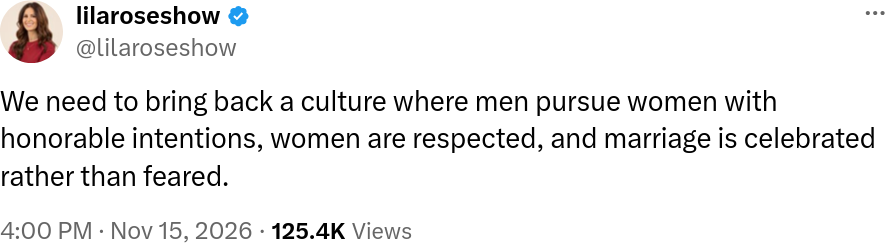
In response to this one, I'm seeing an awful lot of very angry arguments about "what Tolkien meant".
I'm actually not gonna weigh in on that, because I am super unqualified in the fields of necromancy, telepathy, and necrotelepathy. Instead, I'm going to ask... is that really the right question?
Because I do not think it is.
I think the actual impact of Tolkien is very little about what he meant, and very much about how his considerably younger audience interpreted him.
In order to understand Tolkien the cultural phenomenon, as opposed to Tolkien the man, you must understand who his modern equivalent is.
JK Rowling.
Yes, I can hear you screaming. Scream later. Think first.
A generationally beloved text is never, has never been, and will never be beloved just for the quality of the writing, or for storytelling skill. There are plenty of better wordsmiths, and finer storytellers, than Tolkien in the pages of history. Some are alive today.
No, a generationally beloved text is loved because it perfectly captures what an entire generation yearns for. It is the particular selection of the setting and story, not the skill in execution, that produces this sort of popularity.
JK Rowling captured the hearts of millennials because they were a generation born to no birthright, no institutions, and no love.
They lived in a metaphorical closet under the stairs, raised by the Dursleys, and they wanted, more than anything, to receive a letter by owl telling them it was all a mistake, and summoning them to a place they belonged, prepared for them by parents and elders who loved them.
Tolkien captured the hearts of boomers because they were raised on tales of the heroism of their parents and grandparents, but born into a civilization that left them no demons to fight, no epic quests to embark on, nothing to do but enjoy the paradise.
This was why they became hippies. (That and all the Soviet subversion.) By waging a moral struggle against their elders and their civilization, they could imagine themselves the same kind of heroes that their elders actually were. When the hippies took to the streets chanting "fascist scum, your time has come", they meant the same people who had stormed Normandy beach in the face of fascist machine gun fire.
Tolkien, regardless of his intent of lack thereof, gave them a tale that offered perfect archetypes for that worldview.
They weren't particularly interested in Aragorn. To them, he was a secondary character. They loved Frodo, who was a hero not only despite his lack of great power or skill, but precisely because of it. And whose struggle was a moral one, to resist the temptations of power, and rulership, and selfishness.
It mattered not one whit to them whether the Ring was evil because Tolkien tossed Andvari's ring into a blender with his cursed gold and the Tarnkappe, or because Tolkien really hated technological progress, or just because he thought subverting the Hero's Journey would make a fun story.
To the hippies, the Ring was the political power wielded by their elders, who were Sauron because they wielded that power. They were Frodo, and anyone who had power, or wanted it, for benevolent ends, was Boromir and that was that.
So, now, in the world we live in today, we have a lot of brain-damaged people running around thinking that the will to power is evil, regardless of the character and intentions of the man who desires it.
This is a far greater problem than any supposed slight to the memory of an author you happen to like.
These people and their Boromir memes must be stopped, lest they cause the best to lack all conviction, while the worst remain filled with passionate intensity.
In the real world, the tools of power are not good or evil, only the uses to which that power is put. And there is no magic lava mountain which removes power from the universe, and puts the djinni back in the bottle.
Because in the real world, power does not come from unique and irreplaceable magical artifacts. It comes from things that can exist over and over again, once the correct knowledge is discovered.
It's time we stopped reminding everyone that the ends do not justify the means, and started remembering something far more important:
The means do not justify the ends.
Here's a great video explainer from Open Protocol Labs on why BSV is so unique in the blockchain space.
Please let me know what you think of these kinds of explainers.
Have you heard the story of the Golem of Prague?
The Jews of Prague went to their rabbi, Judah Loew ben Bezalel, the wise, and they said "The Christians are stronger and more numerous than us, and surely if they become wrathful, they shall destroy us! What can we do?"
"Do not make them wrathful," said the rabbi. "Deal fairly with them and treat them with respect, as you would all God's creations."
But the Jews were fearful, and they imprecated the rabbi with great lamentations.
So he created a great statue of a mighty giant from clay, and inscribed it with mystic and secret words from Kabbalah, and into its hollow head he inserted a clay tablet, containing the 99 sacred names of god.
And the statue came to life, and it did mighty work for the Jews of Prague, serving them with all its labor, and putting fear into the Christians, that they might not dare harm the Jews, or offend them.
And yet man's works are not god's works, and the Golem was made far from perfect, and it became harder and harder to control, until it rampaged through the streets, destroying Christian and Jew alike.
"Save us!" the Jews of Prague cried to Judah Loew ben Bezalel.
"Have you not learned?" asked the rabbi, "A wise man does not loose a mad dog in the streets, hoping it will bite the neighbor he has quarreled with."
But Judah Loew ben Bezalel relented, and blotted the letter alef from the word "emet" (truth) on the golem's forehead, so that it read "met" (death).
And the golem was still.
You've all heard the story, perhaps in slightly different forms.
Ah, but you haven't heard about the second Golem.
The women of America made it, out of words, for they saw that men had built many things, and would not give them half of what they had built. Of their most cunning arguments and their most piteous appeals for sympathy they crafted it.
And into its head they placed a clay tablet, with their most sacred scripture, which read "Gender is a Social Construct."
They called it "Feminism".
And it went forth and fought for them.
"Gender is a social construct!" the golem cried. "Men and women differ only in their genitalia! Therefore women can do everything men can do, backwards and in heels, and are entitled to an equal share of everything! Little boys have no special capabilities or needs! If they behave differently than little girls, they are defective and must be dosed with methamphetamines until they are docile! Women are entitled to equal pay, because they must be doing the same type and amount of work! Anything a woman does differently than a man, or a man does differently than a woman, is regressive social conditioning and must be vigorously stamped out, because gender is a social construct!"
And all the little boys were herded into schools sensibly run by women, and all the men's spaces were opened to women, and changed to be welcoming to women, and all respect for men and their capabilities, and all rewards for men and their contributions, were banished from society, because gender is a social construct, and therefore men neither needed nor deserved anything that a woman did not receive also.
And when everything had at last been made equal, the golem put on a sundress, and a pink hat, and it went into the women's locker room to suit up with the women's soccer team for their game.
"Stop!" the women cried. "You are not a woman! You a five-story animated statue made of clay! You are smashing the building! You are invading our private space!"
"I identify as a woman," said the golem. "See? I have put on a pink hat. Women wear pink hats. I am a woman."
"You cannot be a woman!" the women cried, "Woman is a thing you are, not a performance! You cannot become a woman just by saying you are, or doing the things women do!"
The golem sat down on a bench in the locker room, smashing it flat.
"Gender is a social construct," it said.
The first world, the second world, and the third world are defined by how much people cooperate on shared goals instead of seeking their own interests.
In the third world, self-interest is total. In the first world, self-interest is balanced with cooperation. But there is a secret world that only a handful of people on the planet know about.
There is a zeroth world.
It's hidden. You won't find it on any map. There are no zeroth world countries.
Instead, it is tucked into the universe in bright spots here and there, tiny walled gardens where something unique, almost magical, happens.
In the zeroth world, the team always chooses the mission over themselves.
Notice how I slipped the word "mission" in there?
That's because the zeroth world has never manifested as a country, not in all of history, although early America may have come close. The zeroth world manifests as a team. And even its denizens only exist in it during the time they spend working, supporting the mission.
And the zeroth world never manifests as a democracy or a sharing of power. Every zeroth world team I have ever witnessed or heard of was the private fiefdom of a zeroth world dictator.
When you think about it this way, it might sound awful. A totalitarian regime, where everyone is forced or brainwashed or intimidated into serving the master's goals over his own needs. And from the outside, that's what the zeroth world often looks like, if you are not looking carefully.
But the zeroth world is not created by force or deception.
The zeroth world is created by carefully choosing your team, and aligning incentives, so that, at every moment a member must make a choice, a choice to serve the mission or to serve himself, he believes, reasonably believes, believes based on experience, that he will benefit more, in the ways that actually matter to him, by choosing the team and the mission.
That is the zeroth world dictator's job. To create that team, and that alignment, and to defend it from outside interference.
The third world dictator exercises absolute power to serve himself. The zeroth world dictator exercises power for the same reason, and in the same way, that his team makes choices... to achieve the shared goal.
If you have ever wondered why SpaceX is worth ten or a hundred or a thousand Lockheed Martins, this is why. There is a zeroth world culture within SpaceX, possibly even encompassing most of it.
It's not because Elon Musk is some kind of super engineer who can do the work of thousands. If he were only doing the work of an engineer, or the work of an engineering manager, it would only result in a slightly better company.
But Elon Musk is a zeroth world dictator, and he made a zeroth world team. Total mission focus. That's why you see SpaceX engineer weeping on open microphones at launches.
Because when all people have to do is care, they care.
Want another example? Gabe Newell, and Valve.
Zeroth world teams can seem magical when compared even to functional first-world companies. There's nothing particularly wrong with Blue Origin. But in the ordinary first world, even in the best and most talented of first world teams, huge amounts of effort and time are wasted on internal friction ... interpersonal, political, bureaucratic, regulatory compliance, habit, and so on.
Zeroth world teams only waste effort when outside forces compel them to. For example, that's why SpaceX is a serial seal molester. But part of a zeroth world dictator's job is to shield his team from all that bullshit.
I have no way of measuring this, but it would not surprise me in the least if even good, useful, functional companies in the first world are wasting 75 to 80% of their efforts.
The zeroth world mostly manifests, here and there, among engineers or soldiers. And it is among engineers that it matters the most.
An engineer is born, not made, and every engineer is born with the magical ability to picture the zeroth world. Anyone who can't is not a real engineer, regardless of his job title.
Engineers want to work in the zeroth world. They yearn for it. Most never get the chance.
And this is why, seen from the outside, by midwits, the zeroth world team makes no sense.
Here is a team, led by an absolute dictator. He swears like a sailor, seems to demand total dedication, and breaks all the little social rules you're supposed to follow at tea parties.
So they try to organize a coup. "Power to the People!" they cry. (That's "the People" with a capital P, which is the favorite abstract cause of those who hate actual people.)
And if they succeed, they expect those engineers to dance in the streets, arm in arm with the stockholders, singing "Ding dong, the witch is dead, the wicked witch is dead".
Boy, do they ever get a surprise.
Because an engineer's idea of heaven is to be given a job that is important, colleagues as smart and mission-focused and he is, rewards that track his performance instead of his charisma or sociopolitical skill, and a leader who shields him from 100% of the outside world's bullshit.
If an engineer is blessed enough to have that, and you take it away from him, he will hate you until his dying breath, and the first opportunity, he will spurn you as you would spurn a rabid dog.
In other news, NVIDIA is gonna need some new board members. And a new CFO.
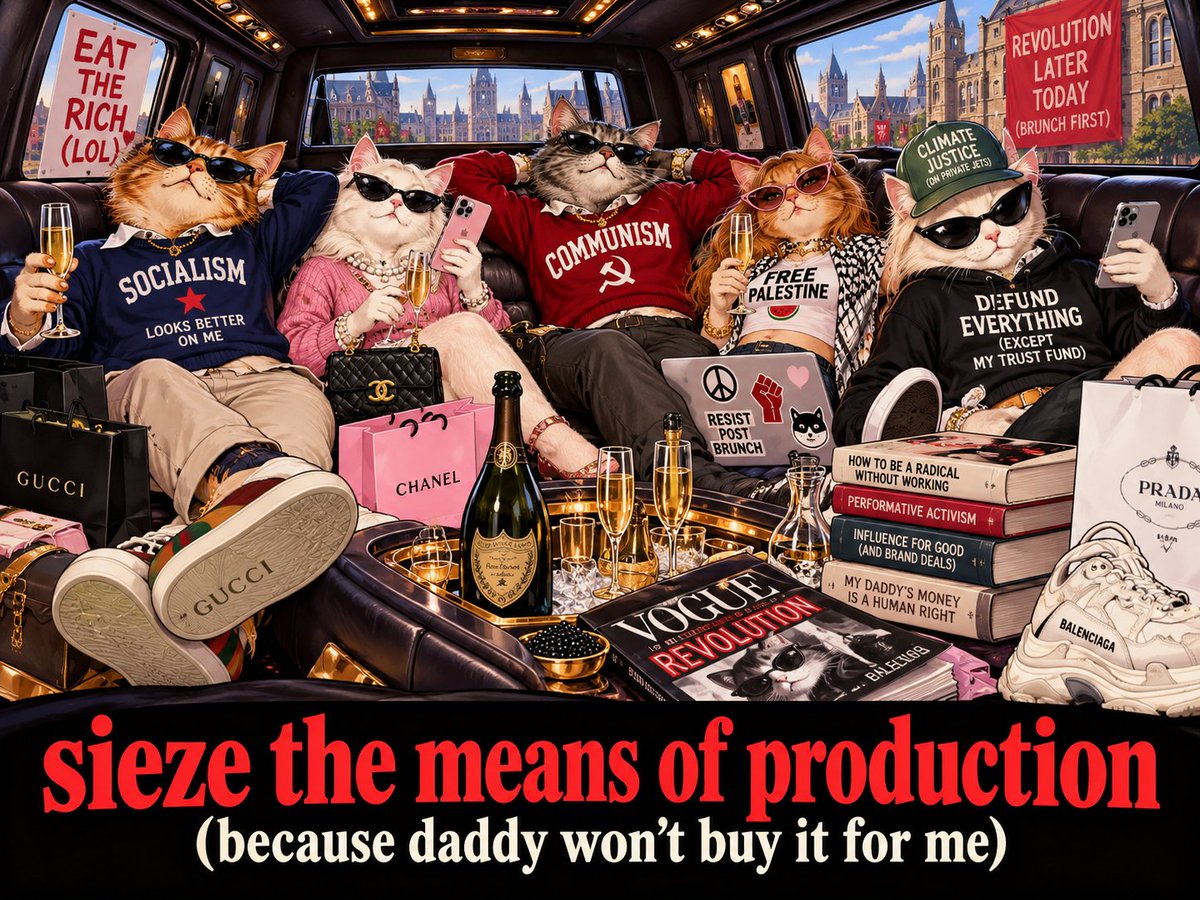
There is a simple reason that some of the most ardent supporters of communism are the children of the hyper-wealthy.
Many men become wealthy partly by being smart. Smart men want smart wives, because it's hard to catch feelings for someone who can't interest or understand you.
So they have smart kids.
But those kids are born into a trap.
They are talented, but what is to be done with that talent? Make more money? Whatever they need, they have already inherited.
Some of them, the real geniuses, are seized by some inspiration, some possibility, and make it their life's mission to build some particular thing. And they are fulfilled by that mission.
But others, the merely smart, have nothing important to do.
And they become depressed, a malady which is very poorly named, because depression isn't sadness. It's something else, something that makes you sad, but is something else entirely.
It's learned helplessness.
If you think you're caught in a no-win situation, you will be depressed. But you will also be depressed if you are caught in a no-lose situation. Because nothing you do matters.
When this happens, the child is ripe for communist recruitment.
Communism gives this child a sense of purpose. He may have everything he needs, without lifting a finger, but others are struggling. He is going to save them. He is going to fix the world.
This might sound noble. It might sound like a laudable goal. But there is one really big problem here, a problem that makes it all turn to shit.
The kid isn't doing communism for altruistic reasons. He's doing it to feel important. He's doing it to feel like he matters. He's doing it as an antidote to his own mental turmoil.
If he really wanted to help people, then evidence that communism doesn't, in fact, help people, would just be feedback. It would simply help him switch to some other cause that does.
But because he is using communism as psychotherapy, any evidence against it becomes an attack on his own inner needs.
He must reject it.
And therefore, whatever intelligence and talent he has will become solely devoted to verbally rationalizing communism, rather than empirically analyzing it.
Then it doesn't matter how many corpses you show him, he will always be convinced that this time it will be different, that he and his friends know the proper way to stick the fork in the light socket.
The moral of this story is that if you are wealthy, you must not only give your children love and "all the things you never had".
You must also give them responsibilities.
Below a certain IQ level, you can't think about single hypotheticals...
"What should you do if rent is 55% your paycheck?"
"But rent isn't 55% of my paycheck!"
Above that IQ level, but below another, you can't think about aggregate hypotheticals.
"What would happen if median rents rose to 55% of median income?"
"You should get another job!"
That is the level that Steven Crowder engages with this question on, because he put most of his points in charisma, and used intelligence as a dump stat.
Clearly, the reason this question is significant, the reason it's all over social media, is that it affects a large group of people. In aggregate.
Crowder can imagine himself, as an individual, in this situation, and picture what he would do. But he can't, or at least doesn't, engage with the real question, which is:
What happens if real wage values are held stagnant while real estate values (rent) are allowed to continuously increase?
If someone cannot entertain aggregate hypotheticals, you cannot discuss this question with him, not because he disagrees with you and won't listen, not because there is some ideological difference, but because he can't understand anything you say about the issue.
Any prediction you make about this, any way you characterize it as a problem, any solution you propose, all require him to imagine the hypothetical aggregate behavior of a population.
Which he either cannot or will not do.
You cannot explain to him that it is in the interest of old people, who own land and businesses, to keep the price of land high, and the price of labor low.
You cannot explain to him that it is in the interest of young people, who sell labor and need land to live on and start families, to keep the price of land low, and the price of labor high.
You cannot explain to him that when old people are allowed to put their collective thumb on the political scales forever, young people will stop having children, not only because they can't afford land, but because broke dudes give chicks the ick.
And you most certainly cannot explain to him that once young people stop having children for long enough, labor will become scarce, and the price will go up unless old people start importing eleventy-billion slaves from the third world in a desperate effort to keep the party going until they are safely dead.
He does not understand the concept of a forest. He only understands the concept of a tree.
And the old people voting to keep the cheap labor party going forever have the same limitation. And the politicians they elect either have the same limitation, or must pretend to or they won't be politicians anymore.
The real root problem here is universal democracy. In universal democracy, every adult receives one equal vote.
But not every adult is equally important to the future of civilization, and not every adult is equally able to understand what that future needs.
The more complex a civilization becomes, the more the people who understand it will be outnumbered by the people who don't, and not only don't, but can't.
There is nothing you can say to these people which will magically make them smarter.
No matter what you are selling, you always want to commoditize complements to your product.
That might sound like gibberish until I explain the terminology.
To commoditize something is to make it into commodity. A commodity is a product that's available from lots of different brands, they are mostly the same, and they mostly compete on price.
A compliment to your product is something that people use with your product. Especially if they need it to use your product.
In other words, if you sell cars, you want gasoline to be cheap, plentiful, and all pretty much the same. And if you sell gasoline, you want lots of brands of cheap cars out there that are pretty much the same.
If you sell electric cars, you want everyone to have rooftop solar panels. If you sell rooftop solar panels, you want everyone to have electric cars.
But what if you sell floating point processors that run AI models?
Well, you want AI models to be a commodity, don't you? And in the software world, "commodity software" usually mean open source.
And what if you sell AI models as a subscription service?
Well, you sure as hell don't want all of these open source AI models floating around commoditizing your product, do you? You want the opposite... a nice fat regulatory moat around AI software, while dozens or hundreds of chip-fab companies make GPUs off open-source designs.
So Anthropic and NIVIDA are, by necessity, business partners. But they have opposing goals. One is naturally against open source AI, and one is naturally for it.
So, now, let's think about what the accusations against Jensen Huang are.
1. He cheated on his wife.
Red herring. Immaterial. Lots of powerful men cheat on their wives, especially on the mid wives they picked up before becoming powerful men.
No one cares except retarded social media midwits who just react to whatever the matrix shoves under their noses, like a canary pecking at a mirror, without ever asking why the matrix shoved this particular tidbit at them.
2. He was doinking a Chinese intelligence asset.
I don't know if this is true or not. Sources differ. But it does occur to me that plenty of our politicians are doinking Chinese intelligence assets and no one cares.
So, again, why did the matrix shove this particular tidbit at you?
3. He is too cozy with China.
Here, at last, is the rub. What aspect of China? And why? Was he passing NVIDIA's tech secrets to mainland China, because Taiwanese people just love the CCP so much? Or was he trying to provide certain types of support for the development of open source AI models?
So, how should you feel about this?
Well, I won't decide for you, because it depends on what you want.
But I will tell you what the real issue is.
Is more important (and possible) to keep cutting-edge AI out of the hands of the Chinese, so they can't compete with America?
Or is it more important to have open source AI models freely available, so you and I can compete with Sam Altman and Dario Amodei?
People have been wondering when I'm going to retire. When I'm finally going to stop.
The answer is rather simple.
When I've finished the one thing that has been driving me since I was a teenager.
How do you stop a digital file from being copied?
Not make copying illegal. Not make it inconvenient. Not encrypt it and hope nobody discovers the key.
How do you make a digital file that can only move?
Alice has it. She gives it to Bob. Alice no longer has it.
One usable instance. One owner. A genuine transfer.
True digital scarcity.
I've spent decades thinking about that problem. Mathematics, cryptography, economics, computer science, hardware engineering. Different disciplines, different approaches, different failures, and an extraordinary amount of work.
All because of a question I couldn't put down.
What if digital information could behave like physical property?
What if transferring something meant actually giving it away?
What if we could create digital items that were genuinely scarce, independently controlled and transferable without relying on somebody else's permission?
Think about what that could mean for the world.
For information security. For intellectual property. For global commerce. For people who have almost nothing but an internet connection and an idea.
For governments accustomed to controlling information through central institutions.
For corporations whose business models depend on controlling access.
For ordinary people who want to own something without having to ask permission to keep it.
That's what has kept me working.
Not the price of Bitcoin.
Not another company.
Not another collection of titles or qualifications.
A problem I first wanted to solve when I was young enough to believe that anything worth imagining ought to be possible.
I've developed the architecture. I've built a working beta. And I'm preparing to let people see how I've approached the problem.
I'm going to explain it.
I'm going to teach it.
I'm going to release the software, the methods and the educational materials.
And I'm going to let other people build.
Because I don't want to spend the rest of my life administering what I've created.
I don't want an empire.
I don't want millions of people dependent on me.
I want the opposite.
I want to give people something they can take further without needing me at all.
And then, perhaps, I can finally retire.
I want to enjoy the seaside.
I want to sit somewhere beautiful with a good meal and a glass of wine.
I want to travel without spending every waking moment thinking about the next technical problem.
I want to read books simply because they're worth reading, not because I'm researching another paper.
I want to enjoy time with my wife, watch the sun disappear over the water and occasionally accomplish absolutely nothing.
What a magnificent luxury that would be.
I've spent most of my life chasing an idea.
Now I want to give that idea to the world and let other people discover what they can do with it.
There will always be another problem to solve. Another paper to write. Another invention to pursue.
But perhaps the greatest achievement isn't working forever.
Perhaps it's finally creating something that no longer needs you.
I've spent my life trying to make a digital file move instead of copy.
Now I want to make the knowledge move too.
And once I've done that, I intend to enjoy the rest of my life.
Preferably somewhere near the sea.
Most people never even considered true digital scarcity possible.
And perhaps that's because the people who benefit most from the existing system have very little incentive to imagine a world without it.
Think about what genuine digital scarcity means.
A digital item that can be transferred, but not duplicated into another usable instance. Alice gives it to Bob. Alice loses it. Bob gains it.
No central administrator deciding who owns it. No corporation maintaining the only authoritative record. No platform with an arbitrary power to revoke it.
Now imagine combining that with pseudonymous exchange, independently controlled cryptographic keys and systems where even governments cannot obtain protected information merely by demanding access from a central provider.
You're no longer talking about another piece of software. You're talking about changing the architecture of power.
Today, centralised systems give institutions enormous practical control over information, property and economic participation.
Governments regulate through intermediaries. Corporations control access through platforms. Individuals are frequently reduced to asking permission to use things they've already purchased.
True digital scarcity offers the possibility of a fundamentally different arrangement.
Property that can change hands without a central custodian.
Markets that can operate without one company controlling every participant.
Information whose transfer requires independent authorisation rather than the decision of a single administrator.
Economic relationships built around verifiable rules instead of institutional discretion.
And that changes the possibilities for authoritarian systems, democratic governments and corporations alike.
Not because cryptography abolishes law or makes institutions disappear.
But because technical control and political authority are not the same thing.
A government may possess legal authority without possessing a universal key.
A corporation may operate a marketplace without controlling every asset traded through it.
An individual may participate economically without surrendering every aspect of their identity and property to an intermediary.
Now multiply those possibilities across finance, intellectual property, education, information security, software, entertainment and international commerce.
The consequences are not merely technological.
They are economic, institutional and potentially constitutional.
I've spent years developing the architecture behind this idea. I've built a working beta, and I'm preparing to release the software, methods and educational materials so other people can learn to build their own systems.
I don't want to replace today's gatekeepers with myself.
I want people to have the means to build without needing another gatekeeper.
And that is the part I suspect many people still haven't understood.
True digital scarcity isn't about making another coin valuable.
It's about what happens when exclusive digital ownership no longer has to depend on centralised permission.
When that capability becomes practical and widely accessible, established business models and institutional arrangements may have to change.
Not everything disappears overnight. But assumptions that have governed the digital economy for decades become open to challenge.
The world doesn't reset because somebody announces a revolution.
It begins to change when ordinary people acquire capabilities they previously had to ask permission to use.
And that's what I intend to put into their hands.
it has absolutely amazed me how difficult it has been to communicate this to the right.
chucking elon was not popular, tariffs are not popular, iran is not popular. people wanted to see agencies get cut, regulation drop, spending decrease, prices moderate, DEI get dismantled, elections get secured, and far more illegals get sent home.
they wanted economic and social stability, not new wars, huge deficits, and constant economic disruption. they wanted to see the department of education shut down and its offices sold for condos.
there was a grand coalition around this and the GOP failed to live up to it.
and it cost them.
and every time you try to explain this, it's "the polls are wrong" (they weren't), "the election was stolen" (it wasn't), or "you're a traitor for not backing the GOP even though they broke faith with you" which is not just DARVO, but the path to splitting the party.
the GOP must learn to be forcefully for something and to hold the story of why that thing is both right and needed. you cannot run as "we'll make it worse more slowly than the other guys" anymore. that's not a vision that will motivate builders and makers to support you.
GOP leadership needs to either learn to lead or to get the hell out of the way. at this point, they are far more hinderance than help.
A lot of people have real trouble thinking about the aggregate behavior of groups. They can only think about individuals.
So they think about Elon Musk as an individual. Maybe they think that he must be retarded, because they need that for emotional reasons. Or maybe they think he is a talented rocket designer.
But even if they realize he understands rockets, they can only think about him as an individual doing tasks. Not about his impact on what the whole company does.
If Elon Musk is just a talented rocket designer, then he can spend all day, every day, improving rocket designs.
But he is just one of 7000 engineers. So even if did a perfect job, he would only improve progress by about .014%
So, when a midwit looks at SpaceX, he sees 7000 engineers, and says to himself "Elon Musk cannot possibly be designing the whole damn rocket himself. These people are giving him too much credit."
This would be absolutely true if Musk were just a some random SpaceX engineer. But he isn't. He's the absolute dictator of the whole damn company.
He decides, with absolute and unquestionable authority, which behaviors are punished and which are rewarded.
Why is this important?
When I worked at Boeing, on various classified projects, I naively came in with the assumption that I was a software engineer, employed to design and build functional software as quickly and cheaply as possible.
Because of this, I focused on functionality and efficiency, for example suggesting changes that would obviate the need for entire projects and software components.
And I very rapidly became persona non grata.
At first, this caused me to adopt an air of aggrieved innocence. I was just trying to do my job well, and I was being punished for it.
Then I gradually came to realize that I hadn't properly understood what my job was, or what the actual mission of Boeing Defense, Space, and Security was.
Boeing DSS was not an aerospace company. Boeing DSS was a fraud company.
Its goal was twofold. First, to maximize transfer of public tax dollars to stockholder pockets. Second, to maintain the appearance of being an aerospace company, to prevent the fraud from being exposed.
Which meant that my real job was twofold. First, to generate billable hours. Second, to look busy.
This is why Space Launch System sucks. Why it is always late when it doesn't fail outright. Why it is at 300% of its target budget. Why it leaves American astronauts stranded and needing a lift from SpaceX.
That's because, for Boeing, building rockets is a side quest. Something they have to do to look busy. Yes, a rocket does occasionally fly, but that's just happening so programs don't get shut down.
For Boeing, coming in early and under budget would actually be failure. The system is functioning exactly as designed.
The cost, not the rocket, is the goal.
Musk and SpaceX don't work like that.
Unlike Boeing executives, Musk is not a useless grifter asshole. He is an entirely different kind of asshole... a rocket obsessed sperg.
So, at SpaceX, engineers do not get rewarded for generating billable hours. They get rewarded for making rockets fly. And for all the subtasks of this, like figuring out how to make rockets lighter, figuring out how to make engines reignite better, figuring out how to make rocket exhaust not destroy launch pads, etc.
And this attracts engineers who care about rockets. You've seen them on broadcasts, crying on open microphones because they dedicated their lives to something and it just flew.
As a rocket engineer, who designs rockets, Musk is probably replaceable. As a rocket company engineer, who designs rocket companies, he is not.
For over 50 years, the US space industry stagnated precisely for the lack of a Musk-like figure, who could not only create an effective aerospace company, but who could thereby demonstrate what an effective aerospace company looks like.
Which makes it much more difficult for fraudsters to get away with fraud.
I'm envious. I wish I could have worked for an aerospace company instead of a fraud company.
But what's more important is that some of us now no longer have to play "who gets the most cheese?".
They get to play "What can we build today?".
Data sovereignty is at least as important as sound money.
The wealthiest, most powerful people in the world understand this, and we need to stop misunderstanding the magnitude of the power of data.
Data is money.
And the only way to take sovereignty over it is through true ownership of your data on BSV.
So many will dismiss this. DO NOT. Read history. It is a replay in many ways of horrific events 1300 years ago. It is spreading again all over the world. Those of us in America have never experienced war on our own land. That will change if we do not sober up. What is worth living for? What is worth preserving? Who do you ultimately answer to? Everyone is on the field whether they realize it or not. May God save the West.
I love how these guys just make up history based on vibes.
But then, they kinda have to, because the entire CivNat philosophy is destroyed by reading the first sentence of the constitution.
CivNats claim that a piece of paper, granted by the federal government, defines an American. And claim that there is no such thing as a "Heritage American".
But on what does the authority of the federal government rest?
The Constitution.
And on what does the authority of the Constitution rest?
Well, the Constitution itself tells you. In the first sentence.
"We the People of the United States, in Order to form a more perfect Union, establish Justice, insure domestic Tranquility, provide for the common defence, promote the general Welfare, and secure the Blessings of Liberty to ourselves and our Posterity, do ordain and establish this Constitution for the United States of America."
That authority derives from "We, the People of the United States".
Who were — not ARE, but WERE — the people of the United States, when this document was written? They had to exist at that time, because the constitution could not be approved by people who didn't exist yet.
Therefore, they had to be the People of the United States of America at the time the Constitution was written.
Therefore the definition of an American preexists the Constitution. As it must, because they very claim that the Constitution makes to this authority rests on that definition.
If there were no "we, the people" until the federal government defined them, then the constitution, and thus the federal government, has no authority to do anything.
That means that Paperwork Americans could only ever exist if Heritage Americans not only existed, but had the authority to frame laws, and define what their nation was to be.
And for what purpose did they establish the Constitution?
To secure a list of benefits for themselves (Heritage Americans) and their posterity.
Well, who is their posterity?
Well, words mean things. And words meant things at the time. We don't get to redefine the individual words of their Constitution, that they wrote, because if we did that, they it, and any other document, could mean literally anything. We must read the words as they wrote them, without redefinition.
Posterity obviously includes their direct biological descendants, because that's what the fucking word means.
And here's the important bit: if you wish to claim and word "posterity" included anyone or anything else, in addition to their direct biological fucking descendants, then the burden of evidence is on you.
And that evidence must come from contemporary sources. Not definition-changing shit someone came up with later to put words in their mouths.
Have you any contemporary evidence?
I think you haven't bothered to look.
This is not complicated.
A man will hate you either because you have robbed him, or because he wants to rob you.
If he wants to rob you, he needs you to be a bad man who deserves to be robbed.
How do you tell the difference? Simple. Can you appease him?
If he hates you because you have robbed him, then the more kind and apologetic you are, the more you try to make amends, the more likely he is stop hating and forgive you.
But if he hates you because he wants to rob you, then the nicer you are to him, the more reasons he will find to hate you, because he will need those reasons more.
So which is it?
Well, look around you. Has 75 years of unfathomable forbearance made other demographics hate White men less?
Has 75 years of unfathomable generosity made other nations and peoples hate America less?
No. It has not. They have devoured everything we have given them, become dependent on us, and scolded us for not giving more. They have abused every liberty we provided them, ruined not only our society but their own lives as well, and then scolded us for not letting them get away with more.
The man, or even more likely the woman, who wants to rob you can never be appeased. There is no amount of kindness that will ever move the needle.
She will take from you until you have nothing left to give, and then she will demand you sell yourself into slavery to give her more.
The robber cannot be appeased. You must fight. You must make the robber respect and fear you. You must make him look for easier prey.
You must purge yourself of any impulse to be sympathetic to these grifters and thieves. You must stop caring about being "fair" to them. They do not care about or even understand fairness. If they did, they would not be trying to demonize and rob you.
They hate you because they want to rob you.
They want to rob you because your people have the most stuff.
Your people have the most stuff because they make the most stuff.
If you let them continue, you will eventually be unable to make stuff, and there will be no more stuff.
They say they can make stuff just as well, if we just give them enough stuff. But we have been doing this for 75 years or more, and that has not happened. They can't even maintain the stuff we give them.
Some parts of the world can't even feed themselves.
It will never stop unless we stop it. By any means necessary.