I’m shocked he’s denying he’s Satoshi!
“As chief executive of the merged company, Mr. Back was required under U.S. securities law to disclose any information that was material to its investors. A secret stash of 1.1 million coins…would probably be considered material.”
The mystery of Satoshi Nakamoto, the pseudonymous inventor of Bitcoin, has remained unsolved for 17 years. Not anymore. Read my 18-month investigation to find out who Satoshi really is. https://t.co/fPtaK6YHJC
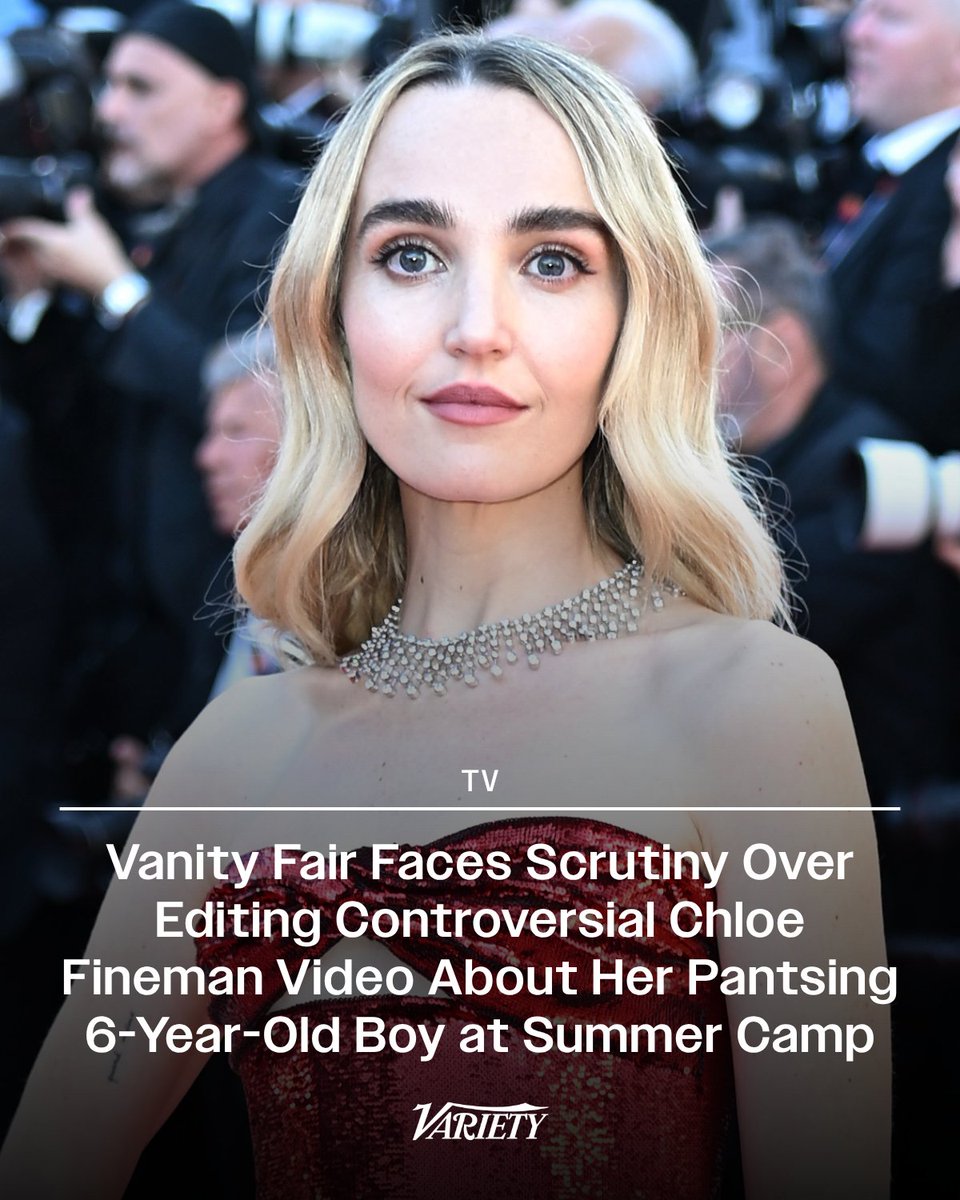
“Saturday Night Live” star Chloe Fineman is facing backlash over a story she shared in a Vanity Fair video about pantsing a 6-year-old boy while working at a summer camp as a teenager.
Vanity Fair later edited the video, removing some cast reactions and details, including Fineman mentioning the boy’s age and saying his “little ding-a-ling was out.”
https://t.co/tqA0pP9YAM
Scientists put kids through 100 hours of reading, then scanned their brains. New wiring had physically grown inside the language regions. Communication between brain areas sped up by a factor of 10. Kids who didn't read showed zero change.
That was a 2009 Carnegie Mellon study. It gets wilder.
In 2013, Emory University scanned 19 students every morning for 19 straight days while they read one novel chapter each night. Mornings after reading, the brain areas responsible for understanding other people's emotions lit up with new connections. So did the region that processes physical sensation. Their brains were simulating what the characters felt, as if it were happening to them. Those changes stuck around for 5 days after they finished the book.
Now flip to scrolling. A massive review published in Psychological Bulletin last September pulled together 71 studies covering 98,299 people. Heavy short-form video use (TikTok, Reels, Shorts) showed a clear pattern: worse attention, weaker self-control, and more anxiety. Consistent across teenagers and adults, across every platform tested. Oxford didn't name "brain rot" its 2024 Word of the Year for nothing.
A 2024 brain wave study found that people hooked on short-form video had weaker activity in the front of the brain, the part that controls focus and impulse control. Separate brain scans showed the same thing: heavy scrollers had less activation in the exact regions that deep reading strengthens.
UCLA neuroscientist Maryanne Wolf has been studying this for decades. Humans were never born to read. There's no gene for it. Reading is something we invented, and it hijacked neurons that were originally meant for recognizing faces. Over time, it built entirely new brain circuits connecting language, vision, and emotion. But those circuits only survive if you use them. Stop reading, and they fade. Wolf's conclusion is simple: screens built for speed produce a speed-wired brain. Books built for depth produce a depth-wired brain.
One honest caveat: most of these studies are snapshots, not long-term tracking. People who already struggle to focus might just prefer short videos. But the same pattern showing up across nearly 100,000 people is hard to shrug off.
The tweet repeats the line seven times. The research backs it up with brain scans, EEG data, and white-matter imaging across tens of thousands of people.
Was lucky to spend 20 minutes talking to Robert Duvall once. One of my more fun interviews. Got him to talk about what a nightmare it was to work with Henry Hathaway and that led to him dissing The Searchers and eventually talking about them punking Brando on The Godfather
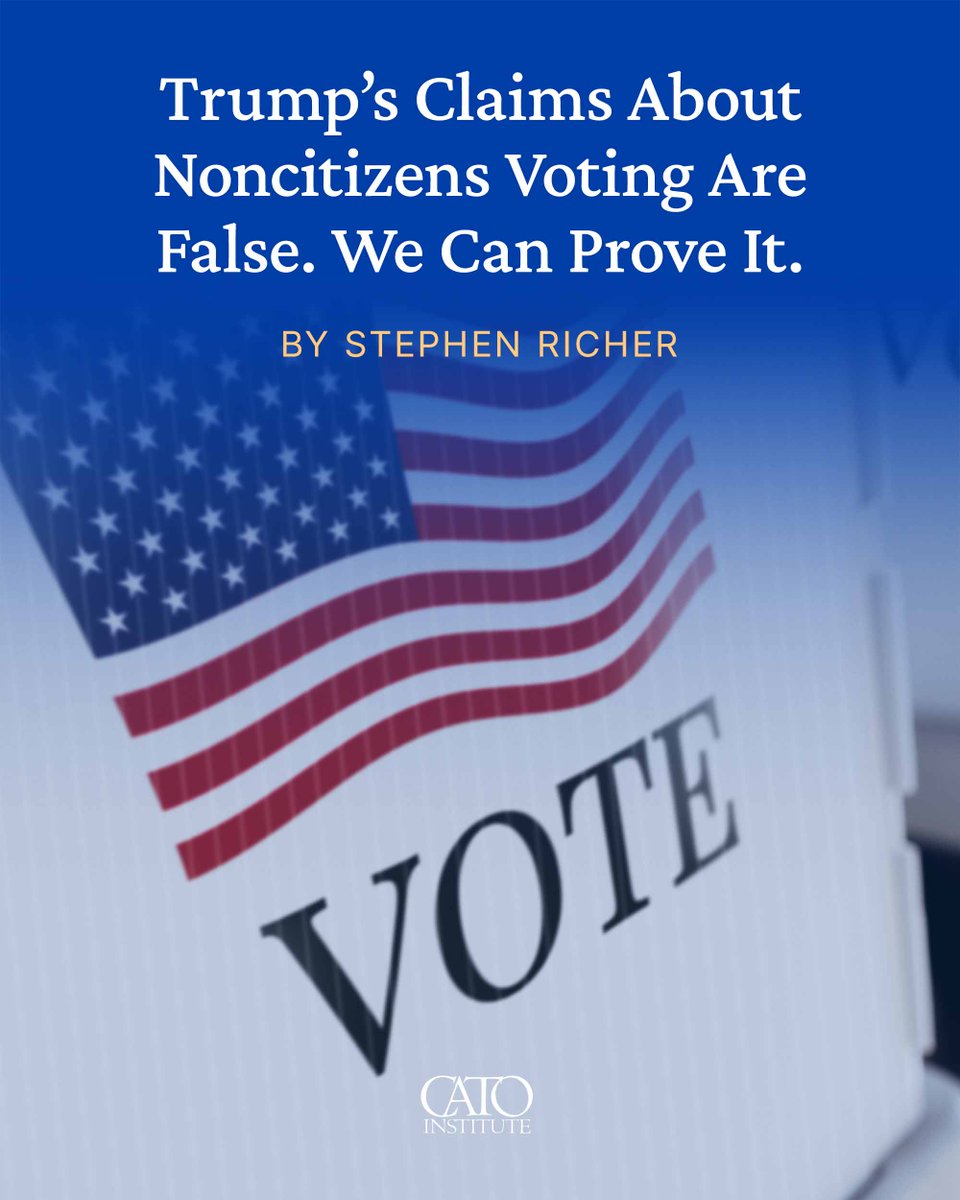
Audits in Utah, Idaho, Louisiana, Montana, and Georgia found a few dozen possible noncitizen registrants out of millions—and virtually no voting. Trump’s claim that noncitizens are swinging elections is false, says Cato’s @stephen_richer.
https://t.co/13ky0NqACJ
A retired Minneapolis couple who had guns pointed at them by ICE in a church parking lot.
"They were obviously not trained at all. I've known many police officers in my life. These people were right off the streets."
"They had the professional demeanor of criminals."
Trump is just the trigger.
There are deep historical forces:
The dismantling of the FCC fairness doctrine by Reagan, the resulting emergence of Fox News, conservative talk radio, and other propaganda outlets, the removal of guardrails for the influence of money in politics (e.g. Citizen United), the continuous reduction of taxes on high incomes, the ever-increasing wealth and income inequalities enabled by the above, the stagnation of working class income despite continued increase in productivity (and corporate profits), the total lack of social protection and benefits compared to other developed countries.
People in the middle class and below have been screwed for 40 years and are angry.
They should be angry at Republicans.
But the Republican party has managed to deflect their anger towards immigrants, non-Christians, non-whites, liberals, LGBT, China, academia, intellectual "elites", scientists, journalists, and non-existent scarecrows like Antifa.
I think one of the hardest truths for people to accept in the social media age is that individual human beings are a complex collection of beliefs, ideals, works, and actions, and that they change over time. They’re not just a simple binary—good/evil, right/wrong, left/right. Yet social media demands the sorting of everything and everyone into binaries that are unnatural. A person can make a great piece of art, then say or believe something you find offensive—that doesn’t make the art less worthy of consideration, nor the person your enemy. A person can claim to stand for something, while taking actions that seem hypocritical to that ideal—yet somehow make sense to them. A good person can fall from grace. A bad person can redeem themselves. Everyone’s on their own journey. Without knowing the path they’ve walked or the obstacles they’ve faced, trying to shove people into a box is foolish and counterproductive. Would you want to be judged for only your worst moments? The point is, genuine good or evil is an outcome of this journey—by the choices you make each day, you’ll approach one end or the other in time.
“Objective judgement, now, at this very moment. Unselfish action, now, at this very moment. Willing acceptance—now, at this very moment—of all external events. That’s all you need.” –Marcus Aurelius, Meditations 9.6
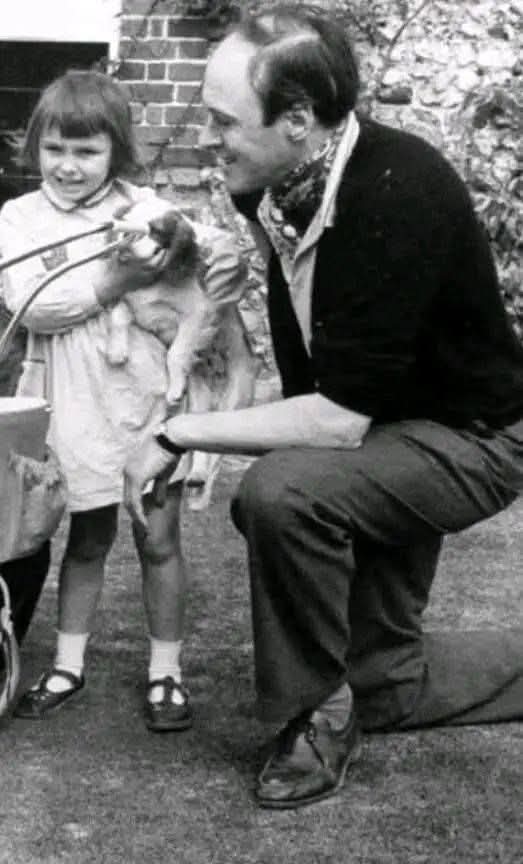
Roald Dahl on Measles: Olivia, my eldest daughter, caught measles when she was seven years old. As the illness took its usual course I can remember reading to her often in bed and not feeling particularly alarmed about it. Then one morning, when she was well on the road to recovery, I was sitting on her bed showing her how to fashion little animals out of coloured pipe-cleaners, and when it came to her turn to make one herself, I noticed that her fingers and her mind were not working together and she couldn’t do anything.
'Are you feeling all right?' I asked her.
'I feel all sleepy,' she said.
In an hour, she was unconscious. In twelve hours she was dead.
The measles had turned into a terrible thing called measles encephalitis and there was nothing the doctors could do to save her. That was...in 1962, but even now, if a child with measles happens to develop the same deadly reaction from measles as Olivia did, there would still be nothing the doctors could do to help her. On the other hand, there is today something that parents can do to make sure that this sort of tragedy does not happen to a child of theirs. They can insist that their child is immunised against measles.
...I dedicated two of my books to Olivia, the first was ‘James and the Giant Peach’. That was when she was still alive. The second was ‘The BFG’, dedicated to her memory after she had died from measles. You will see her name at the beginning of each of these books. And I know how happy she would be if only she could know that her death had helped to save a good deal of illness and death among other children.
Roald Dahl, 1986
Still processing the news about Rob Reiner and his wife Michelle. It made me think about the video he did with his father Carl Reiner, right before he passed away.
An anecdote I cherish is Mandy Patinkin once asked Rob Reiner what The Princess Bride was about. Reiner said it’s about a grandfather telling his grandson that the most important thing in in the world is love. I think that’s beautiful.
@matthewstoller When you say they would have to freeze their business while under review, does that mean they couldn’t make new film/tv for during that entire time - up to around 1 1/2 years?