Most software engineers are facing an identity crisis bordering on depression.
As CTOs aggressively evangelize tokenmaxxing, a class divide ensues.
The lazy. The lazy push code. They don't write it. They don't manually test it. They don't even read it. They're on autopilot. See Jira ticket, prompt for task, submit code. Many of them are barely on their computer the whole day. A comment on the PR asking why they did this? The lazy ask AI. A Slack message? The lazy ask AI. Need to prepare for standup? The lazy ask AI. As long as it sounds enough like them and isn't detected. Some of the lazy are even overemployed, and work multiple jobs. The lazy smart ones get away with this, and even rewarded. After all, software engineering for the lazy is just a dance to convince your colleagues you're smart and hard working.
The craftsmen. The craftsmen are tired. Very tired. 15 PRs in queue. Slack blowing up. The entire burden of review falls on the craftsman. The burden of understanding. They try. They work their way through the code, thoughtfully commenting to improve what ships. The response? A lazy: "That's a clever idea! You're absolutely right." with an incorrect change. It's fine, the craftsman says. I can fix them. They write a doc urging his colleagues to be better. The next day? 20,000 line PR to review. Day after day, their workload grows. Bugs seep into production. No one seems to care. Another round of AI is thrown at it. Their animosity to their colleagues rises. Eventually, they give up. It's just not what it used to be. The craft they loved is dead. They eventually wake up, a lazy.
This isn't all companies. Many companies are genuinely more productive, adopt the right set of principles and practices around AI development and have highly talented teams that trust each other. It tends to happen in bigger companies that are 10+yrs old with a higher talent variance. But it happens. A lot.
@dhh Optimize current code hot spots a little more and free up some server capacity? In the past adding hardware was cheaper, now those economics seem reversed. I remember you rewrote a certain hot path in early basecamp 1 (or campfire?) in C.
We're dealing with a major malicious attack on @rubygems right now. Signups are paused for the time being.
Hundreds of packages involved - mostly targeting us, but some carrying exploits. The team has been on this for hours. More details to follow once we're through it.
#ruby
The web was amazing prior to the reactification of everything 😄. Hotwire's Turbo framework is based on Chris Wanstrath's original Pjax concept (that powered GitHub in those early years). This kind of speed is still possible!
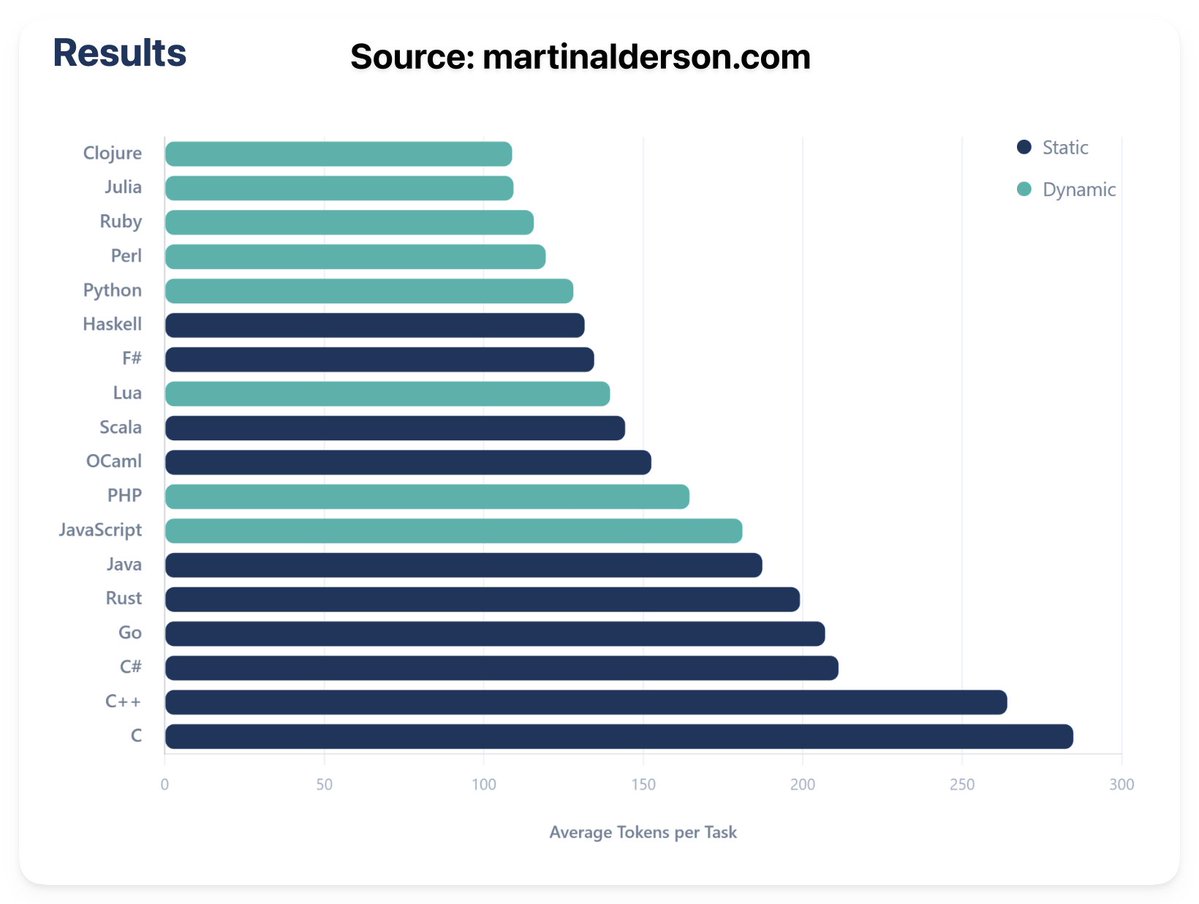
Seems like Ruby is pretty well positioned as a language that is token-efficient when used with LLMs.
Source "Which programming languages are most token-efficient?" by Martin Alderson https://t.co/MwBLJnI2Fg
@adamwathan Thank you for sharing.
Have you tried reaching out to OpenAI, Anthropic et al to become sponsors of tailwind? Could that be a viable revenue path?
Tailwind and its popularity make LLM’s more valuable, so I’d expect the model makers want Tailwind to thrive.
It is finally here: Tidewave now supports Claude Code and OpenAI Codex.
Tidewave unlocks the full-stack potential of your favorite coding agent by tightly integrating it with your web app and web framework at every layer, from UI to database. More info 👇
Not unity. Not unreal. Kitten space agency. Custom engine. Dust storm on Mars. Releasing for free, powered by contributions. Will have some tech firsts. See for yourself.
What is a Wave but a Thousand Drops?
I started my journey into video game development more than 25 years ago, back before there were any books or courses, back before there were engines to license, back before it even felt like a viable career.
My high school friends and I spent our summers in Burlington, Vermont not working for others, but working to try to create a video game. Every summer we tried and every summer we failed. Failed to have anything even remotely playable before the leaves developed their autumn colors and threatened to fall. But we kept trying, until the final summer after my college graduation in 1996, when just two of us worked through the fall and got our first game playable: an underwater (!) Star Control II clone called Aquarium Fighter. When I played it against my friend for the first time, and I evaluated the fun, controls and balance, I instantly became hooked. Hooked on making games. Hooked on making not-fun-things (but with potential), fun. That game helped me land my first professional game programming job which I used to pay off my credit cards, and I started iterating through the now-familiar cycle of making money to make games.
Now we’re halfway to 2026 and the world is a very different place. Anyone can learn how to make a game on YouTube using free engines. But making money off of making a game has become truly brutal. Like the world’s wealth distribution, it’s feast or famine. Game development is a career now, and it can be a very profitable one. And the artistic heights that games have reached is jaw-dropping: Starcraft. Braid. Limbo. Minecraft. League of Legends. Hades. Inscryption. I dreamed, but never thought, that the design, technology, art and business models of these games would one day be possible. Nor would I ever have believed that games could overtake Hollywood, even if they “weren’t art”.
Without realizing it, I started Unknown Worlds in 2001 by making the Half-Life mod Natural Selection. I worked with a distributed team back before a health crisis mandated it and we released not half-baked games, but documents describing level design and textures for making those levels, with the hope that the community would make maps. Lo and behold, they did. And we eventually hired some of those people, giving them careers at Unknown Worlds, however shaky the long-term prospects might be. I asked the community to send me $20 bills in the mail so I could keep working on the game, and you did. $18k was a tough salary to live off of, but I made it work and loved every moment of it. Like a design hook, but I was hooked on design. So hooked that I spent 10 years making the sequel.
There’s no way that could’ve happened without Max McGuire and his belief that the game was something special. With that, we made just enough money to get Subnautica into a stripped-down early access, which allowed us to find the fun. It didn’t have submarines, base-building, story or survival. But through the early access process, the community helped guide us forward until we found something we all loved. Something we loved to make and something that millions loved to play. There's no way it would've been as successful if we had waited until v1.0 before releasing it to the public.
I tell you all this because I want to tell you that game development is in my blood. So is iteration and early access. Our games have thrived because of it, and one of our games failed because we thought we knew better. I was most passionate about that game, and it fell flat. We worked on it 5 years before our early access, thinking that this time we were experts and we knew better. But fewer people played that game than even that humble Half-Life mod. Even though our studio had financial success in that period, and even though many fans fell in love with the game, it really wounded me and I needed time to heal. Sometimes it feels like I’ll never get over that one.
So with all this as background, I hope you can see why we were so excited to release Subnautica 2 into early access. Many of the folks that started the journey with us nearly 20 years ago have worked hard on Subnautica 2, and they're joined by some incredible new talent who were drawn to the studio by their love of the games and their passion for the way we've made them. We know (and love) that the expectations for this sequel are high. But the team has poured their hearts into the game and their dedication really shows. We helped pioneer early access and our community seems to love it just as much as we do. It’s the best way to develop a game like this.
So you can see why for Max, Ted, myself, the Unknown Worlds team, and for our community, the events of this week have been quite a shock. We know that the game is ready for early access release and we know you’re ready to play it. And while we thought this was going to be our decision to make, at least for now, that decision is in Krafton’s hands. And after all these years, to find that I’m no longer able to work at the company I started stings.
I want you to know that whatever happens to the founders, to the team and to the game, our priority is, and has always been, to make the best damned game we can for the best community in the world. With your Gorge plushies and your hand-drawn fish fan-art, and yes, your hard-earned dollars, you’ve supported us in every way, in every season, cold and warm, since Half-Life modding was even a thing.
And I also want you to know that this is not where the story ends.
-Charlie (“Flayra”)
@GregMolnar DigitalOcean is great, especially if you don’t mind managing servers. I’ve had an app on there for more than a decade. For something closer to Heroku, I go for https://t.co/vnRZXPYHui. Have you tried them?