@rnanclares sorry, I don't get your point. Remote sensing IS a complex matter. You have to learn it like playing the piano or operating forklifts. It includes electromagnetics, signal processing, mathematics... But if taught from scratch, anyone can use it, regarldess of the software.
@rnanclares that sounds rather like an organizational issue or lack of guidance to me, but of course it's hard to judge from a distance. In our courses, the "newbies" liked SNAP more than advanced users, which were already used to differently structured software packages (ERDAS, ENVI, PCI)
@rnanclares I really wonder what caused your passionate disapproval. We use SNAP in our introduction to remote sensing (exercises parallel to the lectures) and encourage the students to understand both theoretical and practical aspects of RS based on SNAP and and it works great since years.
Updated 2021 data on @MDPI special sssues.
8 journals have more than 1000 open special issues.
35 have more than 1 *per day*.
Sustainability has 8.7 *per day*.
This is predatory publishing.
Stand clear of them.
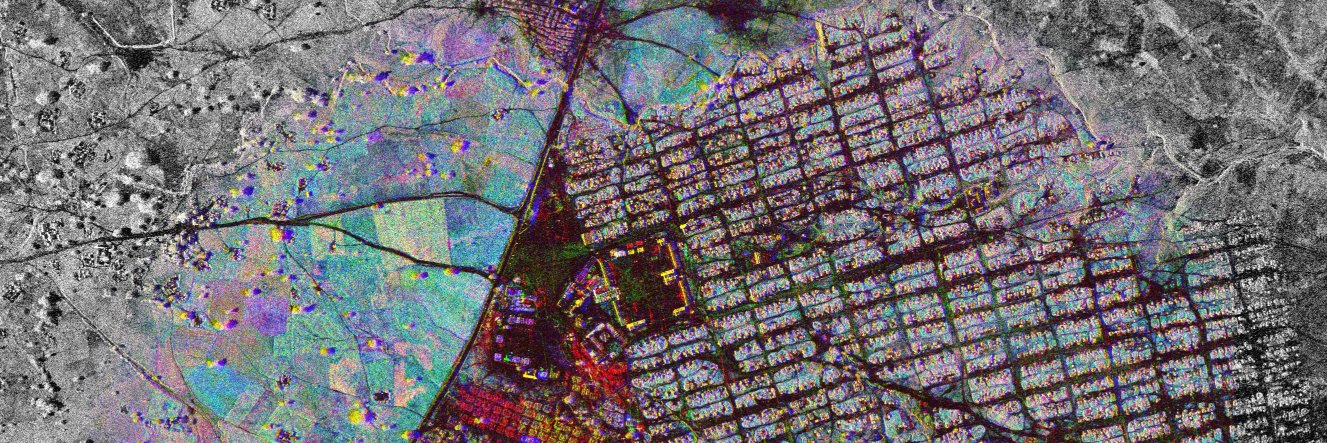
@capellaspace I have written my PhD on radar applications for humanitarian response and would really appreciate if you find a way to make this image openly accessible!
https://t.co/rN6oEqkiFg
@M_U_Pohl@0Schone dieses Journal warnt auf seiner Homepage (https://t.co/88jCWWj9ag) dick und fett vor den Gefahren des Coronavirus (welches Sie als konstruierte Lüge hinstellen), wirbt für das Tragen von Masken und verlinkt auf die Gesundheitshinweise der CDC. Könnte also was dran sein...
@M_U_Pohl@0Schone Starke Vorwürfe für jemanden, dessen wissenschaftliche Arbeiten allein auf der eigenen Homepage zu finden sind. Reichen Sie Ihre Thesen doch mal bei einem Fachjournal ein. Oder sind die auch alle korrupt?
@senko @DrSahlaAroussi How can you know? Peer-reviewing is necessary and works most of the time, but there are many reasons why good work (we don't know) receives bad reviews and vice versa.