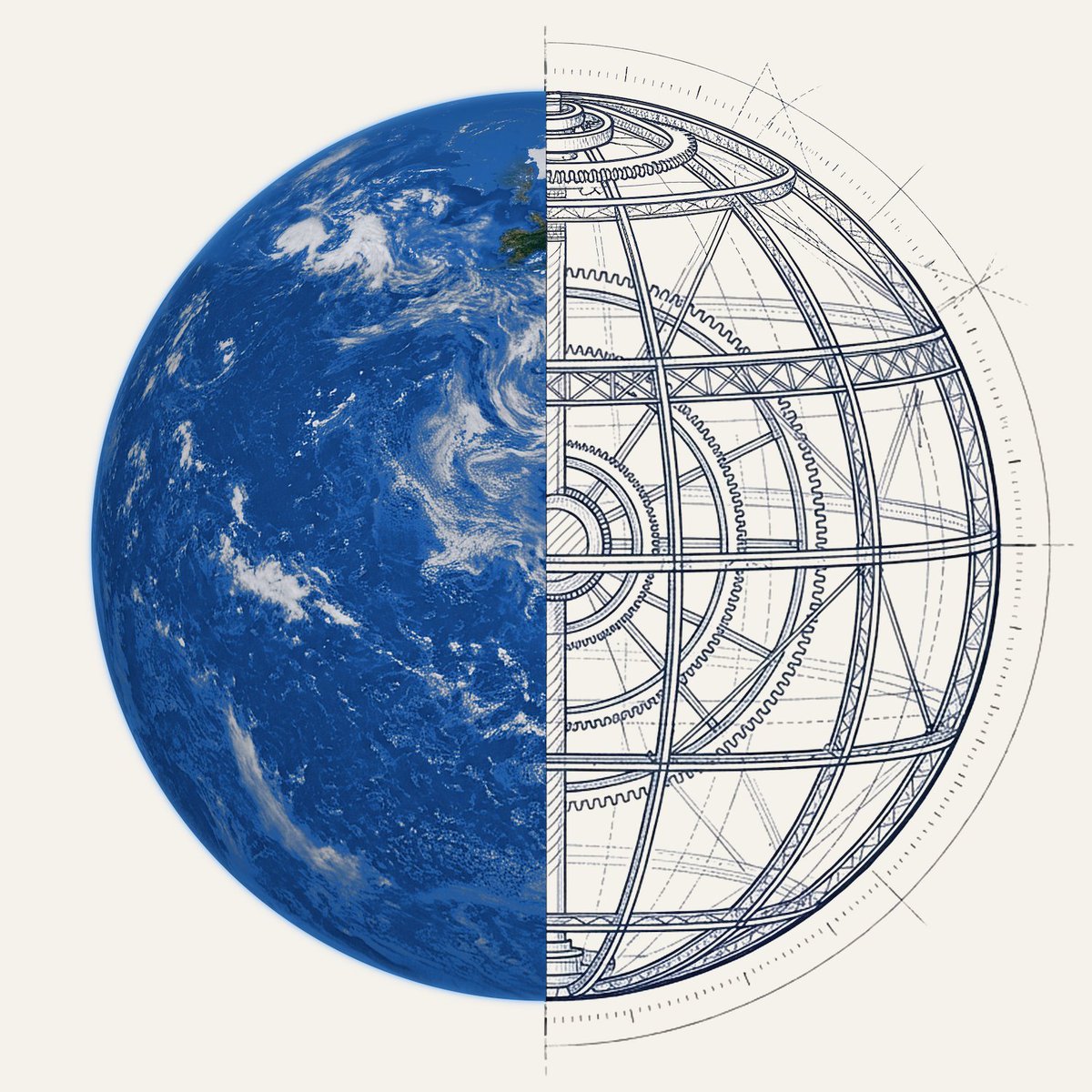
I asked Claude to populate a Civilization-style game map with real data from the US. Opus 5.5 downloaded and parse a ton of public data and 7 hours and 45K lines of code later... it works :)
- 31 real data sources including Census, BEA, BLS, EIA, NOAA, USGS, DoD, NPS, FAA, FEMA, CDC...
- Real elevation, land cover, GDP, jobs, power plants, mines, ports, airports, bases, parks, universities, freight flows, disasters; all reconciled onto one 25 km hex grid.
- The data is converted into Civilization language, e.g. Gold yield is GDP. A city's districts are its real industry specializations: San Jose gets a Campus, Detroit is "Motor city". Its citizens are its real workforce: 1 in 4 San Jose workers are engineers, coders or scientists, against 1 in 14 nationally. Wonders are chosen by published rules, such as national parks by visitor numbers and universities by R&D spending, etc etc.
- 19 lenses (income, degrees, faith, disasters…), a City View for 524 metros, and nine advisors plus an Explorer. The Explorer turns any column for any of 3,100+ counties into a table and scatter plot, linked to the map.
- Claude decided to skip a few states and territories sry
- Built using Claude Code desktop app, Opus 5.5 on medium and turning on ultracode.
It's deployed here: https://t.co/QMhmafXMj5 and the "?" has the source link too. I don't exactly know where I was going with this but it's really fun to browse and play with. Possibly it can be expanded or built into a game. I only have half of my weekly Claude quote left though so someone else will have to take over :D. Claude also made a trailer:
@kimmonismus I mean there are a lot of other things that still matter… but safety and alignment do also matter a lot.
Some prompt engineering or “garbage in, garbage out” joke to be made here.
If this rumors are true, it would explain why OpenAI and Anthropic are holding back their latest models:
Scott Aaronson says he's heard OpenAI or Anthropic may have found a way to factor large numbers in polynomial time.
Why this would be massive? RSA secures a huge chunk of the internet, and its whole security relies on factoring big numbers being impossible on normal computers. If an algorithm like this actually works on real key sizes, you wouldn't even need a quantum computer to break it. Fake software updates could pass signature checks, RSA-encrypted data could be read, and systems across the internet would have to migrate off RSA fast.
So yeah, something we expected might now actually happening.
Announcing Epochal! ✨
We believe the best measure of intelligence is the ability to predict the future. Doing so requires learning about the past and constantly working to be less wrong.
Today's AI has read almost everything and lived through almost nothing. It learns from the internet all at once, already knowing how each story ends.
We want it to live through thousands of yesterdays instead, one day at a time, the way people do.
So, we built Epochal Time Portal, the first true point-in-time environment with trillions of pages spanning 30 years of history, where agents can browse the Internet as it existed on a past date.
Today we’re releasing *SciNet: The Anatomy of Science*, an open database that maps every scientific discipline down to its research tasks.
It describes what scientists spend their time on and helps us understand where AI has potential to accelerate discovery. 🧵
Okay Frontier labs, listen up: I'm gonna help solve the model naming.
Neon? Astra? Fable?!? What do those mean.
Going forward you may use these five names:
big boi
regular boi
fast boi
cheap boi
security boi
Hi. We’re beginning to roll out the combined Chat and Work experience to a small group of Pro users to learn from feedback before we roll out more broadly.
Let us know what you think and where we can improve!
in celebration of Jensen’s return, i've brought a second seedbox online for @thepirateface - a 1:1 mirror of my existing open weight model archive, with twice-daily checks for models in demand
up next comes datasets + more privacy related initiatives
@athyuttamre I like on, but let it be a setting/option. within the context of the app, on makes sense, but within the context of an iphone call, it's less clear.
This is the proof of the Riemann Hypothesis.
175,187 files. 17 million lines of Lean. At 1:22, every dot is one file.
Unsolved for 167 years. A proof was announced Nov. 20 and certified by the Lean and Mathlib communities Nov. 21.
Perhaps problems arise when identity/ego is tied to some part of you that the machine can easily replace. To think that there is more to the essence of each of us than we have believed is cause for curiosity.
my philosophy is simple: if a machine can do something better than me, i will happily let it. period.
i want to be uniquely myself & let that uniqueness shine. i have no desire to compete with machines for the sake of preserving my ego.
if a machine can think like me, create like me, or perform better than me, so be it.
i don't need to be irreplaceable. i want to be free to be myself.
Okay. Look. Imagine how you'd have felt if an AI had just proved the Riemann Hypothesis.
Now you will predictably, at some point, get that news LATER, if we're not all dead before then. So you can go ahead and feel that way NOW, instead of acting surprised LATER.