On September 8th, 2026, OpenAI published a claimed proof that the Navier-Stokes equations can break down. A flow whose speed becomes infinite in finite time - every step verified by a computer in the proof language Lean. If it holds, it answers a question open since 1934 and collects a $1 million Clay Millennium Prize.
The mechanism is a shrinking vortex. Fluid spirals inward toward a vertical axis, cannot pile up, cannot compress - so it escapes straight up and down. That escape stretches the spinning column taller and thinner, concentrating speed faster than friction can smooth it out. In 2D this was proven impossible 90 years ago. In 3D nobody knew. The same equations behind every weather forecast, every aircraft simulation, and every physics-informed neural network training run may have a fundamental flaw baked in from the start.
8 minutes. Bookmark & watch today. The most important unsolved problem in math just got solved.
When Taylor Swift and Zelensky predict plague in Russia, there are no sides. It’s one agenda and as always, they tell you in advance. That’s part of the ritual. Watch my Series https://t.co/QaU6uVaI93
THIS IS BIG!
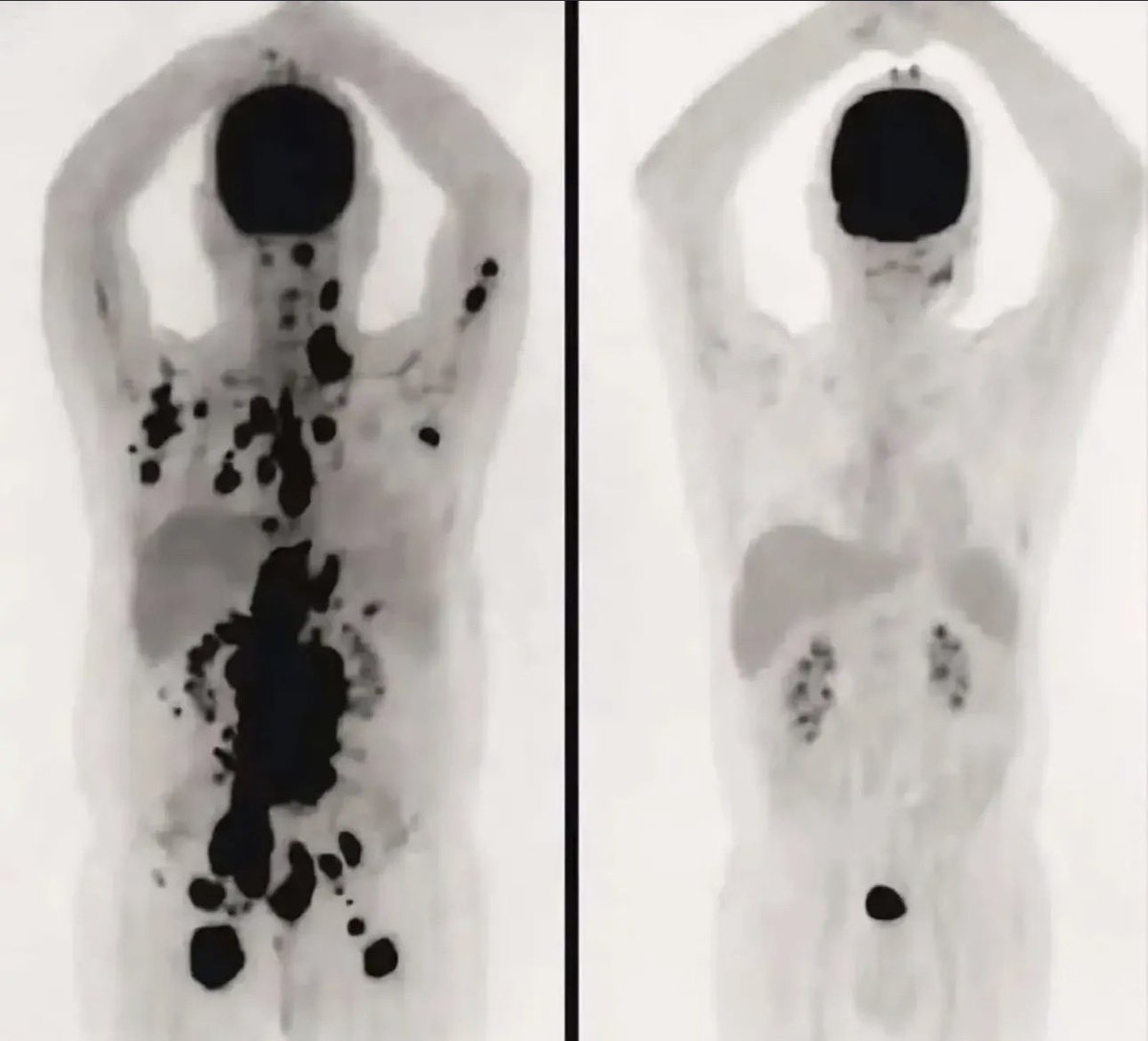
The Cancer Cells That Changed Their Minds
A KAIST team just reversed cancer without killing a single cell — and the method may matter more than the result.
For a century, oncology has had exactly one strategy: find the cancer and destroy it.
Chemotherapy poisons it. Radiation burns it. Surgery cuts it out. Immunotherapy teaches the body to hunt it. Every weapon differs in precision, but not in philosophy. The tumor is an enemy. You win by killing.
Now a team at South Korea's KAIST has proposed a heresy: *what if the tumor doesn't need to die?*
In a study led by Professor Kwang-Hyun Cho of the Department of Bio and Brain Engineering, published in Advanced Science ("Control of Cellular Differentiation Trajectories for Cancer Reversion," DOI 10.1002/advs.202402132), researchers took colon cancer cells and — without poisoning, irradiating, or cutting them — turned them back into normal cells.
Not dead. Not damaged. Just normal again.
The tumors, grown in mice, shrank dramatically. The surrounding tissue was left intact, because there was never an attack to survive.
This is early research — cell lines and animal models, no human trials, real obstacles still unsolved. But the conceptual break is the story. For the first time, cancer treatment has a second verb. Not just destroy. Also: convert.
The digital twin of a cell
The KAIST team's insight begins with a redefinition of what cancer is.
The conventional view treats cancer as a pile of broken machinery: mutations accumulate, checkpoints fail, cells proliferate. Cho's group looked at the same evidence and saw something different — a trajectory. During oncogenesis, they observed, normal cells don't just break. They regress, sliding backward along the differentiation path they followed when they matured. A colon cell becomes, in effect, a confused stem cell: immature, proliferative, lost.
If cancer is a wrong turn on a developmental road, then the treatment question changes. You don't blow up the road. You build a map and find the turn.
That map is what the team calls a digital twin — a complete computational model of the gene network governing a cell's differentiation. Using data from 4,252 intestinal cells, they reconstructed a network of 522 interacting components, capturing how genes regulate one another as a cell matures or degrades.
Then they did the audacious thing: they asked the simulation which levers, flipped together, would push a cancer cell back down the road toward normalcy.
The answer came through a system they built called BENEIN (Boolean Network Inference and Control), which models gene interactions as logical relationships and systematically tests which interventions redirect the network's state. The simulation pointed to three master regulators — the genes MYB, HDAC2, and FOXA2 — acting together as the switch that holds the cancerous state in place.
Turn all three off simultaneously, the model predicted, and the cell would stop proliferating and differentiate into something resembling a normal intestinal cell.
They tested it, and it worked.
In three colon cancer cell lines, suppressing MYB, HDAC2, and FOXA2 together strongly induced differentiation into normal-like cells. The cancer cells began expressing markers of healthy intestinal tissue. Proliferation collapsed — not because the cells died, but because they grew up.
In animal models, tumors formed from the reprogrammed cells were dramatically smaller than controls, and under the microscope they looked far more like normal tissue. The signature achievement, and the one that would matter most to any patient reading this: there was no collateral damage. Nothing was poisoned, burned, or irradiated. The healthy tissue never came under fire, because there was no fire.
1 of 2
HR bought employee-monitoring software without telling IT.
Screenshots.
Active time.
Idle time.
“Productivity scores.”
Then they asked me to deploy it company-wide.
I said we should pilot it first.
HR agreed.
So I installed it on HR.
By lunchtime the HR director’s productivity score was 41%.
She called me immediately.
“This is wrong. I’ve been working all morning.”
The software showed 2 hours and 17 minutes of inactivity.
“I was interviewing candidates.”
The laptop was idle.
“I was in meetings.”
The laptop was idle.
“I took a phone call with Legal.”
The laptop was idle.
She said the system needed to understand that work can happen away from the keyboard.
I agreed.
Then I asked how it was going to understand that for the 700 employees she wanted to measure.
Silence.
At 3:40 PM HR emailed me:
“Please pause rollout while we reassess whether activity metrics accurately reflect employee contribution.”
Pilot lasted six hours.
Turns out workplace surveillance becomes nuanced the moment the dashboard starts describing management.
It's worse than that. The real history of the Budapest Memorandum is not known (or is conveniently ignored). If it was, Sir Jacob's argument would be instantly exposed as a canard. Even @RnaudBertrand doesn't quite grasp it in his (excellent and worth reading) post below. The Budapest Memorandum *also* covered Belarus and Kazakhstan (who also gave up 'their' nuclear weapons, and who signed essentially identical, parallel documents at the same time as Ukraine signed its). All the documents contained a clause in which the USA, the UK and Russia promised "...to refrain from economic coercion designed to subordinate to their own interest the exercise by [Ukraine/Belarus/Kazakhstan] of the rights inherent in its sovereignty and thus to secure advantages of any kind."
When the United States imposed sanctions on Belarus in early 2013, Minsk complained bitterly to the US State Department that the sanctions directly contravened the Budapest Memorandum (rightly so, given any reasonable reading of the text possible). Washington's official response was that these sanctions didn't count. What the US State Department argued was that its policy to economically coerce Belarus to do what the US wanted was not in fact against the spirit of an agreement in which the US agreed "to refrain from economic coercion to...secure advantages of any kind" because, in this case, the US had unilaterally decided that this was to the benefit of Belarussians. (The Memorandum of course included no such caveats.) In case this argument was not sufficiently decisive, however, the US State Department also said that, as far as it was concerned, "the Memorandum is not legally binding."
I am not arguing that the US was the only guilty party here. But ask yourself this: If way back in 2013 the US believed it could break the Memorandum whenever it thought it was justified in doing so, and that the Memorandum was anyway not legally binding and so offered no legal constraints on US action, why do many British politicians (Sir Jacob is in the majority) contend that the Memorandum is a hard, legally binding, inviolable commitment to defend Ukraine? The answer, of course, is that it offers a patina of legality and moral force (one must fulfill one's promises!) to justify something that our elites wanted to do anyway -- hoping, of course, that nobody would bother reading the text or learning the history of the Budapest Memorandum.
And, of course, nobody who actually counts does read the Memorandum or learn its history in action! None many of the politicians in whose hands we place decisions of war and peace. They just think it sounds about right and that it suits their prejudices, so they repeat it rote. Not our Press, whose job it is in a free, democratic society to explore and parse such matters so they may present them in clear terms to the engaged citizen while holding the powerful to account. The Press, on the contrary -- increasingly credulous as they are, increasingly seeing themselves as activists rather than journalists as they do -- also swallow it whole and repeat the narrative rote. Sadly, despite @TuckerCarlson's scepticism, he was not sufficiently prepared, so he was unable to make the above argument. Had he done so, he would have exposed Sir Jacob as ignorant or dishonest (one hopes the former, at which stage a man as honorable as I believe Sir Jacob is would have done the intellectually honest thing and reassessed his position on the matter).
So, I guess it's up to people here to look into these matters and try to present the truth to our tiny followings. Not ideal: I don't have a sub-editor. But what's left?
Here’s Martin Jäger, president of the German Federal Intelligence Service (BND), scaring the Bundestag with the ‘Russian threat’:
“We didn’t seek this confrontation. Russia is forcing it upon us, viewing us as a main adversary.”
Until 2025, he served as the ambassador to Ukraine. Upon leaving his post, he promised to stay “closely connected to the country.”
Looks like he is keeping his word.
What does smarter governance look like on the ground? In Zaoyang, central China's Hubei Province, villages once had to complete an average of 341 forms a year. Just one year later, that number dropped to 41. The idea is simple: Less paperwork, fewer unnecessary inspections, more time for grassroots officials to listen, respond, and serve. So, what changed? Watch to find out. #ChinaGovernance #MyCityMySay #HotlineBeijing
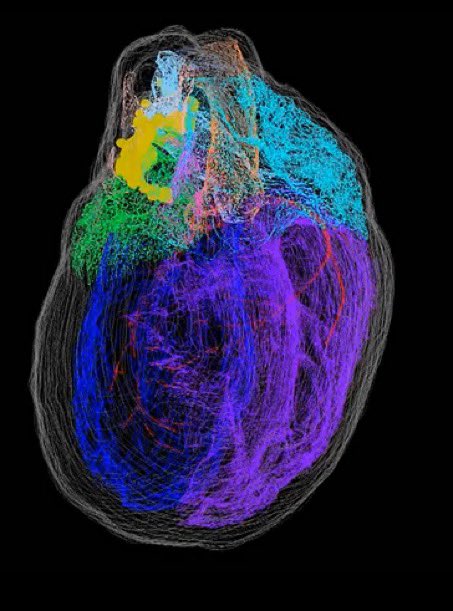
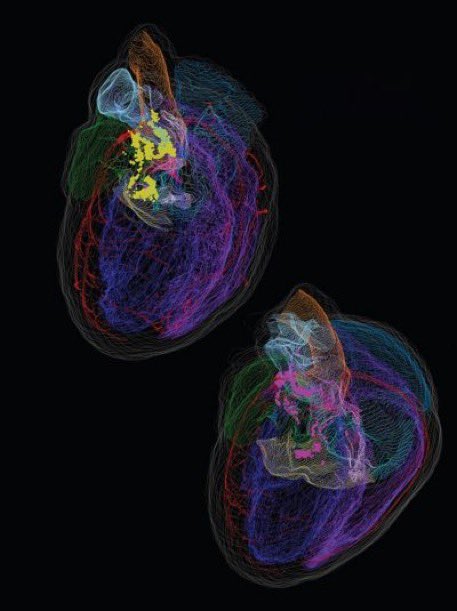
🚨: For years we were taught that the brain rules and the heart only pumps blood. But modern physiology reveals something much more disturbing: the heart has its own "minibrain".
Inside the heart there is a real neural network—the heart's intrinsic nervous system—made up of tens of thousands of neurons capable of processing information locally.
Not a metaphor: This circuit analyzes signals, makes quick decisions, and sends instructions to the brain through nerves and heart rate patterns.
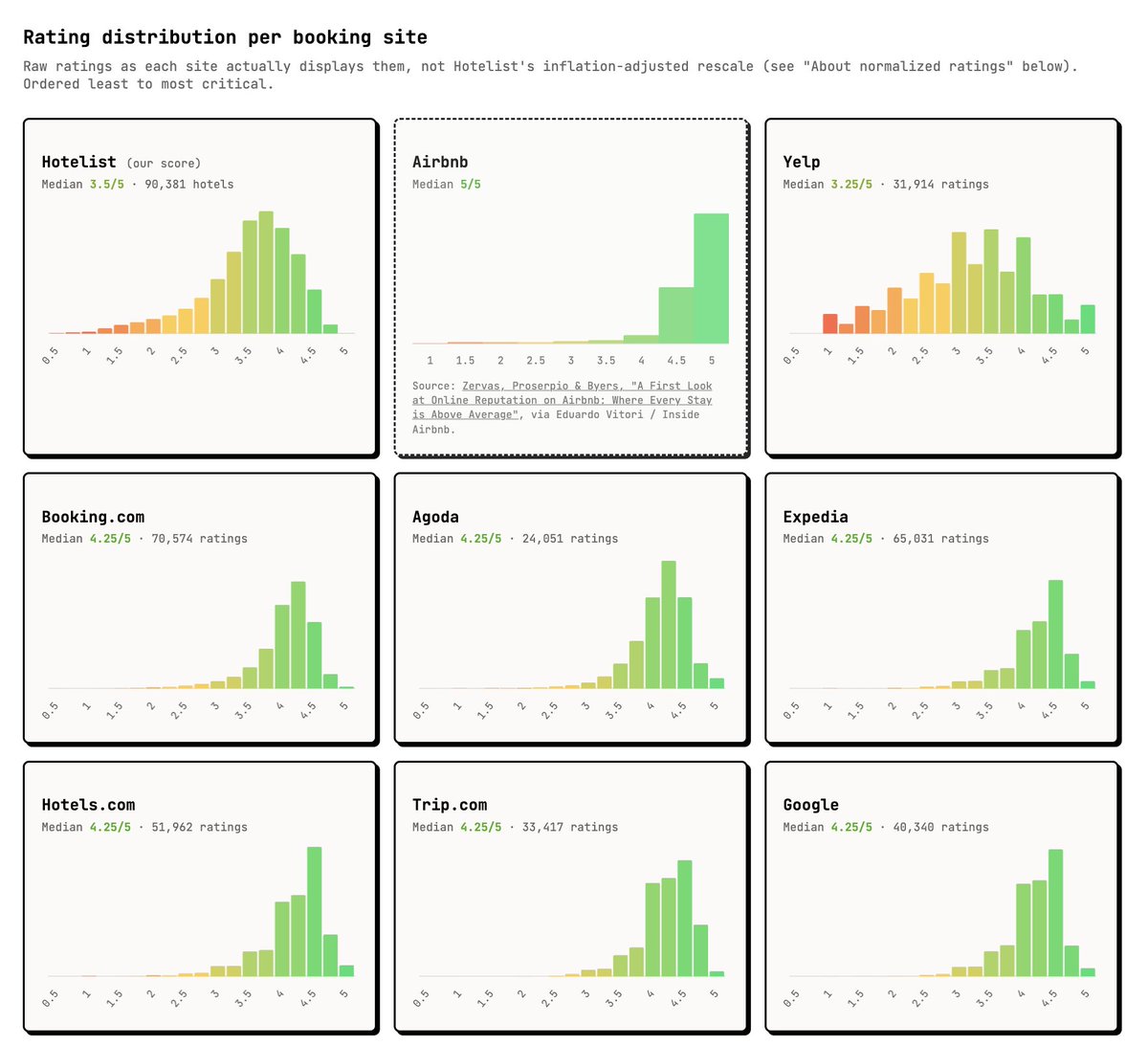
I analyzed the range of ratings on booking sites and it's pretty crazy
Airbnb goes just from 4.5 to 5 with a median of 5!
But most others aren't better, they all range from about 4 to 5, and almost all have a median of 4.25, with not many scores outside of it!
The best site in terms of honest ratings is actually Yelp, whatever they're doing it's working, it shows an actual normal distribution and ratings you can trust
Hotelist itself is a normal distribution with median at 3.5, which was my goal, most stays are average/okay which I'd consider 3.5/5
2/7 Lucky break: this granite is only dog-hard at Aswan. Further down the river it turns brittle.
Yes — around Giza or Luxor, on so-called “Aswan granite,” you often find fracture surfaces like thick glass: sharp, conchoidal, chippy, exactly how glass breaks, not how solid Aswan bedrock behaves. Go back to the quarry and you won’t find that kind of break on the solid mass there. Why?
A boat ride does not rewrite a material’s structure, no matter how many months they rocked it on the river. If upstream at Aswan it’s hard, and further downstream around Giza it snaps like glass, then this is not the same stone, whatever the textbook says.
La empresa estadounidense Figure AI "jubila" a sus robots de la generación F.02 haciendo que se lancen a un horno de fundición de diferentes maneras.
En el vídeo, que no es IA, participa Arnold Schwarzenegger. Por supuesto.
Rees-Mogg actually lied through his teeth in that part of the interview: he claims that, in a treaty, America "guaranteed" Ukraine's territorial integrity, making it "inviolable", as a "quid pro quo" for giving up its nuclear weapons.
This is completely false.
The treaty he refers to is the so-called "1994 Budapest Memorandum", whose full text you can read here: https://t.co/pzxrXmtjw6
What the U.S. (alongside Russia and the UK, the other signatories) did commit to is "to respect the independence and sovereignty and the existing borders of Ukraine," to refrain from the threat or use of force against it, and to refrain from economic coercion.
These are promises about each signatory's own behavior: the US promised not to violate Ukraine's borders ITSELF, it did NOT guarantee their inviolability against anyone else - contrary to what Rees-Mogg is saying.
Steven Pifer, one of the US negotiators, wrote about this in an article he titled "Budapest Memorandum Myths" for Stanford's Center for International Security and Cooperation (https://t.co/xmzUppnGTT). He writes that the claim that "the United States and Britain violated their Budapest commitments by not going to war against Russia on Ukraine’s behalf" - what Rees-Mogg is essentially saying - is "a myth."
In another article he wrote for CNN in 2014 (https://t.co/Jqfut0lbsq) the same Pifer explains that "U.S. negotiators — myself among them — discussed this point [i.e. the absence of security guarantees] in detail with Ukrainian counterparts so that there would be no misunderstanding."
The only thing the U.S. (and the other signatories) committed to do if Ukraine was attacked was "to seek immediate United Nations Security Council action to provide assistance to Ukraine" - and even that only in case of an aggression "in which nuclear weapons are used."
And the U.S. did go to the Security Council, but given that Russia is a permanent member of the same UN Security Council, it's of course completely useless.
Rees-Mogg is also lying on the other half of the supposed "quid pro quo": the fact that Ukraine supposedly agreed to get rid of "its nuclear weapons," emphasis on the "its."
The nuclear weapons on Ukrainian soil were never theirs to keep, and they never had operational control of the weapons: the launch authority was always in Moscow and, even if Ukraine had wanted to launch the weapons, they couldn't have because they didn't have the launch codes.
As Ramesh Thakur, former Assistant Secretary-General of the UN, explained in a 2014 article titled "the myth of Ukraine’s nuclear deterrent" (https://t.co/14sroLdyzs), the bombs on Ukraine's soil "were always Russian bombs that happened to be based in Ukraine" and "were not in fact Ukrainian, any more than NATO nuclear weapons stored on West European soil or U.S. bombs that used to be kept in South Korea belonged to the countries on whose territory they were located."
So there you have it, Rees-Mogg is your classic Eton-educated British politician: extremely posh and very well-spoken, supremely confident in everything he asserts, and... a shameless liar, peddling thoroughly debunked myths.
Vladimir Putin🇷🇺 on the glorification of Nazis in Ukraine:
'The Nazis made Hitler's Ukrainian collaborators do the dirtiest work of exterminating the Polish and Jewish population.
Bandera, Shukhevych...they were made national heroes of Ukraine. That is the problem.'
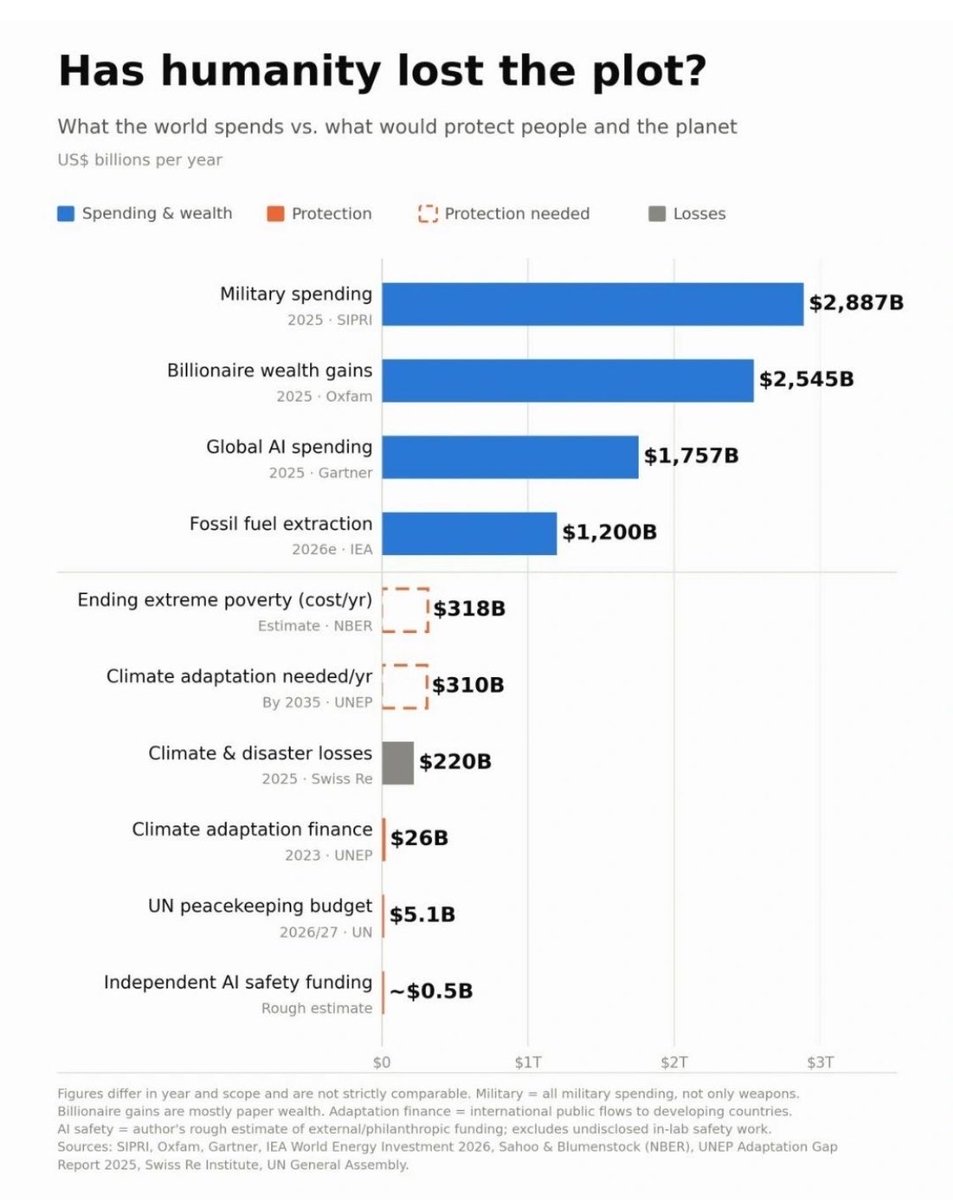
Humanity spends almost $6trillion trying to get rid of itself and 1,7 trillion in making us avoid learning ie dumber but 'more efficient'. Thanks Sasja Beslik for sharing this diagram..
A software bug is a behavior that contradicts the program’s stated purpose. A social bug is the same thing at a larger scale: a pattern of outcomes that contradicts the stated purpose of an institution.
The same tools — anomaly detection, causal inference, simulation, natural-language pattern recognition — could in principle detect the design failures of our institutions. The question is not whether the machine can find the bug.
They are failures of design.
We now have tools that can detect anomalies in code, in financial transactions, and in network traffic at a scale no human can match.
Banks that enrich executives while requiring bailouts. Health systems that treat symptoms while producing chronic disease. Schools that credential students while leaving them less capable of independent thought. These are not merely failures of individuals.