All this chaos.
Just to protect the Dutertes and their allies.
The country has sacrificed too much—our institutions, our democracy, and far too many lives—for the survival of people who believe they are above accountability.
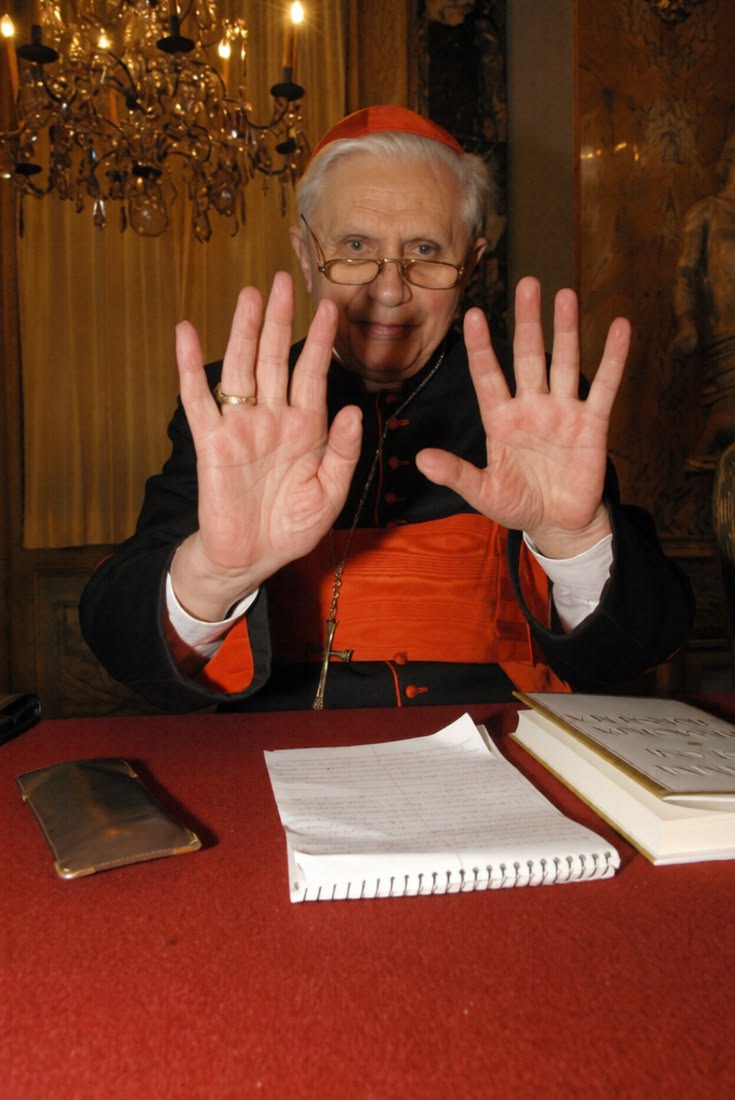
I had foreseen then, if one may put it that way, that the Church would become small, that one day she would become a Church comprising a minority of society and that she could then no longer continue with the large institutions and organizations that she has but would have to organize herself on a more modest scale. In that connection I had thought that when that happened, then, next to those priests who are ordained as young men, proven men from the professions could also advance, that, in any case, diverse forms of office would take shape. I think that this was correct insofar as the Church has to adjust herself gradually to a minority position, to another position in society. Also correct was the prediction that in particular unsalaried ministries will probably be on the rise. To what extent, then, there will be viri probati (“proven men” who come from another profession) is another question. I mean, the whole ancient Church lived on the vir probatus. Since there were not yet seminaries, she generally called men to the priesthood who had had another profession. However, from about the second or third century on they subsequently renounced marriage. Let’s leave open what forms will develop in this area. But the irreplaceability of the priesthood and of the deep inner connection between celibacy and priesthood are constants.
—Pope Benedict XVI
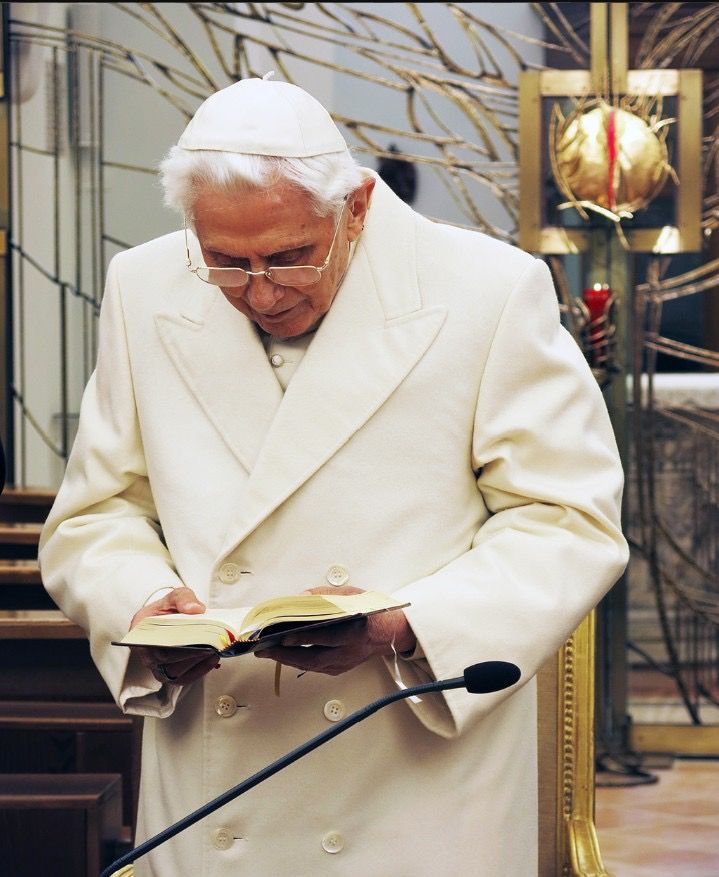
Together with the magisterial role of the primacy, the mission of Peter's Successor for the whole Church entails the right to perform acts of ecclesiastical governance necessary or suited to promoting and defending the unity of faith and communion; one of these, for example, is to give the mandate for the ordination of new Bishops, requiring that they make the profession of Catholic faith; to help everyone continue in the faith professed. Obviously, there are many other possible ways, more or less contingent, of carrying out this service of unity: to issue laws for the whole Church, to establish pastoral structures to serve various particular Churches, to give binding force to the decisions of Particular Councils, to approve supradiocesan religious institutes, etc. Since the power of the primacy is supreme, there is no other authority to which the Roman Pontiff must juridically answer for his exercise of the gift he has received: "prima sedes a nemine iudicatur".[42]This does not mean, however, that the Pope has absolute power. Listening to what the Churches are saying is, in fact, an earmark of the ministry of unity, a consequence also of the unity of the Episcopal Body and of the sensus fidei of the entire People of God; and this bond seems to enjoy considerably greater power and certainty than the juridical authorities — an inadmissible hypothesis, moreover, because it is groundless — to which the Roman Pontiff would supposedly have to answer. The ultimate and absolute responsibility of the Pope is best guaranteed, on the one hand, by its relationship to Tradition and fraternal communion and, on the other, by trust in the assistance of the Holy Spirit who governs the Church.
—Cardinal Ratzinger
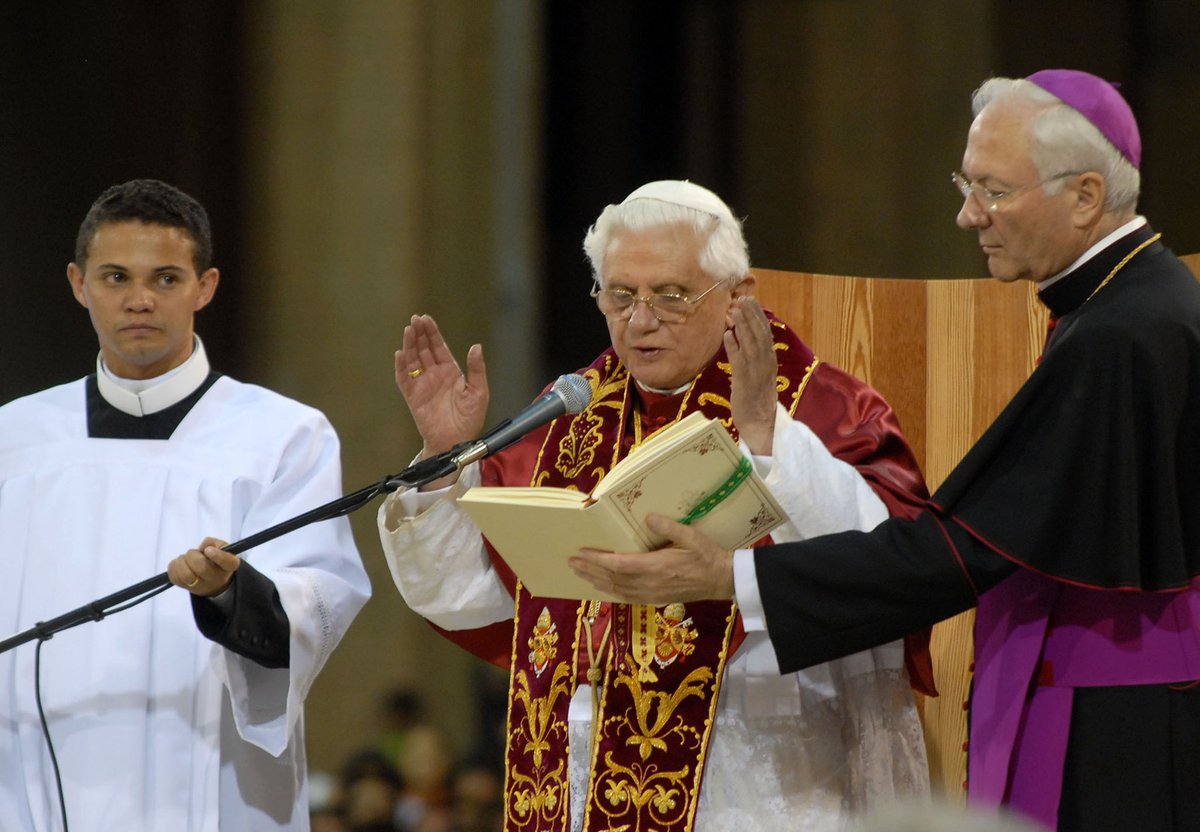
Dancing is not a form of expression for the Christian liturgy. In about the third century, there was an attempt in certain Gnostic-Docetic circles to introduce it into the liturgy. For these people, the Crucifixion was only an appearance . . . Dancing could take the place of the liturgy of the Cross, because, after all, the Cross was only an appearance. The cultic dances of the different religions have different purposes — incantation, imitative magic, mystical ecstasy — none of which is compatible with the essential purpose of the liturgy as the "reasonable sacrifice." It is totally absurd to try to make the liturgy "attractive" by introducing dancing pantomimes (wherever possible performed by professional dance troupes), which frequently (and rightly, from the professionals' point of view) end with applause. Wherever applause breaks out in the liturgy because of some human achievement, it is a sure sign that the essence of liturgy has totally disappeared and been replaced by a kind of religious entertainment. Such attraction fades quickly — it cannot compete in the market of leisure pursuits, incorporating as it increasingly does various forms of religious titillation.
—Cardinal Ratzinger
As he prepares for the historic meeting of the first woman Archbishop of Canterbury with Pope Leo XIV, Kurt Koch, the phlegmatic Swiss cardinal who leads the Church’s unity office, explains to Daniel Beurthe, “The Catholic Church cannot recognise Anglican ordinations, as decided by Pope Leo XIII. This applies regardless of whether the person ordained is a man or a woman.”
https://t.co/DFUkChRD2L
“𝗠𝗮𝘁𝗮𝗴𝗮𝗹 𝗻𝗮 𝗮𝗸𝗼𝗻𝗴 𝗻𝗮𝗴𝗱𝗲𝘀𝗶𝘀𝘆𝗼𝗻. 𝗞𝗮𝘆𝗼 𝗹𝗮𝗻𝗴 𝗻𝗮𝗺𝗮𝗻 𝗮𝗻𝗴 𝗺𝗮𝘆 𝗮𝘆𝗮𝘄 𝘀𝗮 𝗱𝗲𝘀𝗶𝘀𝘆𝗼𝗻 𝗸𝗼… 𝗗𝗶𝘁𝗼 𝗻𝗮 𝗮𝗸𝗼 [𝘀𝗮 𝗡𝗮𝗴𝗮] 𝗺𝗮𝗴𝗿𝗲-𝗿𝗲𝘁𝗶𝗿𝗲.”
After saying she’s done with national politics, Naga City Mayor Leni Robredo urged the public to end the "savior" mentality and look toward a new generation of leaders. | via @punongmhistrado
Cardenal Arinze: “el sacerdote tiene un papel clave en la celebración de la Misa, pero si se comporta mal, si introduce en la Misa partes que no están aprobadas, o elimina partes que se aprueban, hace daño a la Iglesia”











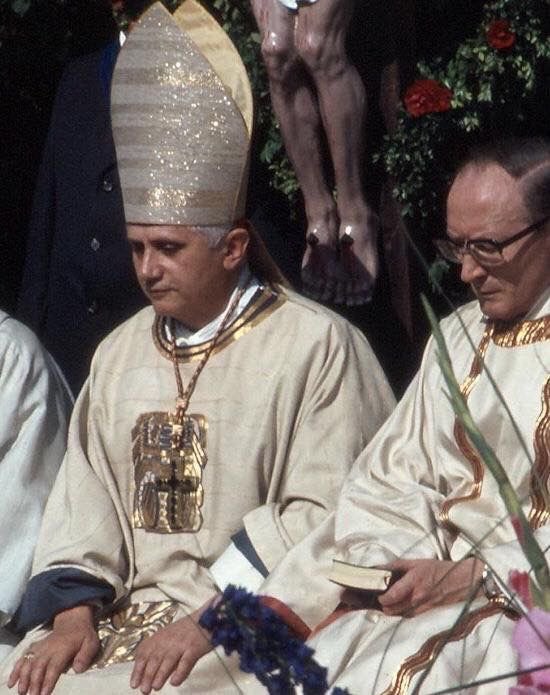
![coworkeroftruth's tweet photo. Together with the magisterial role of the primacy, the mission of Peter's Successor for the whole Church entails the right to perform acts of ecclesiastical governance necessary or suited to promoting and defending the unity of faith and communion; one of these, for example, is to give the mandate for the ordination of new Bishops, requiring that they make the profession of Catholic faith; to help everyone continue in the faith professed. Obviously, there are many other possible ways, more or less contingent, of carrying out this service of unity: to issue laws for the whole Church, to establish pastoral structures to serve various particular Churches, to give binding force to the decisions of Particular Councils, to approve supradiocesan religious institutes, etc. Since the power of the primacy is supreme, there is no other authority to which the Roman Pontiff must juridically answer for his exercise of the gift he has received: "prima sedes a nemine iudicatur".[42]This does not mean, however, that the Pope has absolute power. Listening to what the Churches are saying is, in fact, an earmark of the ministry of unity, a consequence also of the unity of the Episcopal Body and of the sensus fidei of the entire People of God; and this bond seems to enjoy considerably greater power and certainty than the juridical authorities — an inadmissible hypothesis, moreover, because it is groundless — to which the Roman Pontiff would supposedly have to answer. The ultimate and absolute responsibility of the Pope is best guaranteed, on the one hand, by its relationship to Tradition and fraternal communion and, on the other, by trust in the assistance of the Holy Spirit who governs the Church.
—Cardinal Ratzinger](https://pbs.twimg.com/media/HHR3gpGacAARx8w.jpg)