Google has started rolling out new Generative AI reports in Search Console.
The key shift is not more clicks, but visibility: pages, countries, devices and dates for AI Overviews and AI Mode.
Early, limited, worth watching.
#SEO#GSC#AISearch#GenerativeAI#SearchVisibility
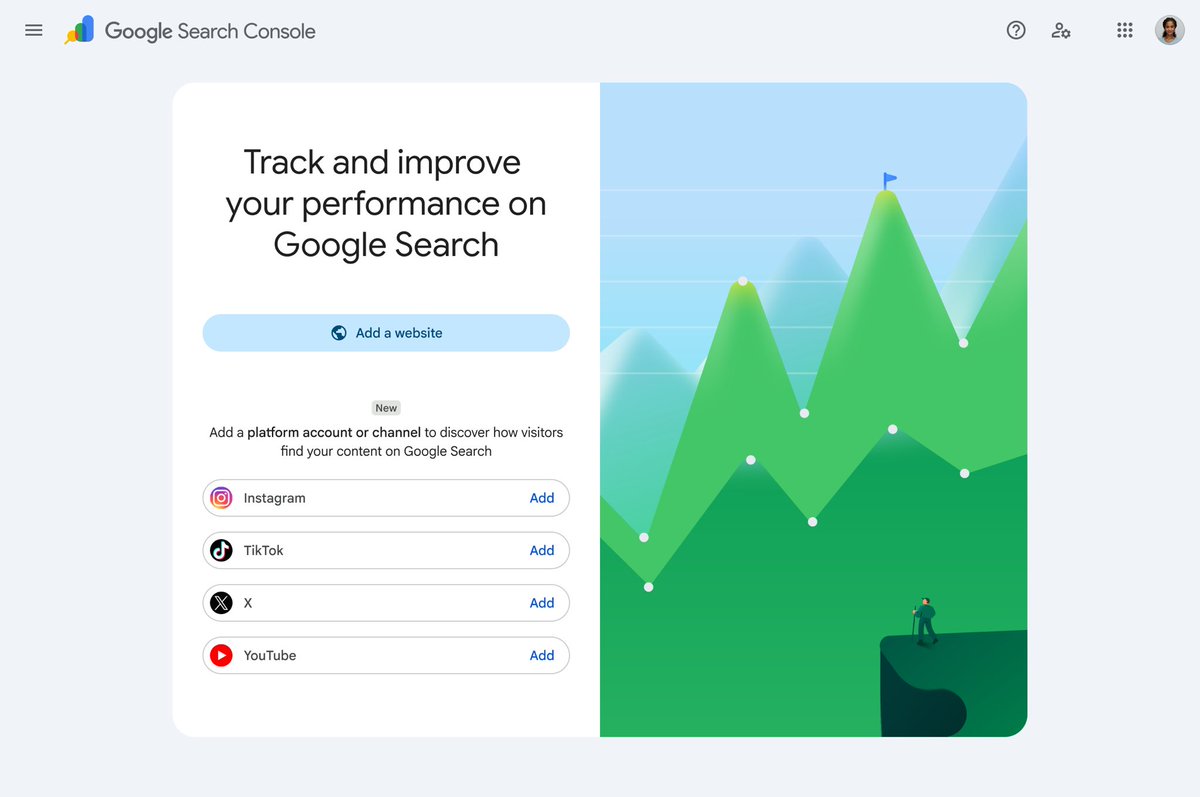
Google adding Search Console “platform properties” for Instagram, TikTok, X and YouTube is a useful shift.
Social and video posts are no longer just distribution. They are becoming measurable Search assets.
For creators without a site, this matters even more.
Ads are rolling out rapidly in Google's AI Mode!
There are some that were announced, but not all are showing just yet... Here are 5 AI Mode ad formats that are now live and how they work.
Read my latest article here (a running list of AI Mode ad types): https://t.co/jvTNgus1nX
We’ve received notice that the Department of Commerce has lifted export controls on Claude Fable 5 and Mythos 5.
We'll begin restoring access tomorrow, and will share an update soon.
We’re grateful to our users for their patience, and to everyone who worked with us on redeploying the models.
I’ve spent the last 18 months doing AI SEO / GEO / AEO for B2B SaaS companies... and here's the 10 biggest things I've learned:
1. Most companies do not have an "AEO problem." Most do not have an unfixable technical SEO problem either. They have a positioning, category alignment, and market validation problem.
2. I've spent too many hours in meetings explaining how the old-world SEO model is dying (clicks and rankings) and the new model is about being selected for AI-powered answer recommendations.
3. Brand selection depends on whether the market, your website, your customers, and third-party sources all tell the same story about why your brand belongs in the answer. This is not about llms.txt or paragraph chunking.
4. Bulldozing your way to the top with listicles and backlinks may help you rank, but not get recommended. Especially if your brand doesn't belong in that category.
5. The best AEO strategy starts with positioning and category alignment.
Here is the proper diagnostic framework for: “What's our AEO strategy?”
Do we have clear product positioning?
Do we have messaging that's aligned to the category?
Does the website make our category alignment obvious?
Do we have a BOFU content strategy aligned with the desired category?
Do we have an external authority gap?
6. AI referral traffic is negligible for most B2B SaaS companies.
For most of the companies I work with: ChatGPT / Perplexity / Gemini / Claude, etc. is a tiny fraction compared to Google.
It's common to see a range of 5% (AI) vs 95% (Google).
Why? Because AI SEO eliminates top of funnel, whereas traditional SEO sends mostly informational traffic.
7. Visitor to page conversion rates from AI referral traffic tend to be higher than traditional Google traffic.
This is because of personalization, long-tail BOFU intent, and the elimination of TOFU intent.
8. There's a "Dark SEO" funnel emerging where buyers are shortlisting vendor options with AI search, verifying the brands they want to evaluate with Google search, and then converting directly on the website from branded search much later in the buying process.
9. Off-site authority matters, but the GEO vendor claims are getting out of control. I'm skeptical on things like: “90% of AI visibility comes from third-party sources.” etc.
Claims like these are confusing and pulled out of context. This causes marketers to have the wrong reactions and think irrationally.
10. Buying AEO tools is not a strategy. I have personally worked with companies that purchased AEO tools with no strategy in-place. The mere fact that a tool was purchased only buys them time with the board... "we're working on it" ... but it's not a real strategy.
Bonus: There's a "research" study out there which fits any narrative you want to push. Be wary. And be skeptical.
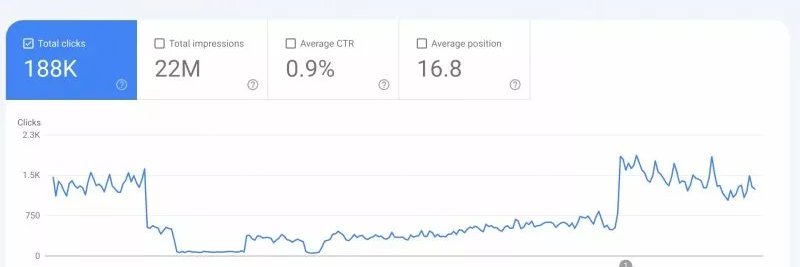
Programmatic SEO + scaling to additional countries/languages + YMYL category can be risky. Interesting case here. Tanks in visibility and now is barely indexed. No manual action from what I understand.
The US government, citing national security authorities, has issued an export control directive to suspend all access to Fable 5 and Mythos 5 by any foreign national, whether inside or outside the United States, including foreign national Anthropic employees.
The net effect of this order is that we must abruptly disable Fable 5 and Mythos 5 for all our customers to ensure compliance.
Access to all other Claude models is not affected.
We apologize for this disruption to our customers. We believe this is a misunderstanding and are working to restore access as soon as possible.
Read our full statement: https://t.co/bwn0sximKZ
Google has started rolling out new Generative AI reports in Search Console.
The key shift is not more clicks, but visibility: pages, countries, devices and dates for AI Overviews and AI Mode.
Early, limited, worth watching.
#SEO#GSC#AISearch#GenerativeAI#SearchVisibility
UK site owners can now start controlling whether their content appears in Google’s generative #AISearch features, including #AIOverviews and #AIMode.
Useful? Yes.
But opting out by default may push already declining visibility even further down.
Test first, block later.
Big Tech companies like Apple and Google have been given three months to activate built in safeguards on smartphones and tablets to detect and block nude images for children.
This will prevent predators from exploiting and abusing victims through their devices, as well as stopping children accessing pornography.
If companies do not act within three months, the government will bring forward legislation to force them to activate the technology.
This will include fines for companies and, as a last resort, we are exploring criminal liability for tech bosses who fail to comply.
91% of online child sexual abuse reports recorded in 2024 contained self‑generated content. Children as young as five are being groomed, manipulated and coerced by online predators into creating and sharing explicit images.
Predators then use these images to blackmail children into creating more extreme content and, in the most horrific cases, children have committed suicide on livestream or engaged in self‑harm.
These features are not about surveillance or policing people’s phones - they are about protecting our children from vile predators.
Over‑18s will still be able to view adult content by providing proof of age.
There is no data collection, no monitoring and no reporting. The device will simply block harmful content across all apps and services.
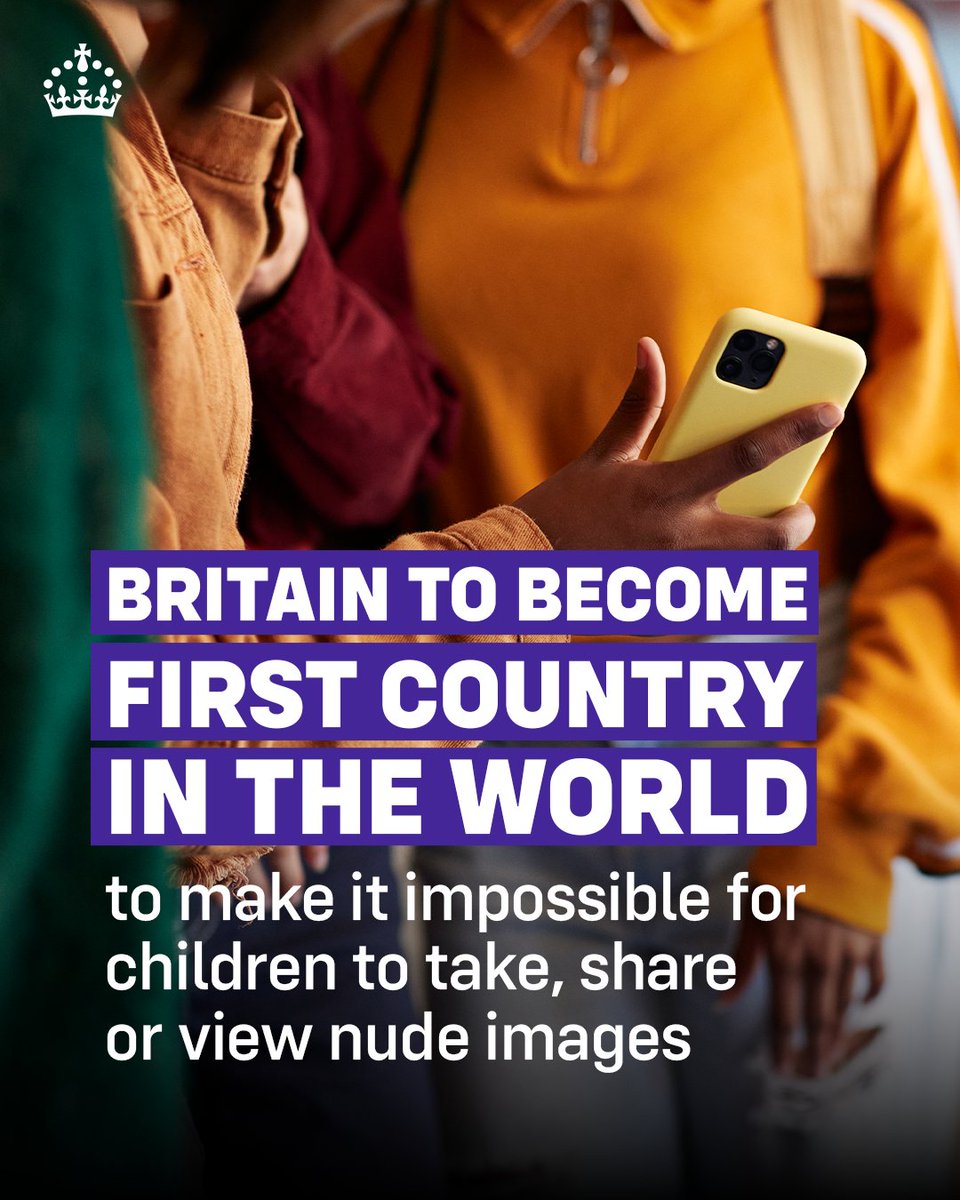
This will make Britain the first country in the world where it is impossible for children to take, share or view naked pictures on their devices.
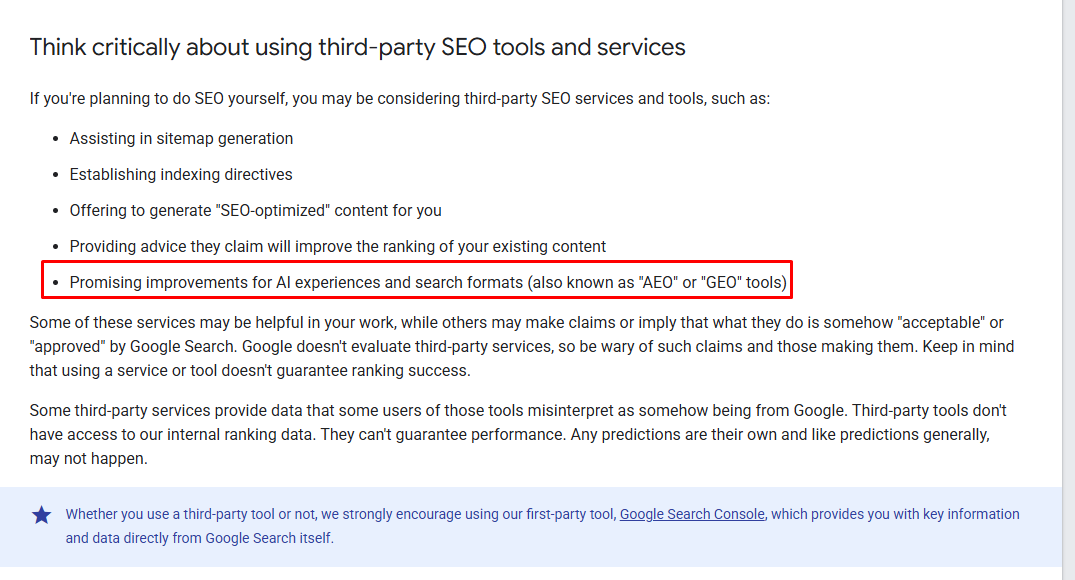
Second, there's a new page for "Google Search's guidance on using third-party SEO tools, services, and advice" which contains information about AEO/GEO as well. I still believe we will see a spam update that wipes out sites gaming AI Search... We might also see new manual actions as well. Stay tuned.
"Promising improvements for AI experiences and search formats (also known as "AEO" or "GEO" tools)"
https://t.co/c99UzxNcbl
Google anuncia, en colaboración con la comunidad de Schema(.)org un nuevo repositorio con datos de uso de los diferentes marcados de datos estructurados a lo largo de Internet.
Estos datos, que se actualizarán de manera mensual, estarán disponibles para su análisis o descarga (en .csv o .json) desde el GitHub oficial de Schema: https://t.co/jL1s9lMAz2
Una manera de ver la adopción de los datos estructurados con el paso del tiempo, así como para ver cuál de ellos escoger en base a su nivel de implantación en casos de duda ante otros similares.
Puedes ver el comunicado oficial de Schema en: https://t.co/sZRRJBMjMh
Así como algo más de información adicional en: https://t.co/wG57AjzdKs
Google officially releases what we've seen tested and what @AndellDam has covered:
"Search profiles give publishers and creators a central place to showcase their latest articles, videos and social posts. People can easily follow sources from their profile, so they’re more likely to see that content on Discover, found on the home screen of the Google app. Search profiles can be accessed on mobile via a creator or publisher’s knowledge panel (the information box on Search for notable people, places and things), by tapping the name of a publisher or creator on Discover, or through a direct URL."