📢 Governance Proposal #9 is now live.
OORT Strategic Deflation & Coordinated Burn, a synchronized deflationary model linking Foundation & investor burns 1:1 with miner activity.
Cast your vote. Shape what comes next.
✅ More scarcity
✅ Stronger community trust
✅ Transparent tokenomics
🗳️ Poll closes in 6 days 👉 https://t.co/d6hgzp6d6z
@oortech 1. AI Social Media Manager: Tracks trends across social & Web3, creates highperforming content & optimizes posts in real time.
2. AI Community Manager: Handles replies, engagement, moderation, growth 24/7, keeping community active & scaling interactions effortlessly.
#AskOORT
OORT Network Expansion: Vote on Deimos II License Fee Reduction.
We've proposed reducing the Deimos II license fee from 120 USDT to 10 USDT per device to accelerate network growth. Your voice matters in shaping the OORT ecosystem.
Vote on governance platform:
https://t.co/LeiptGzccA
Voting closes on April 26.
Act fast 💨
AION - The first marketing AI agents for Web3 projects, deployed in a few hours with a fraction of cost. Our tech team is developing stronger Agents now. More to come. @realkemabae@oortchair@oortech@NormLevy
OORT is about to launch AI Social Media Manager and AI Community Manager — starting at $499/month.
Powered by our data layer - OORT Datahub, these AI managers will give you
→ 5x marketing efficiency
→ 1/10 the cost
For Web3 teams, this means replacing your marketing workflows with AI agents that work 24/7. We are the first to bring this solution to the Web3 market — and once again, OORT is leading the wave of AI transformation.
Please reply with your email contact if you are interested in a 7-day free trial. @oortech@oortchair@NormLevy@realkemabae
Introducing OORT AION, your AI marketing agent team.
It monitors trends. Drafts content. Manages your community. 24/7.
You review. You approve. It executes.
The marketing team just got a new force. 🔱
Learn more https://t.co/6pcGy9lCuR → Projects → AION
@oortech 200+ patents
Dr. Max Li, founder of #OORT holds over 200 international and US patents in communications, AI, and distributed systems. #AskOORT
New governance proposal is live. ⚡️
We're switching license pricing from real-time to a 3-day moving average off Gateio daily closes.
The idea: less exposure to flash volatility, more breathing room for miners and manufacturers to plan. A moving average smooths it out without losing market responsiveness.
To pass, we need:
✅ Majority Support (YES > NO)
✅ 1,000,000 OORT minimum "YES" votes
✅ 1-Year Lock-up to align with the network's long-term value
🗳️ Cast your vote now
https://t.co/MlJeOzDsox
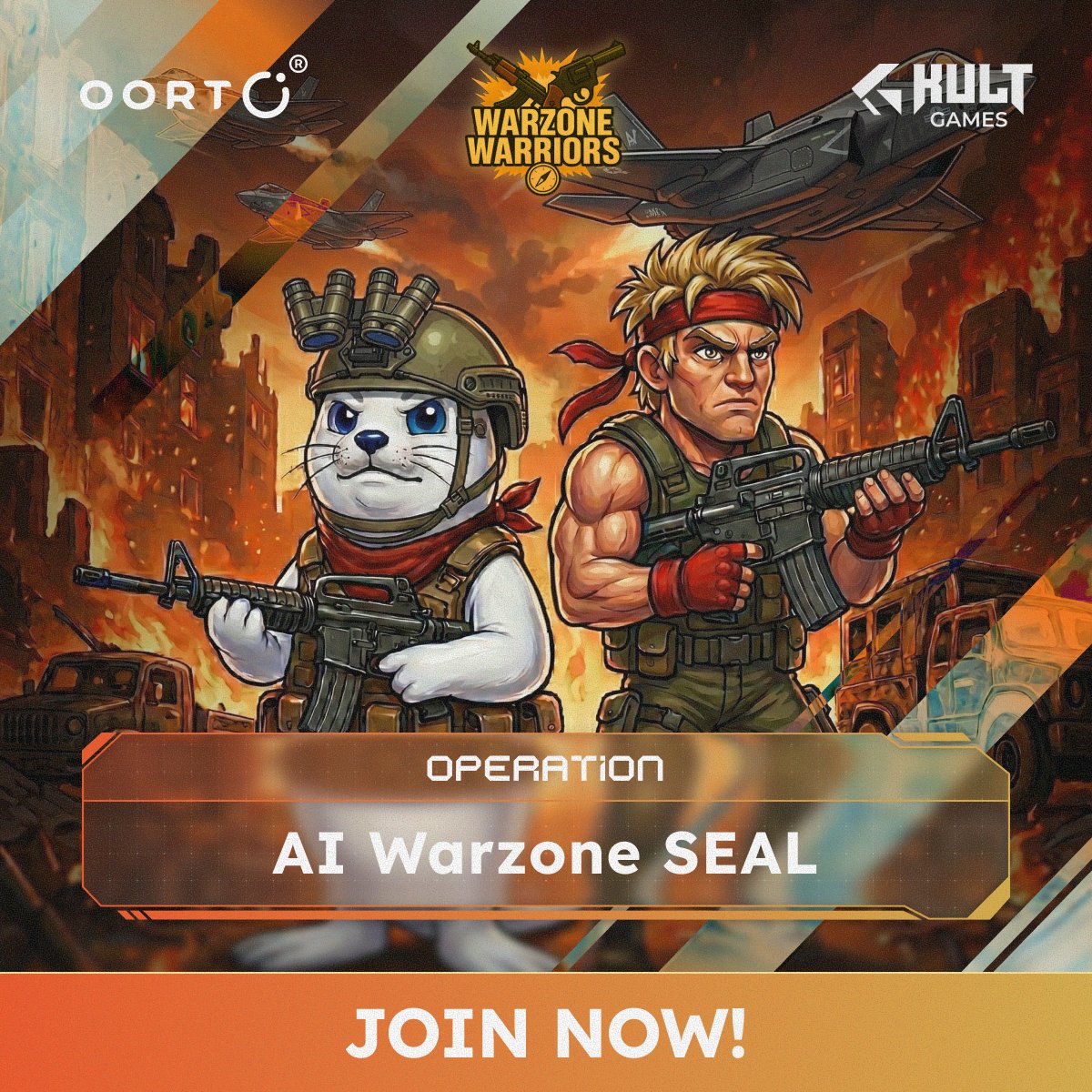
🚨 Attention Operatives. Operation: AI Warzone SEAL is officially greenlit.
We are deploying the next generation of AI-driven combat via Kult Games, backed by the decentralization and security of the OORT protocol. @_KultGames@Warzone_somi
🎯 Mission Objective: Dominate the arena and secure your share of the $200 Bounty Pool plus exclusive in-game weapons and items.
Gear up, stay frosty, and claim your rewards at the drop zone.
Go to OORT DataHub Launchpad 👉 https://t.co/6LpR7P6iGZ
There have recently been some discussions on the ongoing role of L2s in the Ethereum ecosystem, especially in the face of two facts:
* L2s' progress to stage 2 (and, secondarily, on interop) has been far slower and more difficult than originally expected
* L1 itself is scaling, fees are very low, and gaslimits are projected to increase greatly in 2026
Both of these facts, for their own separate reasons, mean that the original vision of L2s and their role in Ethereum no longer makes sense, and we need a new path.
First, let us recap the original vision. Ethereum needs to scale. The definition of "Ethereum scaling" is the existence of large quantities of block space that is backed by the full faith and credit of Ethereum - that is, block space where, if you do things (including with ETH) inside that block space, your activities are guaranteed to be valid, uncensored, unreverted, untouched, as long as Ethereum itself functions. If you create a 10000 TPS EVM where its connection to L1 is mediated by a multisig bridge, then you are not scaling Ethereum.
This vision no longer makes sense. L1 does not need L2s to be "branded shards", because L1 is itself scaling. And L2s are not able or willing to satisfy the properties that a true "branded shard" would require. I've even seen at least one explicitly saying that they may never want to go beyond stage 1, not just for technical reasons around ZK-EVM safety, but also because their customers' regulatory needs require them to have ultimate control. This may be doing the right thing for your customers. But it should be obvious that if you are doing this, then you are not "scaling Ethereum" in the sense meant by the rollup-centric roadmap. But that's fine! it's fine because Ethereum itself is now scaling directly on L1, with large planned increases to its gas limit this year and the years ahead.
We should stop thinking about L2s as literally being "branded shards" of Ethereum, with the social status and responsibilities that this entails. Instead, we can think of L2s as being a full spectrum, which includes both chains backed by the full faith and credit of Ethereum with various unique properties (eg. not just EVM), as well as a whole array of options at different levels of connection to Ethereum, that each person (or bot) is free to care about or not care about depending on their needs.
What would I do today if I were an L2?
* Identify a value add other than "scaling". Examples: (i) non-EVM specialized features/VMs around privacy, (ii) efficiency specialized around a particular application, (iii) truly extreme levels of scaling that even a greatly expanded L1 will not do, (iv) a totally different design for non-financial applications, eg. social, identity, AI, (v) ultra-low-latency and other sequencing properties, (vi) maybe built-in oracles or decentralized dispute resolution or other "non-computationally-verifiable" features
* Be stage 1 at the minimum (otherwise you really are just a separate L1 with a bridge, and you should just call yourself that) if you're doing things with ETH or other ethereum-issued assets
* Support maximum interoperability with Ethereum, though this will differ for each one (eg. what if you're not EVM, or even not financial?)
From Ethereum's side, over the past few months I've become more convinced of the value of the native rollup precompile, particuarly once we have enshrined ZK-EVM proofs that we need anyway to scale L1. This is a precompile that verifies a ZK-EVM proof, and it's "part of Ethereum", so (i) it auto-upgrades along with Ethereum, and (ii) if the precompile has a bug, Ethereum will hard-fork to fix the bug.
The native rollup precompile would make full, security-council-free, EVM verification accessible. We should spend much more time working out how to design it in such a way that if your L2 is "EVM plus other stuff", then the native rollup precompile would verify the EVM, and you only have to bring your own prover for the "other stuff" (eg. Stylus). This might involve a canonical way of exposing a lookup table between contract call inputs and outputs, and letting you provide your own values to the lookup table (that you would prove separately).
This would make it easy to have safe, strong, trustless interoperability with Ethereum. It also enables synchronous composability (see: https://t.co/9jy6v1X6Fw and https://t.co/gZmu3YjebM ). And from there, it's each L2's choice exactly what they want to build. Don't just "extend L1", figure out something new to add.
This of course means that some will add things that are trust-dependent, or backdoored, or otherwise insecure; this is unavoidable in a permissionless ecosystem where developers have freedom. Our job should make to make it clear to users what guarantees they have, and to build up the strongest Ethereum that we can.