Just published
A Systematic Review with Meta-analysis of the Association between Changes in Muscle Strength and Clinical Outcome Changes in Patellofemoral Pain
👇👇👇
https://t.co/ForDjKTL6B
💪 There is much more to subacromial shoulder pain than an impingement!
🎯 For an up-to-date and evidence-based lesson on shoulder pain, check out our popular Masterclass with @JaredPowell12
🍿 You can watch it now with a 7-day free trial:
🔗 https://t.co/xhh1WKJpY4
The flowchart illustrates how dietary habits and metabolic factors increase the risk of Slipped Capital Femoral Epiphysis (SCFE),
https://t.co/T6JMOdXbnJ
About 30% of people with psoriasis develop PsA. Nail/scalp involvement & family hx increase the risk. Prior to clinical synovitis/enthesitis, people may present with generalised joint pain, fatigue & stiffness.
https://t.co/GqwiT8Og6u
1/2
Did you know? 🤔
In a recent study rotator cuff abnormalities were present in 96% of asymptomatic (1039 of 1076) & 98% of symptomatic shoulders (126 of 128)
📚⤵️
https://t.co/mq8aOb2Fje
Not first time we’ve come across this! 😉
The NSAID (non steroidal anti inflammatory drugs such as Ibuprofen, naproxen and diclofenac etc) debate seems to have reared its head again recently in many ultra running online groups and forums.
Here’s an old post sharing the position stand of the International Society of Sports Nutrition.
Widespread use as well as prophylactic use of NSAIDS should ALWAYS be discouraged, whilst active EDUCATION on the risks and contraindications should be encouraged.
Many race organisers including the UTMB are now taking this stance.
Although this position stand referenced single stage ultra marathons, I’ve certainly had experience of this creeping into the majority of endurance events at all levels of ability and performance.
APPG on Osteoporosis and Bone Health new Inquiry report is a must read and must be actioned
Report highlights huge gaps in long-term osteoporosis care @SoniaKumarMP@Brynnen_R#RightToRehab The Chartered Society of Physiotherapy Royal Osteoporosis Society
Non-smoking lung cancer- so important to understand and to raise awareness"Episode 20: In the Clinic - Non-smoking Lung Cancer with Dr Tom Newsom-Davis" at https://t.co/O5pnusxvdN
Coming tomorrow @simplyoncology episode discussing 🦴bone health in prostate cancer. Approx 1 in 10 men with met prostate cancer on hormone therapy develop osteoporotic fractures🦴We talk to Dr Xue-Yan Jiang about @rcr guidelines coming out 2025!!
@craig_m_jones@AlisonBirtle
Spread of Psoriatic Disease from Skin to Joints
Approximately 20-30 % of all people who suffer from psoriasis also develop painful inflammation in their joints over time. If left untreated, PsA can lead to permanent damage to bones and joints. Why the disease progresses was assessed by researchers from the Universität Erlangen-Nürnberg (FAU), who discovered which cells migrate from the skin of psoriasis patients to the joints and how they trigger inflammation there.
https://t.co/UUrEthRnaf
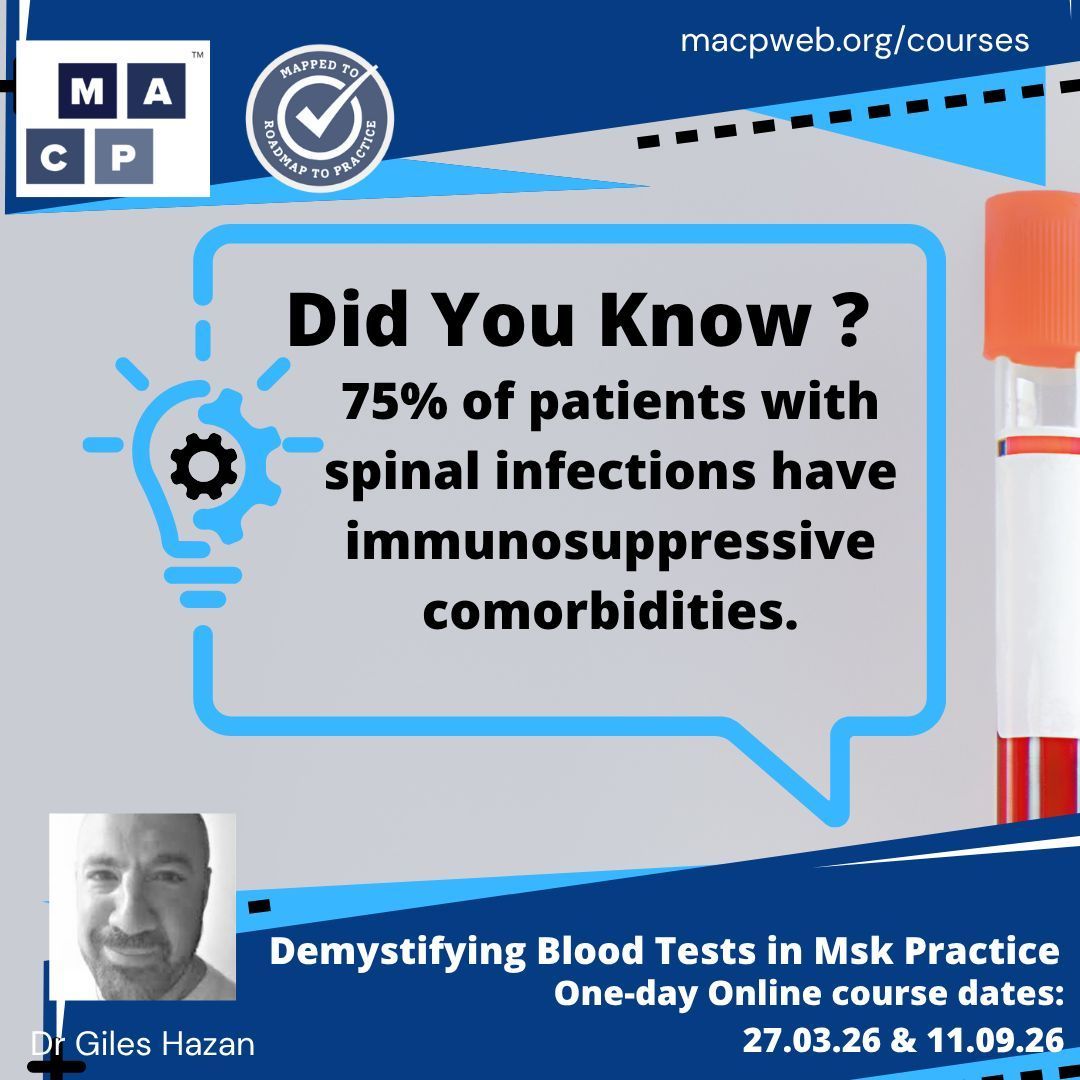
Confused by Blood tests in your Msk Practice?
Improve your clinical reasoning when requesting and interpreting blood tests with this excellent course led by tutor @gileshazan using Msk patient case studies.
Book your place here 👇
https://t.co/MeQXxXfZnf
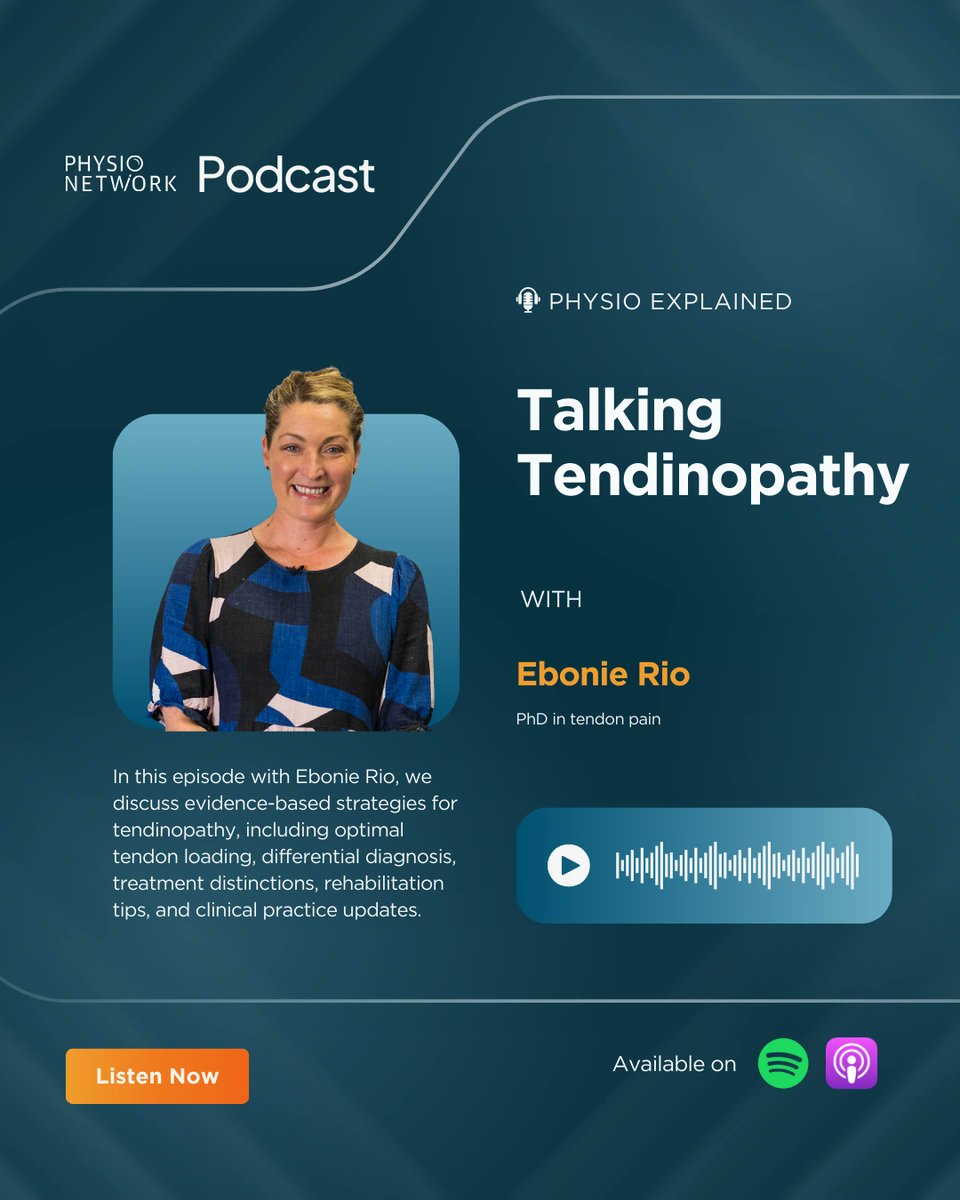
🤔 How do you optimally load tendons and treat patients with tendinopathy?
👉🏻 We have just replayed one of our most popular podcasts episodes of all time with Dr. Ebonie Rio
📲 Listen to the new episode now: https://t.co/gRzEqYTq6T
Also available on Spotify & Apple Podcasts
Science and research evolves, and as we learn more about many of the common conditions that we see and treat, then the things that we do to help sometimes change.
Sometimes they are dismissed with good reason, sometimes they may remain valid treatment approaches, but under a new understanding and with a new narrative or framework.
However, often the baby gets thrown out with the bath water, and the pendulum swings too far from one side to the polar opposite.
Rather than simply changing the narrative or our understanding around certain things that we do, we completely dismiss them, we label them evil and we chastise any therapist who still uses or advocates for them (whatever the supporting narrative!).
A great example of this revolves around pain relief and symptom modification for plantar fasciopathy.
Many moons ago, as a young therapist in the industry one of our front-line approaches as a “fix” or “cure” for this common condition was to roll a frozen bottle as ice massage under the foot, or get patients to use some hard object like a ball to massage the painful area.
At the time we used phrases like “this will release the tissue”, “break down the scar tissue” because that’s what the science and our best intentions suggested was the mechanism of effect.
Fast forward a decade (or two!) and our understanding of the condition has evolved.
We understand a specific graded loading and strength programme coupled with some activity modification is the best approach to gain long term relief and a return to activity.
Allied to this I now hear therapists telling people NOT to rub a ball under the foot or use a frozen ice bottle for some massage.
Yet alongside the fundamental rehab that is needed and understood these days, why shouldn’t they use these old techniques if it helps relieve pain, settle symptoms and allows them to complete the required rehab with less aggravation?
There is no reason people can't still do these things: its self-managed, cheap and has little to no negative effects if framed within the correct narrative and understanding of what it is, and more importantly isn’t doing.
Of course they shouldn’t be the primary care treatment choice, of course they shouldn’t be the sole treatment choice, of course the outdated narrative of mechanism of effect shouldn’t be used.
But it’s absolutely still okay to do some of these adjuncts, and as therapists we shouldn’t be so lazy to just dismiss them categorically, because of the contempt we hold these concepts in based on old concepts and context or their misuse by some today.
I just tell them “ you now know what it does and you know what it doesn’t do, you also know the stuff we really need you to do...as long as that’s getting down than I’m absolutely good with you trying it if you think it will help”.
This doesn’t mean I give carte blanche approval for ANYTHING to be used, but there are so many self-help things for everyday injuries and conditions that are thrown out as the proverbial baby with the bath water without a second thought.
@drlouisenewson@simplyoncology ..another great online resource for those entering menopause. As a First Contact Physiotherapist in primary care we often have women presenting with joint pain during perimenopause and menopause - this resource helps to explain why the changes are taking place.
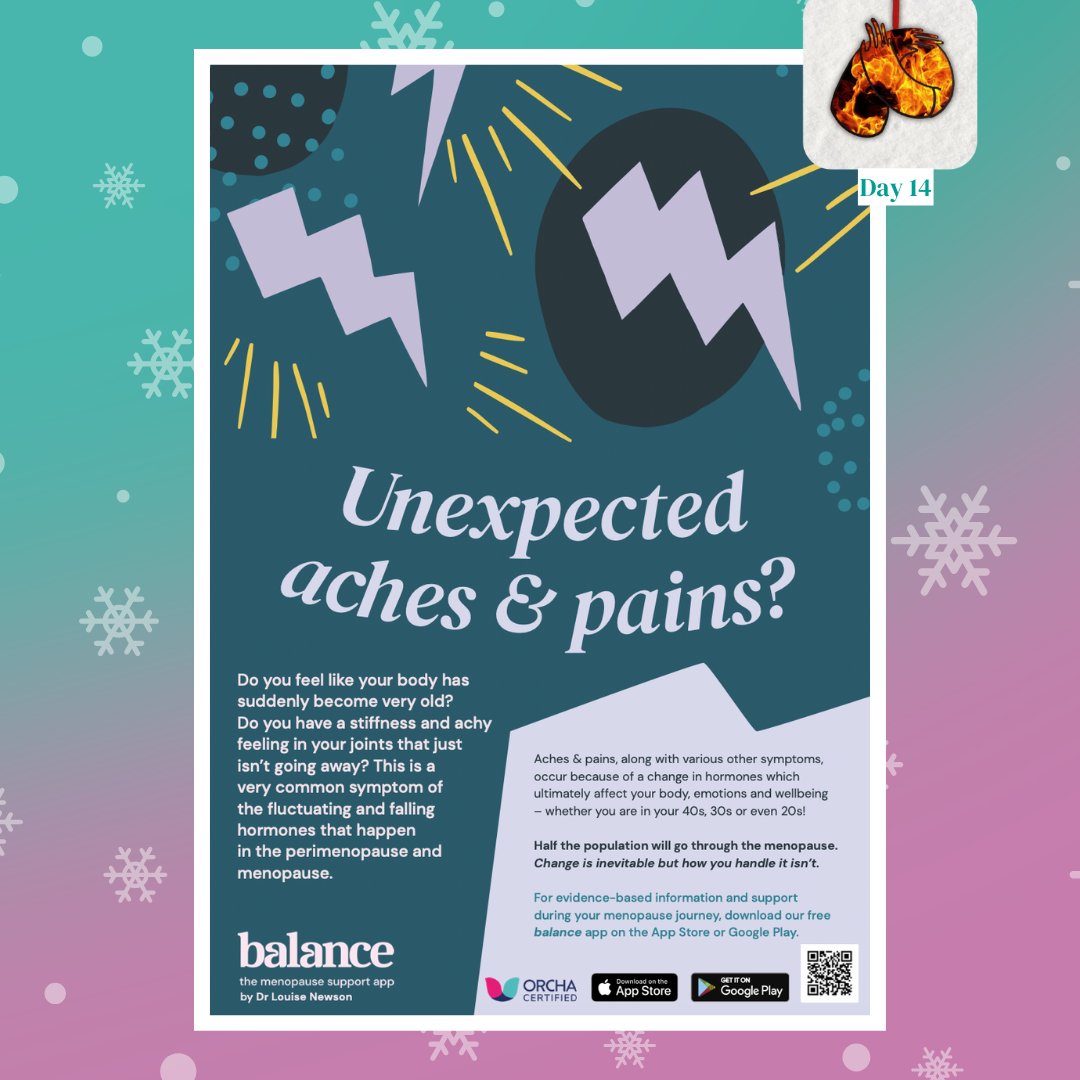
It’s day 14 of #DeckTheHormones and today we’re discussing the symptoms of muscle and joint pain.
Pain, muscle aches and stiffness in the joints are extremely common symptoms during the perimenopause, menopause and beyond, but many women overlook this as a menopausal symptom and just think it’s a part of ageing.
In actual fact, your muscle and joint pain can be due to the lack of hormones oestrogen, progesterone and testosterone as these hormones work as anti-inflammatories in our muscles and joints, and therefore replacing these missing hormones with HRT is the most effective way to help women manage this pain.
Many women we consult within our Newson Health clinic have muscle and joint pains which usually really improve with the right dose and type of HRT and testosterone.
To help women acknowledge this symptom as a part of their menopause, we have created a downloadable poster that you can print out and put up in your workplace or hand out to friends. It includes QR codes that link to a library of helpful resources on our balance menopause app: https://t.co/TMzqdEPxbL
It’s not so much about how long you move; it’s how often.
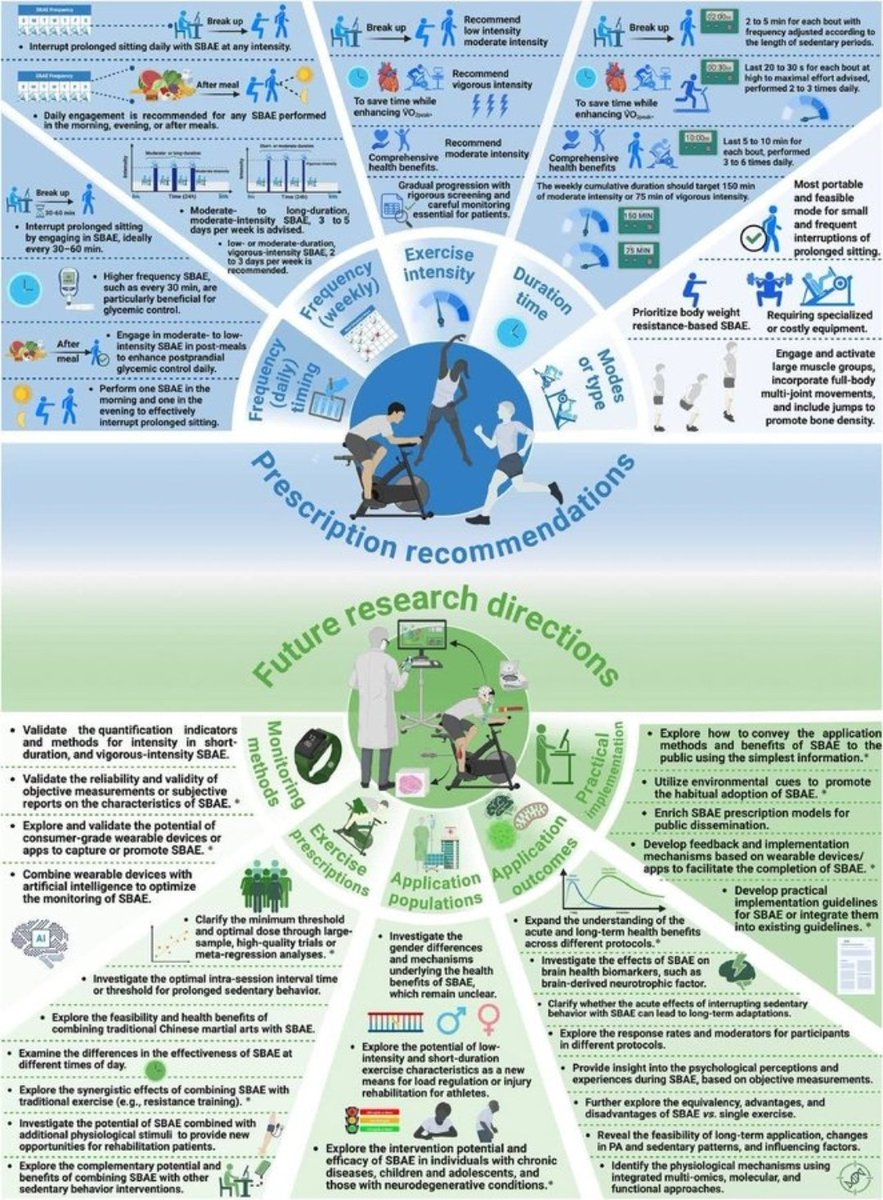
A growing body of research shows that you don’t need long gym sessions to improve health. The 2025 expert consensus statement (citation below) highlights how brief, frequent bursts of movement throughout the day, called short bouts of accumulated exercise (SBAE), can deliver many of the same benefits as structured workouts.
1️⃣ What Is SBAE?
Short bouts of accumulated exercise are small sessions of movement, often 2–10 minutes, performed several times per day.
They “add up” to meaningful totals of physical activity over time.
🟢 Example: Walking up the stairs, doing air squats after a meeting, or brisk walking after meals.
2️⃣ Why It Works
Each short bout boosts blood flow, glucose control, and mitochondrial activity, while breaking up long periods of sitting — a key driver of metabolic and cardiovascular risk.
🟢 Example: Even a 2–5 minute walk every 30 minutes can help regulate blood sugar and reduce insulin spikes.
3️⃣ How to Apply It (Prescription Recommendations)
The consensus provides a practical “exercise prescription” for SBAE:
Frequency: Move every 30–60 minutes, several times daily.
Intensity: Start light to moderate; progress to brief vigorous bouts if tolerated.
Duration: Aim for ≥150 minutes per week of total activity, accumulated in short bouts.
Timing: Post-meal movement is especially beneficial for glucose control.
Type: Prioritize bodyweight or resistance-based movements that activate large muscle groups.
🟢 Example: Three 10-minute brisk walks daily = similar cardiovascular benefit as a single 30-minute session.
4️⃣ Key Benefits of SBAE
Improves insulin sensitivity and glycemic control
Enhances vascular function and blood flow
Reduces inflammation and oxidative stress
Supports cardiometabolic health and mental well-being
🟢 Example: Studies show SBAE improves blood pressure and mood, even in people who don’t meet standard exercise guidelines.
5️⃣ Who It’s For
SBAE is feasible for nearly everyone, including older adults, people with limited mobility, and those managing chronic conditions like type 2 diabetes or cardiovascular disease.
🟢 Example: Breaking up sitting with 2–5 minutes of movement is a practical, accessible strategy for desk workers and older adults alike.
6️⃣ Future Directions
The consensus calls for research into:
Optimizing intensity and timing for different populations.
Using wearable tech and AI to track and personalize SBAE.
Integrating SBAE into clinical guidelines for chronic disease prevention.
You don’t need a gym or an hour - just consistency.
Short bouts of accumulated exercise break the “sit–disease” cycle, enhance metabolic health, and make movement accessible for all.
Yin M, Chen P, Mao L. Expert Author Group. Short bouts of accumulated exercise: Review and consensus statement on definition, efficacy, feasibility, practical applications, and future directions. J Sport Health Sci. 2025 Sep 18:101088.