Corp Strategy @FedEx | SP Jain | Foodie who can cook | Meditation | Guitar | Belief: There is no black and white in the world, they are all shades of grey
I shared this data earlier and am sharing it again.
The source is none other than India’s foremost consumer expert, Rama Bijapurkar.
It’s good to revisit this from time to time.
Our demographic dividend is expected to peak in the next 14 years or so. If we do not grow at least 8% or above in real GDP every year,and ensure that growth is inclusive, we risk being stuck in our current state forever.
Whether it’s the central government or state governments, the single minded focus must be on economic growth and people’s welfare. Our social fault lines, based on religion, caste, region, language, and everything else, can wait. If we lose this 14 year window, our country’s future will be seriously compromised.
Rama Bijapurkar’s consumer segmentation data:
L5 (Affluent): Annual household spend of ₹11.24 lakhs, covering just 25 million people.
L4 (Resilient): Annual household spend of ₹5.4 lakhs to ₹7 lakhs, covering 71 million people.
L3 (Real Middle): Annual household spend of ₹3.8 lakhs to ₹5.4 lakhs, covering 200 million people.
L2 (Strained Mass): Annual household spend of ₹2.2 lakhs to ₹3.8 lakhs, covering 432 million people.
L1 (Vulnerables): Annual household spend of ₹1.1 lakhs to ₹2.2 lakhs, representing a massive 707 million people.
Note that these figures refer to household expenditure, not individual.
If you combine L1 and L2 (Vulnerables + Strained Mass), they account for close to 80% of India’s population. For them, everyday life is a constant struggle. They are literally living on the edge. Not that the others are enjoying ultra luxury, but the sheer scale of vulnerability at the bottom is sobering.
80% of the country is just surviving and that too with great difficulty.
𝗧𝗵𝗲 𝗯𝗲𝘀𝘁 𝘄𝗮𝘆 𝘁𝗼 𝗯𝗼𝗼𝗸 𝗳𝗹𝗶𝗴𝗵𝘁𝘀 𝗮𝗻𝗱 𝗵𝗼𝘁𝗲𝗹𝘀!
For the longest time, booking travel meant opening five different tabs - one for cash fares, one for each loyalty program, a calculator for points, and a lot of guesswork to figure out what was actually the better deal.
We just fixed that.
Today, we're launching Travel on the @savesage_club app.
Search Flights & Hotels across Cash and Points simultaneously, and instantly know the smartest way to book. Here's what you get:
✈️ 𝗣𝗼𝗶𝗻𝘁𝘀 𝗯𝗼𝗼𝗸𝗶𝗻𝗴𝘀
• View redemption availability across loyalty programs, along with taxes if applicable.
• Running short of points? We'll tell you the best points transfer to complete your booking.
💳 𝗖𝗮𝘀𝗵 𝗯𝗼𝗼𝗸𝗶𝗻𝗴𝘀
• Compare prices across booking platforms.
• See the best offers, discounts, and reward points you'll earn across all your cards for every booking.
SaveSage recommends the best booking strategy for you - not just the cheapest one. Not the one that earns a platform the highest commission, but the one that delivers the maximum value to you.
Before you book your next flight or hotel, check SaveSage.
You might already have enough points to travel for free.
Travel will never be the same again.
Try it today.
We request Government of India to appoint Shri Tukaram Mundhe sir as CEO of FSSAI.
Whole India deserves safe and unadulterated food and safe drugs not only maharashtra.
Please Retweet so that it reaches to the government.
“Lots of wealth has been created by Jhunjhunu, Pilani and Shekhawati areas of Rajasthan.”
“This is because Rajasthan and Kutch are desserts, so it’s in desserts we face adversity well and there’s a very big feeling of community.”
“The Birlas and all the Marwadi families who are 70-80 years old, earned their first wealth through speculation.”
- Late Rakesh Jhunjhunwala.
Sitting in India right now, watching the world burn in real time. US & Israel striking Iran. Iran retaliating across the Gulf. Russia-Ukraine still raging. Pakistan-Afghanistan tensions simmering.
Missiles flying over Tehran, Bahrain, Abu Dhabi, Qatar.
And here I am, safe at home on a Saturday evening, in a democratic, peaceful country, worrying about none of this at my doorstep.
We don't say this enough - we are incredibly lucky. Not perfect, not without problems. But at peace. That's not a small thing in 2026.
Imagine Bharat🇮🇳 wins the lottery. $1.7 Trillion. What’s the first thing our politicians do? Spend it, right?
In 1969, Norway found massive oil reserves. They were suddenly rich. But instead of a spending spree, they chose "Radical Patience."
In 1990, the Norwegian Parliament created the "Government Pension Fund Global"
The mission: Transform "black gold" into a permanent financial legacy.
In 1996, they deposited the first payment: $150 million.
Then they did something even more remarkable.
They stuck to the plan. Year after year, oil revenues flowed into the fund. Year after year, the fund invested in global markets—stocks, bonds, real estate across 70 countries. Year after year, politicians resisted the overwhelming temptation to raid the fund for short-term political wins (something our politicians should emulate from it).
Every election cycle brought promises to spend more. Every economic downturn brought demands to tap the fund. Every crisis brought calls to break the rules "just this once." Norway said no. Every single time.
The fund's managers didn't try to beat the market or gamble on hot stocks. They simply bought small stakes in thousands of companies worldwide—around 9,000 today—and held them. They played the longest game imaginable. By 2000, the fund was worth $50 billion. By 2010, it had grown to $500 billion. By 2017, it crossed $1 trillion. Today, it has surpassed $2 trillion.
Every time we buy an iPhone, a coffee at Starbucks, or a subscription to Netflix, a tiny fraction of that money flows back to Norway. Why? Because their fund owns a piece of almost 9,000 companies worldwide.😃
Now, the investment returns are higher than the oil revenue. Even when the oil runs out, the schools, hospitals, and pensions stay funded.
For a country of just 5.6 million people, that works out to roughly $340,000 per citizen.
This👇👇
The 3% withdrawal rule ensures the fund will last indefinitely. That 3% provides roughly a quarter of Norway's national budget—funding education, healthcare, infrastructure, and pensions without ever depleting the principal.
Norway's oil will eventually run out. Maybe in 30 years, maybe 50. It doesn't matter anymore.
By the time the last barrel is pumped, Norway will have a multi-trillion-dollar fund generating returns forever.
Norwegian children will attend free universities, elderly Norwegians will retire with security, and the entire nation will thrive—all funded by oil that stopped flowing decades earlier.
Because in 1990, Norway made a choice that most countries never make.
The genius wasn't finding the oil. It was having the humility to admit that people who haven't been born yet deserve a seat at the table. 🇳🇴
Full circle moments like these never get old.
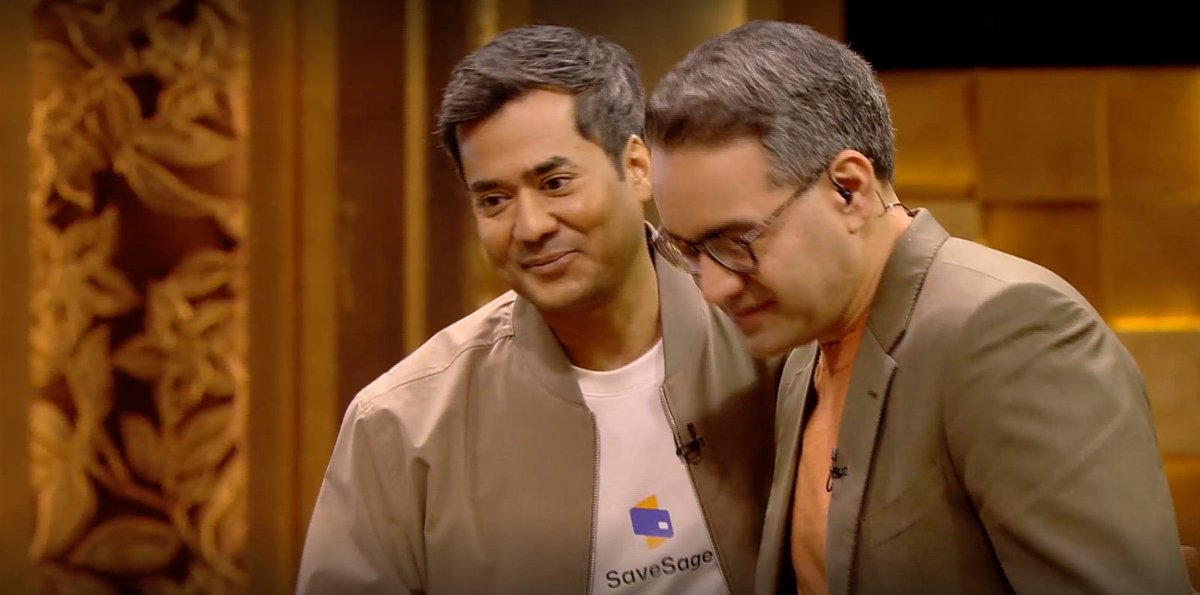
Years ago, @ashishlath was an integral part of the @snapdeal journey with us. Now, he walked into the Tank as a founder, pitching his own dream. Watching that arc come together is deeply fulfilling.
We’ve always believed that leadership is not just about what you build, but about the people you help grow along the way. When someone from our team feels ready to step out, take risks, and build something of their own, they will always have our respect and support.
Ashish, this moment is well earned. Proud of the humility, conviction, and ambition along with deep knowledge you bring to the table.
Onwards and upwards 🚀
@AceVector1@TitanCapitalVC@sharktankindia
@VVikiLuxe @pointscasa@savesage_club@onpointindia Finally someone said it. The fee is completely worth it. You earn the fee back in just one good recommendation for a flight or hotel.
Anyone serious for optimizing will see the ROI happening.
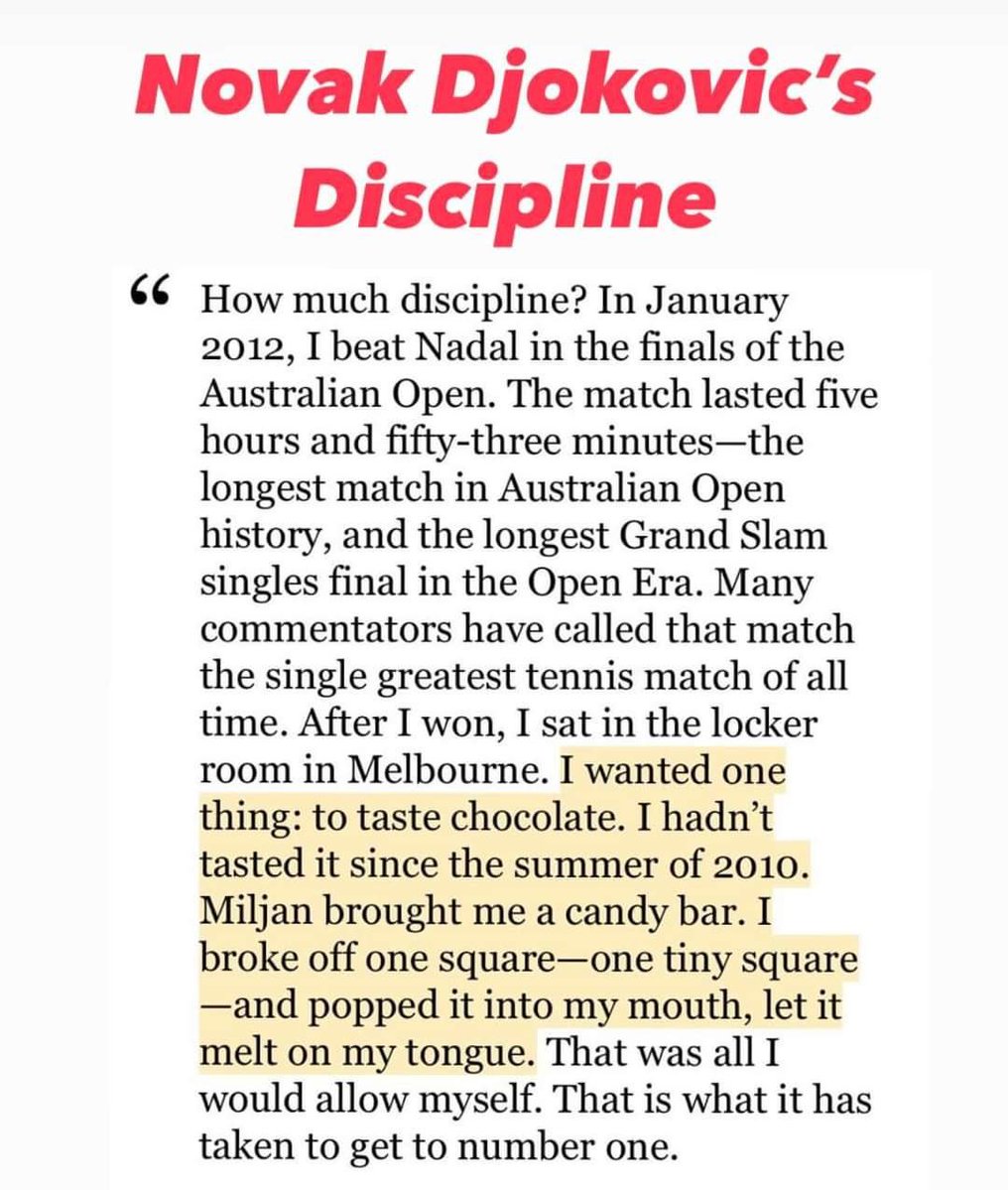
Novak Djokovic on the discipline required to be the best:
"I wanted one thing: to taste chocolate. I hadn't tasted it since the summer of 2010. I broke off one square — one tiny square — and popped it into my mouth, let it melt on my tongue. That was all I would allow myself. That's what it has taken to get to number 1."
India is treating the AI wave like the SaaS wave. And that’s going to backfire.
The SaaS wave was a very specific kind of win. We didn’t win because our products were always elegant. We won because we had two blunt arbitrages the market rewarded for years: we were cheap, and we could throw people at a problem until it looked solved. Even if the UI was clunky, even if onboarding was painful, even if the product needed hand-holding, buyers tolerated it because the pricing was absurdly good. And when the product didn’t do something smoothly, we didn’t redesign the system, we staffed it. Price + labor covered a lot of sins.
AI kills both of those advantages.
Cheap labor stops being special when software itself becomes labor. And “we’ll throw a team on it” stops sounding like execution and starts sounding like “we don’t have a product, we have a staffing plan.” In AI, one great builder with the right workflow and model can do what ten people used to do. Headcount is not your moat anymore. It’s often your drag.
That’s why treating AI like “SaaS 2.0” is dangerous. If your plan is wrappers, services disguised as product, competing on price, and bragging about team size, you’re walking into a market where “good enough” is already the baseline. Everyone has access to strong models. Everyone can ship a decent demo. Everyone can integrate an API. “We’re like X but cheaper” doesn’t land when X can get cheaper too, and when users can try five alternatives in fifteen minutes.
AI rewards different things: taste, judgment, and depth.
Taste isn’t “pretty UI.” It’s whether the product feels inevitable. Whether the workflow is clean. Whether the defaults are smart. Whether it’s fast to value. Whether it’s trustworthy. In SaaS, you could compensate for weak taste with bodies. In AI, bodies don’t fix taste, they just hide it briefly (and badly!), until the user churns.
Depth is the other requirement. Generic AI is already good. You don’t beat it by being “also generic.” You beat it by being specific in ways the general model can’t cheaply imitate: better data, better evaluation, better reliability, and a real understanding of the domain you’re serving. In AI, shallow understanding gets exposed in production and there’s no coming back.
So how should India think about this race instead?
Our advantage isn’t cheap labor anymore. It’s context. India is one of the hardest markets in the world: multilingual, convoluted, high-volume, constraint-heavy. If you can build AI that works reliably here, you can build AI that works in a lot of the world. But context becomes an advantage only if you turn it into product excellence, not discounting.
For founders: if you remove “we’re cheaper” and “we’ll provide support” from your pitch, what’s left? What do you know that the general model doesn’t? What’s the one workflow you can make feel like magic by removing friction, not by adding features?
For builders: your edge is no longer “I can execute.” Execution is getting commoditized. Your edge becomes judgment. The ability to simplify, to choose, to build reliability, to make the experience feel clean and human.
For investors: stop underwriting AI like SaaS. Big teams, services revenue, feature checklists, and shiny demos are weak signals now. Look for evaluation discipline, domain depth, reliability engineering, and founder taste. Reward being right, not being busy.
AI isn’t our SaaS sequel. We’re running the very real risk of becoming world’s best b team again. This could be our inflection point. But only if we acknowledge what it needs.
Hamza in Dhurandhar took extra care to not get caught while writing names of enemies in his diary, first he used invisible ink second he wrote it in English.