Welp, that happened faster than I predicted. Thought it would be end of 2027, then early 2027, but agentic traffic growing so fast that bots have now passed human traffic online for the first time in the Internet's history. https://t.co/2zX5bHdhsa
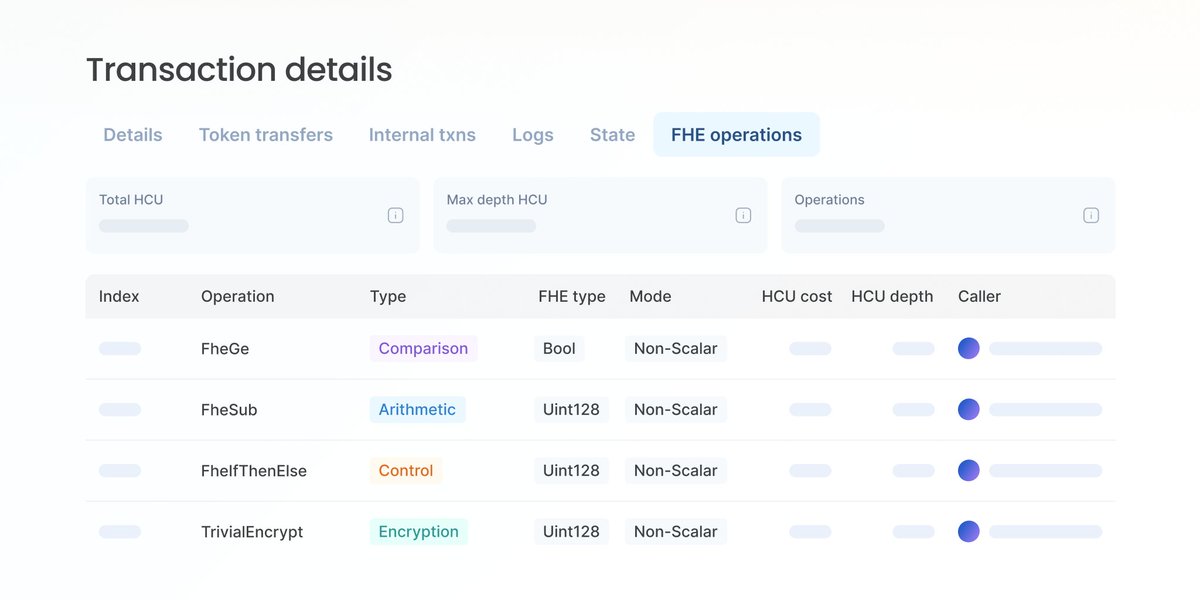
Love this collab with Blockscout to demystify how FHE-powered transactions work on Ethereum - a great tool for anyone building privacy applications on @zama!
Have you explored the "FHE operations" tab on Blockscout yet? 🛡️
Let’s break down a live transaction to see how we maintain total on-chain transparency while keeping your sensitive data completely private. 👇
https://t.co/TPhiLzs3yx
The EU used to be a leader in privacy-preserving digital ID for a very long time (2017 to 2024 or so), but has unfortunately since ceded ground to groups that want zk/decentralised only “in theory”.
They’ve got a maximum of 2-3 year more years they can keep coasting on their previous reputation as a supporter of such privacy tech.
But with the way things are heading, they are simply not serious about any of their zk/decentralised work, and the factions wanting to push through centralised, state-controlled tech are growing stronger.
The EU age verification app is presented as “completely anonymous”. But the risk is that member states (the countries are supposed to create their own versions of the open-source EU app) use it to introduce identity verification that makes it impossible to post anonymously on social media.
The idea behind “completely anonymous” is to use Zero-Knowledge Proof (ZKP) cryptography to break the link between the age credential issuer (EU governments) and the regulated services/sites. Currently, the EU app does not have ZKP functionality, contrasting Ursula von der Leyen’s claim that the app ”is technically ready to be used”. But more importantly, the app is designed to always function without ZKP technology; if ZKP is unavailable, the app falls back to a non-ZKP model. Even if fully developed ZKP technology could be implemented in the future, it would remain an optional extra feature that countries may choose to disable and that the EU could remove at any time.
This means that the EU could decide at any time that ZKP may no longer be used, and in one stroke the app would fall back to its default mode, meaning that every post on social media carries an ID tag. By that point, an infrastructure will already have been rolled out; people will have gotten used to it, and it will be harder to roll it back.
More details on https://t.co/wTVKHMS1zg
Anthropic has confidentially submitted a draft S-1 registration statement to the Securities and Exchange Commission.
Pending completion of SEC review, this gives us the option to pursue an initial public offering.
Read more: https://t.co/onGZAhRLvD
One of the wildest design quirks you’ll find in Indian e-commerce (especially on the Indian Railways booking site) is that the UI forces the user to choose the payment processor.
At a glance, it looks like bad UX. Why make the user choose between PayU, Razorpay, or NTT Data? If the goal is resiliency, shouldn't automated "smart routing" just dynamically handle failovers behind the scenes?
But if you scratch beneath the surface, it’s actually a masterclass in market-specific engineering. It's actually quite clever:
1. Mind-boggling scale: About 50% of ALL online payments globally happen in India. By comparison, US's share of online payments is ~1-2%, Europe is about ~3-5%.
India's real-time transaction volume is huge: 100+ billion transactions yearly! That number is greater than the transaction volumes in the US, UK, Canada, France, and Germany combined...and then multiplied by eleven.
(Where India's share is smaller is transaction value. If you want an insight into the future of micropayments, look here. Because the sheer infrastructure strain is immense, no single traditional payment processor can guarantee 100% uptime.)
2. Power-user overrides: If a Stripe payment fails on a regular e-commerce site, waiting 10-15 minutes while the system figures out what happened is annoying but fine.
But on Indian Railways, high-demand tickets sell out in seconds. You're competing with thousands of people for a fixed number of seats releasing at a specific moment. Those 10-15 minutes could be the difference between getting the ticket or not.
So, counter-intuitively, users want to be power users. They'd rather immediately retry with a different processor, than wait for automated fallback logic to catch up.
3. Anti-monopoly by design: On publicly-funded services such as this, locking into a single payment processor would hand one company a dominant position over an enormous share of transaction volume...and the processing fees that come with it.
The multi-processor setup avoids creating that winner-takes-all dynamic. In fact, the order in which these payment processors are shown is also randomised on every page load, so that the order on the screen itself doesn't disproportionately drive volume to a single processor.
4. Transaction costs aren't always absorbed by the merchant: Unlike the West, where merchants quietly absorb a 2-3% card processing fee, in India the processing fees are often directly passed to the user as a "convenience fee."
Different processors negotiate different rates with specific banks, and some pass on the savings to the users, which creates a live competitive market.
Users actively pick the processor with the lowest fee for their transaction based, or cashback provided based on special promotions. It's a local version of pointsmaxxing.
There's enormous richness and complexity in India's payments ecosystem, and more broadly across the global south. It is a fascinating look at high-velocity financial infrastructure built under real constraints: scale, competition, scarcity, that Western fintechs largely never had to contend with.
But that same ecosystem is also ripe for disruption. Moving payments and finance onchain will be a generational shift in speed and cost, but only if the privacy problem gets solved. No national or local payments infrastructure can run without that, as financial data is some of the most sensitive data there is.
No brainer indeed.
What I find compelling here is providing privacy/confidentiality to individuals, while still being able to offer data at a macro-level on tokenomics such as unlock schedules, total/circulating supplies and so on which crypto holders rely on to assess projects.
The THORchain $10.8M is gone - let's protect the next protocol or wallet.
Here is a short list of ECDSA TSS protocols and libraries that should not be in production right now. The list exists. The deprecations are documented publicly, please follow them:
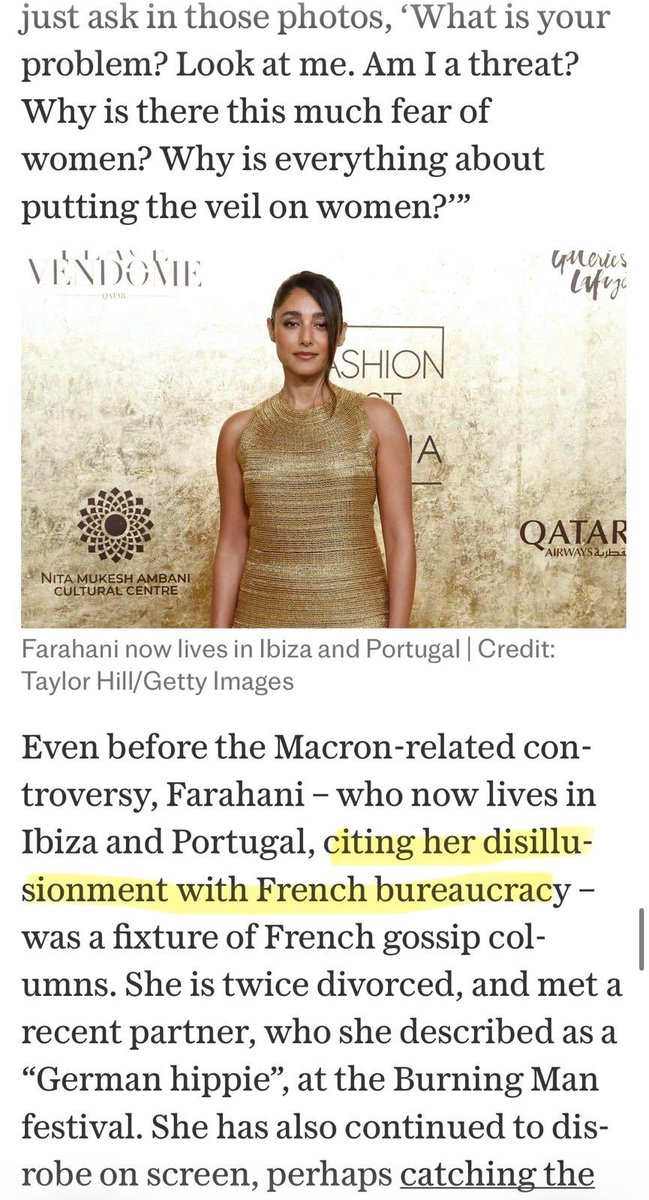
@candicekteo I’ve seen this happen! The specific document requested keeps changing, which I think is a way of a bureaucrat bouncing the dossier to someone else. 🫠
Me too, Golshifteh. The new story I *really* want to read is about how she fared with French bureaucracy like CPAM (the health insurance system). 12+ months and waiting to have things finalised by them. 🫠
“She had previously indicated her intent to leave France, explaining that she was severely impacted by the bureaucracy and banking system.”
And on top of that, I do think it’ll be extremely tough for an Iranian person with all the sanctions to deal with French bureaucracy.
Due to the extremely archaic ways sanctions screening works, any names common in certain communities e.g., from the Middle East get entirely debarked because of partial/fuzzy hits against sanctions lists.
As crypto matures into financial infrastructure, moats will be defined by security posture, compliance enablement and confidentiality.
We keep treating privacy as a silo - a category or a chain you go to.
Security stopped being a product the moment it became table stakes. Privacy will have the same arc, and those that embrace this sooner than later will own the rails everyone else ends up renting.