Taką mamy młodzież! Chłopak ma 20 lat 🙂 Nasz stypendysta Bison Fellowship. Karol Śliwa. Karol to inżynier danych i młody badacz wysokozłożonych systemów socjotechnicznych. Równolegle realizuje trzy programy studiów magisterskich (https://t.co/G4LG4pXrPI. w KINGS w Korei Płd. i na AGH). Stypendysta prestiżowego Technical Cooperation Fellowship w Międzynarodowej Agencji Energii Atomowej (IAEA). Doświadczenie komercyjne zdobywał w amerykańskiej centrali Westinghouse Electric Company jako Full Stack Developer oraz w globalnym banku HSBC, modelując ryzyko operacyjne.
Kochani, Karol jest autorem koncepcji „Triple-S”, autorskiego frameworku przywództwa i odporności organizacyjnej dla megaprojektów infrastrukturalnych dużego ryzyka (SMR, FOAK). Prowadzi badania nad modelowaniem przyszłości krajowego systemu energetycznego, zastosowaniami uczenia maszynowego w geoinformatyce, wpływem ryzyka emisyjnego na rynki finansowe oraz integracją technologii wodorowych w ramach Akademii H2 Orlenu.
Mówi biegle w kilku językach a po angielsku na poziomie niemal nativa. Po godzinach zamienia algorytmy na twardą sportową rywalizację, grając w uniwersyteckich drużynach piłkarskich w Polsce i Korei Południowej. Karol pracuje nad projektem PKP Intercity. Pociąg do podróży. Takich mamy młodych innowatorów w Polsce. Udostępniajcie tę historię, niech zaraża innych.
Over the past few days, I have been overwhelmed by the incredible outpouring of support surrounding the IPN’s Ambassador of Polish History award.
To everyone who has written to me, publicly encouraged my nomination, offered to prepare nomination documents, or simply shared kind words of encouragement, thank you. I have read every message with deep gratitude and genuine humility.
Whether I receive this honor or not, I already feel profoundly blessed. Seeing so many people believe in my work is something I never expected, and it has reminded me why I began this journey so many years ago.
I am an American, but Poland captured my heart decades ago. Through its history, I discovered a nation of extraordinary courage, resilience, faith, and sacrifice. I found a people who endured partitions, occupations, genocide, totalitarianism, and unimaginable suffering, yet refused to surrender their identity or their love of freedom. It is a history that deserves to be remembered, honored, and taught.
For nearly two decades, I have tried, in my own small way, to help preserve that memory and share it with the English-speaking world. If my work has inspired others to learn about Poland, remember its heroes, or better understand its sacrifices, then I consider that one of the greatest privileges of my life.
The Polish people deserve the utmost respect for their remarkable and unbreakable history. Their story is not only one of tragedy, but also one of perseverance, dignity, hope, and renewal. It has changed my life, and I will continue to tell it for as long as I am able.
Thank you all, from the bottom of my heart, for your friendship, encouragement, and trust. Regardless of the outcome, your support has already made this one of the most meaningful moments of my journey.
Dziękuję z całego serca. 🇵🇱❤️
You often hear that the world was silent during the Holocaust, or that Poland did not do enough to save Jews. But is that really true?
Poland was the first to repeatedly warn the world about the German genocide. Jan Karski risked his life to bring the truth to the West. Witold Pilecki volunteered for Auschwitz, organized resistance, escaped, and reported what he saw. The Polish government-in-exile begged the Allies to act.
The Polish Underground also helped create Żegota, the only state-backed organization in occupied Europe dedicated to rescuing Jews. Poles provided false papers, shelter, food, arms, and escape routes—often under the threat of death not only to themselves, but to their entire families.
The Ulma family is one example among many. They sheltered Jews and were murdered with them, including Wiktoria Ulma, who was pregnant.
Were there Polish collaborators? Yes. Every occupied country had collaborators. But reducing Poland’s wartime record to that alone is dishonest and cruel to the memory of those who risked everything.
Before accusing an entire nation, remember the Poles who died trying to save Jews, the Poles who warned the world, and the Poles whose names will never be known.
History deserves truth, not stereotypes.
Shocking video from Saint-Étienne in France.
An illegal migrant from North Africa entered the Cathedral of St. Charles and attacked a disabled elderly woman who had come to attend mass.
He grabbed her in a headlock, stole her gold chain & fled the scene
Российский солдат признаёт, что его подразделение изнасиловало девочек в возрасте 10 и 11 лет в Украине + заставило матерей смотреть — сразу перед тем, как казнить всех троих по приказу его командира
Он признаётся, что это происходило несколько раз, поскольку они находили гражданских, прячущихся в подвалах. Русня такиеже чудовища как Хамас..
Her name is Luana Zaratti, an Italian bus ticket inspector.
She was 26 when, during one of her shifts, she asked an illegal Egyptian immigrant for his ticket.
He had none. His answer was a violent headbutt straight to her face, so hard it shattered her nasal septum and caused severe head trauma.
Luana collapsed to the ground, blood pouring from her nose.
That single blow destroyed her life.
It left her with permanent brain damage and lifelong disability.
Years bedridden, almost vegetative.
But her willpower pulled her back to a shadow of the life she once had.
The attacker was sentenced to just 14 months in prison, but he never served a single day. He disappeared.
Luana, declared unfit to work, now survives on less than €1,000 a month.
A 24-year-old Polish tennis player arrived in Paris last week ranked 114th in the world, with no sponsors, no guaranteed income, and no certainty she could even pay for her hotel room.
She had to win three qualifying matches just to enter the French Open main draw. Prize money is only paid at the end of the tournament, so a Polish sports drink brand quietly stepped in and covered her hotel bill.
Her name is Maja Chwalinska. And today, she plays in the French Open final.
Before this tournament, she had won exactly one Grand Slam main draw match in her entire career. She had battled depression so severe that in 2021 she couldn't get out of bed. She underwent knee surgery in 2022. She spent years grinding through small tournaments across Europe just to stay afloat.
Then she arrived in Paris, won three qualifiers, and kept winning. Zheng Qinwen. Elise Mertens. Maria Sakkari. Diana Shnaider. Nine straight matches. One set dropped.
She is now the first qualifier in French Open history to reach the final. The last time a qualifier reached a Grand Slam final, it was Emma Raducanu at the 2021 US Open. Raducanu won.
By simply making the final, Chwalinska has earned more prize money than her entire career combined. The runner-up cheque alone is $1.6 million. If she wins today, she takes home $3.25 million.
One week ago she couldn't pay for her hotel room.
Maja Chwalinska has changed her life at this year’s Roland Garros.
Her total career earnings before Roland Garros:
$864,030.
What she’s earned at this tournament:
$1,624,000.
Because the players don’t get the money til after the tournament, she was worried she wouldn’t be able to cover her costs for a hotel as she went further and further in the draw.
Polish company OSHEE had to step in and pay for the rest of her hotel fees.
It’s nothing short of heartwarming to see this happening to such a humble person who has overcome her share of struggles.
She overcame a battle with depression and stopped playing tennis entirely for a period to take care of her mental health.
She wasn’t sure if she’d ever come back to this sport.
Absolutely unreal story. 🥹
🇵🇱❤️
In his final moments, Henry Nowak told police officers nine times “I can’t breathe” and four times that he had been stabbed.
In response police officer dragged him across the gravel, handcuffed and read him his rights.
It was the last thing Henry heard before he died.
Anonyme : Je suis pompier et ce que j’ai vu hier dans les rues de Paris m’a brisé le cœur.
On est intervenus vers 22h, après l’appel pour un feu de poubelles qui dégénérait. On pensait à un simple incident de soirée. On est arrivés sur place et c’était l’enfer. Paris, ma ville, celle où j’ai grandi, où j’ai fait mes premières gardes, était devenue une zone de guerre. Des fumées noires partout, des cris, des explosions de mortiers. Des groupes de jeunes, souvent issus de l’immigration, cagoulés, organisés, qui chargeaient les forces de l’ordre comme sur un champ de bataille.
J’ai vu des collègues policiers se faire lyncher à coups de barre de fer. J’ai vu une voiture de police caillassée alors qu’on sortait juste pour éteindre un feu qui menaçait des familles. On a été pris à partie par des émeutiers qui nous hurlaient dessus, nous traitant de “chiens”. On essayait juste de sauver des vies, et on devenait des cibles.
J’ai ramassé un gamin de 14 ans, le visage en sang, qui pleurait en disant qu’il avait suivi “les grands” pour “s’amuser”. J’ai vu une mère de famille, volets fermés, qui nous suppliait de protéger ses enfants pendant que ça cassait tout en bas. Les vitrines défoncées, les commerces pillés, les voitures brûlées… tout ça sous prétexte de “fêter” quelque chose.
Fêter, ce n’est pas casser.
C’est ça, la France en 2026 ? Un pays où on ne peut plus sortir le soir sans risquer sa vie ? Un pays où des quartiers entiers sont livrés à des clans qui ne respectent ni nos lois, ni notre histoire, ni nos pompiers, ni nos policiers ? Où on regarde impuissant notre capitale, symbole de lumière et de culture, transformée en terrain de jeu pour des barbares qui crachent sur la main qui les nourrit ?
Cette nuit, en rentrant chez moi à 6h du matin, encore couvert de suie et de sueur, j’ai pleuré comme un gosse. Pas de fatigue. De rage et de tristesse. Pour mes enfants. Pour mes collègues blessés. Pour ce pays que j’aime et qui se laisse mourir.
Réveillez-vous. S’il vous plaît. Avant qu’il ne reste plus rien à sauver.
It is difficult to build genuine historical reconciliation while Ukraine continues to officially honor the UPA. Although many Ukrainians regard the organization as a symbol of anti-Soviet resistance, for Poles the UPA is inseparable from the systematic massacres of tens of thousands of Polish civilians in Volhynia and Eastern Galicia. The issue is not merely one of differing historical interpretations, but of whether atrocities committed against innocent men, women, and children are acknowledged with honesty and moral clarity.
No nation is strengthened by mythologizing the darkest chapters of its past. Just as Poles are expected to confront crimes committed by individuals within their own history, Ukraine must be willing to critically examine the actions of those it elevates as national heroes. Reconciliation cannot be built upon selective memory. It requires a willingness to recognize that resistance to one form of oppression does not erase responsibility for crimes against civilians.
The continued glorification of figures and organizations associated with ethnic cleansing remains a significant obstacle to Polish–Ukrainian historical understanding. Respect for the victims demands more than symbolic gestures; it requires a clear and unambiguous acknowledgment of the suffering that was inflicted and an honest reckoning with the legacy of those responsible.
Photo: Monument in memory of Polish citizens of Janowa Dolina, Volhynia, murdered by the Ukrainian Insurgent Army (UPA) on 22–23 April 1943. Author: Pawdx Paweł Duński (Public Domain)
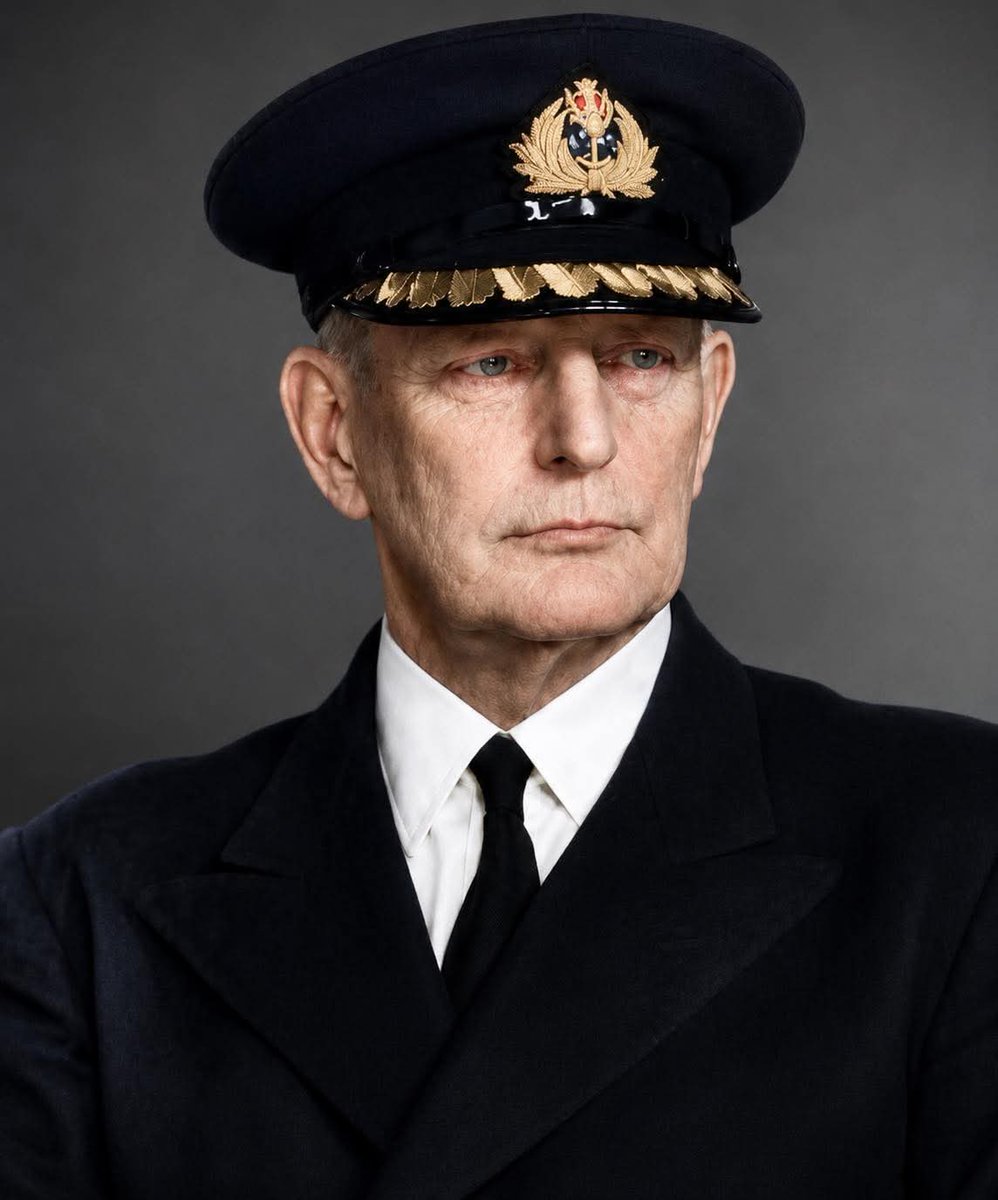
For nearly six years in German prisoner-of-war camps, he did not utter a single word in German.
And this despite the fact that he was born in Germany, grew up in a German-speaking environment, and served in the Imperial German Navy.
His name was Józef Unrug.
His story is one of the most remarkable examples of loyalty to one's country during World War II.
Unrug was born in 1884 in Brandenburg an der Havel, in Prussia, to a family of both Polish and German heritage. German was his native language. He graduated from prestigious naval academies of the German Empire and served as a naval officer during World War I, commanding submarines.
But after the war, his life took a different course.
In 1918, after more than a century of partition, Poland regained its independence. It was then that Unrug made the decision that would define the rest of his life.
He left the German Navy and joined the newly created Polish Navy.
In fact, he became one of the founders of Poland's naval forces, which had to be built almost from scratch. Unrug not only served the new state but also supported the development of the navy with his own money.
In 1925, he became commander of the Polish Navy.
When Germany invaded Poland on September 1, 1939, Unrug was responsible for the defense of the Polish coast and the Hel Peninsula. Despite overwhelming enemy superiority, his forces resisted for more than a month.
Only on October 2, 1939, was he forced to surrender.
Years of captivity followed.
The Germans held him in several officer prisoner-of-war camps, including Oflag II-C Woldenberg, Colditz Castle, and Oflag VII-A Murnau. They knew his background well, including his service in the German Navy and his German roots.
For that reason, they repeatedly tried to persuade him to cooperate.
Former colleagues offered him privileges, special treatment, and high-ranking positions.
Unrug always refused.
Then came the episode that made him a legend.
During one visit, his cousin, German General Walter von Unruh, addressed him in German. It seemed perfectly natural: two relatives who had grown up in the same culture and spoken the same language all their lives.
But Unrug replied in French.
When asked why, he gave the answer that became famous:
"On September 1, 1939, I forgot the German language."
From that moment on, he adhered to this principle until the end of the war.
Unrug understood German perfectly, but he demanded an interpreter for all official conversations. He answered German officers only in Polish or French.
It was not a question of language.
It was a matter of principle.
After the invasion of Poland, he refused to use the language of the state that had occupied his country.
His resistance was not armed.
It was expressed through discipline, consistency, and unwavering loyalty to his convictions—day after day, year after year, throughout nearly six years of captivity.
In 1945, the Murnau camp was liberated by American forces.
But the end of the war did not mean a return home.
Poland had fallen under a communist regime dependent on Moscow, and the admiral chose to remain in exile.
He lived in the United Kingdom, Morocco, and France, leading a modest life far from fame and high office.
Józef Unrug died in 1973.
Before his death, he expressed one final wish: to be buried in a free Poland alongside his sailors.
His wish was fulfilled only 45 years later.
In 2018, the admiral's remains were ceremonially reburied in his homeland.
For years, Józef Unrug refused to speak a language he knew perfectly.
For many, it was a symbolic gesture.
For him, it was a matter of honor, dignity, and loyalty to the country he had consciously chosen as his homeland.
Skrót info ze świata 🌐. Niedziela 31 maja
-250 lat🇺🇸przemówienie Trumpa zamiast koncertu
-🦠pierwszy przypadek Ebola w Brazylii
-⚖️🇵🇱 plan 0,5l kranówki za darmo w restauracji
-🚢USA ostrzelało statek omijający ich blokadę
- E.Warchocki robot Ai z własną linią napojów w Dino
-🇨🇳 sprzedaż prezerwatyw w Chinach -5% . Pekin walczy z kryzysem demograf. 8mln👶/rok
-🪙Trump wzywa do audytu złota Fort Knox (2 raz)
-🇩🇪DB Bahn zlikwiduje 50% miejsc pracy w 4 lata
-🇱🇧Premier Libanu wzywa 🇮🇱 do zawieszenia broni
-⚽️zamieszki w Paryżu po meczu
-🇬🇭 3 lata więzienia dla LGHTQ+,bi, trans etc.
-🇵🇱 Konwojenci zgubili worek💰z 1mln zł.Zgorzelec
-🇨🇳 nadal 147 zamkniętych kopalni węgla koksowego w Chinach. Śledztwo przejmuje Rada Państwa
- 🇺🇸Pentagon: dążymy do równowagi z Chinami
- 🖥️jutro pierwszy Windows na chipów Nvidia
- 🙃Dziś Dzień bez Majtek. Światowy ( Kiedy ci mówią: Czuj się, jak u siebie w domu 🏠, najważniejsze - nie zdejmuj majtek! 🙃)
-🇺🇸 Prezes Cinkciarza chciał uniknąć ekstradycji, zaciągając się do armii USA
-🔥Pożar pod Wołominem gasi 1300 strażaków
-🇬🇫 malutka Gujana osiąga gigantyczne zyski z ropy
-CNBC: 3-4 lata zajmie powrót eksportu ropy w Ormuz do stanu sprzed wojny
⚠️ napisz czy chciałyś skróty audio 🎶tutaj czy mają zostać tylko na kanale subskrypcji
-🛒Biedronka otwiera Lab. Produkty przyszłości
-🇬🇧🇺🇸🇦🇺 budują wspólnie podwodne drony
- SoftBank wybiera Francję na centra AI. Mało OZE
-👟Modivo zmienia strategię. Tnie e-commerce. HalfPrice ma napędzać wzrost. Start ShockPrice
-🛒Eurocash, Netto Polska i Polomarket łączą się w Unitas by razem kupować taniej na rynku światowym
-🇮🇱 rząd debatuje nad propozycją Netanjahu zajęcia prawie całej Strefy Gazy przez wojsko
-🇯🇵 codziennie ubywa 1643 Japończyków
-🇫🇷 rekord więźniów 88 tys. Głównie imigranci
-🇳🇱 rozbito botnet 17 mln urządzeń w Holandii
-🧮LibreOffice trafi na smartfony.Cios w Microsoft
- 💰ok.82% Polaków posiada oszczędności ( Najlepszy komplement dla Żyda ? Twoja chciwość nie zna granic 🙃)
-🥼Lekarz Trumpa: "jest w doskonałym zdrowiu"
-🎦zamieszki nowych Paryżach po zwycięstwie PSG nad Arsenalem. Olbrzymie starcia z policją
- Dzień Bociana Białego ( gdzie się chowa bocian jak przyniesie dziecko 👶? W spodnie 👖🙃Jutro Dzień Dziecka)
- skrót nocny 🌜
https://t.co/SkTE8pc1ll
- skrót sobotni
https://t.co/m2WbPsp27V
You can't even escape the DIEversity of "Modern England" by having a day at the beach.
Muslims film themselves setting fireworks off at families at the coast, all whilst screaming "allahu akbar".
Marta Kostyuk shows damage caused by Russian missile that narrowly missed her parent’s house.
“If it was 100m closer, I probably wouldn’t have a mum and sister today.”
#RolandGarros
🚨 A case in the UK is rapidly turning into a national political firestorm.
Lawmakers are now openly demanding answers after the death of Henry Nowak sparked outrage over police conduct and accusations of “two-tier policing.”
The controversy exploded after claims that officers focused on allegations made at the scene while a critically injured student was reportedly left without immediate life-saving attention.
Now members of Parliament are calling the situation a full-blown scandal and demanding investigations into how police handled the incident.
The debate has now moved far beyond one case.
Public trust.
Equal treatment under the law.
And confidence in policing itself.
All being dragged into the spotlight.
🇬🇧🔥
Pressure on UK authorities is rising by the hour.
U.S. Forest Service seeks public help identifying individuals who defaced Cathedral Rock
The U.S. Forest Service is asking the public for help identifying a group of individuals caught on video defacing Cathedral Rock in Sedona, Arizona — a sacred Native American site.
The AI video below shows enhanced imagery of two men believed to be connected to the incident.
This incident has drawn significant public attention and concern over the protection of important cultural and natural landmarks.
America’s sacred sites and public lands deserve respect and protection.
What should happen to those responsible?
(Video: AI)
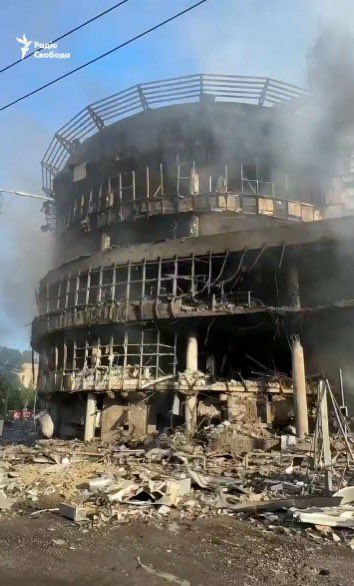
Hellish night in Kyiv. Didn’t know if I’d wake up.
When there’s nothing on the battlefield, Russia wages war on market stalls and apartment blocks, murdering people in their sleep.