Als tegengewicht voor al het slechte, of toch minder leuke, nieuws af en toe wat leuke muziek uit mijn 'Wonder Years'. Deze kwam uit in november 1964. Ik was 7 en luisterde naar muziek op een klein transistor radiootje, een SBR als ik me niet vergis.
https://t.co/wdaMEF6KFZ
#musicfromtheseventies
295/1978
#ABBA stond in 1978 2 weken op 1 in België met 'Take a chance on me'. Het is één vd weinige ABBA-hits waarop de stemmen van de mannen ook te horen zijn. Het deed niks af van het succes want ook deze werd wereldwijd een hit.
https://t.co/AyH1wZAnFC
#Goedemorgen iedereen 😘
Vrijdag 23 oktober 2026
We hebben maar één leven. Probeer er dus uit te halen wat er inzit. Maar je leven is jouw leven. Bepaal dus ook zoveel mogelijk wat je wil, hoe je het wil en wanneer je wat wil.
Geniet van je dag ❤️
https://t.co/STPM6D2B2X
#musicfromtheseventies
296/1978
#Blondie stond in 1978 3 weken op 1 in Nederland met 'Denis'. De Amerikaanse new-wave band coverde 'Denise' uit 1963 van Randy en The Rainbows. Voor Blondie was 'Denis' dé doorbraak hit.
https://t.co/5Axlx1cTEM
"No te olvides de tu México que es la raíz de tu vida y ten presente que «acantos» te espera tu cuate Frida."
Frida Kahlo. 1946. Fragmento de carta a la niña Mariana Morrillo Safa.
El amor de Frida Kahlo por México quedó grabado en su puño y letra. En sus cartas plasmaba la nostalgia por sus colores, el orgullo de sus raíces y ese refugio identitario que la sostenía incluso cuando estaba a la distancia.
Leer sus cartas es descubrir que México no era solo su hogar, sino la raíz misma de su vida y de su arte.
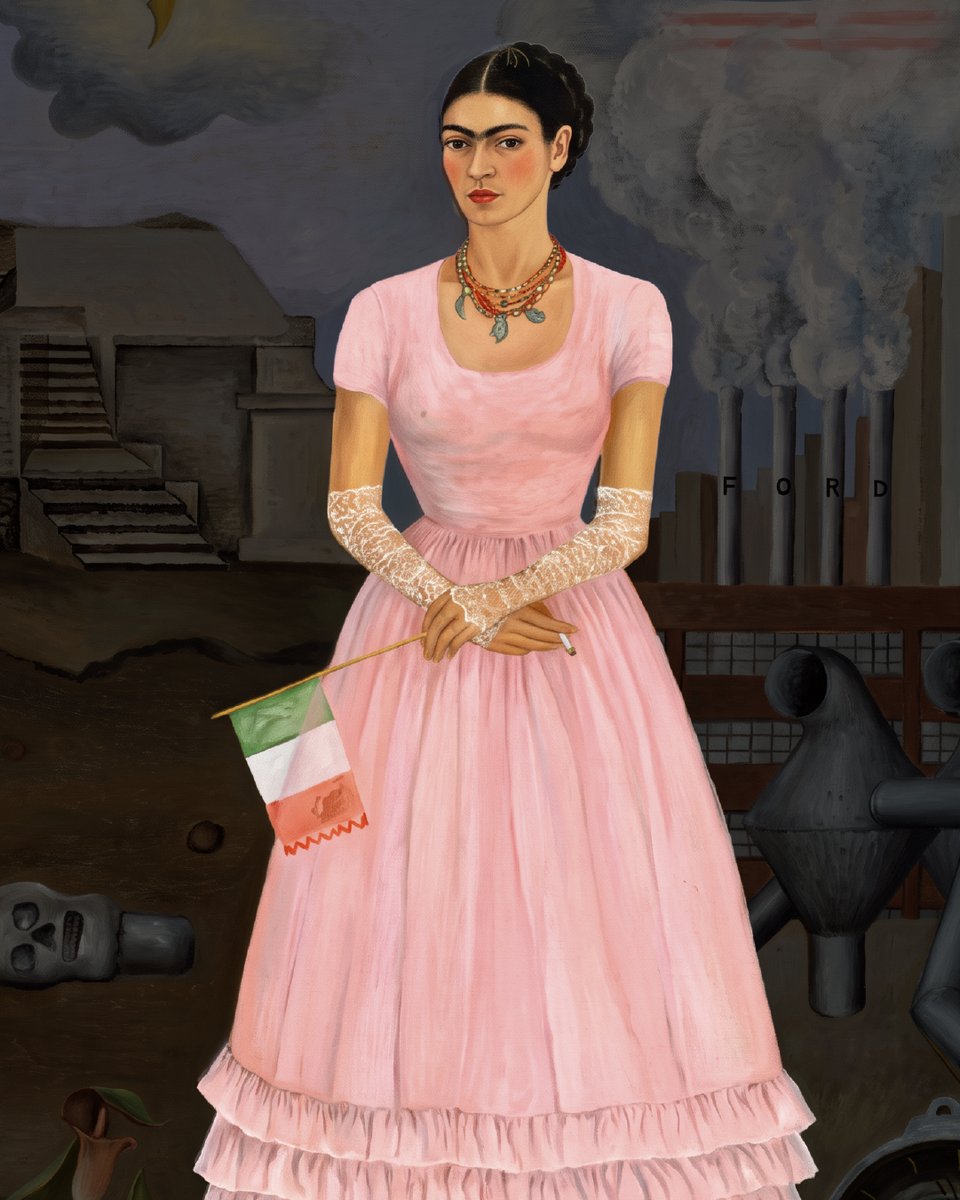
🖼️ Fragmento de pintura intervenida. Autorretrato en la frontera entre México y Estados Unidos. Frida Kahlo. 1932. Nueva York, Modern Art International, cortesía Foundation.
※※※
"Don't forget your Mexico, which is the root of your life, and keep in mind that your pal Frida eagerly awaits you."
— Frida Kahlo, 1946. Excerpt from a letter to the young girl Mariana Morrillo Safa.
Frida Kahlo’s love for Mexico was captured in her very own handwriting. Through her letters, she expressed a deep nostalgia for its colors, pride in her roots, and the sense of identity that sustained her even from afar.
Reading her correspondence reveals that Mexico was not just her home, but the very root of her life and art.
🖼️ Fragment of modified painting. Self-Portrait along the Border Line Between Mexico and the United States. Frida Kahlo, 1932. New York, Modern Art International, courtesy of Foundation.
🍉 Frida Kahlo, coleccionista.
Frida diseñó su entorno en la Casa Azul reuniendo elementos que expresaban su visión particular de la vida. Con un espíritu curioso y coleccionista, atesoró objetos que le provocaban alegría, manifestaban sus ideales políticos y reafirmaban su orgullo patrio e identidad ancestral. En esta constante búsqueda, su profundo amor por el arte popular mexicano se tradujo en una rica colección de objetos tradicionales como cerámicas, retablos, juguetes y singulares candelabros artesanales modelados con aves, flores y figuras alegóricas que terminaron por transformar su hogar en un reflejo vivo y auténtico de su propio ser y sensibilidad.
※※※
Frida curated her surroundings at the Blue House by gathering pieces that expressed her unique vision of life. Driven by a curious and collecting spirit, she treasured objects that brought her joy, conveyed her political ideals, and reaffirmed her national pride and ancestral identity. In this ongoing pursuit, her deep love for Mexican folk art translated into a rich collection of traditional piecessuch as ceramics, votive paintings (retablos), toys, and distinctive handcrafted candelabras adorned with birds, flowers, and allegorical figures ultimately transforming her home into a living, authentic reflection of her true self and sensibility.