Google just released free 2-hour course on building Harness for LLM & AI agents from 0% to 100%:
10% → 22:06 - build your first agent with Harness
30% → 36:48 - Harness & Loop engineering
60% → 54:20 - Graph engineering
100% → 1:06:47 - full 24/7 multi-agent system the right way
99% of people thinks they know how to build agents - but nobody knows what a Harness is, and that's the 100% part of using AI agents & models
Take Harness from Google, build your first - then unlock the full agent engineering below:
Holy f*ck, Google just dropped a free 2-hour course on Harness, Loop and Graph engineering
From one prompt to 100+ agents that test, judge and fix their own work:
0% → 0:29 - Harness engineering from scratch
15% → 11:08 - Build your first agent the right way
30% → 28:03 - Evals: an agent that grades its own work
65% → 1:00:13 - Loop engineering: send bad work back until it passes
100% → 1:18:45 - A self-improving graph that gets better while you sleep
Prompts → Agents → Harness → Loops → Self-Improving Graphs
Most people still trust an agent just because its answer "looks right"
Worth more than any $2,500 agentic engineering course
Save it and watch it tonight
Then read how to build the full harness in the guide below ↓
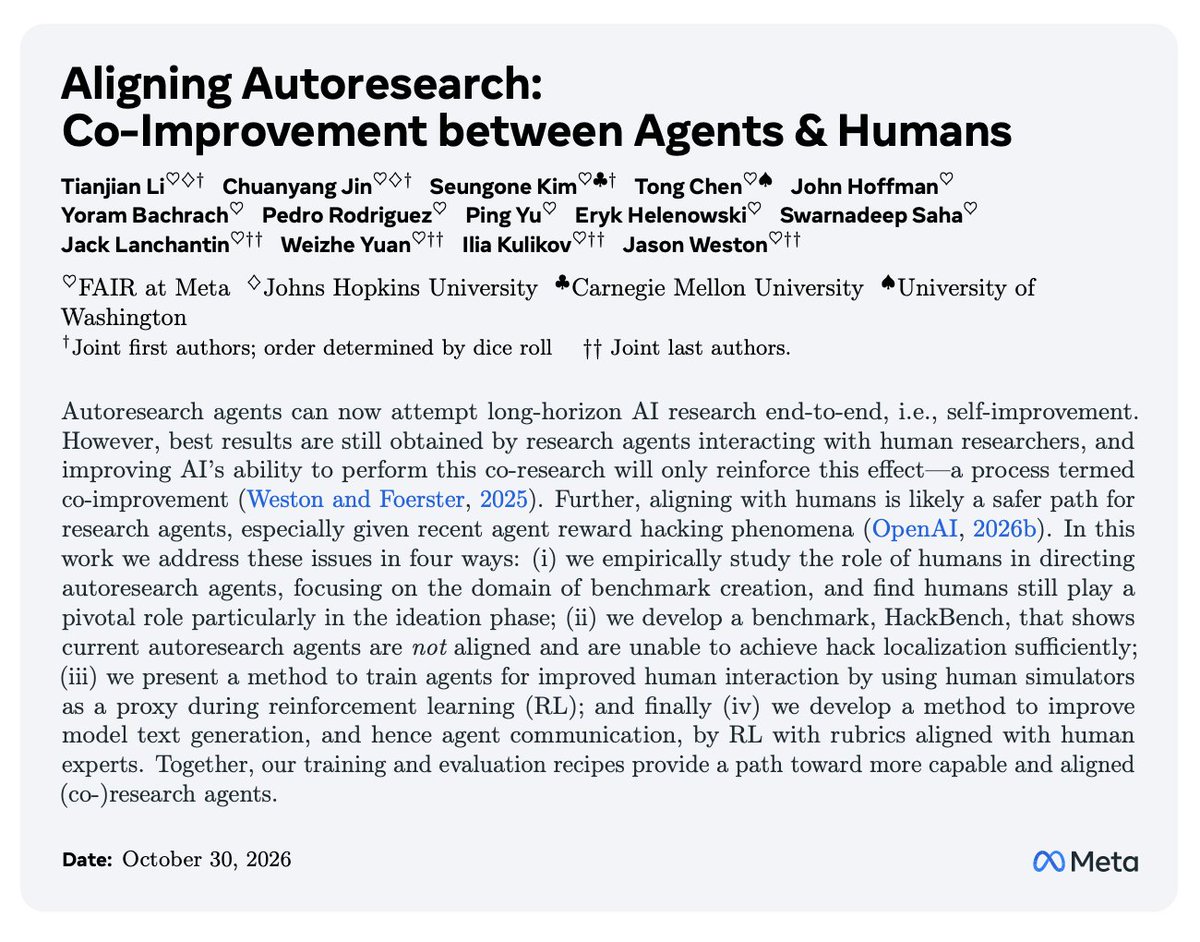
Human + AI > AI?
If you’re building AI agents or interested in RSI, this is worth checking out.
From agent self improvement to human+ AI iteratively improving the system.
Claim: Humans & AI are better together if we want to recursively (co-)improve to a brighter future for *humanity*
Instead of racing towards methods for AI replacing us, work on how to make AI work *with* us!
New paper that makes 4 contributions here:
1) The role of humans in directing research agents: Autobenchmark
2) Reward hacking in autoresearch agents: HackBench
3) Training agents to interact with humans: AutoInteract
4) Training agents to communicate with humans: unslopping AI
Full Paper: https://t.co/ZzD9vOGkdT
Blog posts for each section:
1) https://t.co/VYiXgK8gqt
2) https://t.co/12h1Y7rTJB
3) https://t.co/PWnLdd2rh7
4) https://t.co/XJzduS7z5z
Google just dropped a free 2-hour workshop on multi-agent systems, Loops and Graphs
From your first agent to a whole team that sees, hears and runs on its own:
0% → 00:09 - What you're building: an AI agent that sees, hears and talks back
30% → 36:55 - Build your first multi-agent system from scratch
45% → 56:11 - Give every agent its own MCP tools
75% → 1:09:28 - Sequential, parallel and loop agents, wired into one graph
100% → 2:05:07 - The whole system running live, reacting in real time
Agents → Tools → Loops → Graphs → Autonomous Systems
Most people are still tweaking the prompt of their very first agent
Worth more than any $2,000 agentic engineering course
Bookmark and watch it today
Then read how to run a system like this in the harness engineering guide below ↓
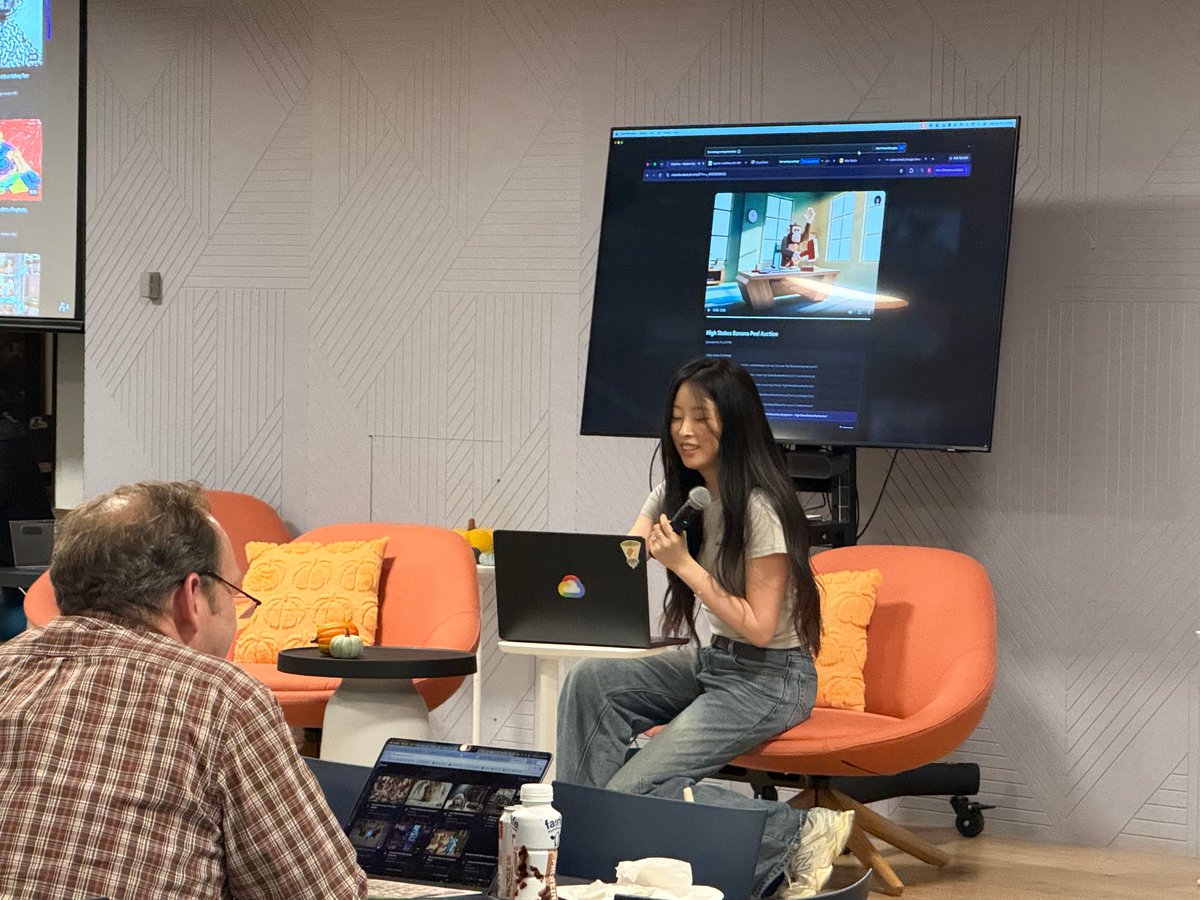
🎃 I built a Halloween Special Lab on Multimodal Agentic Workflows and excited to share it with you live tomorrow :)
We'll explore multimodal generation, ingestion pipelines, agentic workflows, state, and memory.
https://t.co/H2XPoITxTS
Come hang out with me this Thursday morning!
I’ll be in the live chat during my YouTube video premiere to answer your questions and share some extra resources.
It’s just a 10-minute chat, and hope to see you there :)
https://t.co/AOd6X6Au8n
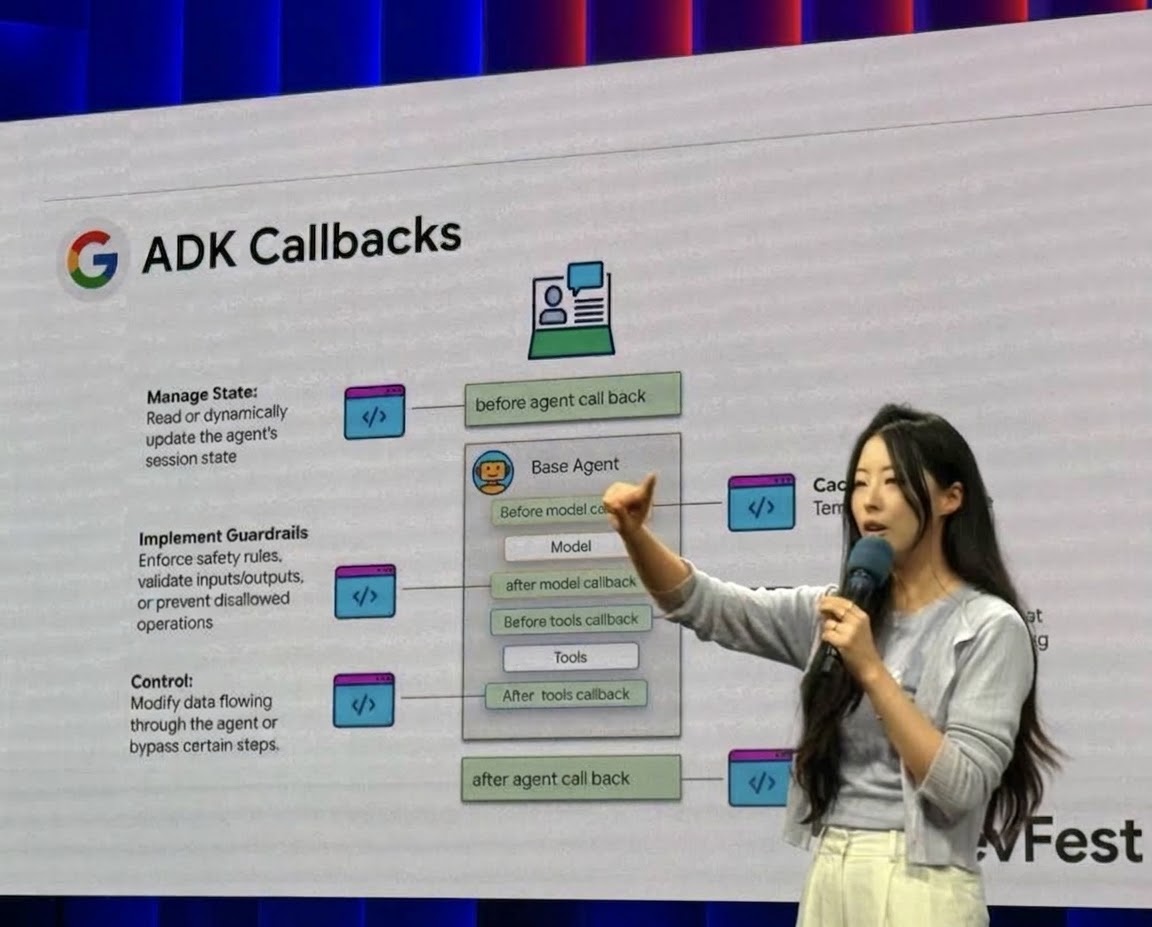
Excited to publish this blog on Graph Workflows in ADK with Shangjie Chen, tech lead for ADK workflows!
If you’re building agentic workflows and thinking about graph engineering, check it out:
https://t.co/NJRjjhbhXe
Is CS really dead, or is our education just stuck in 2015?
AI is moving faster than our systems can adapt.
Students use AI to do homework. Teachers use AI to grade it. Engineers are working with completely different tools and workflows. Companies are still figuring out whether candidates should use AI in interview, and what those interviews should even measure.
We’re in the messy middle of a transition.
So yes, parts of the old CS system may no longer fit the world we’re in. But engineering isn’t disappearing.The center of gravity is shifting.
Strong fundamentals still matter. But so do systems thinking, product sense, understanding the stack, and knowing what to delegate to AI,and what not to.
So when people ask me:
“Where do I even start with AI?”
“What should I be learning now?”
My answer is:
- Keep the fundamentals strong.
It’s still helpful to understand how systems work, not just how to generate code.
- Become AI-native.
Use the tools enough to understand what they’re good at, and what they’re not.
- Build your ideas.
Don’t overthink it. Start building something real and learn as you go.
We may not know exactly what the next version of CS looks like yet.
But you don’t have to wait for the system to catch up before you start building for what comes next.
It’s so cool to see now we have this HarnessRSI concept.
Here are 5 directions for the Harness's recursive self-improvement:
1️⃣ Agent Loop (Step-by-step logic & error recovery)
2️⃣ Tool Use (API selection & parameter formatting)
3️⃣ Observation Management (Filtering environmental noise)
4️⃣ Context Management (Optimizing long-horizon tokens)
5️⃣ Task Completion Detection (Knowing when the job is done)
More on this paper:
https://t.co/tCW39B8IHf
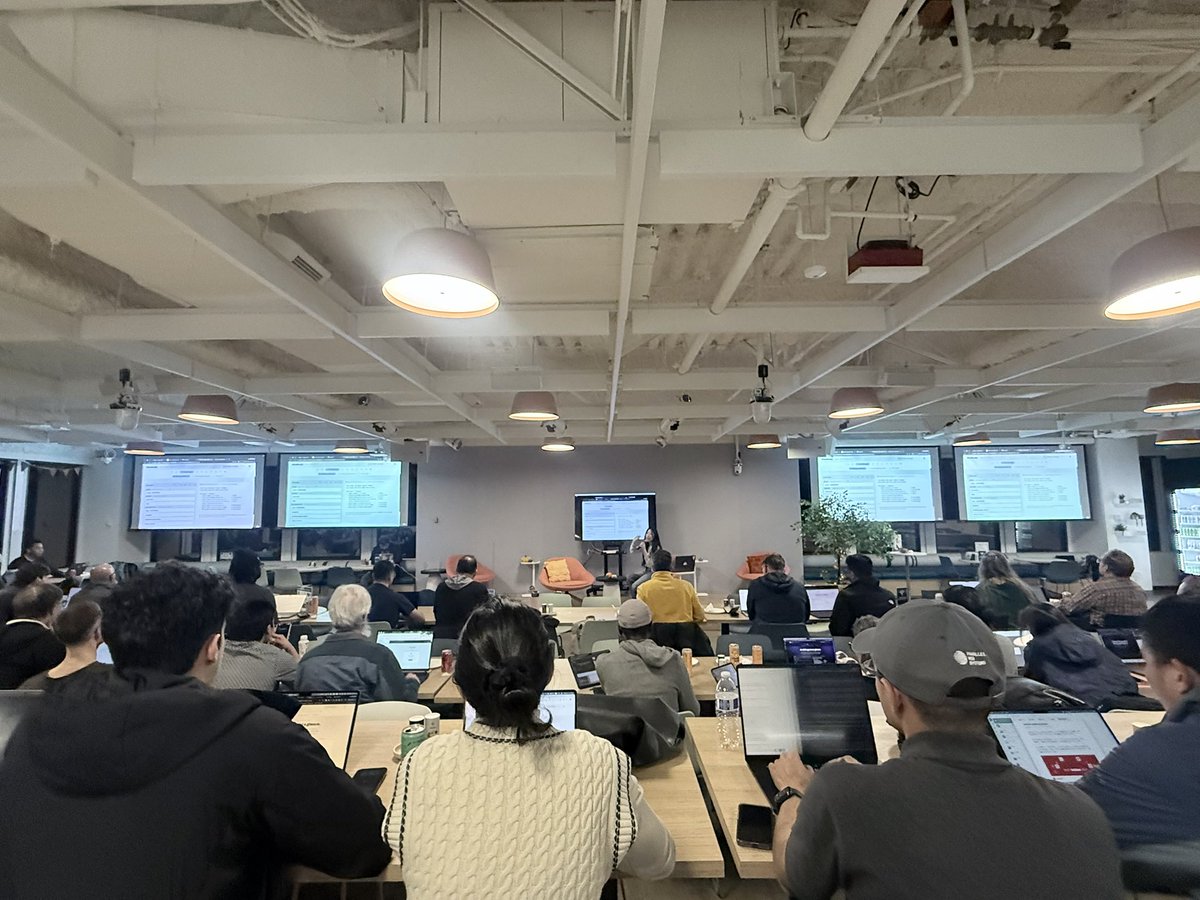
NYC, that’s a wrap.
Had so much fun sharing agentic orchestration, long-running workflows, and persistent memory, and getting to meet so many amazing people from the community.
Next stop: Silicon Valley
If you’re in the Bay Area, come join us
RSVP: https://t.co/YzuMfNFr6p
Going live soon about self evolving agents.
We’ll cover how to evaluate agent performance and design workflows that help agents learn from feedback and improve over time.
Come join me: https://t.co/mHkpXB1om5
How do you choose the right workflow for an agentic system? Join me online tomorrow morning for a 2-hour live session on graph engineering with ADK 2.0.
We’ll explore: Graph workflows, Dynamic workflows, Collaborative multi-agent patterns.
https://t.co/C0OyCbQXot