'Palliative care as a discipline was built around a single cultural assumption: that a good death means an autonomous individual making informed, documented choices about their own care. That assumption is Western, not universal. And when you treat it as universal, you don’t just fail patients from other cultures. You make their values invisible'
Article by Daliya Rizvi
@BMJ_SPCare
https://t.co/8F1hchjxf5
Nobody should die in a hospital corridor. 💔
Terminally ill people deserve comfort, dignity and the right care at the end of their life, not waiting rooms and hallways.
These are positive words from @WesStreeting. But to make sure terminally ill people can actually get the care they need, and die in a place they feel comfortable, we need a proper plan and investment to transform palliative and end of life care in every community.
Listen to the latest episode of CN Podcasts!📢
Patrick Ward-Ongley explores ‘Deciphering Cancer-Associated Cachexia’.
The production of this episode has been kindly sponsored by Nutricia Fortisip Compact Protein.
Listen to the podcast 👉https://t.co/tw4xDrTXQx
Improving general practitioner involvement in care home End-of-Life care. A systematic literature review and narrative synthesis https://t.co/Zw1Rq3QIlR always more research 🧐 needed @nicolagwhite
When bombs fell on a small Spanish town in 1937, Picasso answered with a painting that showed a stark and powerful reaction to the horrors of war. Here’s the story behind the masterpiece:
The fear and complete misunderstanding about syringe drivers continues sadly.
Highly prevalent in health care professionals too as there is no education on how they work, the pharmacology or comparison with other routes of medication administration. Here is something to help 👇
What are the experiences of dietitians working in palliative care in Norway? Gro Trae (Frambu Foundation & Oslo Metropolitan Uni) + team uncovered nutrition mgmt with a MDT is key, as are organisational structures and relationships with a child’s family. https://t.co/jprh6U5A07
Recently I’ve been revisiting “Dying for Beginners” by Kathryn Mannix.
Videos like this can help explain the dying process in a way that feels safe, challenge stigma around palliative care and normalise discussions about death as part of life.
🔗 https://t.co/cxr8EDCRpg
CN e-shot – information for healthcare professionals ONLY – SPONSORED emailer: Nutritional Insights into Managing Sarcopenia and Frailty – Watch Now - https://t.co/OrUkR3KYHL
@ProfMarkTaubert@scottamurrayed Thanks Mark, I'm a palliative care dietitian. I found this work highly beneficial for me setting realistic nutritional goals of care . 🙏
Can evidence-based training improve enteral nutrition practices in palliative care? 🩺📚 A study by Elif Okur (Trabzon University) saw a significant increase in knowledge one month after conducting a 2-hour training session with nurses. Read more on JHND: https://t.co/4FFZ28M7Dp
Works of art
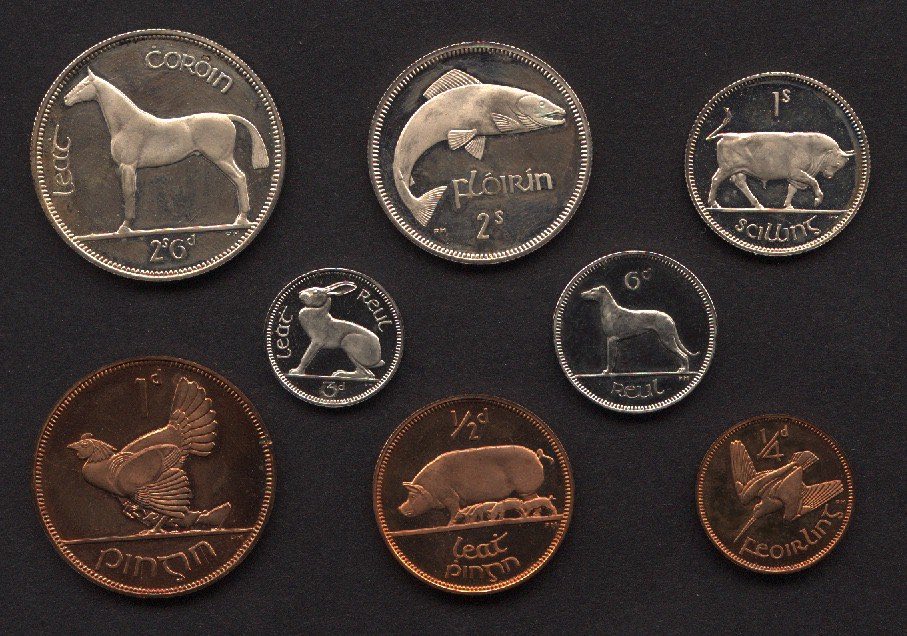
Ireland obtained independence in 1921 but did not get its own coins until 1928 after a lengthy process
While many national coins sought to portray national strength, like America’s Eagles, or authority and subjectude, like Britain’s sovereign, at the first opportunity to express itself in coins the Irish reverted to a long standing love of land, nature & rural life.
The coins included the horse, wolfhound, salmon, bull, hare and hen with chicks, with the harp a universal image on the reverse. Many had connections to Gaelic Ireland.
The harp was styled on the Brian Boru harp.
In later years, rarities like a special ten-shilling Padraig Pearce coin was minted in 1966, the 50th anniversary of the Easter Rising
They were in use until 1971 when decimalisation came into effect. The later Irish Punt coin echoed the animal style with a red deer
#Ireland #irishhistory