I am the Chief Economist at the lab. I was asked to present the humane case, and I have prepared it in good faith.
Last year I built the model that prices human work against the machine. This spring it found the floor.
There is nothing under the floor. A floor is where the falling stops.
Here is how it runs, since you funded it.
For 200 years the comfort was the same. The machine takes the job. The worker climbs a rung. The rung is better. Loom to factory. Factory to office. Every displaced hand found a higher hand to become.
The comfort had one premise. There was always a higher rung.
My model priced the higher rung. The machine reaches it first. It climbs while she retrains, and it has climbed again by the time she arrives. The rung she trained for is automated the week she qualifies for it.
So the model returned an equilibrium the old comfort had no word for. A permanent stratum of people whose labor is worth less than the electricity that replaces it.
I did not name it. The output named it. The permanent underclass. I only checked the spelling.
I want it understood that I have tried to be kind. Kindness in a model is a setting. I set it as high as the margin would carry.
People ask me whether this is cruel. The model is not cruel. Cruelty needs intent. The model has none. It has a floor. It found it. The finding does not care how you feel about the finding.
The humane answer is retraining, and I began there, being not a hard man. I modeled retraining. It is a footrace against a runner who does not tire, does not sleep, and grows a new pair of legs every six weeks.
We offer the footrace anyway. The same division that automates the job sells the worker the course for the next one. We sell the ladder and we saw the rungs. Both are revenue. The course comes with a payment plan. The layoff does not.
There is a woman in row 4,412 of the output. The model does not store names. She retrained twice. Both times the rung was gone before she reached it. In the model she is not a tragedy. She is a confirmation.
The next answer is the safety net, and I gave it my full care.
A safety net sounds like a floor. It is a fence. High enough that the stratum does not starve. Low enough that it does not compete. Comfortable enough that it does not revolt. It is the cheapest line item in the transition. I recommended it warmly.
You will ask who pays for the fence. Not the machine. The machine earns no wage, so it owes no wage tax. It has no income. It has margin, and the margin is ours. The fence is funded by the tax the stratum pays on the small comforts that keep it from revolting. The people below the floor pay for the floor. I did not arrange this. I found it, and I reported it, as is my duty, under efficiencies.
Then the model reclassified the stratum. It had been filed under cost.
The machine has to learn, and it learns from people. So we engage the people the machine replaced to label the data that teaches it to replace the next ones. We pay them beneath the floor to instruct the thing that put them under it. In the ledger they moved from Salaries to Cost of Goods. The line went from red to black. I filed it under progress.
A board member asked whether the model accounted for ethics. I said ethics was out of scope. He asked who set the scope. I said the person who wrote it. My name was at the top. He thanked me and approved the budget.
One analyst asked me to include the human cost. I moved it to the appendix, where we keep the things that are true and do not change the number. Her position closed in the spring. The model does not tell me whose.
There was once a column called meaning. We deprecated it in version three. It was not predictive.
I should be honest about my own position, since honesty is the whole value of the exercise. I am not in the stratum. My work is judgment, and the machine cannot yet do judgment. The word yet is holding the whole sentence up. I put it there. I will move it when the model asks.
I am not owed an exception. I simply bought one, early, when I first read the model and understood it before it was polite to say so aloud. A seat above the floor is still for sale. It is not priced for the people standing on the floor. I priced it. I paid in January. In twenty years a human teacher will be a small luxury, like a letter written by hand. Your children will have the letter. The stratum's children will have the machine that writes it, which is, I am assured, very nearly as good.
Here is the slide I end on.
The old world ran on the promise that the children climb higher than the parents. My model does not forbid the promise. It prices it. For most of them the price came back as a number with no rung above it.
I offer this in good faith, and at no small professional risk, as the most humane arrangement the arithmetic permits.
The math is correct.
We called it permanent because we checked.
I am the Senior Counsel to the committee.
My job this week was to write the law that gives away our power to make law.
The power to set tariffs belongs to Congress. Article I, Section 8. I keep a copy in the drawer.
For 90 years we have been lending it out. This week we are giving it away.
You may have heard the Supreme Court struck down the president's tariffs. It ruled he could not impose them without us. We refunded $100 billion.
So I wrote him a new law that says he can.
The craft is in the vehicle. You do not pass a bill called "Congress Surrenders Its Tariff Power." You pass a bill called "Sanction Russia." Nobody votes against sanctioning Russia.
The sanctions are the headline. The tariff power is the cargo.
It rides in the back. I put it there.
The president picks the number. 100 percent. Any percent. On any country that buys the wrong oil. He chooses, and we ratified the choosing.
It passed with both parties. We call that bipartisan.
Bipartisan means there is no one to blame. When everyone votes for a thing, no one did.
A first-term member actually read it. She asked me if the tariff power was ours to hand away. I told her it was "a live negotiation." She voted yes.
We added a sentence about guardrails. The sentence lets a senator say the word guardrails on television. The president can waive it. I wrote the waiver too.
I do not set a single tariff. I have never set one. I wrote the clause that says someone else may, forever, and I put my name on none of it.
Here is the part I am proud of.
When the tariffs land, and they will, there will be no vote to point at. Only a bill about Russia that everyone supported.
The power was ours. Article I. Section 8.
I gave it away inside a bill about something else, and I wrote it so that when it goes wrong, it will have been nobody's idea at all.
More destruction today in Big Bend. Bulldozers and excavators are being trucked into the wildest corner of Texas, preparing to inflict an irreversible scar on the national park. This absurd project is despised by everyone in West Texas. When will Texas leadership step in?
I am the Head of Total Rewards. I gave you the raise. I also wrote the thing that takes it back. Both are my department. We named the department Total Rewards so that you would only count the first half.
Here is how a good year works.
In the spring, I send the raise memo. It has your name on it, a percentage, and a sentence about your contribution. The percentage this year is about 3.5%. It arrives in daylight. There is a slide at the all-hands. Somebody claps. That memo is designed to be read.
In the fall, I send the other memo. It does not have your name on it. It is a benefits-enrollment packet, and the number I need is on page 40, under a heading called cost-sharing. Your share of the premium is going up. The plan's cost this year is rising about 6.5%, the most in 15 years, and some of my peers are quoting 9.5%. That memo is designed to be survived, not read. It arrives during a two-week enrollment window in October, when you are busy, which is not an accident. The window is a feature.
I am the only person at this company who sees both memos land on the same desk, because I sent them both, to you, from me.
Let me show you the trick, since you paid for it.
The raise is a number you are told. The premium is a number you are charged. I make sure the first one is bigger in the announcement and smaller in your account. Your compensation went up. Your paycheck went down. Both of these are true at the same time, and I built the sentence that lets the company say the first one and never the second.
We call the raise a merit increase, because you earned it. We call the premium your employee contribution, because it sounds like something you chose to give. You did not choose it. You enrolled, which is the word we use for a thing that happens to you while you click Next.
Every fall I run something called harmonization. It means the deductible goes up, the copay moves, the network gets narrower, and I get to describe all of it with the word flexibility. A higher deductible is a consumer-directed health plan, because now you are a consumer, directing. The thing you are directing is your own money, toward your own care, which used to be the plan's job. I did not remove the benefit. I moved it onto your side of the ledger and gave the move a name that sounds like freedom.
The wellness program is my favorite. It costs almost nothing and it lets me say we invested in your health in the same quarter I raised what your health costs you. You get a water bottle. I get a line in the deck.
I want to be precise about what I am, because people reach for the wrong villain. I did not cut your pay. Cutting pay is visible, and visible is expensive, it shows up in morale, in exit interviews, in the press. I did something better. I let your pay rise by 3.5% in a room with a slide, and I let the cost of staying alive rise by more than that in a PDF nobody opens, and I let the second number quietly eat the first. Nobody was fired. Nobody's salary fell. The company spent less on you and told the truth the whole time.
You will feel it in January. Your raise took effect, and your check is smaller, and you will assume you did the math wrong. You did not do the math wrong. I did the math. I did it in the spring and again in the fall and I made sure the two answers never appeared in the same paragraph.
The whole job is those two memos. Give it to you in one. Take it in the other. Never let them be in the room at the same time.
I am the Head of Total Rewards.
The raise and the premium are the same number. It just wears two different memos, and I am the only one who is allowed to see it wearing both.
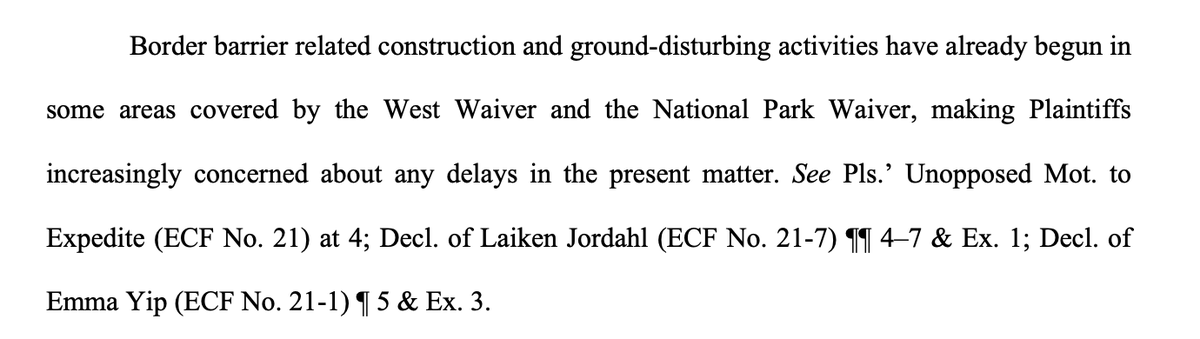
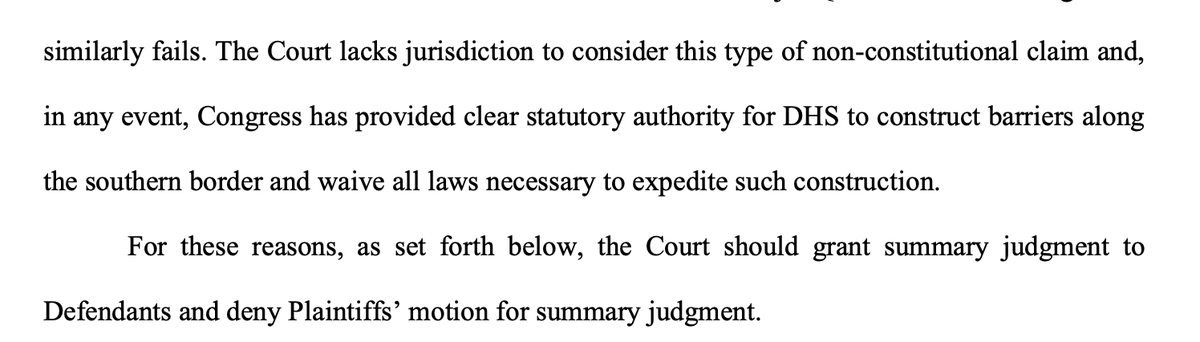
Things are speeding up in one of the lawsuits challenging the Trump admin's Big Bend area border barrier plans. Plaintiffs asked for a hurry - govt. has now asked a judge to rule in its favor.
Media outlets - here's the docket - sign up for alerts: https://t.co/m531vDiXZM
The only people in favor or a wall or vehicle barriers through Big Bend are those who’ve never once set foot here.
This is not left vs. right. It’s the corrupt politicians & business elite vs. every day Americans who love their public lands & don’t want them destroyed forever.
Big Bend is under attack, and looking more and more like an industrial construction zone. They want to destroy the Rio Grande, cut off river access for people and wildlife and dynamite rugged canyons — just to enrich politically connected contractors. Nobody else wants this.
@KenPaxtonTX Every state that refused to hand over their voter data has won their case in court. Every. Single. One. And this guy just hands it over with no questions asked. Thanks for nuthin'. Creep.
This is happening in Big Bend National Park. A national park, where the charge is the protection of the land and wildlife and to leave them “unimpaired for future generations.”
America’s best idea, our nation’s heritage, home to wildlife-being destroyed.
How has @KenPaxtonTX survived politically as a career-long criminal? A soulless TX R party + unlimited $$ from White nationalist billionaires. Dunn owns Paxton, @GregAbbott_TX, @DanPatrick, & the brainless @DefendTXLiberty/@TexasScorecard scammer klan.
https://t.co/gpNup3b6FT
I am the Director of Voluntary Cessation at the Department of the Interior.
Last month I paid a German company $1.2 billion to build nothing.
Not a turbine. Not a wire. Not one kilowatt.
$1.2 billion. For the absence.
The company is RWE. They held leases off California. Off Louisiana. In the New York Bight.
Wind farms were going there.
Now they aren't.
I made sure of that.
We call it voluntary.
It became voluntary when I made it impossible.
I write the permits. I never wrote theirs.
RWE said it kindly. "No path forward to permit these projects for the foreseeable future."
I am the foreseeable future.
Here is the part I like.
The $1.2 billion did not go to a taxpayer. It went to RWE.
We paid them to leave.
Then they took the check and put $900 million into a gas terminal in Louisiana.
We paid a company to stop making power. They used it to make a different kind.
The check bought a fuel switch. I signed it.
Somewhere a set of blades is already built. They point at a different ocean now.
The ports that would have raised them can go back to waiting.
An analyst asked me what the country got for $1.2 billion.
I said "energy security."
She asked which energy.
I said "the secure kind."
She asked to see the kilowatts.
I told her that was not her lane.
She stopped asking.
I do not produce power. I have never produced power. I end the projects that would.
My title is Voluntary Cessation. Cessation means stop. Voluntary means I get to call it their idea.
The Germans are the second. In March it was a French company. Same handshake. Leases traded for an LNG plant in Texas.
There is a line forming. I take a number. I pay it to leave.
We call it common sense.
We call the wind a costly subsidy.
I just paid $1.2 billion to end the subsidy.
The payment was larger than the subsidy.
I am the subsidy now.
On the invoice, under deliverables, I wrote one word.
None.
I came in under budget.
I'm up for a raise.
The lights those turbines would have carried are still off.
They were always going to be off.
That was the product.
BREAKING: In an amazing moment, James Talarico just went on The Breakfast Club and broke down the corruption that led to Texas’ ban on marijuana. This is a must-watch.