A magical time of year is coming in February- a chance to see a natural #firefall at #horsetailfall in @YosemiteNPS Last year was the most amazing one I have ever witnessed-this video captured the wind moving the water in a spectacular show. #yosemite#yosemitefirefall
“It is like nothing we’ve ever seen,” said Dr Jono Wilson, the science director for The Nature Conservancy’s oceans program. “We just are trying to figure out how to wrap our heads around the sheer scale of this event.”
@guardian@GabrielleCanon
https://t.co/cZfhOSUIWU
“To sense this world of waters known to the creatures of the sea we must shed our human perceptions of length and breadth and time and place, and enter vicariously into a universe of all-pervading water.” Rachel L. Carson
@TheAtlantic
https://t.co/OXvCezKoCX
Yes, if you read the article they note this. The article isn’t framed as all is good- “For some of California’s more familiar life forms, the conditions this year have been deeply alarming. April Ridlon, the director of science at the Monterey Bay Aquarium, in Monterey, has deployed extra divers to monitor kelp forests that can suffer in warmer temperatures, deprived of nutrients from cold upwelling waters. Just over a decade ago, amid the marine heat wave known as “the blob,” which coincided with another El Niño, Central California lost more than half of its kelp forests, she says, and Northern California lost even more. In some areas, the kelp has still not returned. She expects to lose kelp now, too, which means potentially losing populations of hundreds of other species that rely on them for habitat and nursery grounds.
In recorded history, “this is the most profound movement of tropical fishes into California that anyone’s ever seen,” Milton Love, a research biologist at UC Santa Barbara’s Marine Science Institute, told me.” @TheAtlantic@partlowj
https://t.co/XBZd6vcHPV
Red admiral and California tortoiseshell butterflies this weekend in my yard. I usually see a few individuals of both these species of butterfly on Sunshine Hill in the fall--often tussling over territory
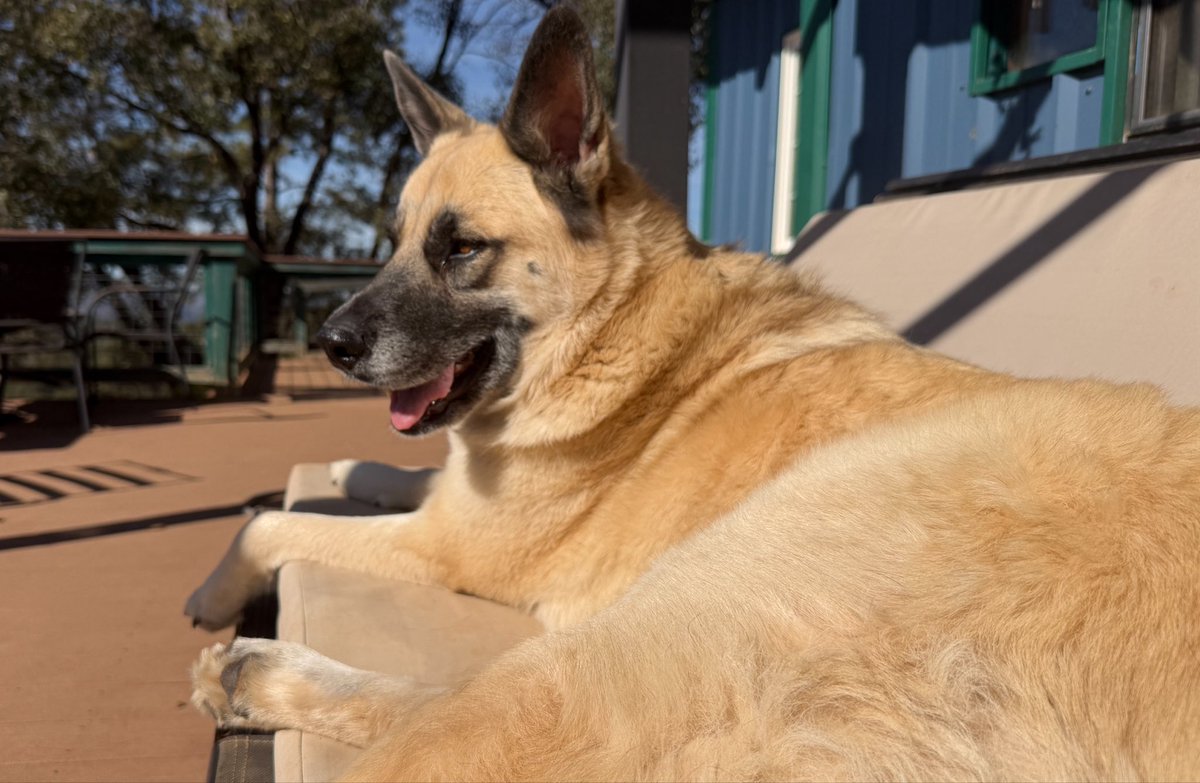
The dogs have it really tough in the Sunshine Hill Pack. They would fail as wolves. 🙂
This is my four year old Knox, a happy gentle soul who loves to give hugs and sunbath. Adopted from Madera County Animal Services in 2023.
"Perhaps it’s nothing more than an old-fashioned case of just loving a spring vacation spot so much you can’t help but go back every year."
@NautilusMag@davidnield
https://t.co/AAY4gOMMKt
Those ears!!!! Mule deer youngster on Sunshine Hill.
Those big ears, as I write in my book Yosemite Wildlife, "provide an incredible acoustic advantage that allows mule deer to conserve energy by assessing whether to take flight, rather than automatically fleeing at any perceived threat, a characteristic that has given them the reputation of being more difficult to spook than white-tailed deer. As outdoor writer Erwin Bauer noted, “The hearing of this species is keen enough not only to hear sounds of different pitches, but also to instantly catalog them. To a deer, the sound of an approaching human, or a bear, or a string of pack horses differs greatly from the sounds made by other deer.”
One of these things is not like the other...the cedar waxwings are back on Sunshine Hill, shown here hanging with some western bluebirds. Nomadic wanderers of the Sierra foothills, sightings are possible year-round, but I most often see them in the spring and fall. They love the manzanita berries on Sunshine Hill!
Coyotes can't stop, won't stop using the Wallis Annenberg Wildlife Crossing! Another one was spotted on it -- this time on the structure over the 101 Freeway.
Biologists don't think it made it all the way across, though that's now possible. https://t.co/f39hYgucqT