just started. ( yeah eventually )
i’m going to spend the next 21 days building, shipping, learning, and meeting people here.
let’s see where this goes.
@rauchg Yeah there are two kinds of distinctions: the best things and free things. Free things are those which are a little bit past, and the newest, best thing is still behind the paywalls. But still they will come down to being free when compute will be even cheaper.
Violent desire to go somewhere else, in another city where nobody knows you
You know how it's like when you left your home and are on a road? You're going somewhere but you don't know where. You do not have any direction, any reason, anything to go somewhere or anywhere. You're confused. You go on a road in one lane and return from the other.
How it feels to be stuck and you're not even trying to get out of that
How to find your mission:
Sample wide to figure out what activities speak to you, then filter down and pick one (or a couple) that you're willing to seriously invest your time and effort climbing up the skill tree and going on "quests".
You may not understand this early on, but skill trees branch out, and quests beget follow-up quests, and the act of climbing to these branch-points will imbue you with perspective that you can leverage to keep filtering down.
If you iterate this process enough, it gradually converges into a single area that you can describe coherently and uniquely. That's your mission.
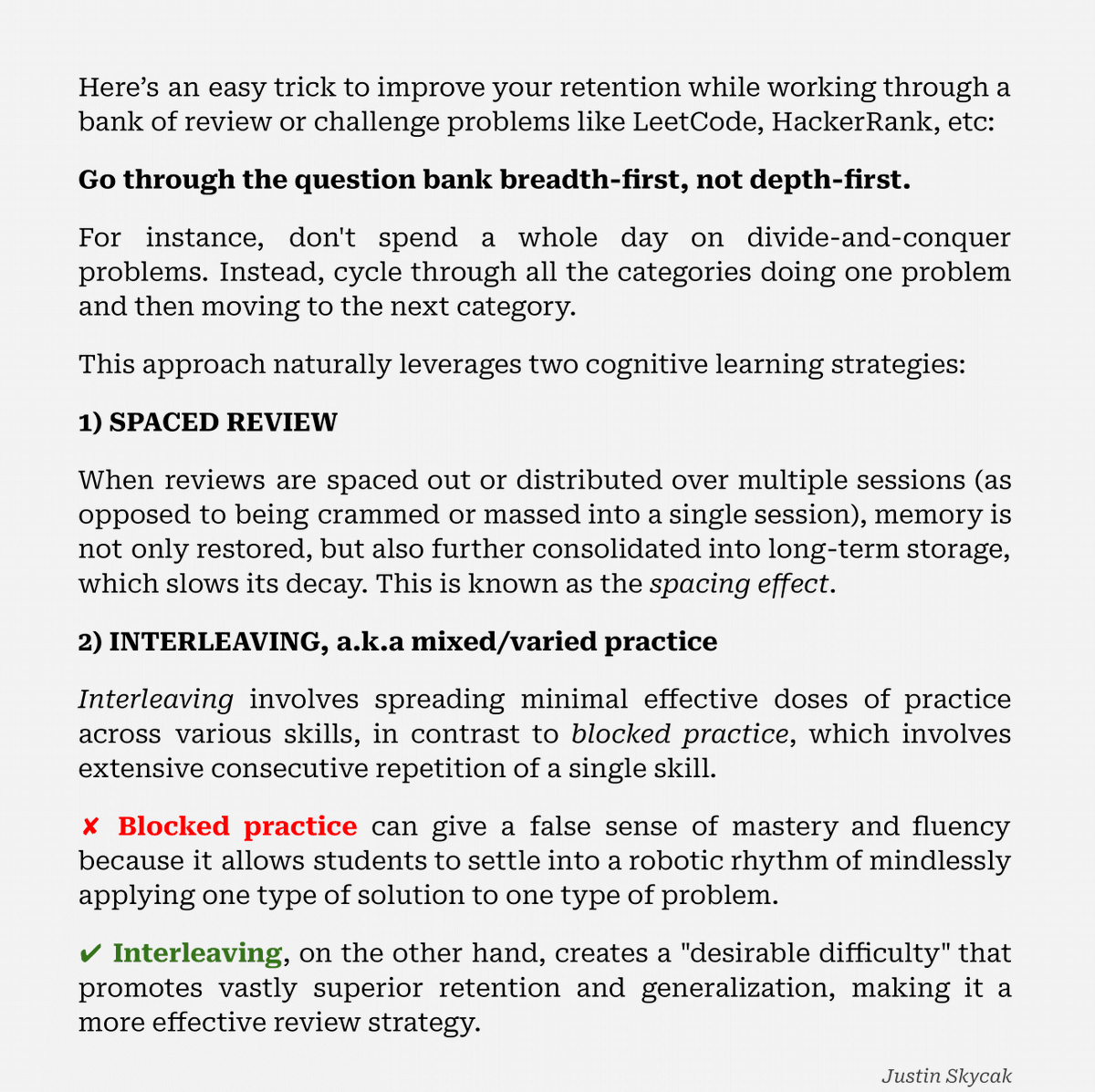
An easy trick to improve your retention while working through a bank of review or challenge problems like LeetCode, HackerRank, etc:
Go through the question bank breadth-first, not depth-first.
Why the hell don't they consider school graduates, I mean, those people who are 18? Why are they looking for college grads? I mean the school grads can do work too.
Please don't on basis of degree🎓
There are a lot of ambitious and really skilled good people but they lack a degree
On the first Thiel Fellowship application, one of the questions was: “Tell us one thing about the world that you strongly believe is true, but that most people think is not true. If this belief shapes the way you live, tell us how.”
Attached is how future fellow @zoink of @figma answered.
Our latest essay explores the defining moments that shaped the fellowship: https://t.co/gR2vdS05M8
This is a pretty good way. The thing is you would have to physically go to the offices of these big companies and try to plead with them to get the job as soon as you can
“Mera beta coding mein master hai.”
My office cab driver casually dropped the most unexpected flex today.
His son is a final-year BCA student.
9.5 GPA.
Exceptional at coding.
But here's the interesting part.
His father drives for Amazon, too.
He reached out to an Amazon employee for a referral for his son.
No LinkedIn cold DMs.
No “Hope this message finds you well.”
No 5-paragraph networking emails written by ChatGPT.
Just a father trying to get his son’s foot in the door.
And his son?
Already cleared Amazon's initial screening.
We spend so much time trying to crack the networking game.
Meanwhile, this man was getting it done from the driver's seat.
Sometimes, the best networking strategy is simply having someone who believes in you.
how to contribute to open source :
> pick an active org
> fork the repository
> clone it
> set it up locally
> ask ai questions about the project structure, how data flow, etc...
> pick an issue
> reproduce the issue
> create a new branch
> fix the issue
> commit & push the code
> go to github and raise a PR
"Deliberate practice" can be a real game-changer for developing insane skills in software engineering.
A common piece of advice is to write more code, design more systems, build more AI-native apps, etc. This advice is good but incomplete.
It needs to be coupled with recognising specific weaknesses, doing targeted exercises of appropriate difficulty, getting targeted feedback, and adjusting your approach during reps.
This is called deliberate practice.
Let's say you wanna get good at coding. Instead of repeatedly writing code, work on areas where your performance is weak.
E.g., if you struggle with concurrency, find out which specific area you are not good at. Let's say you struggle with finding race conditions. You can take existing code (with which you are unfamiliar) and inject races into it, then try to predict interleavings. Predict what would happen and compare it with the actual output by running tests. Find out where you missed, update the code (and your understanding), and repeat the process with another type of race.
With time, you will get better at identifying, explaining, and correcting concurrency defects.
Take another example. Say you want to learn about reliability in distributed systems, and you struggle with failures in distributed systems. Let's say you have a Kafka-based processing architecture. You inject a consumer crash, but before that, predict what would happen. Then, compare your prediction with actual experiments and compare the results against system invariants. You will find overlooked failure modes. Update your architecture incorporating those. Repeat the process for other types of failures.
This process will help you in developing correct reasoning about distributed systems.
Metrics like number of lines of code, portfolio projects, years of experience, etc. are insufficient for measuring someone's capabilities.
Deliberate practice is good, but it only works well when you have a combination of focused attention, sufficient repetition, and a useful feedback mechanism with adjustments.
The story is,
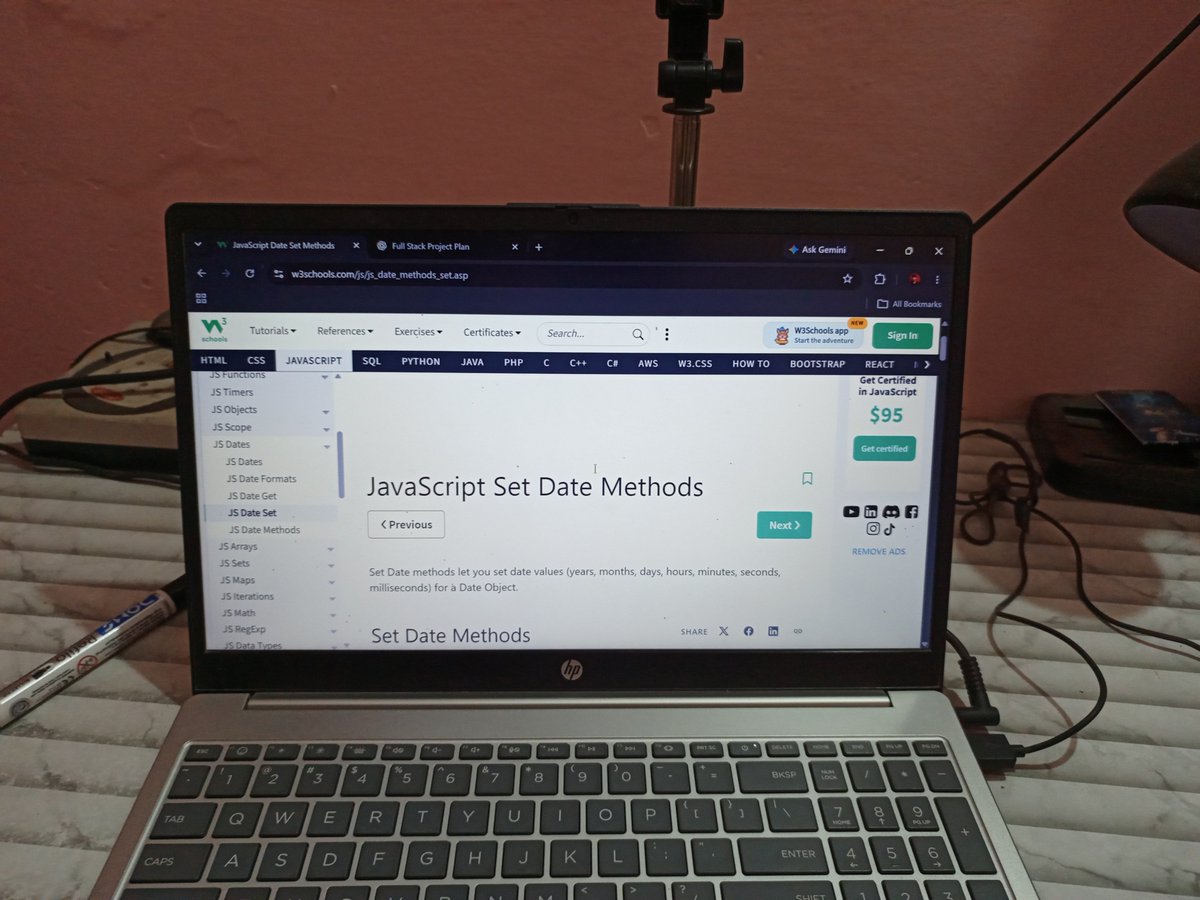
I was reading about how millisecond works in JavaScript and how it is connected with January 1, 1970. I'm so distracted. The level of distraction was insane. I got to YouTube, searched 70s, and wasted my 2 hours there. Ultimately I know that the 70s, 80s, and 90s were better than what we are living in.