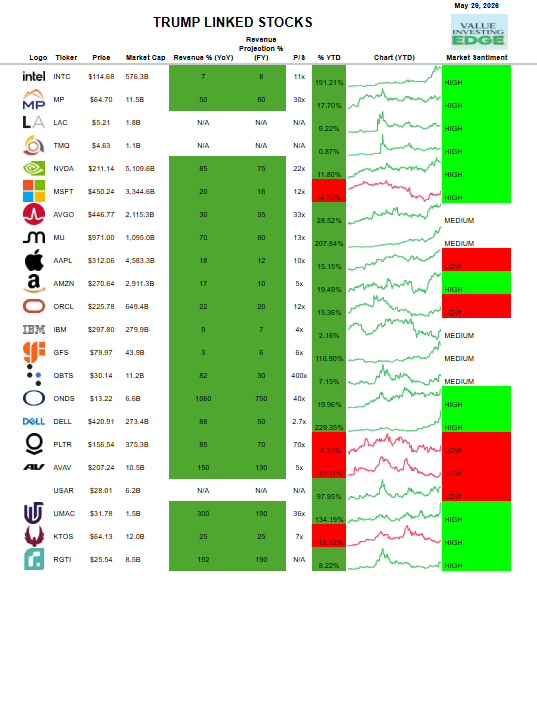
5 stocks you should watch this week👀
1) $NBIS - officially joins the Nasdaq 100 on Monday.
2) $RKLB - officially joins the Nasdaq 100 on Monday.
3) $HIMS - the rally could continue heading into July. The FDA peptide meeting later next month is a potential catalyst. And Director David Wells bought 48,400 shares on May 26 at a weighted average of $24.235, or about $1.17M.
4) $OSCR - CEO Mark Bertolini recently made an $11.9M purchase. I still think this has a path toward $45-$55 over time.
5) $CRWV - also joins the Nasdaq 100 on Monday. The bigger catalyst: CoreWeave reported $99.4B in backlog and signed an approximately $21B Meta infrastructure agreement through 2032.
$SPCX shares are priced at $135 for its $2 trillion IPO.
Its return is 100x-200x by 2035.
These 20 companies will benefit the most:
1. $BKSY ~$34
AI-ready Earth observation satellites feed SpaceX orbital intelligence layer.
2. $SPIR ~$20
Space data analytics monetizing SpaceX's growing orbital constellation.
3. $ACHR ~$5
Air mobility networks integrate with Starlink's low-latency infrastructure.
5. $SATL ~$7
High-resolution imaging complements SpaceX orbital AI compute constellation data.
6. $VIAV ~$50
Optical networking components critical for Starlink ground station upgrades.
7. $OUST ~$40
Sensor fusion tech supports SpaceX booster catch reusability automation.
8. $GILT ~$15
Satellite ground infrastructure scales alongside Starlink enterprise deployments.
9. $POET ~$11
Optical interposer chips slash data center power costs inside COLOSSUS AI cluster.
10. $ARQQ ~$12
Quantum encryption securing Starshield government classified orbital networks.
11. $TWST ~$74
Synthetic biology tools accelerate SpaceX long-term Mars life support research.
12. $LUNR ~$30
NASA lunar lander tech directly supports SpaceX Moon base buildout.
13. $AEVA ~$24
LiDAR sensors enable autonomous Starship landing and booster catch precision.
14. $KTOS ~$60
Defense tech partner powering Starshield national security satellite contracts.
15. $IONQ ~$58
Quantum compute layer powering next-gen orbital AI satellites.
16. $RDDT ~$178
Real-time social data feeds Grok's truth-seeking AI via X integration.
17. $RKLB ~$115
Small payload launch fills exact gaps Falcon can't efficiently serve.
18. $ASTS ~$97
Direct-to-phone satellite broadband. Starlink's closest competitor and partner.
19. $MTSI ~$375
RF semiconductors power Starlink phased-array antenna signal processing.
20. $BWXT ~$200
Nuclear propulsion R&D aligns with SpaceX Mars mission power requirements.
I'm definetly a buyer of $SPCX IPO and want to get it super cheap.
♻️ RESHARE this post and write 1 comment, I'll DM you the PRICE I want to buy $SPCX at this month.
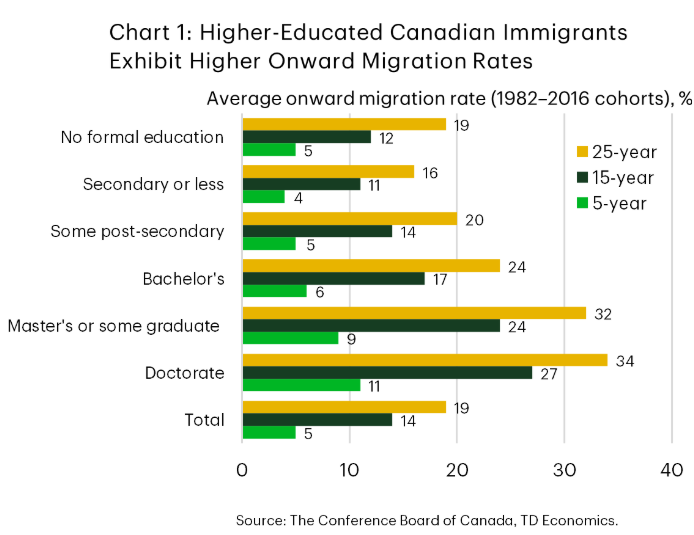
TD report on CANADA's BRAIN DRAIN is really interesting.
Canada is quietly losing its top talent to the United States in what economists call a silent brain drain. While Canada does a strong job educating highly skilled workers in STEM, engineering, and entrepreneurship, it struggles to keep them due to higher taxes that kick in at much lower income levels, limited opportunities to scale companies, weaker commercialization of ideas, and much better pay and growth potential south of the border.
-> Talent leaves mainly through temporary US work visas rather than permanent moves
-> Outflows are heavily concentrated among the highest skilled, especially in tech and advanced degrees
-> Onward migration is worst among immigrants and top university graduates
-> Canada has a missing middle of medium sized firms, relying instead on many tiny businesses and a few large ones
-> Personal tax rates often exceed 50 percent in major provinces and apply at much lower thresholds than in the US
-> Complex corporate tax rules push entrepreneurs toward tax planning instead of growth
All of this weakens productivity, innovation, and domestic returns on education, making Canada a feeder system for the US economy
REPORT: https://t.co/fA0VzaJDSm
Software Engineering is changing.
Not slowly.
Structurally.
OLD ENGINEER
│
├── Writes code manually
├── Solves isolated problems
├── Focuses on implementation
└── Uses AI as a helper
↓
NEW ENGINEER
│
├── Frames the right problems
├── Provides context + constraints
├── Reviews architecture & trade-offs
├── Orchestrates AI agents
└── Builds systems, not just code
The shift:
Autocomplete → Assistants → Context-aware tools → Agentic workflows
And now?
AI doesn’t just help you code.
It helps you think, decide, and execute.
🔥 What actually matters now:
• Systems thinking
• Architecture judgment
• Code review skills
• Debugging complex flows
• Security & reliability
• Task decomposition
🚀 What to learn next:
Repo-aware prompting
Reviewing AI-generated code
Eval + test-first workflows
Agentic workflow design
Guardrails + safe automation
The future engineer won’t just write code.
They’ll orchestrate systems at scale.
If you're still only coding…
you're already behind.
💬 Comment your thoughts
♻️ Repost to help your dev circle
MOST DEVELOPERS CAN BUILD SPRING BOOT APIS.
BUT INTERVIEWS TEST WHAT HAPPENS WHEN THEY BREAK IN PRODUCTION.
Here are ADVANCED scenario-based Spring Boot questions:
1) Your API is slow only under high traffic. CPU is normal. What could be the bottleneck?
2) DB connection pool (HikariCP) gets exhausted suddenly. Why?
3) @Transactional is present but rollback doesn’t happen in a nested call. Why?
4) API works locally but fails in Kubernetes deployment. What do you check first?
5) Your service works but memory keeps increasing over time. What could cause this?
6) Circuit breaker opens frequently even when downstream service is healthy. Why?
7) Adding caching improved performance but introduced inconsistent data. Why?
8) Async processing (@Async) made the system slower. How?
9) Logs are present locally but missing in production. What could be wrong?
10) Multiple instances deployed but performance didn’t improve. Why?
11) API gateway calls succeed but headers are missing in downstream service. Why?
12) Your application randomly throws 503 errors under load. What could be happening?
13) After deployment, users still see old behavior. What might be the issue?
14) Scheduled jobs start affecting API latency. How do you isolate them?
15) External API integration causes random timeouts. What should you configure?
16) Application works fine in staging but fails in production. What differences matter?
17) High GC activity impacts response time. What could be causing it?
18) Your service becomes a bottleneck in a microservice architecture. How do you identify it?
19) Retry mechanism causes cascading failures across services. Why?
20) Increasing resources (CPU/RAM) didn’t improve performance. What’s the real issue?
These questions test whether you understand how Spring Boot systems behave in real production environments.
Which one would you struggle to answer?
If I had to become an AI engineer in 90 days, I would not start with courses.
I would build projects from these 10 GitHub repos.
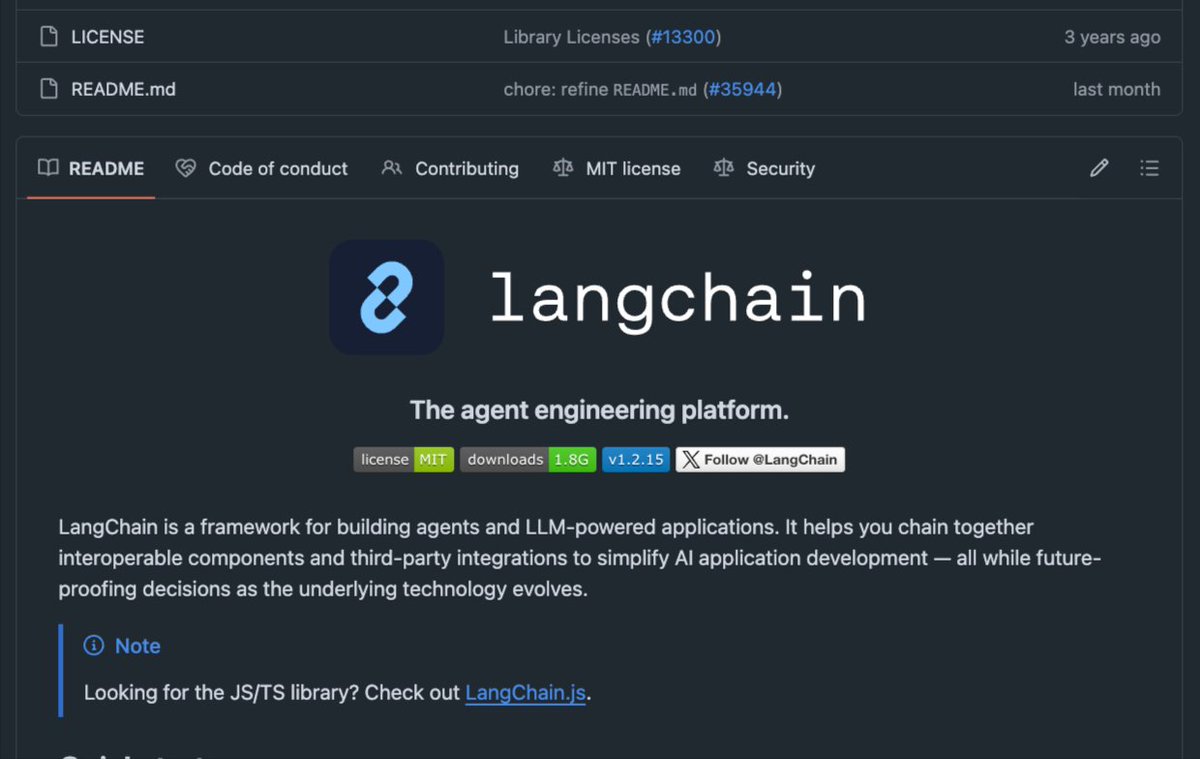
1. LangChain
The LLM application framework on almost every AI engineer JD. If you want to build production LLM apps, start here.
repo → https://t.co/alIh6rDDIu
2. LangGraph
Stateful agents as graphs. The repo JDs mean when they say "agentic workflows."
repo → https://t.co/bzVBn9uecV
3. LlamaIndex
The go-to framework for RAG and document agents. Every "retrieval pipeline" JD points here.
repo → https://t.co/m4oJ9FiCrX
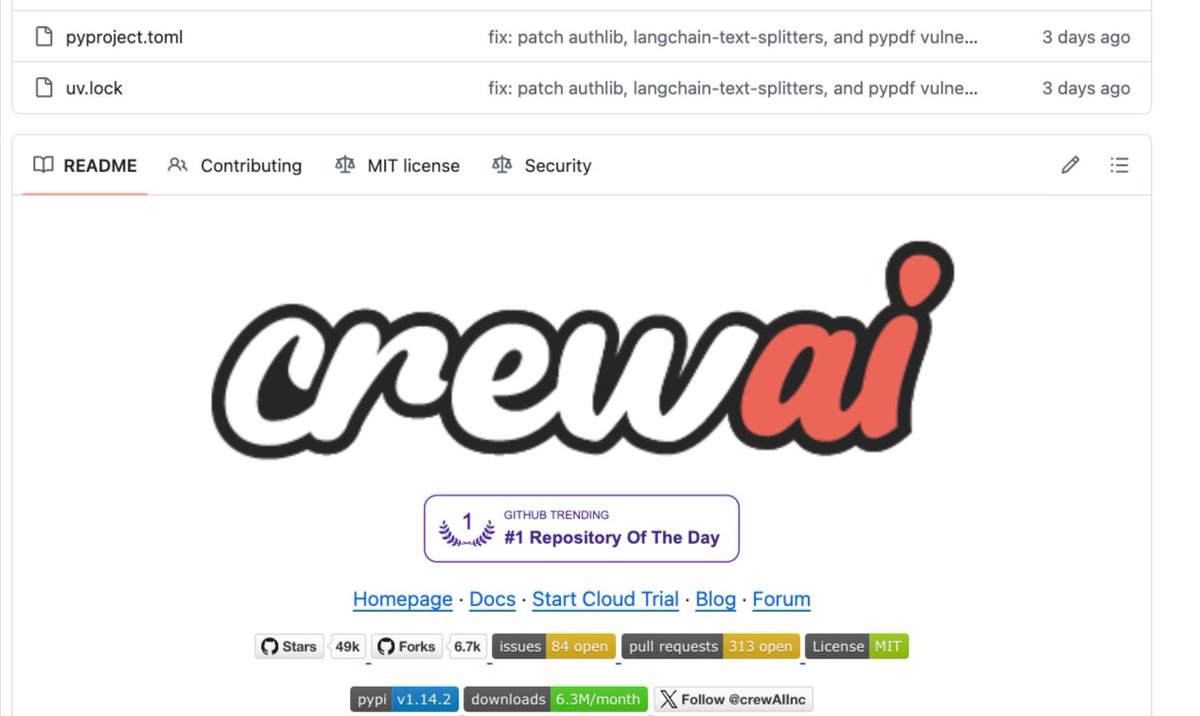
4. CrewAI
Multi-agent teams with roles and tasks. Used in production by enterprises across the Fortune 500.
repo → https://t.co/0xohE065sD
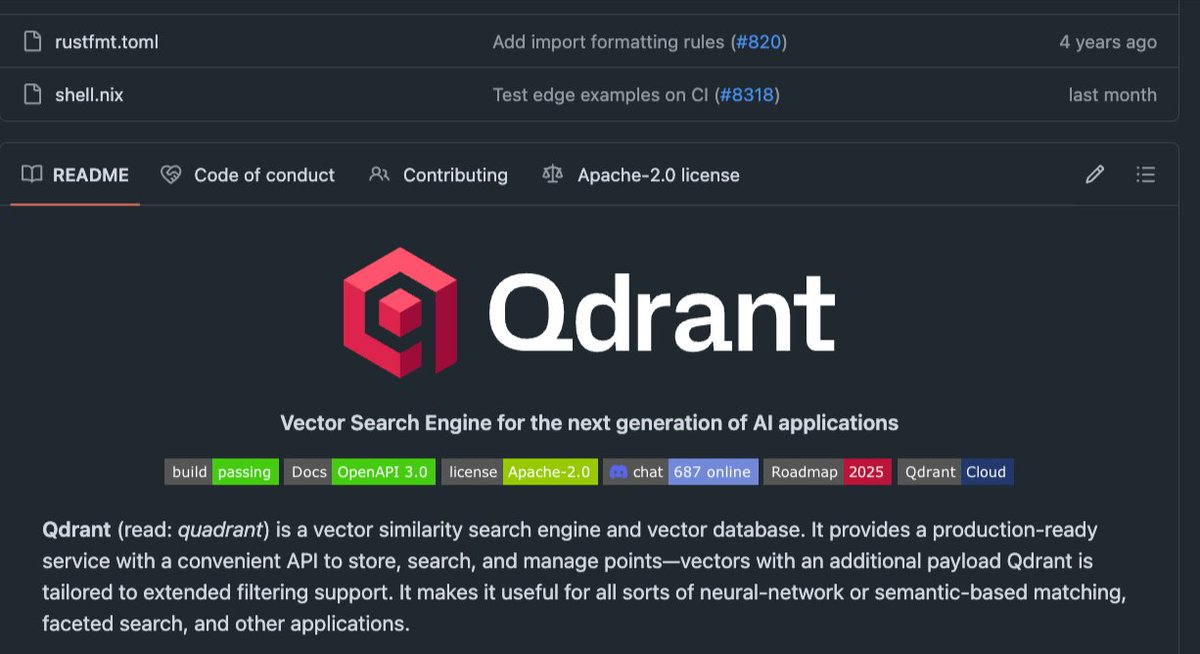
5. Qdrant
A production vector database written in Rust. JDs name it alongside Pinecone, Chroma, and FAISS.
repo → https://t.co/ziSSXW2dzZ
6. Ragas
The standard framework for evaluating RAG pipelines. Hallucination, faithfulness, relevancy, all measurable.
repo → https://t.co/vgOInvREU5
7. Ollama
Run open-source LLMs locally in one command. JDs ask for local inference for cost and privacy reasons.
repo → https://t.co/gyZhUdzsnZ
8. Awesome MCP Servers
Model Context Protocol is the newest skill on JDs. This repo indexes every production MCP server out there.
repo → https://t.co/ejVOgkRJDX
9. Awesome LLM Apps
100+ end-to-end templates for RAG, agents, multi-agent teams, voice agents, and MCP. Real working code.
repo → https://t.co/oXrD5A8K6a
10. AI Agents for Beginners
Microsoft's free 12-lesson curriculum covering the full AI agent stack. No paywall, no signup.
repo → https://t.co/7dNsDw6bTj
AI engineer job descriptions in 2026 keep asking for the same things: RAG, agents, vector databases, evals, MCP.
These 10 repos teach all of it.
Pick one. Build one project. Push it to GitHub. That's how you start.
100% free. 100% open source.
BREAKING: AI can now create mobile apps like a Silicon Valley dev team (for free).
Here are 12 insane Replit + Claude prompts that ship $50K apps in a weekend.
Bookmark this thread 🔖 before everyone catches on.
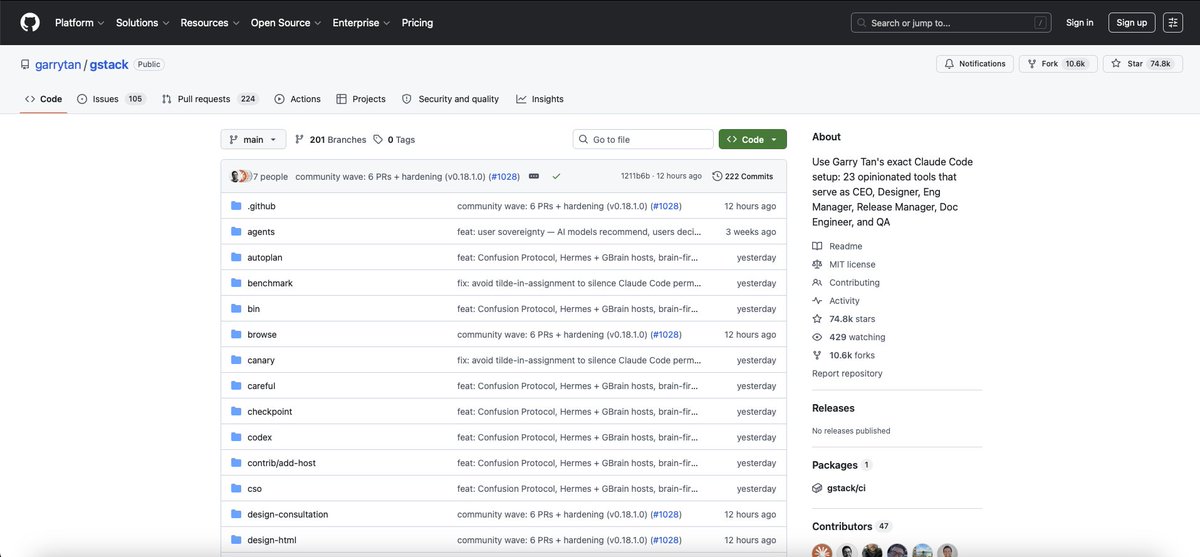
The CEO of Y Combinator just open-sourced his entire AI development setup.
And it is already at 72,600 stars on GitHub.
Garry Tan runs Y Combinator. He has worked with Coinbase, Instacart, and Rippling when they were two people in a garage. Before that he was one of the first engineers at Palantir. He has seen more startups build product than almost anyone alive.
He is now shipping 10,000 to 20,000 lines of production code per day. Part-time. While running YC full-time.
In the last 60 days alone: 600,000 lines of production code. 35% of it tests.
That number is not a typo.
Here is exactly how he does it.
He built a system called gstack — 23 AI tools that turn Claude Code into a full engineering team. He open-sourced the entire thing. Free. MIT license. One command to install. And then he posted the quote that explains why he built it:
"I don't think I've typed like a line of code probably since December, basically, which is an extremely large change." — Andrej Karpathy, March 2026.
When Tan heard that, he wanted to find out how. The result is gstack.
Here is what the 23 tools actually do.
There is a CEO tool that challenges your product framing before you write a line of code. It does not just approve your idea. It finds the 10-star product hiding inside what you described and pushes back on everything you got wrong.
There is an engineering manager that locks architecture, draws ASCII diagrams of data flow, and forces hidden assumptions into the open before anything gets built.
There is a designer that rates every design decision on a 0 to 10 scale, explains what a 10 looks like, and edits the plan until it gets there. It also has AI slop detection. It catches the generic AI output that looks fine and ships badly.
There is a QA lead that opens a real browser, clicks through your actual app, finds bugs, writes regression tests, and verifies the fix. Not a simulation. A real browser.
There is a security officer that runs OWASP Top 10 and STRIDE threat modeling with 17 false positive exclusions built in, so you only see findings that actually matter.
There is a release engineer that syncs main, runs tests, audits coverage, pushes, and opens the PR. One command from approved to shipped.
And then there is something Tan says was the biggest unlock of all.
You can run 10 to 15 of these sprints in parallel. Each one in its own isolated workspace. One agent challenging a product idea. One implementing a feature. One doing QA on staging. Six more on separate branches. All at the same time.
Tan's GitHub contribution graph for 2026 is a vertical wall. In 2013, building Bookface at YC from scratch, he made 772 contributions in a year. In 2026, he is at 1,237 — and still climbing.
Same person. Different era. The difference is the tooling.
One more thing.
In the README, Tan quotes the number directly: 140,751 lines added. 362 commits. 115,000 net lines of code. In one week. Part-time.
That is not what a solo developer looks like. That is what a team looks like.
Except it is one person with 23 AI specialists and a GitHub repo you can clone right now for free.
https://t.co/LRoiMcSYcx
Over 5,000 young Canadians line up for Calgary job fair as desperation grows. One young man says he has sent 100 applications and not heard back.
Yet the Carney government will approve 230,000 new foreign worker permits this year at the behest of the business lobby.
As an AI Developer, which one are you?
A. Python → PyTorch → Hugging Face → LLMs → RAG → Agents
B. Python → TensorFlow → Keras → Computer Vision → Model Deployment
C. Python → LangChain → LlamaIndex → Vector DBs → AI Orchestration
D. Python → FastAPI → PostgreSQL + pgvector → LLM APIs → Production AI
E. TypeScript → Next.js → Vercel AI SDK → OpenAI/Anthropic → Full-Stack AI
F. Python → CrewAI/AutoGen → Multi-Agent Systems → Tool Use → AI Workflows
G. Go/Python → High-Performance Inference → ONNX/TensorRT → Edge AI → Optimization
🔥 Spring Boot looks simple… until the interviewer goes deep.
Here are **real Spring Boot internals questions** asked in recent interviews 👇
1. How does Spring Boot decide which **auto-configuration** to apply?
2. What happens internally when you add `spring-boot-starter-web`?
3. Why does Spring Boot prefer **convention over configuration**?
4. How does Spring Boot load `application[dot]properties` internally?
5. Exact **startup flow** of a Spring Boot application.
6. Difference between `@ComponentScan` and `@SpringBootApplication`.
7. How does Spring Boot detect **embedded Tomcat** and configure it?
8. What happens if two beans of the same type exist without `@Qualifier`?
9. How does Spring Boot handle **profile-specific configuration**?
10. What is the role of `SpringFactoriesLoader` under the hood?
11. Difference between `@RestController` and `@Controller` internally.
12. How does Spring Boot manage **dependency versions automatically**?
13. Lifecycle of a Spring Bean in Spring Boot.
14. How does Spring Boot handle **externalized configuration**?
15. Fat jar vs normal jar — internal difference.
16. How Spring Boot decides **server port priority**.
17. What happens internally when you hit a **REST endpoint**.
18. How Spring Boot integrates with **Actuator** internally.
19. How exception translation works in Spring Boot.
20. Common performance mistakes in Spring Boot applications.
💡 **Pro Tip:**
Knowing **internals** is what separates average from strong candidates.
If you can explain 10–15 of these confidently, you’re already ahead of 90% of Spring Boot developers.
📌 Save this for interviews