i would love interacting with people in tech, design, art and politics. a balanced discussion. trying to broaden my horizon. let’s see if @X can make that happen
💡SQL challenge: Rank the Scores
👉Highest→Lowest.
👉Ties get the same rank and there are no gaps after ties.
👉Return the table ordered by score desc.
Ready to solve?
🔗 Schema + Solution included.
https://t.co/xJxddGenCz
🚀 SQL Challenge: Combine Two Tables
You have:
👤 Person (personId, firstName, lastName)
🏠 Address (addressId, personId, city, state)
Task → Return each person’s first & last name + city & state.
If no address exists → return NULL.
Schema + Example included.
🔗https://t.co/eOoLR0B5Xr
Scaling is exciting, but it often comes with some familiar speed bumps:
🧩 Data scattered across teams
⏳ Reports taking too long
🏃🏻 Constantly chasing updates
🚨 Getting blindsided by anomalies
📊 Hours lost wrangling spreadsheets
At @anovate, we help teams cut through that noise.
We run a 10-day, NO-COST proof of concept to show what’s possible - a live KPI dashboard with real-time alerts built on your existing stack.
The goal is simple: make the value visible before you commit to anything.
Curious? I’d be happy to share a one-pager, a sample dashboard, or just jump on a 15-minute scope call. Let’s explore how to make your data actually work for you.
Here's a quick peek
https://t.co/TfI8r3X8x3
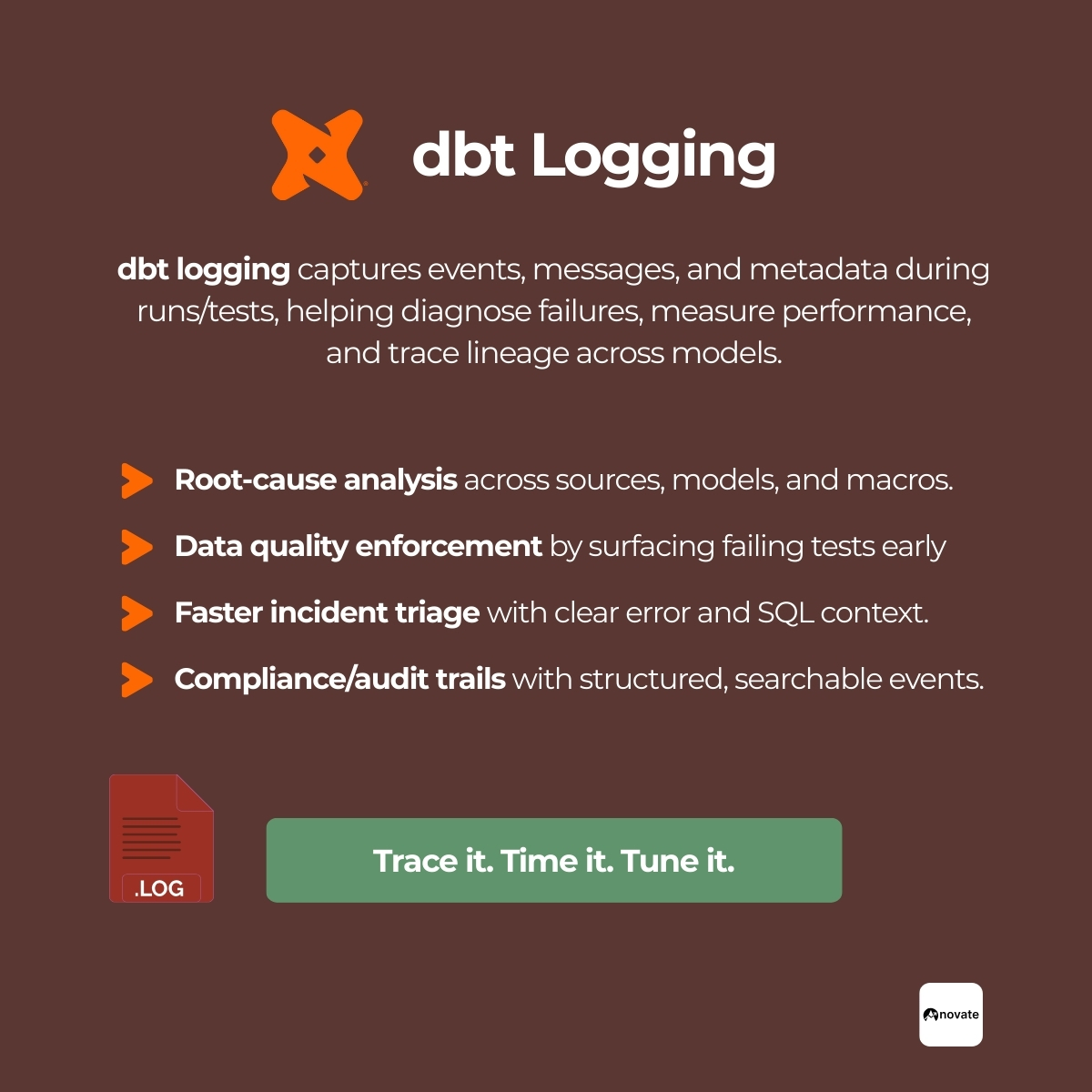
dbt Logging: Make Your Data Builds Observable
dbt logging captures events, messages, and metadata during runs/tests, helping diagnose failures, measure performance, and trace lineage across models.
Currently reading "How to Lie with Statistics" by Darrell Huff, a classic on how numbers can be twisted to mislead, manipulate, or deceive.
Essential and fun reading for anyone who wants to spot dodgy data, misleading graphs, and “statisticulation” in the news and beyond. Stay skeptical!
Ever wonder how data models power your favourite dashboards, ML pipelines, and reports?
Meet dbt exposures! ✨
Exposures close the gap between your backend SQL and business-facing analytics, adding transparency, accountability, and traceability to your modern data stack.
Master your data workflows with dbt hooks! 🛠️
✨ dbt hooks let you run custom SQL at key points, before or after models build, or even at the start/end of your run. Use hooks for automating audits, setting permissions, triggering cleanups, and more.
Most SQL projects have one big problem:
🧠 No one knows wtf is going on.
🔻What feeds this table?
🔻What does this column mean?
🔻Is this still being used?
That’s where dbt docs comes in clutch.
people often play fast and loose with "average". it wouldn't be amiss to state that it's often used to manipulate general opinion.
often by cherry-picking the type of average that flatters their narrative, they manufacture a perception that doesn’t reflect reality.
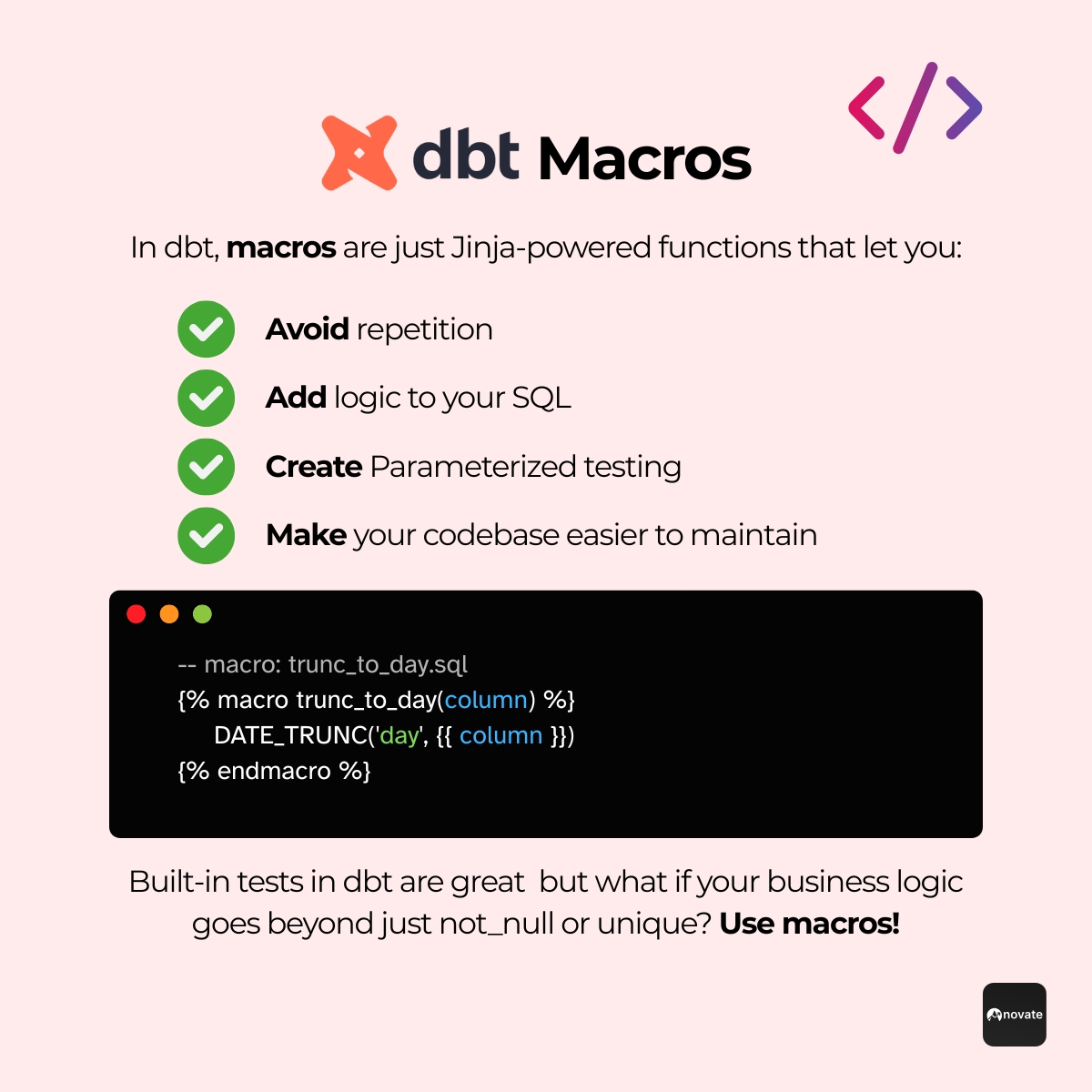
dbt macros let you define logic once and use it everywhere, whether you're transforming data or writing custom tests.
dbt comes with several built-in macros for your use in model definition and tests!
If you're building data pipelines, but not writing tests in dbt, you're flying blind.
🧵 Let's talk about dbt tests, your first line of defense for clean, reliable data.
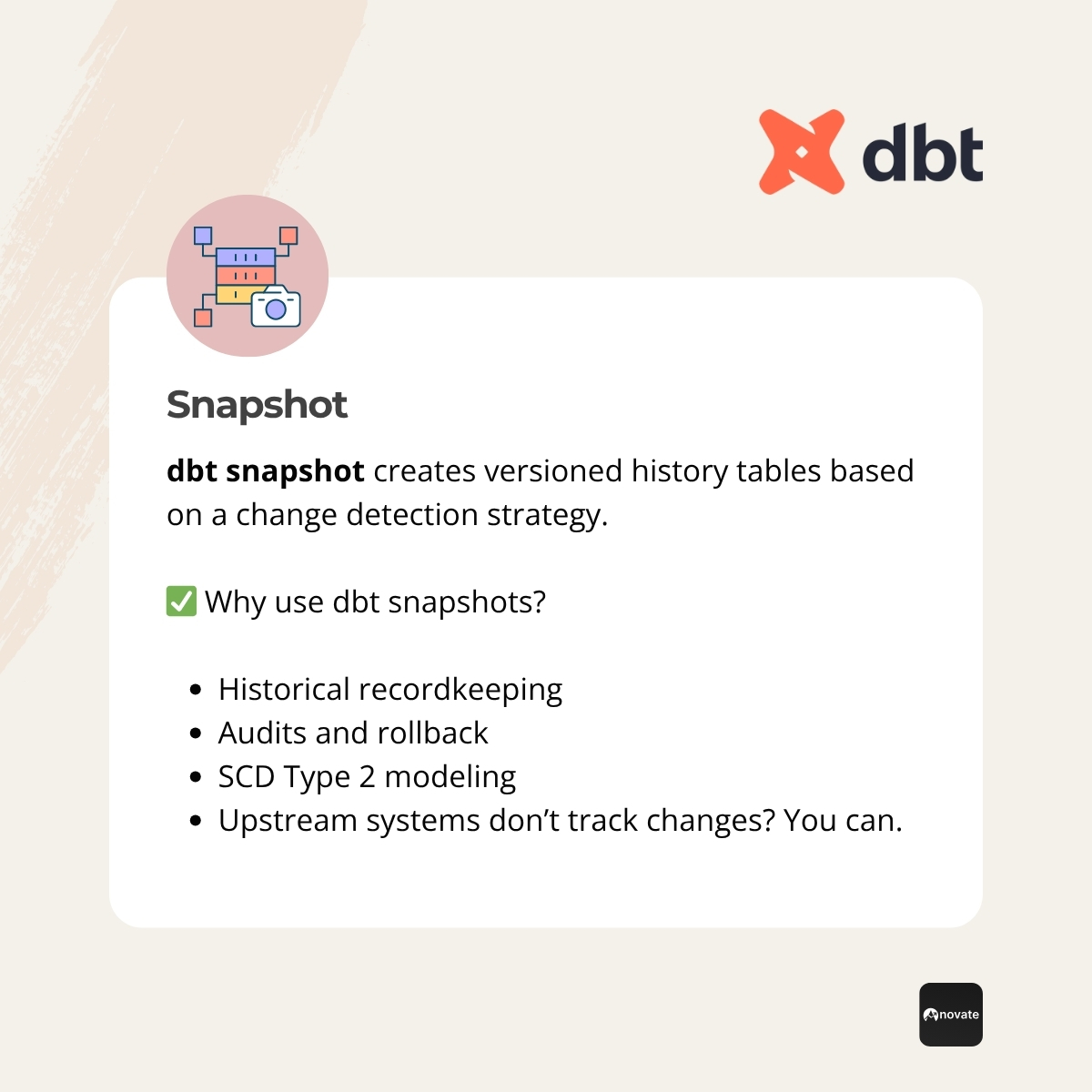
Need slowly changing dimensions (SCDs) in your warehouse? Even if it doesn't get tracked in production.
Use dbt snapshots to track row-level changes over time.
In dbt, a model is just a .sql file that selects data.
It’s that simple. ✅
But that simplicity hides powerful structure and control that makes your data stack maintainable and scalable.