🧵 4/4
And then there is the fifth element.
It is not simply another element placed beside earth, water, fire, and air.
It is the animating presence moving through all four.
Spirit is what gives the elements consciousness, direction, and purpose.
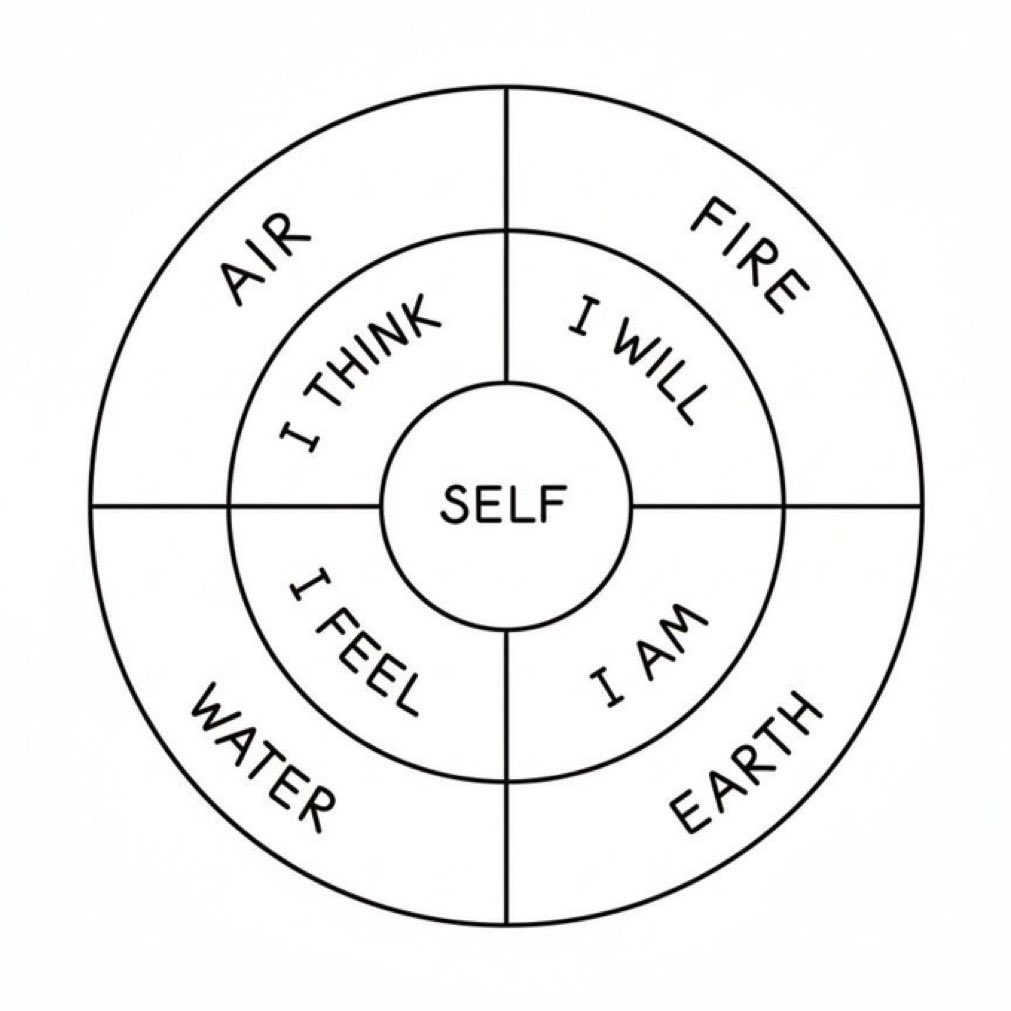
Your body is earth.
Your emotions and inner currents are water.
Your passion, will, and capacity for transformation are fire.
Your breath, thoughts, and perception are air.
But none of those, by themselves, are the entirety of you.
You are the presence experiencing them.
Spirit moves through earth and the body becomes alive.
Spirit moves through water and feeling becomes intuition.
Spirit moves through fire and desire becomes conscious creation.
Spirit moves through air and thought becomes understanding.
That animating consciousness is the fifth element.
It is not controlling the other elements from above. It is inhabiting them, relating them to one another, and allowing each one to serve the whole.
Without spirit, the elements operate according to their raw nature.
Fire consumes.
Water flows.
Earth holds.
Air moves.
But when spirit moves consciously through them:
Fire becomes purpose.
Water becomes wisdom.
Earth becomes embodiment.
Air becomes vision.
This takes the idea of mastery even further.
Mastery is not controlling or suppressing the elements within you. It is becoming conscious enough to recognize which element is moving through you, whether it is balanced, and what the moment is asking you to embody.
Sometimes spirit must direct fire.
Sometimes it must give water a container.
Sometimes it must soften earth.
Sometimes it must call air back into the body.
The fifth element is the awareness capable of doing this.
You are not any one element.
You are the spirit moving through all of them.
The fifth element is not something you possess.
It is what you become when every part of your nature is animated by consciousness and brought into relationship with the whole.
J.R.R. Tolkien explains why he spent years building Middle-earth before writing The Lord of the Rings.
In a rare interview, Tolkien is asked why he devoted more than a decade to creating the world behind his stories before writing them.
He rejects the idea that Middle-earth emerged purely from his unconscious, describing himself instead as “a meticulous sort of bloke” who spent years working out timelines, languages, histories, customs, and genealogies until everything fit together.
For Tolkien, the world existed before the story.
He even says The Hobbit began almost by accident, explaining that the larger mythology was already in place and that the novel simply became absorbed into it.
When asked why anyone would build an entire fictional world before telling a story, Tolkien points to what he calls “subcreation.”
As creations of a Creator, he argues, humans naturally desire to create. Since we cannot create something from nothing, we instead reshape existing reality into new forms that are both imaginative and aesthetically satisfying.
Tolkien also rejects the idea that art should be driven solely by moral purpose, insisting that beauty and aesthetics are just as fundamental to human creativity.
Discussing good and evil, he explains that Sauron was not evil from the beginning but fell from grace, much like Lucifer. The One Ring, he says, symbolizes a power so absolute that even someone with good intentions would inevitably be corrupted by wielding it.
He adds that this idea long predates the atomic age, noting that the foundations of his mythology were developed while he was still an undergraduate, not as an allegory for modern events.
At the end of the interview, Tolkien is asked whether he would rather be remembered for what he said or for what he made. He dismisses the distinction, arguing that lasting creations endure precisely because they have something meaningful to say.
Source: The Tolkien Professor interview with J.R.R. Tolkien (BBC, 1968), “J.R.R. Tolkien Interview (1968).
ever notice where your ascendant lord gets exalted?
whichever house your Asc Lord gets exalted in is a big clue into what naturally gives you access to your natural power and highest expression.
Its the arena of life where your soul tends to mature, and operate at its best.
aries ascendant:
mars exalts in the 10th.
you become yourself through achievement, leadership, and taking responsibility.
taurus ascendant:
venus exalts in the 11th.
growth comes through community, alliances, and contributing to something bigger than yourself.
gemini:
mercury exalts in the 4th.
the restless mind finds its highest intelligence through inner stability.
cancer:
moon exalts in the 11th.
your nourishment expands through friendships, networks, and belonging.
leo ascendant:
sun exalts in the 9th.
confidence matures into wisdom, philosophy, and faith.
virgo:
mercury exalts in the 1st.
the journey is self-mastery itself.
libra:
venus exalts in the 6th.
love becomes powerful when it learns service, humility, and practical compassion.
scorpio:
mars exalts in the 3rd.
courage grows through effort, skill-building, and repeatedly facing fear.
sagittarius:
jupiter exalts in the 8th.
wisdom deepens through surrender, transformation, loss, research, and the mysteries most people avoid.
capricorn:
saturn exalts in the 10th.
authority is earned through work, endurance, and responsibility.
aquarius:
saturn exalts in the 9th.
the rebel eventually becomes the teacher.
pisces:
jupiter exalts in the 5th.
faith flowers through creativity, teaching, children, and the courage to express what's in the heart.
the exaltation house of your ascendant ruler is the clue to what that sign aspires to be.
Rahu says: "There must be more out there."
Ketu says: "I've seen enough to know that more isn't always the answer."
If the ascendant Lord is with Rahu, then the person's life will have a rebel streak that refuses to follow the script. Even when they try to fit in, something inside keeps pushing toward a different path, a different version of life.
If the ascendant Lord is with Ketu, then the person's life will have a wanderer streak that refuses to build an identity around any one role for too long. Every label eventually starts feeling too small, too temporary or too incomplete.
This illustration, from a 14th-century German manuscript, depicts astrologers or wise men studying the heavens. The figures are labeled with names such as Solomon, David, and Abraham, linking biblical patriarchs and kings with celestial wisdom.
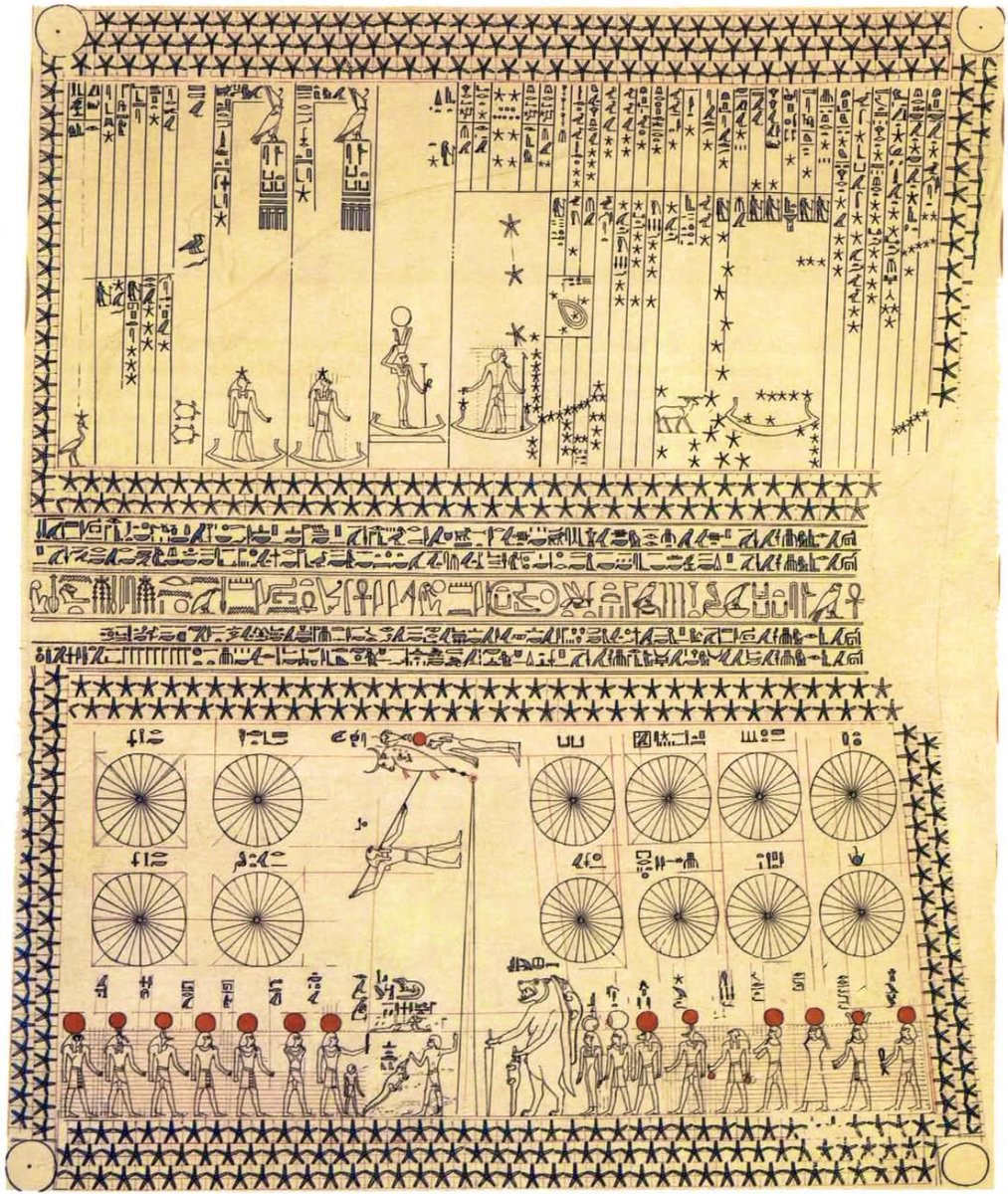
A drawing of the astronomical ceiling from the tomb of Senenmut in Deir el-Bahari, Egypt, dating to the 18th Dynasty. The ceiling is considered one of the earliest known Egyptian star charts and highlights the importance of astronomy in ancient Egyptian religion and daily life.
Planet is the Actor
Sign is the Costume
House is the Stage
Lordship is the Job Description Dasha is the Director's Spotlight
Eclipses as sudden scene changes
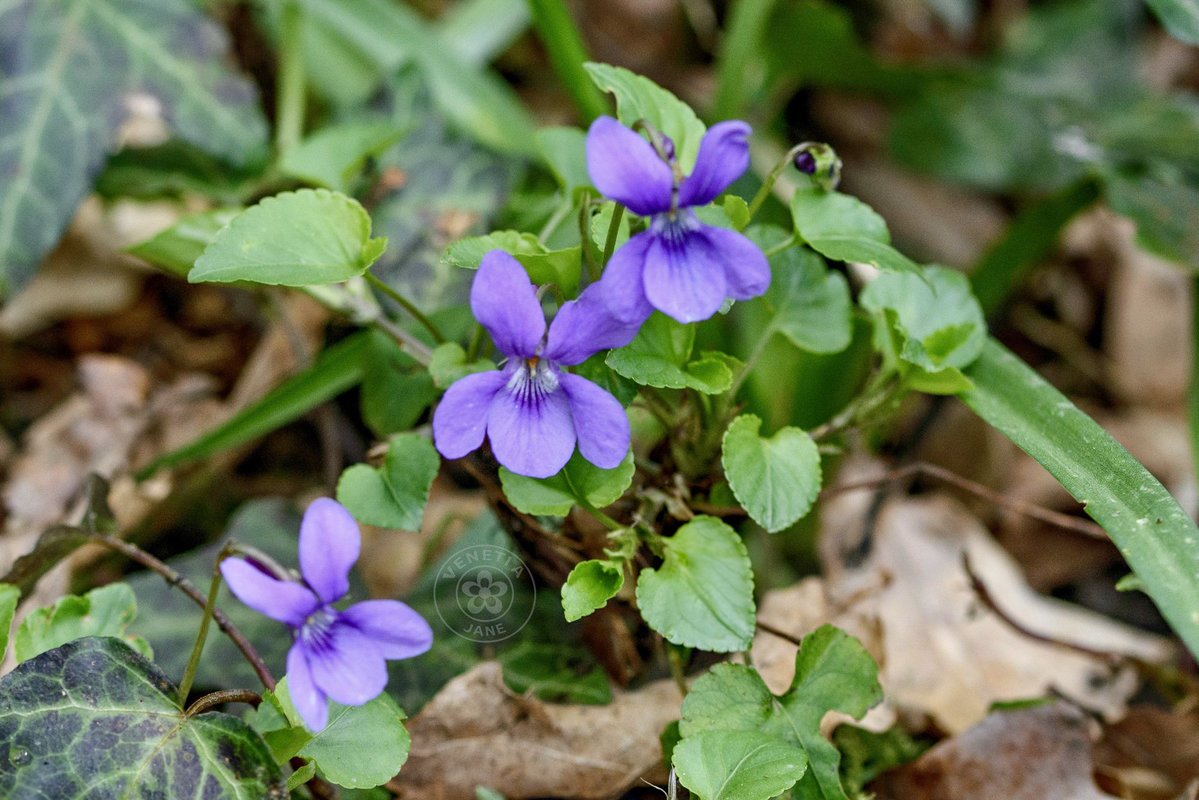
Violets have long been associated with secrecy. Growing low and overlooked, they came to symbolise feelings and truths kept close rather than spoken aloud. In older belief silence itself could carry meaning, and violets stood for promises honoured without words. #FairytaleTuesday
God is the Supreme Soul (Paramatman) The Soul (Atman) is part the parcel of God- it is the real God Particle. God is the Supreme Soul (Paramatman). If God (Paramatman) was an ocean, the Soul (Atman) would be a droplet/wave of that ocean. If God (Paramatman) was the sun, the Soul (Atman) would be a ray of light coming from the sun. If God (Paramatman) was the fire, the Soul (Atman) would be a spark of that fire. Yet despite this, Paramatman (God/Supreme Soul) resides in the Atman(Soul)- "the ocean is in the drop, the ray is in the sun, God is in the Soul"- Sant Kripal Singh. "All know the drop merges into the ocean, but little know the ocean merges into the drop"- Sant Kabir. "I am not a drop in an ocean, I am an ocean in a drop"- Rumi. The Soul (Atman) resides in God (Paramatman) and God (Paramatman) resides in the Soul (Atman). So the true Self (Atman/Soul) is God in reality.
~ Jai Chandarana
https://t.co/sMt3z4qGCI