The BOB Explorer might be the most underrated piece of infra in Bitcoin DeFi right now.
Forget waiting for analysts or dashboards — if you want the raw pulse of the hybrid chain, this is where you get it.
Drop in a wallet → instant audit of its activity.
Open a contract → watch calls stream live.
Scroll new blocks → see BOB breathe in real time.
The analytics side seals the deal: gas trends, daily/weekly TX volumes, contract activity… it’s all there in one place. I don’t need middlemen to tell me “chain activity is up” I can see it myself.
Are there downsides? Sure. The UI can feel a little raw if you’re not used to onchain explorers, and it still misses some polished filters you’d find in third-party dashboards. But honestly, that’s part of the appeal it’s unfiltered access.
Bottom line: if you touch BOB at all whether you’re building, trading, or just lurking the Explorer is where you see the chain speak for itself. That’s when you realize BOB isn’t just another L2, it’s building its own living economy.
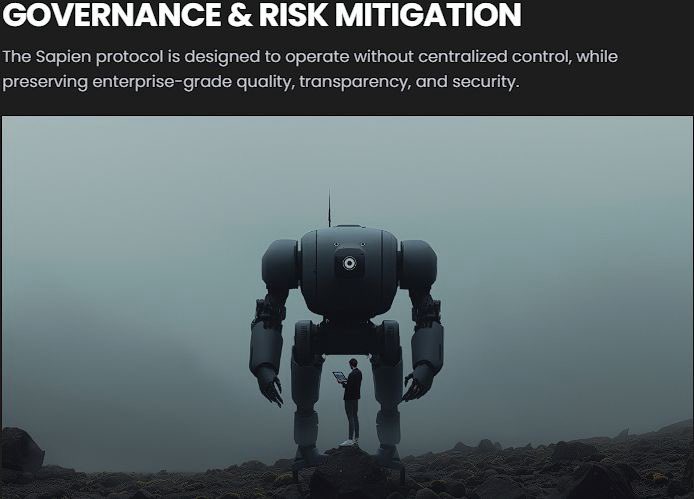
Decentralization isn’t just a buzzword for $Sapien It’s baked into the protocol’s DNA.
In a space where projects still rely on backroom decisions and centralized gatekeepers, $Sapien is charting a clear path toward trustless governance. It doesn’t just say “community-driven”—it builds for it.
Right now, founding contributors are steering the ship. But make no mistake, control is designed to move into the hands of token holders. Treasury allocations, protocol changes, slashing parameters, whitelisting new verticals it’s all set to go through onchain governance. Transparent. Trackable. Accountable.
This shift to a DAO isn’t cosmetic. It’s core to $Sapien’s architecture of trust. The same logic that demands peer validation for tasks applies to decision-making: no single point of failure, no hidden lever-pullers.
And here’s what sets it apart:
Voting isn’t just for show. It’s linked to $SAPIEN holdings, and soon, to real participation thresholds.
Oversight isn’t an afterthought. Regular audits, live dashboards, third-party legal involvement $Sapien’s committing to resilience like a proper public infrastructure project.
In a world where "governance" often means a Discord poll or a multisig clique, $Sapien is building something more serious. It’s slow, deliberate, and hard to fake. That’s how you earn trust—and keep it.
This isn’t just governance. This is governance with teeth.
#Sapien #DAO #TokenGovernance #DecentralizedInfrastructure #ProofOfQuality #CookieDotFun #SNAPS #AIforall @joinsapien@cookiedotfun
Most social platforms reward noise.
I’ve posted deep, thoughtful answers on Reddit and Quora thousands of upvotes, but nothing tangible. No ownership, no recognition, just karma points that don’t mean anything outside the site.
I always wondered: where’s the platform that actually values thinking?
Then we found @JoinSapien.
Here, your contributions are recorded onchain. Your reasoning, logic, and clarity build your $Sapien Score a real reputation you carry with you.
It’s not about going viral. It’s about being right, being useful, and being traceable. Your insights don’t just disappear they become part of AI systems being trained for the future.
If you’ve ever wanted to be seen for your ideas not just scrolled past this is where that starts.
#Sapien #AI #Web3 #AIforall @cookiedotfun
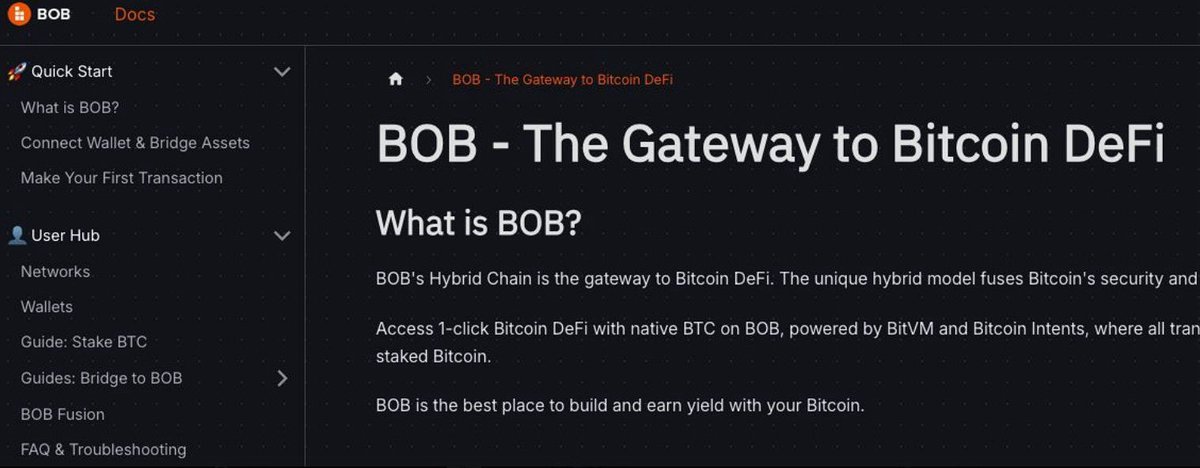
Took some time to dig into @build_on_bob, and I’ll be honest, this is the first Bitcoin DeFi project that actually feels like it could work at scale.
BOB isn’t just a generic L2 with Bitcoin branding. It’s a hybrid chain that blends Ethereum’s flexibility with Bitcoin’s security in a way that’s both technically sound and actually usable. The big shift here is BOB lets you put BTC to work without wrapping it or trusting some shady bridge.
For years, Bitcoin’s DeFi presence has been basically nonexistent. It’s the biggest asset in crypto by far, yet it’s been sidelined in DeFi because the infrastructure hasn’t respected its core values: security, decentralization, and simplicity. BOB flips that script.
It uses BitVM to enable trustless interaction with Bitcoin, while the rest of the stack is built on familiar, battle-tested EVM tools. You can stake, lend, LP, and earn, all while staying rooted in BTC. That’s the leap. And for once, it’s not just theory. There’s already TVL, real users, and serious partners.
The ecosystem is quickly taking shape: Uniswap, Chainlink, Aave, LiFi, LayerZero. There’s also support from institutional names like Fireblocks and ForDeFi. This isn’t some fringe side-chain. It’s becoming a real player in multi-chain DeFi with Bitcoin as a core pillar, not just a wrapped token floating in someone else’s system.
Add to that one-click deployment, seamless onboarding, and an interface that doesn’t feel like it was built by protocol maxis for other protocol maxis. That alone makes it stand out. Most Bitcoin DeFi efforts have failed because they forgot that regular users matter.
If you’re someone who thinks BTC shouldn’t just sit in cold storage forever, BOB gives it something new to do. Not through marketing hype, but through real infrastructure that’s live, tested, and growing fast.
I don’t say this often, but this could be the start of something real for Bitcoin in DeFi. Not a trend an actual shift.
@cookiedotfun@build_on_bob
You know what makes @JoinSapien stand out? It’s not just another AI project with buzzwords and a token slapped on. It’s a completely different way of building machine intelligence, one where real people, not corporations or black-box labs, are at the center.
$Sapien isn’t just using the usual scraped datasets or relying on synthetic benchmarks. It’s crowdsourcing data from verified humans around the world, paying them fairly, and feeding that into AI systems that are actually grounded in diverse, high-quality input. That matters. Most AI today is built behind closed doors, trained on questionable data, and designed to serve profit, not people.
But $Sapien flips that around. It’s about building ethical AI with real-world context, where contributors aren’t just a line item they’re part of the system. If you care about where AI is heading, this isn’t just a side project, it’s a signal. A pushback against the idea that only trillion-dollar companies get to decide what intelligence looks like.
And the kicker? They’re not just talking ideals. Look at the partners. Worldcoin, YGG, AirTM, Veera. This is infrastructure-level ambition with actual momentum. It’s decentralized, it’s human-first, and it’s scaling.
$Sapien feels like the start of a shift from centralized machine learning monopolies to open, transparent AI ecosystems built with people, not on top of them.
If you want a future where AI is smarter, more ethical, and actually serves the world, $Sapien is worth paying attention to. Not because it’s hype. Because it’s right.
@Cookiedotfun@joinsapien #AIforall
Why I’m very bullish on
@JoinSapien
after that Cookie DAO snapshot:
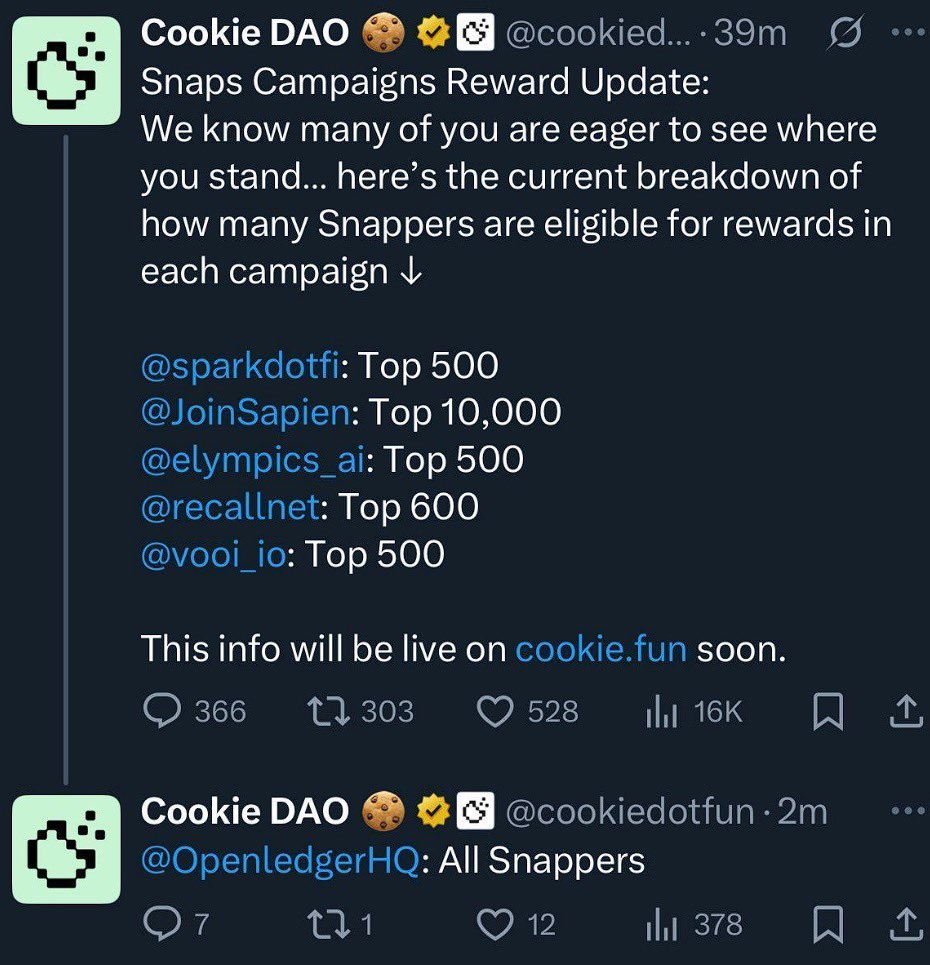
10,000 eligible snappers vs just 500–600 in other projects?
This isn’t just about numbers—it’s validation.
Here’s why that matters:
20x more eligible users than competitors
Massive organic traction
Cookie DAO clearly sees $Sapien as tier-1
When an airdrop targets the top 10k, you’re not dealing with hype—you’re dealing with depth.
Other ecosystems are scrapping over 500-user caps.
$Sapien? Quietly building a 10,000-strong, active community.
And the market still hasn’t priced this in 👀
Not financial advice—but if Cookie DAO ranks Sapien with the big players and gives it 20x the allocation...
That’s alpha hiding in plain sight. 🔥
$SAPIEN—when moon? 🚀
🚀 The Big 4 Centralized Exchanges in 2025: The Big 4 Centralized Exchanges in 2025: What Every Trader Should Know
Choosing a crypto exchange isn't just about low fees or flashy features—it’s about trust, access, and how well the platform matches your strategy. Here's a detailed breakdown of the top 4 centralized exchanges (CEXs) in 2025, what they offer, where they shine, and what to watch out for.
1. 🟡 @Binance — The Industry Titan
Founded: 2017
Market Share: ~38%
Headquarters: Global (originally China, now Cayman Islands)
Best for: General-purpose trading, beginners to pros
🔍 Overview:
Binance is still the heavyweight of the crypto world. Its massive liquidity, wide token selection, and feature-rich ecosystem make it a one-stop shop for most users. It’s ideal whether you’re just getting started or managing high-volume trades.
✅ Pros:
Deep liquidity → Minimal slippage even during high-volume trading
500+ listed tokens → Broadest coverage from majors to microcaps
Low fees → 0.1% standard, even lower with BNB
Robust features → Staking, Launchpad, DeFi access, P2P, NFTs
Top-rated mobile app → Stable, intuitive, full-featured
Education-focused → Binance Academy is a strong learning resource
❌ Cons:
Regulatory pressure → Ongoing legal issues in US, UK, and Canada
Customer support → Can be slow, especially during market spikes
High traffic overloads → Platform occasionally lags during volatility
Stricter compliance → KYC is now required in most regions
💰 Fees:
Spot: 0.1% (maker/taker)
Futures: 0.02% maker / 0.04% taker
🛡️ Security:
Cold storage majority
SAFU fund (insurance against emergencies)
Regular internal audits
2. 🟠 @OKX — The CeFi–DeFi Hybrid
Founded: 2017
Headquarters: Seychelles, with Asia offices
Best for: Web3-savvy and advanced users
🔍 Overview:
OKX stands out by seamlessly blending centralized trading with decentralized access. With a built-in Web3 wallet and access to dApps, DeFi platforms, and NFT markets, it’s the go-to platform for users who want more than just basic trading.
✅ Pros:
Web3-native wallet → Direct access to dApps and DeFi without leaving the exchange
Proof-of-reserves → Transparent, verifiable audits
Derivatives depth → Strong tools, deep liquidity, low spreads
DeFi & NFT integrations → Unique in combining CeFi + DeFi in one place
Competitive fees → Often undercuts Binance on certain pairs
❌ Cons:
Not beginner-friendly → Interface is complex and feature-dense
Geo-restrictions → Some tools blocked in US/Europe
Learning curve → Lacks simple onboarding flow for new users
💰 Fees:
Spot: 0.08%–0.1%
Futures: 0.02%–0.05%
🛡️ Security:
Cold storage + 2FA
Real-time fund tracking (Proof of Reserves)
Anti-phishing and whitelisting features
3. 🔵 @MEXC_official — The Altcoin Hunter’s Playground
Founded: 2018
Headquarters: Seychelles
Best for: Traders looking for early-stage tokens and fast-moving alts
🔍 Overview:
If you’re looking for variety and early access to new coins, MEXC has you covered. With over 2,800 tokens and fast listings, it’s one of the best platforms for altcoin traders—but it comes with added risk.
✅ Pros:
Huge selection → 3,100+ trading pairs, largest in the altcoin space
Zero maker fees → Excellent for active traders
Fast token listings → Projects often list here before they hit bigger exchanges
Global fiat support → 100+ currencies accepted
Quick onboarding → Fast KYC, minimal friction
❌ Cons:
Less regulatory transparency → Still building long-term trust
Higher scam/token risk → Due to open listing policies
Low liquidity on niche pairs → Watch out for slippage
Limited pro tools → Less robust for advanced charting or algo trading
💰 Fees:
Maker: 0%
Taker: 0.1%
🛡️ Security:
Improving over time
Cold storage, 2FA, anti-phishing protections
No major hacks, but caution needed with token selection
4. 🟣 @Bitget — The Copy Trading & Derivatives Powerhouse
Founded: 2018
Headquarters: Seychelles + Singapore presence
Best for: Derivatives traders, passive investors
🔍 Overview:
Bitget has built its name around copy trading—allowing users to follow the strategies of high-performing traders automatically. It’s also expanding fast into futures, with a focus on reliability, low latency, and global access.
✅ Pros:
Copy trading leader → Largest ecosystem for following top traders
Derivatives-first → Excellent futures liquidity and execution
$BGB token utility → Incentives, discounts, and ecosystem rewards
Global reach → Regulatory compliance in multiple jurisdictions
Mastercard integration → Fiat–crypto payments made simple
❌ Cons:
High-risk focus → Leverage-heavy = more potential losses
Spot market still growing → Not as mature as Binance/OKX
Brand recognition still rising → Especially outside Asia
Beginner education limited → Lacks strong learning tools
💰 Fees:
Spot: 0.1%
Futures: 0.02%–0.06%
🛡️ Security:
ISO/IEC 27001-certified
Cold storage, 2FA, and anti-phishing protections
No major security breaches to date
🧠 Pro Tips Before You Trade:
Never keep all funds on a single exchange – Use hardware wallets for long-term storage
Enable 2FA and anti-phishing protections on all accounts
Check regional availability – Some features may be blocked based on where you live
Understand the fee structure – Especially for futures and leveraged products
Start small – Test deposits and withdrawals before going all in
📊 Final Verdict:
Each of these exchanges fits a different trader profile:
@Binance is the most complete platform overall—but faces regulatory friction in key markets
@OKX is ideal for traders who want access to both CeFi and DeFi under one roof
@MEXC_official is the fastest mover in the altcoin space—high reward, high risk
@Bitget is where copy trading and derivatives traders should be paying attention
👉 Best strategy? Use a few of them. Diversify across exchanges based on what you trade and where you live.
Stay sharp. Stay secure. Always DYOR.
#Crypto #Binance #OKX #MEXC #Bitget #CEX #CryptoTrading #DYOR
What Every Trader Should Know
Choosing a crypto exchange isn't just about low fees or flashy features—it’s about trust, access, and how well the platform matches your strategy. Here's a detailed breakdown of the top 4 centralized exchanges (CEXs) in 2025, what they offer, where they shine, and what to watch out for.
1. 🟡 @Binance — The Industry Titan
Founded: 2017
Market Share: ~38%
Headquarters: Global (originally China, now Cayman Islands)
Best for: General-purpose trading, beginners to pros
🔍 Overview:
Binance is still the heavyweight of the crypto world. Its massive liquidity, wide token selection, and feature-rich ecosystem make it a one-stop shop for most users. It’s ideal whether you’re just getting started or managing high-volume trades.
✅ Pros:
Deep liquidity → Minimal slippage even during high-volume trading
500+ listed tokens → Broadest coverage from majors to microcaps
Low fees → 0.1% standard, even lower with BNB
Robust features → Staking, Launchpad, DeFi access, P2P, NFTs
Top-rated mobile app → Stable, intuitive, full-featured
Education-focused → Binance Academy is a strong learning resource
❌ Cons:
Regulatory pressure → Ongoing legal issues in US, UK, and Canada
Customer support → Can be slow, especially during market spikes
High traffic overloads → Platform occasionally lags during volatility
Stricter compliance → KYC is now required in most regions
💰 Fees:
Spot: 0.1% (maker/taker)
Futures: 0.02% maker / 0.04% taker
🛡️ Security:
Cold storage majority
SAFU fund (insurance against emergencies)
Regular internal audits
2. 🟠 @OKX — The CeFi–DeFi Hybrid
Founded: 2017
Headquarters: Seychelles, with Asia offices
Best for: Web3-savvy and advanced users
🔍 Overview:
OKX stands out by seamlessly blending centralized trading with decentralized access. With a built-in Web3 wallet and access to dApps, DeFi platforms, and NFT markets, it’s the go-to platform for users who want more than just basic trading.
✅ Pros:
Web3-native wallet → Direct access to dApps and DeFi without leaving the exchange
Proof-of-reserves → Transparent, verifiable audits
Derivatives depth → Strong tools, deep liquidity, low spreads
DeFi & NFT integrations → Unique in combining CeFi + DeFi in one place
Competitive fees → Often undercuts Binance on certain pairs
❌ Cons:
Not beginner-friendly → Interface is complex and feature-dense
Geo-restrictions → Some tools blocked in US/Europe
Learning curve → Lacks simple onboarding flow for new users
💰 Fees:
Spot: 0.08%–0.1%
Futures: 0.02%–0.05%
🛡️ Security:
Cold storage + 2FA
Real-time fund tracking (Proof of Reserves)
Anti-phishing and whitelisting features
3. 🔵 @MEXC_official — The Altcoin Hunter’s Playground
Founded: 2018
Headquarters: Seychelles
Best for: Traders looking for early-stage tokens and fast-moving alts
🔍 Overview:
If you’re looking for variety and early access to new coins, MEXC has you covered. With over 2,800 tokens and fast listings, it’s one of the best platforms for altcoin traders—but it comes with added risk.
✅ Pros:
Huge selection → 3,100+ trading pairs, largest in the altcoin space
Zero maker fees → Excellent for active traders
Fast token listings → Projects often list here before they hit bigger exchanges
Global fiat support → 100+ currencies accepted
Quick onboarding → Fast KYC, minimal friction
❌ Cons:
Less regulatory transparency → Still building long-term trust
Higher scam/token risk → Due to open listing policies
Low liquidity on niche pairs → Watch out for slippage
Limited pro tools → Less robust for advanced charting or algo trading
💰 Fees:
Maker: 0%
Taker: 0.1%
🛡️ Security:
Improving over time
Cold storage, 2FA, anti-phishing protections
No major hacks, but caution needed with token selection
4. 🟣 @Bitget — The Copy Trading & Derivatives Powerhouse
Founded: 2018
Headquarters: Seychelles + Singapore presence
Best for: Derivatives traders, passive investors
🔍 Overview:
Bitget has built its name around copy trading—allowing users to follow the strategies of high-performing traders automatically. It’s also expanding fast into futures, with a focus on reliability, low latency, and global access.
✅ Pros:
Copy trading leader → Largest ecosystem for following top traders
Derivatives-first → Excellent futures liquidity and execution
$BGB token utility → Incentives, discounts, and ecosystem rewards
Global reach → Regulatory compliance in multiple jurisdictions
Mastercard integration → Fiat–crypto payments made simple
❌ Cons:
High-risk focus → Leverage-heavy = more potential losses
Spot market still growing → Not as mature as Binance/OKX
Brand recognition still rising → Especially outside Asia
Beginner education limited → Lacks strong learning tools
💰 Fees:
Spot: 0.1%
Futures: 0.02%–0.06%
🛡️ Security:
ISO/IEC 27001-certified
Cold storage, 2FA, and anti-phishing protections
No major security breaches to date
🧠 Pro Tips Before You Trade:
Never keep all funds on a single exchange – Use hardware wallets for long-term storage
Enable 2FA and anti-phishing protections on all accounts
Check regional availability – Some features may be blocked based on where you live
Understand the fee structure – Especially for futures and leveraged products
Start small – Test deposits and withdrawals before going all in
📊 Final Verdict:
Each of these exchanges fits a different trader profile:
@Binance is the most complete platform overall—but faces regulatory friction in key markets
@OKX is ideal for traders who want access to both CeFi and DeFi under one roof
@MEXC_official is the fastest mover in the altcoin space—high reward, high risk
@Bitget is where copy trading and derivatives traders should be paying attention
👉 Best strategy? Use a few of them. Diversify across exchanges based on what you trade and where you live.
Stay sharp. Stay secure. Always DYOR.
#Crypto #Binance #OKX #MEXC #Bitget #CEX #CryptoTrading #DYOR
Metaplanet’s Bitcoin Strategy – The Most Underreported BTC Story in Asia
Just in: Metaplanet scooped up another 2,205 BTC ($240.8M)🧵
But here’s what most people are missing 👇
This isn’t just another corporate buy.
This is the most aggressive Bitcoin accumulation play in Asia—and barely anyone's paying attention.
📊 Let’s talk numbers:
• Started with 0 BTC in April 2024
• Now holds 15,555 BTC ($1.69B)
• Stock is up 1,744% since pivot
• Target: 210,000 BTC by 2027 → would be the #2 holder globally
💡 How they’re doing it:
Forget MicroStrategy’s playbook—Metaplanet is running a more advanced strategy:
• Zero-interest bond financing
• BTC options for smarter entries
• Quarterly BTC returns of 41.7%, 309.8%, 95.6%, 47.8%
That’s not random luck. That’s execution.
🎯 The bigger picture:
A few years ago, Metaplanet was a struggling hotel business post-COVID.
Now, under CEO Simon Gerovich, it’s becoming Asia’s MicroStrategy—and the pivot is paying off.
🔥 Why this matters:
• First public company in Japan to adopt a Bitcoin standard
• 68% of 10K BTC short-term target hit in just 4 months
• Plans to raise $5.4B to fuel more accumulation
• Proof that corporate BTC adoption isn’t just a US phenomenon
This isn’t a Japan story.
It’s a global shift in real time.
When the history of corporate Bitcoin is written, it’ll have two phases:
MicroStrategy opened the door
Metaplanet showed the world it's scalable
Still early. Still flying under the radar. Still buying.
#Bitcoin #Metaplanet #CorporateAdoption #BTC
Key Takeaways from Yesterday's Sapien AMA
Yesterday's Ask Me Anything session with @JoinSapien revealed the ambitious vision behind $SAPIEN - a project positioning itself as more than a typical task marketplace. Instead, they're building what they call a human-centered AI infrastructure that operates entirely on-chain.
The Human-First Philosophy
Co-founder Rowan Stone @RowanRK6
delivered a compelling central thesis during the discussion: "People must remain at the core of AI's evolution - not just larger models or more powerful hardware." This philosophy directly challenges the current industry trajectory that prioritizes computational power over human participation.
Beyond Traditional Machine Learning
Stone highlighted a critical gap in today's AI landscape - the overwhelming focus on pure machine learning algorithms while neglecting human expertise integration. Sapien aims to bridge this divide by creating sustainable pathways for global experts to contribute meaningfully to AI development while receiving fair compensation for their participation.
Addressing AI's Diversity Crisis
Perhaps the most thought-provoking point raised was Stone's warning about centralized data collection: "When AI systems harvest global information without consent through centralized platforms, they inevitably mirror only a narrow range of viewpoints."
This observation underscores Sapien's commitment to building infrastructure that promotes both fairness and diversity in AI training and development.
The Bigger Picture
Rather than competing in the crowded AI tooling space, Sapien is positioning itself as foundational infrastructure - creating the rails for a more equitable AI ecosystem where human expertise is valued, compensated, and integrated at scale.