Ants on two sides of the Atlantic Ocean have independently evolved to cultivate fungus, either to use as food or for nest-building material
https://t.co/vKi7wYdRj4
Among many other things, Charles Turner conducted some pioneering studies on learning and navigation in ants and bees. Here’s a recent article about his life and work by @SamadiHGD and @LChittka: https://t.co/ejerTx6BcO
A ~16 million year old ant, back from the dead via CT-scanning and careful reconstruction by @formicoid97. Neoponera vejestoria is the subject of @Fioromyrmex's paper out @BMCBiology describing this remarkable animal and striking extinction pattern 🐜🏝️☠️ https://t.co/EjSPzQC7No
Trap-jaw ants like these (Odontomachus) search for prey on whom to snap their mandibles shut. The force of this snap makes it quite audible on surfaces like this dry lead litter. If you're in a high density area, you can hear the little pop of death all around.
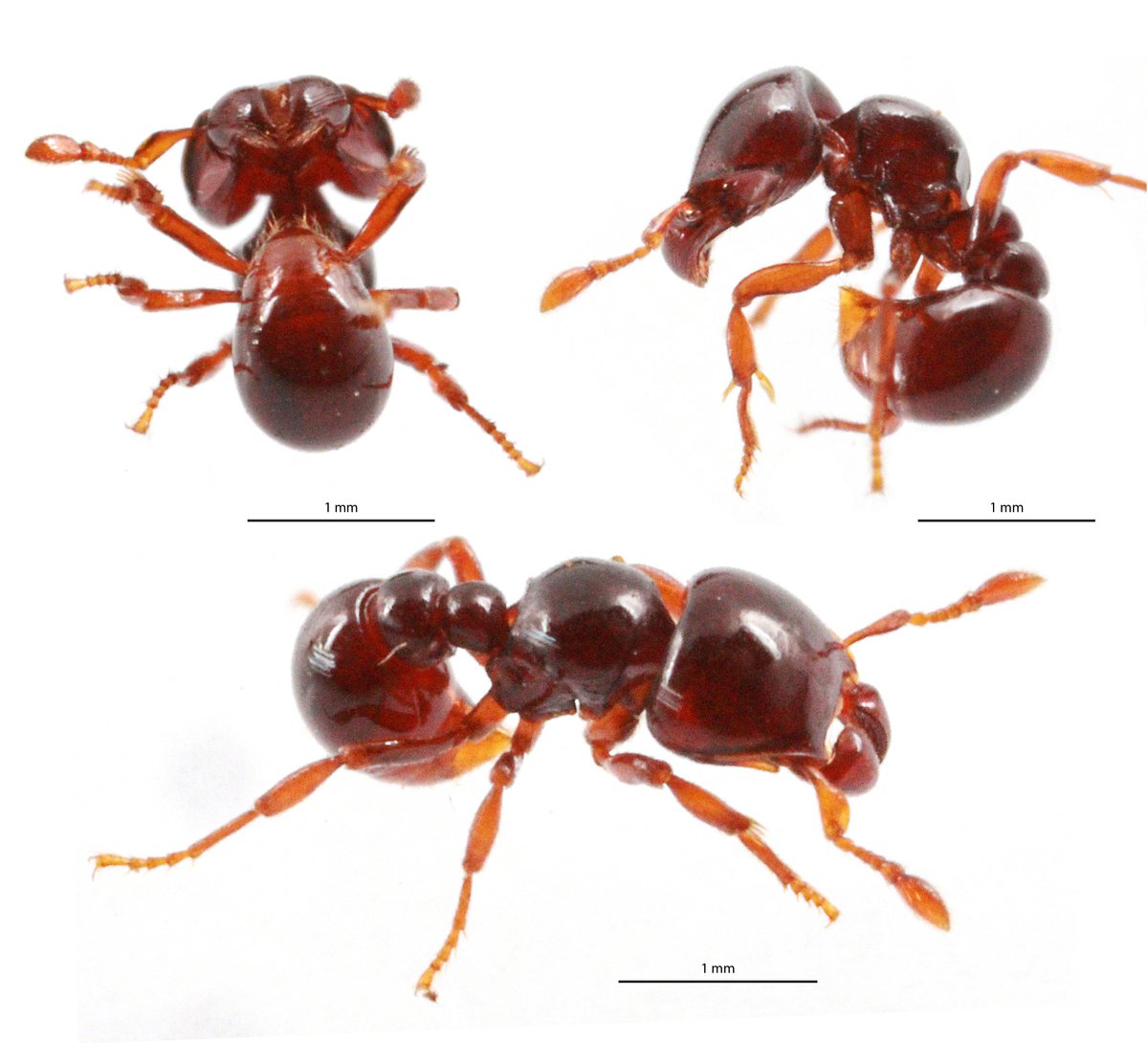
This ant species is found in #CentralAmerica and #SouthAmerica & is one of only two known species in the subfamily Agroecomyrmecinae. The #biology and #anatomy of these ants are not well understood because they are rarely seen alive and are mostly collected from leaf litter.