I always appreciate an opportunity to share what I'm working on @Anthrobotics with soft robotics. Thanks @Em_Nomadic for putting together this joint article.
Let's get more people started with building their own!
Everyone talks about making robots smarter.
Almost nobody talks about whether the body can keep up.
Our new Anthrobotics × Tnkr piece goes deep into:
• Actuation
• Compliance
• Soft robotics
• Artificial muscles
• Real-world engineering tradeoffs
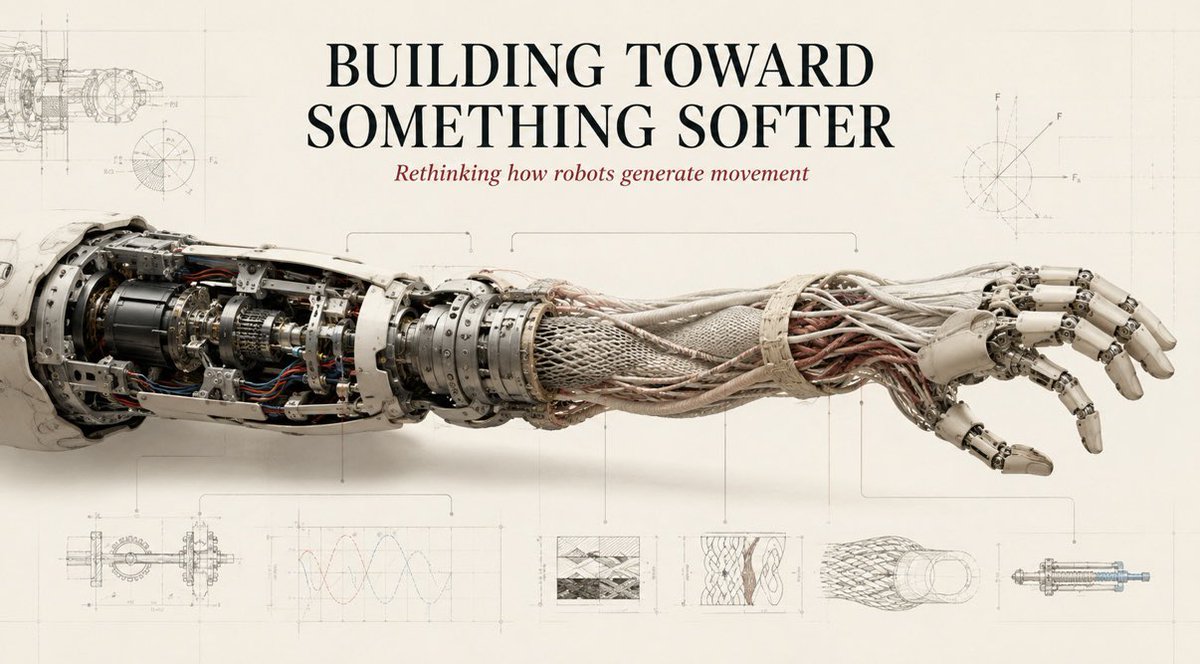
Building Toward Something Softer.
@IanPritchard@Anthrobotics@tnkrdotai
Full article ↓
We’ve spent years trying to make robots think more like us.
What happens when we start making them move more like us too?
Been working on something with @IanPritchard from @Anthrobotics that completely changed how I think about the future of robot hardware.
@tnkrdotai Dropping tomorrow. 👀🦾
Yesterday I had the chance to sit down with @timventura and talk about artificial muscles, and what we're building at @Anthrobotics. If you haven't already, be sure to give it a watch!
Thanks again Tim!
How do you build a robot that moves like a human? Anthrobotics founder Ian Pritchard explores biomimetic muscles, humanoid design, and open-source hardware for the future of human-like robotics. FULL INTERVIEW: https://t.co/rrFJf3J7LD
https://t.co/cl8GUB7KNt @IanPritchard@Anthrobotics
Anthrobotics is an Alberta-based robotics company developing biomimetic humanoid systems. Ian began working on robotic systems in 2014, and his public engineering portfolio spans electronics, motor controls, PCB design, additive manufacturing, linear actuators, planetary actuators, humanoid limbs, and open-source robotics.
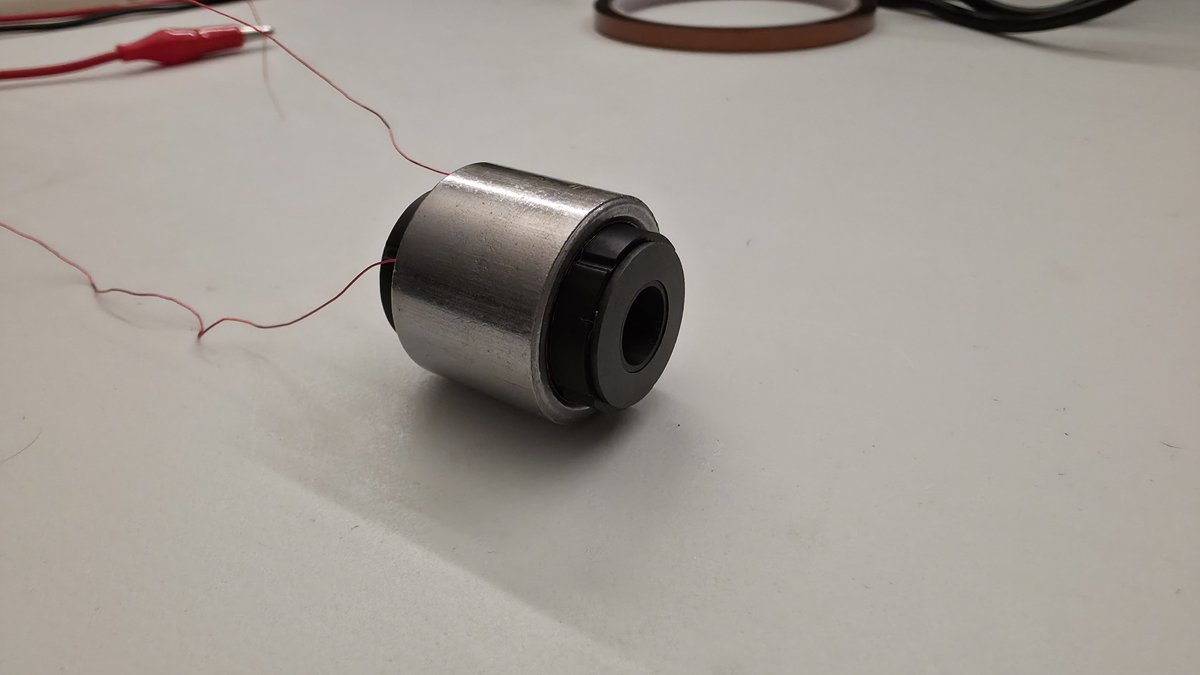
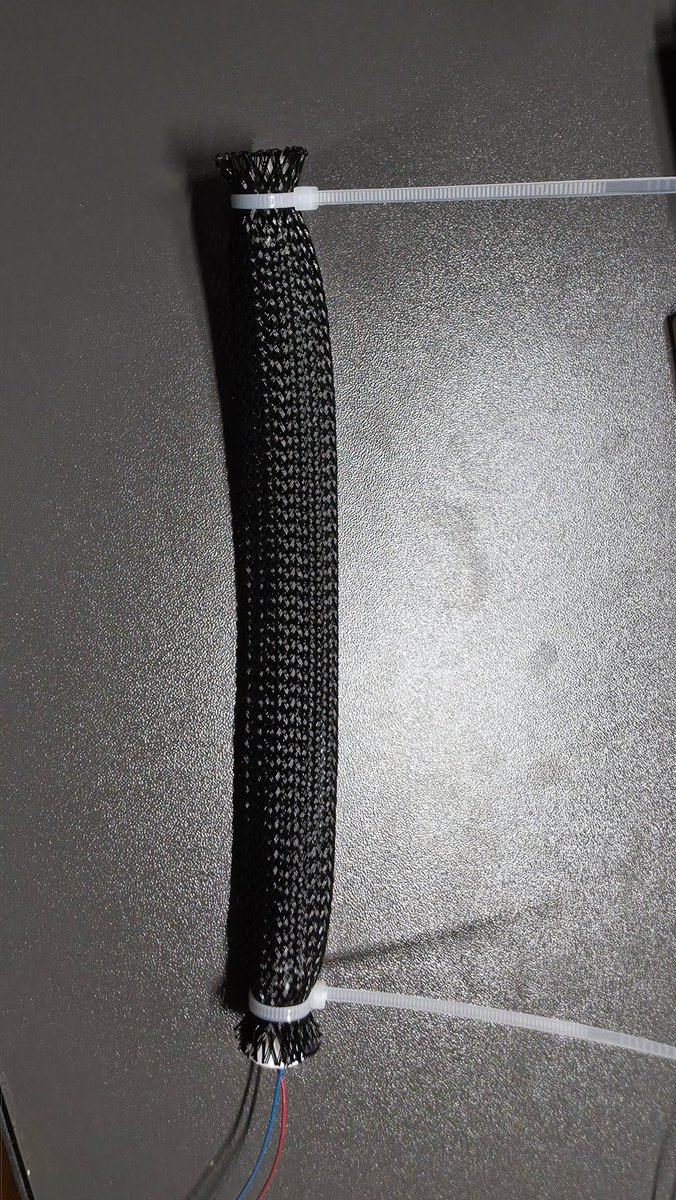
His latest work explores biomimetic muscles driven by electromagnetic voice-coil actuators housed inside flexible braided sheaths. We examine how these actuators generate force, how the braid changes shape as the muscle contracts, and how opposing muscle systems could use leverage around rigid skeletal structures to create flexion and extension.
We also explore the difficult engineering questions that will determine whether this architecture can scale from a laboratory prototype to a complete humanoid robot: continuous and peak force, contraction distance, speed, efficiency, thermal limits, control bandwidth, fatigue life, repeatability, manufacturing, and power requirements.
Other topics include Ian’s unusual inspiration from the animatronics of Five Nights at Freddy’s, the evolution of Anthrobotics, the open-source WOLF planetary actuator, biomimetic design, embodied artificial intelligence, and the company’s long-term vision for human-like machines.
Position control of a VCA artificial muscle! I've got custom driver boards arriving today to make them closed-loop.
This test was done through manual open-loop current control using the PSU.
I've successfully rehydrated the hydrogel strips! Conductivity isn't high enough yet, but it's a great start. The next batch will be made tonight with a few improvements:
- Increased electrolyte content
- Reduced hydropolymer content
Flexion of the finger is almost there, I just need to slightly increase the range of motion. The skin used here is also twice as thick as the final multilayer build.
Finger extension is entirely passive, reducing the total actuator count! I'll recast the skin layers tonight.
My latest humanoid finger design in action! As suggested by some, I've added another tendon to hold the proximal phalanx in place to enable 2-DOF movement. Trigger finger action is now possible.
Next up, adding 2x stabilizers and enabling the integrated flex sensor.
A sneak peak at the new actuator we've been prototyping since early last year. Finally, it's refined enough to demo!
The EFAM (Electrofluidic Artificial Muscle). Lightweight, water-powered, and electrolysis-based.
Tomorrow we swap copper electrodes for 316L stainless steel.