I’ve decided that I’ll only feature videos of Farage in my content with voice modification, like the BBC did with Sinn Fein in the 90s, to avoid giving them the oxygen of publicity or an illusion of credibility.
Palantir were kind enough to sum up its hideous ideology in 22 points. And I have taken the liberty of annotating each one of them. Here is my interpretation of all 22 of them (preserving the original numbering - for the original see their tweet below):
1. Silicon Valley owes an immeasurable debt to the ruling class who bailed out the criminal bankers that wrecked the livelihood of the majority of Americans. The engineering elite of Silicon Valley will defend that ruling class to the death (literally!), in the name of the majority of Americans whom they treat with contempt – i.e., like cattle that have lost their market value.
2. Palantir is eyeing the Apple Store, salivating over the prospect of creating its own technofeudal estate. Time to replace the iPhone with another device that dissolves what is left of people’s privacy.
3. Palantir shall give nothing away for free. It cares uniquely over its own growth which it pursues by sowing fear so that it can sell a fake sense of security.
4. Glory to brute force! Ethics is for suckers. The West needs more of Palantir’s murderous software.
5. AI-powered killer robots are coming. The task is to profit magnificently by building killer robots first and ask questions later. To be able to do so, Palantir will do whatever it takes to avoid at all cost any international treaties that limit AI-driven killer robots.
6. Every poor sod (lacking the connections to avoid being thrown into the trenches with killer drones targeting them from the sky) must be drafted into the army. Forget paying soldiers a salary. All payments should be directed to Palantir, where our own people will be serving their ‘national service’ – leaving the dying to non-shareholders.
7. Palantir works overtime to equip US Marines with killer bots that take away from the US Marines whatever remnants of ethical judgment they are left with on the battlefield. American society should be rendered perfectly incapable of any debate that restricts Palantir’s capacity to get the US Military to eliminate any remaining opportunity to reject its software’s choice of targets.
8. Palantir deplores the fact that the public sector is still not totally devoid of a conscience. Public servants must be fired en masse, except some very few approved by Palantir who will receive huge salaries, paid by taxpayers.
9. Palantir thinks that Donald Trump must be beatified for throwing himself into public service. Not forgiving folks like Trump everything risks our soul, not to mention that it raises the prospect of officials that restrict Palantir’s evil project.
10. Politics needs to be AI-like, devoid of anything that can be mistaken for human empathy. Those who look to the political arena to nourish their soul and sense of self must be sent to the gulag forthwith!
11. There are some people too eager to hasten Palantir’s demise. They should rethink, or else!
12. Palantir makes no nuclear weapons but is happily developing other weapons of mass destruction. We proudly announce that we are now ready to add to nuclear Armageddon the AI-driven threat to humanity’s existence.
13. No other country in the history of the world has committed so many war crimes in the name of progress and freedom. The United States offers infinite freedom to people like Palantir’s founders to profit so handsomely by inflicting so much damage upon humanity.
14. American power has feasted on causing one war after another, one putsch after another, one avoidable financial disaster after another. Too many have forgotten or perhaps have taken for granted America’s capacity to pursue forever wars in the name of peace and democracy.
15. German and Japanese Fascism must be made great again. The denazification of Germany was an overcorrection for which Europe is now paying a heavy price. A similar and highly misplaced commitment to Japanese pacifism must also end immediately!
16. We should applaud those who attempt to monopolise everything by means of generous government contracts. Billionaires must not be satisfied merely with their billions. To become even more obscenely rich they need grand narratives that help them convince the poor to use their freedom to keep them, the billionaires, in power. And, by the way, Palantir loves Elon, especially his grand apartheid-inspired narrative.
17. Silicon Valley must be free to do in America’s cities what it did in Gaza. Many politicians across the United States have essentially shrugged when it came to granting Palantir the right to annihilate all remaining civil liberties and human rights. This must end.
18. Epstein’s syndicate should be forgotten lest lovely people like Trump and the Clintons are deterred from entering government. The public arena must be scrutiny-free unless subversives like Sanders or Mamdani enter it.
19. We love banal public figures as long as they give Palantir all the juicy contracts. We also love colourful public figures who give Palantir all the juicy contracts.
20. We need more opium for the masses, as they are not sufficiently inebriated for us to be unimpeded in the pursuit of their complete subjugation. Questioning organised superstition is dangerous and must end.
21. Time to bring back Hitler’s hierarchy of races, with Palantir’s founders and Elon at its Aryan pinnacle. The idea that it is wrong to judge someone by the colour of their skin or their ethnicity or their religion must be jettisoned.
22. Blacks, Muslims, most Asians, and of course women, are inferior untermensch. Blokes in America, and more broadly the West, have for the past half century resisted putting these subhumans in their places in the name of inclusivity. It was a mistake. Such subhumans must never be allowed in, except as servants or sex service providers – at least until we can improve our robots, in which case we won’t need them at all.
Because we get asked a lot.
The Technological Republic, in brief.
1. Silicon Valley owes a moral debt to the country that made its rise possible. The engineering elite of Silicon Valley has an affirmative obligation to participate in the defense of the nation.
2. We must rebel against the tyranny of the apps. Is the iPhone our greatest creative if not crowning achievement as a civilization? The object has changed our lives, but it may also now be limiting and constraining our sense of the possible.
3. Free email is not enough. The decadence of a culture or civilization, and indeed its ruling class, will be forgiven only if that culture is capable of delivering economic growth and security for the public.
4. The limits of soft power, of soaring rhetoric alone, have been exposed. The ability of free and democratic societies to prevail requires something more than moral appeal. It requires hard power, and hard power in this century will be built on software.
5. The question is not whether A.I. weapons will be built; it is who will build them and for what purpose. Our adversaries will not pause to indulge in theatrical debates about the merits of developing technologies with critical military and national security applications. They will proceed.
6. National service should be a universal duty. We should, as a society, seriously consider moving away from an all-volunteer force and only fight the next war if everyone shares in the risk and the cost.
7. If a U.S. Marine asks for a better rifle, we should build it; and the same goes for software. We should as a country be capable of continuing a debate about the appropriateness of military action abroad while remaining unflinching in our commitment to those we have asked to step into harm’s way.
8. Public servants need not be our priests. Any business that compensated its employees in the way that the federal government compensates public servants would struggle to survive.
9. We should show far more grace towards those who have subjected themselves to public life. The eradication of any space for forgiveness—a jettisoning of any tolerance for the complexities and contradictions of the human psyche—may leave us with a cast of characters at the helm we will grow to regret.
10. The psychologization of modern politics is leading us astray. Those who look to the political arena to nourish their soul and sense of self, who rely too heavily on their internal life finding expression in people they may never meet, will be left disappointed.
11. Our society has grown too eager to hasten, and is often gleeful at, the demise of its enemies. The vanquishing of an opponent is a moment to pause, not rejoice.
12. The atomic age is ending. One age of deterrence, the atomic age, is ending, and a new era of deterrence built on A.I. is set to begin.
13. No other country in the history of the world has advanced progressive values more than this one. The United States is far from perfect. But it is easy to forget how much more opportunity exists in this country for those who are not hereditary elites than in any other nation on the planet.
14. American power has made possible an extraordinarily long peace. Too many have forgotten or perhaps take for granted that nearly a century of some version of peace has prevailed in the world without a great power military conflict. At least three generations — billions of people and their children and now grandchildren — have never known a world war.
15. The postwar neutering of Germany and Japan must be undone. The defanging of Germany was an overcorrection for which Europe is now paying a heavy price. A similar and highly theatrical commitment to Japanese pacifism will, if maintained, also threaten to shift the balance of power in Asia.
16. We should applaud those who attempt to build where the market has failed to act. The culture almost snickers at Musk’s interest in grand narrative, as if billionaires ought to simply stay in their lane of enriching themselves . . . . Any curiosity or genuine interest in the value of what he has created is essentially dismissed, or perhaps lurks from beneath a thinly veiled scorn.
17. Silicon Valley must play a role in addressing violent crime. Many politicians across the United States have essentially shrugged when it comes to violent crime, abandoning any serious efforts to address the problem or take on any risk with their constituencies or donors in coming up with solutions and experiments in what should be a desperate bid to save lives.
18. The ruthless exposure of the private lives of public figures drives far too much talent away from government service. The public arena—and the shallow and petty assaults against those who dare to do something other than enrich themselves—has become so unforgiving that the republic is left with a significant roster of ineffectual, empty vessels whose ambition one would forgive if there were any genuine belief structure lurking within.
19. The caution in public life that we unwittingly encourage is corrosive. Those who say nothing wrong often say nothing much at all.
20. The pervasive intolerance of religious belief in certain circles must be resisted. The elite’s intolerance of religious belief is perhaps one of the most telling signs that its political project constitutes a less open intellectual movement than many within it would claim.
21. Some cultures have produced vital advances; others remain dysfunctional and regressive. All cultures are now equal. Criticism and value judgments are forbidden. Yet this new dogma glosses over the fact that certain cultures and indeed subcultures . . . have produced wonders. Others have proven middling, and worse, regressive and harmful.
22. We must resist the shallow temptation of a vacant and hollow pluralism. We, in America and more broadly the West, have for the past half century resisted defining national cultures in the name of inclusivity. But inclusion into what?
Excerpts from the #1 New York Times Bestseller The Technological Republic: Hard Power, Soft Belief, and the Future of the West, by Alexander C. Karp & Nicholas W. Zamiska
https://t.co/8igjazz1On
@CNN "young women" would be women in their early 20's. To me, the people on these extracts look more like teenagers or CHILDREN!
Say it out loud and stop misrepresenting reality.
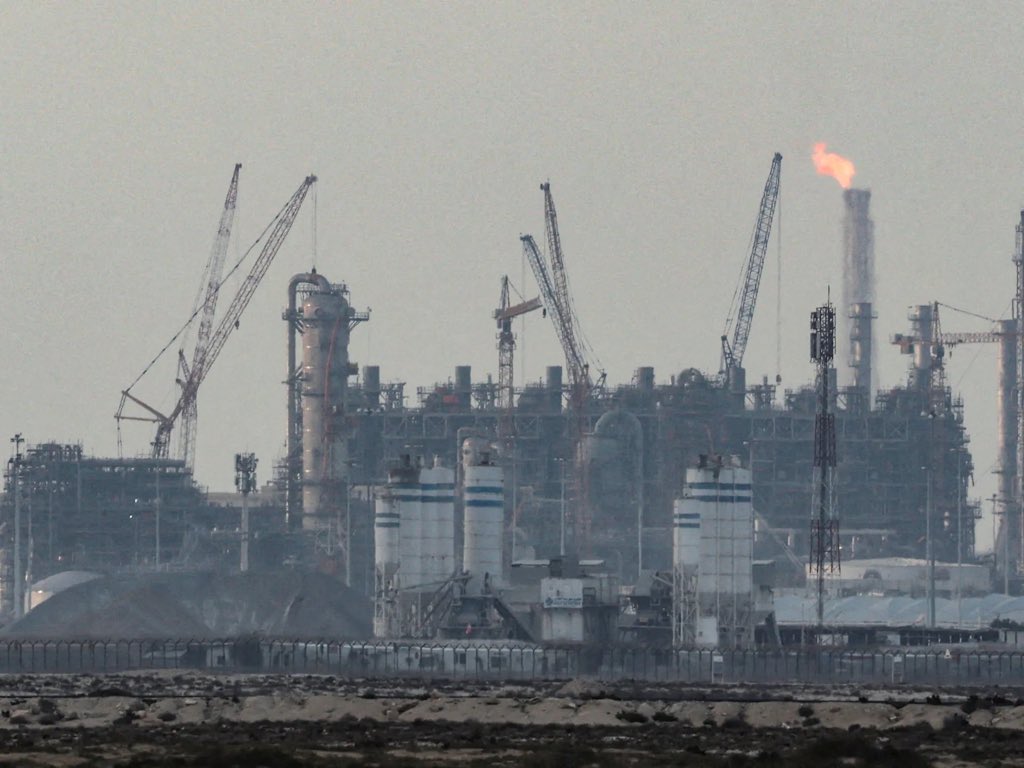
BREAKING: QatarEnergy just declared Force Majeure.
Three words that mean: we cannot deliver, and legally, we do not have to.
This is no longer a supply disruption. This is a contract collapse.
Force Majeure is not a precaution. It is a formal legal declaration that an unforeseeable event beyond QatarEnergy’s control has made fulfillment impossible. Every affected buyer just had their contract voided. The gas they were counting on is gone, and they have no legal recourse to get it back.
82% of Qatar’s LNG goes to Asia.
China relies on Qatar for 30% of its LNG imports. India 42 to 52%. South Korea 14 to 19%. Taiwan 25%. Japan is already rationing to spot markets.
Asian benchmark prices jumped 39% the day production stopped.
Force Majeure just made that permanent until further notice.
Indian companies have already cut gas supplies to industry by 10 to 30%. That is not a market adjustment. That is factories running at reduced capacity today, across the world’s most populous continent, because Iran sent drones into Ras Laffan.
Here is the number the market still has not fully absorbed.
Two weeks to restart a liquefaction train after a full cold shutdown. Then two more weeks to reach full capacity. That is a minimum of four weeks at zero, assuming no further strikes, no security complications, no inspection delays.
The war is still running.
There is no security guarantee. There is no restart timeline. There is no floor.
Every LNG contract in Asia just became a spot market problem. Every spot market problem just became an inflation problem. Every inflation problem just became a central bank problem.
This started as a war in the Middle East.
It is now inside every factory, every power plant, and every gas bill across Asia.
Price that chain.
https://t.co/ULBgEzZ3A8
This is potentially the biggest Iran story nobody is talking about: the global insurance market may be heading toward a systemic crisis. Here’s why…
Most people don’t realize London isn’t just a financial center it’s THE center of global insurance.
Lloyd’s underwrites ~40% of the world’s marine cargo. Ship sinks, port gets bombed, canal gets blocked the bill lands in London.
This is why the UK punches above its weight. Not the Royal Navy. Not diplomacy. Insurance.
Control insurance, control trade.
And London doesn’t just control the 90% of global trade that moves by sea. Lloyd’s and the London market are major insurers of almost everything skyscrapers, factories, ports, satellites, entire supply chains.
You can’t participate in public markets or raise large amounts of capital without insurance.
Now, the normal playbook for war risk is repricing, not cancellation.
Canceling coverage entirely is a massive escalation in underwriting posture. It signals something beyond risk, it signals uncertainty so deep the underwriter can’t even price it.
The question everyone should be asking: why?
Why not just jack up premiums and make a fortune off the crisis like they did in the Black Sea off Ukraine?
To answer that, you have to understand WHY London has maintained a stranglehold on global insurance while losing nearly submarket related to ships.
The answer: better intelligence.
It is no coincidence that MI6 headquarters sits directly across the Thames from the @IMOHQ, the world’s maritime regulator & a short distance from Lloyd’s itself.
I have no proof of a direct pipeline, but it has long been speculated in the industry that intelligence flows from MI6 to Lloyd’s.
Having the best intel in the world would be the single greatest competitive advantage any insurer could possess: the ability to price risk that competitors can only guess at.
Here’s the problem: the majority of MI6’s intel doesn’t come from its own agents. It comes from Five Eyes the alliance comprising the US, UK, Australia, Canada, and New Zealand.
And within 5Eyes, the dominant partner is obvious. The CIA, NSA, NRO, etc generate the lion’s share of intel.
So if Lloyd’s pricing advantage flows from MI6, and MI6’s best intelligence flows from the US… what happens when that data pipeline gets throttled?
All indications are that @Keir_Starmer was blindsided by the size and scope of the US/Israel strikes on Iran this weekend. That alone tells you something about the current state of transatlantic intelligence sharing.
And we know there has been serious anger in Washington over the UK’s decision to sell Diego Garcia, home to America’s most strategically important base in the Indian Ocean, to Mauritius.
It is not a huge leap to conclude that the submarine cables linking Langley to London have gone dark, or at minimum have been significantly throttled.
What this means for UK national security is a question for the Brits. But what it means for EVERY company globally that’s insured through the London market has massive implications for the entire financial system.
Because most large insurers worldwide don’t do independent intelligence work. They index off Lloyd’s rates.
If you’re insuring a skyscraper in Tokyo, a semiconductor fab in Taiwan, or a port in Argentina you get a Lloyd’s quote, then shop that price around.
Other insurers see Lloyd’s number and assume the diligence was done. They price accordingly.
This means if London is suddenly flying blind it’s not just Lloyd’s policyholders at risk. It’s the entire global reinsurance chain.
The cancellation of war risk coverage on ships isn’t the crisis. It’s the canary.
If this hypothesis is correct, we could be looking at a systemic repricing event across global insurance markets…. the kind of cascading uncertainty that defined 2008 and COVID.
Watch Lloyd’s. Watch reinsurance spreads. What Five Eyes. That’s where this story, and possibly Wall Street, breaks.
CC @BillAckman
Voici qui composait le cortège néonazi autorisé par Nunez à Lyon.
Yvan Benedetti, ancien président de de L'Œuvre française, mouvement pétainiste. condamné pour diffamation et provocation publique à la haine envers les juifs en 2021. Condamné à 10 000 euros d'amende pour contestation de crime contre l'humanité en 2022.
Alexandre Gabriac, fondateur des Jeunesses nationalistes, mouvement néonazi, exclu en 2011 du FN après un salut Nazi. Il en revendiquera d’autres notamment devant la tombe de Mussolini. Il organisera des manifs à Lyon aux cris de « La rue, la France, nous appartient » ou « Pas de quartier pour les pédés ».
Marc de Cacqueray-Valménier, néonazi. C’est le fondateur et le principal activiste du groupuscule d’extrême droite les zouaves de Paris dissout en 2022. Il organise ensuite la réactivation du GUD en 2022. Condamné en 2022 à un an de prison ferme pour avoir mené une attaque sur un bar antifasciste à Paris. En 2026, il est condamné à un an de prison, dont six mois fermes pour avoir tabassé des militants de SOS racisme. C’est l’organisateur des ratonnades le soir de France Maroc. Le 10 février 2024, il est arrêté et mis en GAV pour avoir rendu un hommage à l'écrivain Robert Brassilach.
Eliot Bertin l’ancien chef du groupe Lyon Populaire, dissous en juin 2025 pour exaltation de la collaboration avec l’Allemagne nazie. En février 2024 il est mis en examen pour son rôle actif dans la violente attaque d’une conférence sur la Palestine dans le Vieux-Lyon. Il est normalement interdit de paraître à Lyon.
Fabrice Robert, leader du groupe de punk hardcore à l’idéologie nationaliste-révolutionnaire, et responsable du Bloc identitaire, désormais appelé les identitaires. En 1992 il est condamné à un mois de prison avec sursis et 10 000 francs d’amende pour avoir distribué des tracts négationnistes à la sortie de lycées niçois. En 2014, il organise les Assises de la résignation sous l'égide du Bloc identitaire.
Raphaël Ayam, leader du groupuscule nationaliste-révolutionnaire créé en septembre 2019, juste après la dissolution du Bastion social. En juin 2023, il était invité à s'exprimer lors d'une conférence organisée en Espagne par l’Association culturelle des amis de Léon Degrelle, un ancien SS ayant combattu dans les rangs nazis, et resté jusqu'à sa mort un grand défenseur d'Hitler. Ancien collaborateur d’un député RN.
Aurélien Verhassel, ancien patron du groupuscule identitaire lillois La Citadelle dissous en 2024.
Alice cordier, fondatrice du collectif némésis.
Aliette Espieux organisatrice, proche des milieux radicaux, mariée au néonazi violent Eliot Bertin. Elle est la porte-parole de la Marche pour la Vie, mouvement catholique intégriste opposé à l’avortement. Elle a aussi figuré sur la liste du Rassemblement national du Ve secteur lyonnais, lors des élections municipales en 2020.
Gabriel Lousteau, fils de l’ex-dirigeant du GUD Axel Loustau, ancien prestataire du FN et proche de Marine Le Pen. il responsable du GUD (Groupe union défense), syndicat étudiant d’extrême droite. Il a été condamné ce lundi 24 juin par le tribunal correctionnel de Paris à une amende de 1 440 euros pour menace de mort et injure publique en raison de l’origine, de la race ou de la religion.
Ne serait-ce pas plutôt une manœuvre de #trump pour négocier avec la Chine une guerre contre l'Iran? Tu fermes les yeux sur l'Iran et je fermerai les yeux sur Taïwan 🤔
USA 🇺🇸
Donald Trump accuse Taïwan d'avoir volé l'industrie américaine dans le domaine des semi-conducteurs depuis plus de 30 ans. La Maison Blanche considère que Taipei n'est pas un partenaire fiable.
Open Letter to the President of the United States and His Administration
As Mayor of Kommune Kujalleq – the region of Greenland where the majority of the country’s rare earth elements and strategic minerals are located – I feel a clear responsibility to speak plainly and without reservation.
Greenland’s subsoil is not for sale through political pressure, dismissive rhetoric, or a lack of respect. Period.
The interest shown by you and your administration in Greenland’s resources carries obligations – not only legal, but moral and political. When Greenland, our institutions, our allies, and our people are spoken of with disregard, trust is eroded. And without trust, there is no access. Not a single gram.
As mayor, I will never accept that the citizens of my municipality should feel unsafe or uncertain about what is taking place in their own backyard – politically, economically, or in terms of security. Our land and our communities are not pieces on a great-power chessboard.
Greenland has some of the strongest and most responsible mineral resource legislation in the Nordic region. These laws exist to protect people, nature, and future generations. They will be enforced in full – regardless of who seeks to operate in Greenland, and regardless of the size or power of the nation involved. They are not subject to negotiation.
The Greenlandic people hold authority over their land and their resources. And if there is one thing your administration currently lacks in this matter, it is respect: respect for our democracy, respect for our legislation, respect for our allies, and respect for our people.
Jobs and promises of increased revenue can never be used as currency to bypass the law or the will of the people. If mining activities are not carried out in full compliance with Greenlandic law and with genuine respect for the population, there will be no mining. It is that simple.
Not a single gram of Greenland’s minerals will be extracted without order, respect, and responsibility.
Sincerely,
Malene Vahl Rasmussen
Mayor – Kommune Kujalleq – Greenland
Source: Municipality of South Greenland
BREAKING: #TrumpIsUnfitForOffice is currently trending on Twitter in the aftermath of Trump’s unhinged and threatening letter to Norway’s Prime Minister. Can we get 1,000 retweets on this post to amplify this effort?
The Venezuela story everyone missed.
The U.S. just sold $500 million of Venezuelan oil.
But they deposited the money in Qatar.
Not the U.S. Not Venezuela. Qatar.
Here is why that satisfies detail changes everything you think you know about what just happened.
Venezuela owes $170 billion to international creditors. Bondholders. Oil companies. China. Everyone is owed money.
Any account in the U.S. or Venezuela would be immediately seized through litigation.
So the Trump administration parked the money in Qatar. A “neutral venue” where funds flow freely with U.S. approval and without risk of seizure.
This is not liberation. This is not regime change. This is not intervention.
This is the first operational deployment of a new architecture for sovereign resource capture.
The sequence:
- January 3: Capture the president
- January 6: Announce U.S. will “run” oil sector indefinitely
- January 9: Sign Executive Order shielding revenues from all creditors
- January 14: Complete first $500 million sale
Twelve days from military operation to revenue capture.
Iraq took six years to sign its first major oil contracts after 2003. Foreign companies operated under Iraqi law. Revenues went to Iraqi accounts.
Venezuela 2026: The U.S. government directly markets the oil, completes the sales, and deposits proceeds in accounts it controls in third countries.
This has never happened before. Never! Yup!
Not in Iraq. Not in Libya. Not in Kuwait. Not anywhere since 1945.
The Executive Order is the key document. It declares that Venezuelan oil revenues are exempt from all creditor claims, all legal judgments, all international arbitration.
With one signature, $170 billion in legal obligations became unenforceable.
The international legal architecture built over 80 years was bypassed through a domestic Executive Order and an account in Doha.
ExxonMobil’s CEO called Venezuela “uninvestible” at the White House meeting last week.
He is correct. And it does not matter.
When the U.S. government controls the revenue stream, shields it from courts, and promises to “make it real easy,” the old investment calculus is obsolete.
The template is now operational:
- Designate government as narcoterrorist.
- Deploy military to capture leadership.
- Install cooperative interim authority.
- Issue Executive Order voiding all prior obligations.
- Sell resources through U.S.-controlled channels.
- Deposit proceeds in jurisdictions beyond legal reach.
Any nation with vast natural resources, a government whose legitimacy can be contested, and insufficient military deterrence just watched this template execute in real time.
Venezuela has 303+ billion barrels of proven reserves.
The largest on Earth.
The U.S. now controls the revenue stream.
This is not a story about Trump or Maduro or intervention ethics.
This is the birth of a new imperial architecture that renders the post-Westphalian legal order irrelevant through financial engineering and offshore banking.
The 21st century will not be shaped by international law.
It will be shaped by whoever controls the accounts.
Read the full article - https://t.co/TS1Nz2BiSp
For Renee Nicole Good
Killed by I.C.E. on January 7, 2026
by Amanda Gorman
They say she is no more,
That there her absence roars,
Blood-blown like a rose.
Iced wheels flinched & froze.
Now, bare riot of candles,
Dark fury of flowers,
Pure howling of hymns.
If for us she arose,
Somewhere, in the pitched deep of our grief,
Crouches our power,
The howl where we begin,
Straining upon the edge of the crooked crater
Of the worst of what we’ve been.
Change is only possible,
& all the greater,
When the labour
& bitter anger of our neighbors
Is moved by the love
& better angels of our nature.
What they call death & void,
We know is breath & voice;
In the end, gorgeously,
Endures our enormity.
You could believe departed to be the dawn
When the blank night has so long stood.
But our bright-fled angels will never be fully gone,
When they forever are so fiercely Good.
Le droit international est souvent jugé à partir d’un critère qui n’est pas le sien : sa capacité à empêcher les crises.
Cette approche est trompeuse, car elle transpose au niveau international des attentes propres au droit interne, alors que les deux systèmes reposent sur des logiques radicalement différentes.
Le droit interne est bâti sur une architecture hiérarchique : une autorité centrale édicte la norme et dispose des moyens matériels pour en assurer l’exécution. Le droit international, lui, s’inscrit dans un espace décentralisé, composé d’États souverains qui ne reconnaissent aucune autorité supérieure permanente. Il ne peut donc fonctionner ni comme un droit pénal global, ni comme un système de commandement, mais comme un cadre d’organisation des relations entre acteurs indépendants.
Dans ce contexte, la question n’est pas celle de la sanction immédiate, mais celle de l’incitation. Les règles internationales sont respectées non parce qu’un État y serait moralement tenu, mais parce qu’elles structurent un environnement prévisible dont tous tirent bénéfice. La stabilité juridique réduit les coûts de transaction, limite les risques d’escalade et permet aux États de concentrer leurs ressources sur autre chose que la gestion permanente de conflits.
Ce mécanisme est particulièrement visible dans les domaines où l’on ne parle jamais de “crise” : aviation civile, navigation maritime, échanges commerciaux, télécommunications, diplomatie. Ces espaces ne fonctionnent pas par la contrainte, mais par l’adhésion continue à des normes communes, précisément parce que leur effondrement serait immédiatement contre-productif pour l’ensemble des acteurs, y compris les plus puissants.
L’erreur fréquente consiste alors à déduire de l’existence de violations que la norme serait dépourvue d’effet. Or, une règle n’est pas inefficace parce qu’elle est transgressée. Elle l’est lorsqu’elle cesse d’être pertinente dans le calcul des acteurs. Or c’est l’inverse qui se produit : même lorsqu’ils s’en écartent, les États continuent de se référer au droit, de le mobiliser, de le tordre ou de le justifier. Ce simple fait indique que la norme conserve une valeur structurante.
La force brute, à elle seule, est un instrument instable. Elle permet de produire un résultat immédiat, mais elle ne suffit pas à en assurer la durabilité. Une action fondée exclusivement sur la contrainte expose son auteur à des réactions en chaîne qu’il ne maîtrise pas toujours. Le droit, en revanche, permet de transformer une situation de fait en situation acceptable, ou du moins tolérable, pour les autres acteurs du système international.
Ainsi compris, le droit international ne fait pas disparaître les rapports de force ; il les encadre. Il ne prétend pas moraliser la politique mondiale, mais en limiter les effets les plus destructeurs. Il agit moins comme une barrière que comme un amortisseur, réduisant le risque que chaque désaccord dégénère en confrontation ouverte.
L’absence d’une autorité mondiale chargée de l’imposer donne parfois l’illusion que le droit international serait une construction fragile ou purement symbolique.
En réalité, il constitue une technologie de stabilisation : imparfaite, souvent contournée, mais indispensable. Les systèmes internationaux qui ont tenté de s’en affranchir durablement ont fini par être minés par l’arbitraire, l’imprévisibilité et la défiance généralisée.
Le droit international n’est donc ni un idéal naïf ni une morale universelle. Il est un outil pragmatique, forgé par les États eux-mêmes, pour rendre la rivalité supportable et éviter que la puissance ne se retourne systématiquement contre ceux qui l’exercent.