#WATCH | Madurai | On exit polls, BJP candidate from Vasudevanallur constituency, Ananthan Ayyasamy says, "... With nearly 4.5 crore voters, there has to be at least 4.5 lakh samples to be taken. There are about 75,000 booths in Tamil Nadu, and only about 60,000 samples are taken. Not even one person was asked per booth... It is a statistical error. Anyone who understands statistics will just reject this exit poll... We completely reject this exit poll..." (02.05)
The Japanese call it 'tsundoku'. Nassim Taleb, an antilibrary.
It's the delightful habit of acquiring books faster than you can read them.
I'm adding 300+ books to my collection every year.
Check out my latest additions and why I couldn't resist it!
The Next Two Years of Software Engineering https://t.co/uIJSBJdzVa < these are five crazy-relevant questions to ask of yourself and your team. @addyosmani then offers strong recommendations to consider.
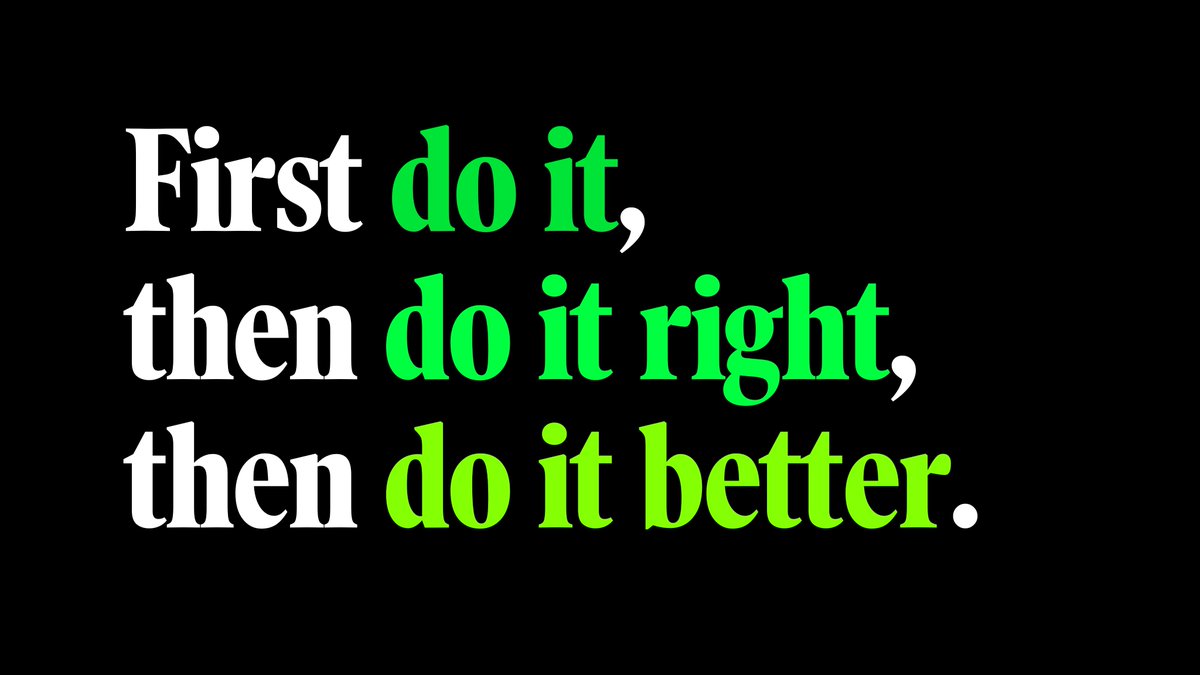
"First do it, then do it right, then do it better."
Just start. The journey to success often begins with a single step, but that first step can be the hardest to take. It's easy to get caught up in the fear of failure or the desire for perfection, but I hope this quote I first shared in 2013 can be a reminder of the importance of simply getting started as we go into 2024.
Just Start Somewhere
"Start slow if you have to. Start small if you have to. Start privately if you have to. Just start." - James Clear
Taking that first step doesn't require perfection or immediate mastery. The key is to overcome inertia and take action, as this action will lead to progress, learning, and (if you’re lucky and consistent) ultimately success.
When you start, you allow yourself the opportunity to grow, adapt, and move forward.
The Power of Starting
Beginning a new project or habit often feels daunting. According to psychologists, we tend to overestimate the pain of starting and underestimate our ability to persist.
However, studies show that "small starts" predict eventual success better than initial enthusiasm or early progress. This phenomenon is known as the fresh start effect - taking the first step energizes us and bolsters motivation.
So focus on starting without putting pressure on perfection. Progress and course corrections will follow.
First, Do It: Embrace the MVP Mindset
Doing it = get the simplest MVP out.
A Minimum Viable Product (MVP) represents the simplest version of a product or idea that allows you to test, gather feedback, and iterate.
By embracing this mindset (just get something done - it's OK if rough, a prototype, a draft), you focus on progress over perfection, understanding that getting something out into the world is far more valuable than waiting for the perfect moment.
Expand Your Comfort Zone
Venturing outside one's comfort zone can elicit fears of failure. Leaning into discomfort not only builds confidence and skills, but research shows it makes us more receptive to learning. Recognize that fear is often the mind's way of urging us to grow. Don't let it stop you from progressing.
Then, Do It Right: Refine and Correct
Doing it right = fix correctness issues.
Once you've taken that first step and put your MVP out into the world, it's time to refine and correct. This stage is about learning from feedback, identifying areas of improvement, and making adjustments accordingly.
It's a chance to iterate on your idea, ensuring that it meets the needs of your audience or customers while aligning with your vision.
Cultivate Curiosity and Resilience
Meeting new challenges with curiosity and resilience makes venturing outside our comfort zone more sustainable and enjoyable. Cultivate curiosity about growth opportunities and your capacity to rise to them. Set mini-challenges to incrementally expand your horizons.
When facing inevitable setbacks, avoid self-criticism and tap into resilience - the ability to recover, learn and continue progressing.
Self-compassion, adaptability and maintaining perspective are key here. With consistent effort, you build confidence in your ability to start, stumble, learn and work toward mastery.
Finally, Do It Better: Strive for Continuous Improvement
"Doing it better = iterate towards an ideal end-state (e.g., make it fast)."
The journey doesn't end with merely doing it right.
The final step is to continuously improve, striving for excellence and growth.
By iterating towards an ideal end-state, you demonstrate a commitment to progress, ensuring that your product, idea, or project remains relevant, innovative, and successful.
Set New Goalposts
As you improve, have a clear idea of when you are “done” or update your goalposts. Elite athletes turn small gains into competitive edges via the aggregation of marginal gains. Identify areas of potential improvement and set measurable stretch goals, from increasing efficiency to enhancing user delight.
Overcoming the Greatest Barrier to Progress
"The greatest barrier to progress is not lack of resources or talent, but fear of failure."
Recognizing that fear of failure is the most significant obstacle in the pursuit of success allows you to confront it head-on.
By acknowledging this fear, you can focus on taking that first step, knowing that once the ball starts rolling, it becomes much easier to keep it in motion.
Remember that starting is more than half the battle. Don't wait until you feel ready, because the perfect moment may never come.
The Bottom Line
Rather than striving for perfect execution, embrace the power of starting - put forth an MVP, soft launch an initiative, or set a milestone. Progress begets motivation. By simply starting, you open the door to growth and innovation. The rest will follow.
Embrace the power of starting and then iterating until you're happy.
@bhumi_mithra Most of the time, the behavior of 🟥 contestants is appreciated- until it goes too far. Much needed warnings should have been given before any major incidents. This could dent their careers, which are built on reputation & social currency. I low-key feel bad, too.
Tiger Woods on what it takes to be a savage.
"It's do all the nitty gritty details that are ugly, hard, and mundane...Quite frankly, a lot of times you don't see the results for maybe years to come, but it's the little details that it takes each and everyday to be successful."
Excellence filters people out through boredom, discomfort, and delayed rewards. It lives in the details that most people don't have the discipline or patience to honor every day.
📹: Skratch
@bhumi_mithra @Calen38623525 All I see is Vikram's chances of staying in for the last 2 weeks increasing. If his demographic was sharing votes with Kani, then with Kani out, Vikram can secure a top 7 spot (without him lifting a finger during TTF week).
Umberto Eco, who owned 50,000 books, had this to say about home libraries:
“It is foolish to think that you have to read all the books you buy, as it is foolish to criticize those who buy more books than they will ever be able to read. It would be like saying that you should use all the cutlery or glasses or screwdrivers or drill bits you bought before buying new ones.
“There are things in life that we need to always have plenty of supplies, even if we will only use a small portion.
“If, for example, we consider books as medicine, we understand that it is good to have many at home rather than a few: when you want to feel better, then you go to the ‘medicine closet’ and choose a book. Not a random one, but the right book for that moment. That’s why you should always have a nutrition choice!
“Those who buy only one book, read only that one and then get rid of it. They simply apply the consumer mentality to books, that is, they consider them a consumer product, a good. Those who love books know that a book is anything but a commodity.”
Came across this video by Evernote founder @plibin detailing the 'Amazing State Machine' framework. This is very high on insight density. Thanks Phil for this!
Founders selling a subs product or service should look at the 'Amazing State Machine' framework. Sadly not so useful for one-time or low frequency usecase like mortgages, or college admission.
The framework deconstructs user activity into 14 flows (see image), e.g., #6 moves low value users to high value users (those who use the app more frequently and extract value from you, not pay most or you extract value from), or #12 (holding on to high value users). You can now have specific teams assigned to each flow
#6 - upgrade team
#12 and 7 - high value user retention and delight team. You can even track revenue and costs per flow.
Three big learnings:
A/ All churn is not the same. First time user to inactive != High value user to inactive user (or even Low value user to inactive user). This was a very actionable insight.
B/ There is a heirarchy of flows - #12 is v important. If #2 is v high, then there is usually no point focusing on #1 (acquiring new users). This is a leaky bucket.
C/ The most aligned startup models allow you to make the most revenue from high value users. If there is a user extracting highest value but doesnt pay the highest (e.g., Meta) it is a less aligned biz model than one where your revenue from user increases in proportion to the value they derive from your platform (e.g., Apple).
I'm looking forward to chatting with my Gemini co-leads @OriolVinyalsML and @NoamShazeer in a conversation with @OfficialLoganK today at 1 PM Pacific. We'll talk Gemini, ML research developments, what are important research directions, etc.
https://t.co/PJDAd4kCom
We spun up a new GitHub repo for all things MCP at @Google.
Get info on our remote managed MCP servers, open source MCP servers, examples, and learning resources.
https://t.co/q6erJX2Xcc