New Research: Arthur Wardle’s Exmoor
Wardle made oil studies on Exmoor, while independent landscapes survive within his oeuvre.
This signed work was catalogued by Burstow & Hewett in November 2022.
View the painting:
https://t.co/R0qrUlCUqf
#ArthurWardle #LandscapePainting #FineArt
Arthur Wardle (1864–1949) — Exmoor
Uncommon signed landscape by one of Britain’s foremost animal painters.
Wardle’s documented Exmoor studies give the subject particular significance.
Heather, rocky moorland and an expansive sky reveal another side of Wardle’s art.
#ArthurWardle #BritishArt #Exmoor
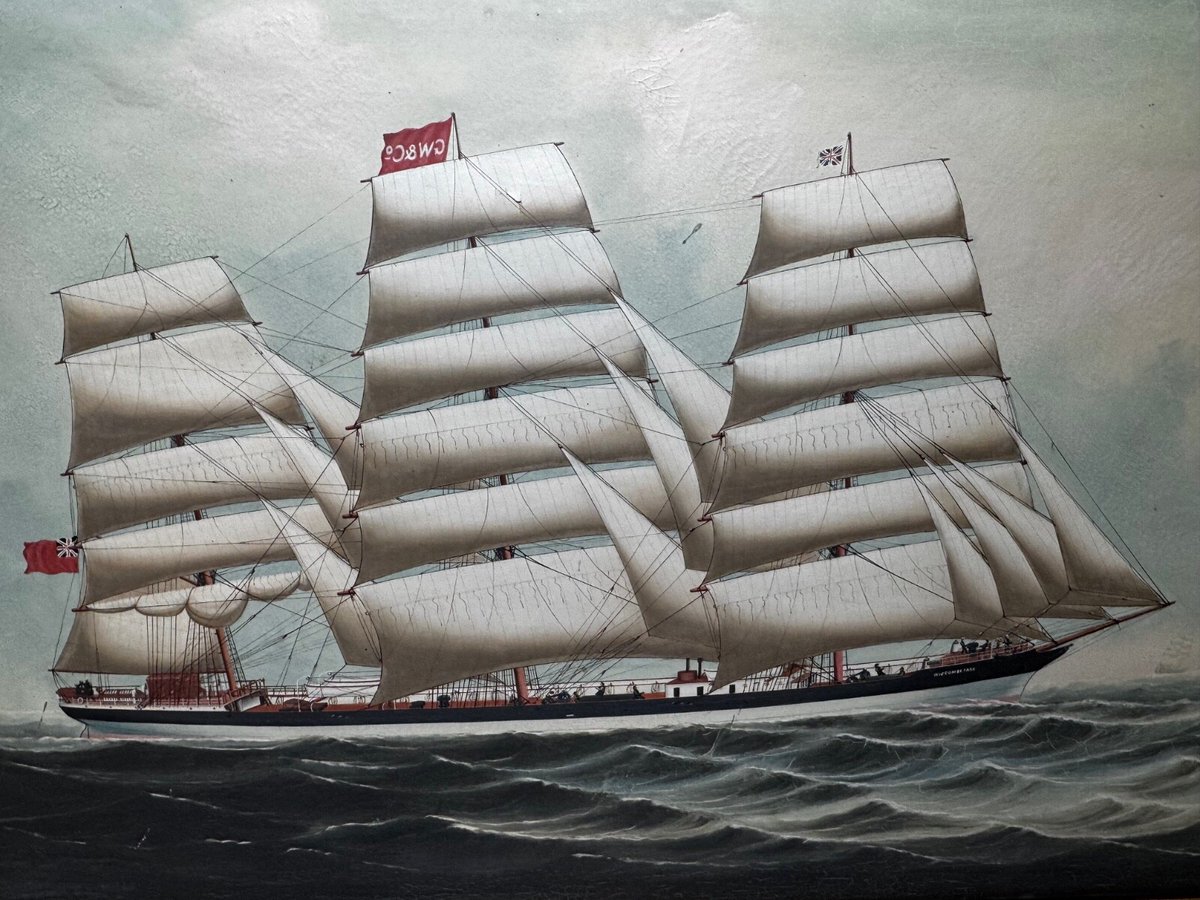
Our research uncovered a separate Reginald Arthur Borstel portrait of Wiscombe Park dated 1917, while the flag in our painting appears consistent with G. Windram & Co. of Liverpool.
The ship also had important Australian connections.
View the artwork:
https://t.co/TvawIoREZi
A remarkable maritime discovery.
This large early 20th-century oil depicts Wiscombe Park, a 281-ft, 2,228-ton three-masted steel sailing ship built by John Blumer & Co. of Sunderland.
Cautiously attributed to Reginald Arthur Borstel, c.1910-1917.
#MaritimeArt#Borstel
Twitter / X — Part 2 of 2
Research links the A. Fontville signature to Alfred Fontville de Breanski Jr. (1877–1957), a Royal Academy exhibiting artist.
Explore the painting and full research:
https://t.co/ANCpM6lbj8
#BritishArt#LakeWindermere#AlfredDeBreanski
Twitter / X — Part 1 of 2
Alfred de Breanski Jr at Lake Windermere
An atmospheric early 20th-century British oil, signed “A. FONTVILLE” and further signed and titled Lake Windermereverso.
Cattle stand in the shallows as evening light catches the distant mountains.
Reverse of Oliver Clare’s Still Life of Blossom and a Bird’s Nest, showing the historic labels and provenance evidence attached to the painting. These include the Haynes Fine Art of Broadway label identifying Oliver Clare, stock no. 3463 and the historic 8 × 10-inch dimensions, together with an earlier F.R. registered-stock label identifying the artist and title.
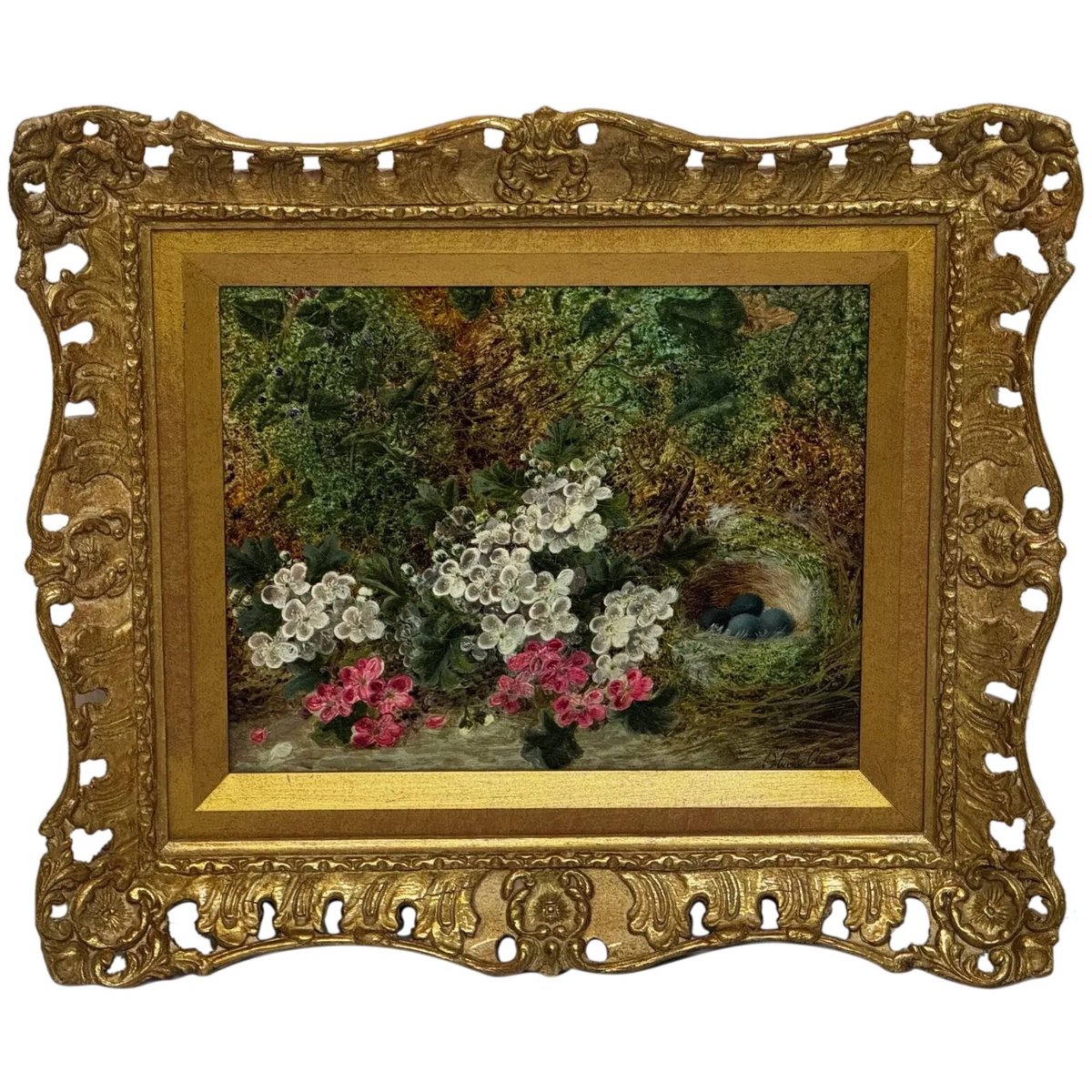
1/2 | Hidden amongst the blossom…
Oliver Clare (1853–1927), Still Life of Blossom and a Bird’s Nest, c.1880–1890.
This signed Victorian oil depicts pink and white blossom, a mossy bank and a nest containing four vivid blue eggs.
#OliverClare#VictorianArt
2/2
The reverse retains historic London trade labels, while a faint painted signature or inscription remains tantalisingly undeciphered.
French School, c.1870
After & adapted from Robert Lefèvre
Discover the portrait and our research:
https://t.co/X9LW2wTDRi
#Napoleon #RobertLefevre #FrenchArt
1/2
What can new research reveal about a 19th-century portrait of Napoleon I?
Previously associated with Jacques-Louis David, this imposing c.1870 oil is now more convincingly placed after and adapted from Robert Lefèvre (1755–1830).
Napoleon appears in Imperial Guard uniform with Légion d’honneur insignia and ceremonial sword.
What can new research reveal about an historic attribution?
The National Galleries of Scotland holds an accepted William Aikman portrait of Sir James Campbell — the same sitter depicted in our portrait.
Aikman also worked extensively within the wider Campbell patronage circle.
Our painting retains an historic William Aikman frame plaque and apparent “Wm Aikman” attribution verso.
It remains responsibly catalogued as Attributed to William Aikman, probably c.1720.
Discover the research:
https://t.co/RPcRgMTKz0
#WilliamAikman #ScottishArt #GeorgianArt #MilitaryPortrait #FineArt
William Aikman — Portrait of Sir James Campbell of Lawers
Sir James Campbell of Lawers and Rowallan
Scottish military officer
Attributed to William Aikman (1682–1731)
Oil on canvas, c.1720
Colonel of the Scots Greys
Later Lieutenant-General
Governor of Edinburgh Castle
Available from Cheshire Antiques Consultant LTD®
John Simmons — Portrait of Captain Gamaliel Nightingale
Captain Gamaliel Nightingale (1731–1791)
Royal Navy
Oil on canvas, c.1760
Bonhams Sale 30152, Lot 9
Earlier Bonhams Sale 28759, Lot 61
Previously from a Private Collection, Europe, since at least 1990.
Privately loaned and exhibited with the Famous Lord Hill Museum, Shropshire.
Available from Cheshire Antiques Consultant LTD®
https://t.co/X7fHOi1lyq
What can the reverse of an 18th-century painting reveal?
This Georgian portrait of Captain Gamaliel Nightingale by John Simmons retains an earlier Bonhams label:
Sale 28759, Lot 61
That earlier auction record means the identification of Nightingale predates the later Bonhams sale of February 2024.
The reverse can sometimes preserve an artwork's history just as clearly as the painted surface.
Victorian Prized Shorthorn Bull
British School, in the manner of William Ward
Oil on canvas, c.1890
Golding Young & Mawer provenance
Professionally conserved
Privately loaned & exhibited with the Famous Lord Hill Museum
Available from Cheshire Antiques Consultant LTD®
https://t.co/OeO663UecO
What can the back of a Victorian painting reveal?
This c.1890 British School portrait of a prized Shorthorn bull held an intriguing clue on its reverse: a historic B-in-lozenge trade mark.
Our research identifies the mark with very high confidence as associated with Bourgeois Aîné, Paris, while the adjacent 46 × 38 cm measurement corresponds to the French F8 standard canvas format.
The painting itself belongs to Britain's distinctive livestock-portrait tradition and is catalogued in the manner of William Ward.
Sometimes the reverse of a painting reveals almost as much history as the front.
Late Georgian Horse-Head Armorial Desk Seal
c.1770–1800
Copper alloy, probably brass
Traditionally associated with the Abercromby family of Tullibody, Scotland
Available from Cheshire Antiques Consultant LTD®
https://t.co/ONl33NNFCJ
Would you trust the story attached to this Georgian seal?
This remarkable horse-head armorial desk seal dates to c.1770–1800 and is traditionally associated with the Abercromby family of Tullibody, Scotland.
But when we examined the heraldry, an intriguing problem emerged.
The engraved matrix contains two shields, yet the surviving details cannot presently be matched securely with the recorded Tullibody arms.
So while the Abercromby connection remains an important part of its history, the specific attribution to Sir Ralph Abercromby remains unverified.
Sometimes good provenance research raises better questions than it answers.
Would you recognise this Scottish landscape?
George Houston painted Arran repeatedly, but Glen Sannox gave him one of Scotland's most dramatic combinations of mountain, water and changing light.
This little oil dates to around 1900.
What caught my attention was the evening light across the landscape.