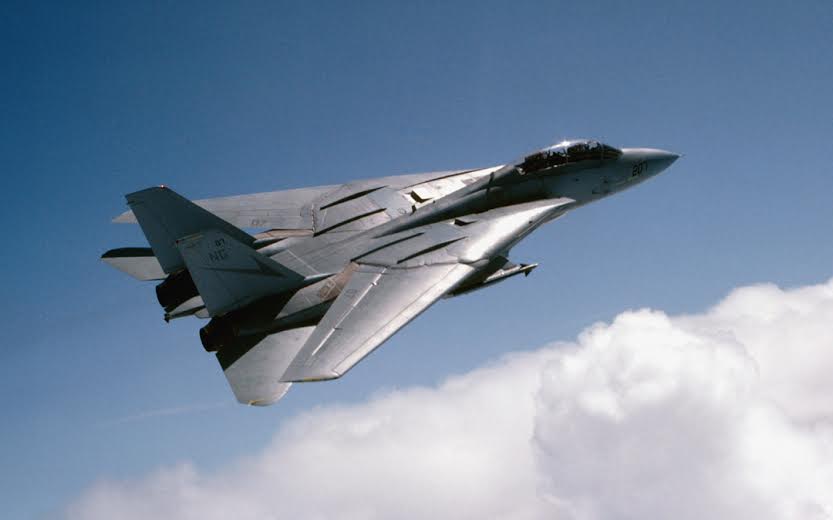
Iconic F-14 vs F-18 hornet
F-14 Tomcat: built around speed, long-range interception and the legendary Phoenix missile.
F/A-18 Hornet: smaller, more versatile and designed for carrier-based multirole operations.The Tomcat became an icon of the Cold War era, while the Hornet went on to become one of the U.S. Navy’s main carrier fighters. Two generations. Two very different philosophies.
If you could bring one back for a final carrier deployment, which would you choose?
F-14 or F/A-18?
Cada año, en los primeros días de septiembre se produce en el Panteón de Agripa un acontecimiento espectacular que solo dura unos segundos y que solo unos pocos conocen y disfrutan.
¿Quieres saber de qué se trata? Viaja conmigo a la antigua Roma para descubrirlo.
#HiloRomano
Venga, que va otra vez por el #MétodoCansino...
🚘 Para salir de una rotonda sitúate con anterioridad a la salida en el carril derecho. ¡No te adelantes!
#NoEsPorLaMulta#SeguridadVial
Top Gun fever met Sega arcade magic.
In 1987 Sega released After Burner, a high-speed rail shooter that put players in the cockpit of an F-14 Tomcat. Designed by Yu Suzuki’s Studio 128 team, the game drew direct inspiration from the 1986 film Top Gun and placed the iconic swing-wing fighter at the center of the action.
Players flew a third-person view of the Tomcat through 18 stages, blasting enemy aircraft with a rapid-fire Vulcan cannon and a limited supply of heat-seeking missiles. The arcade cabinet’s hydraulic motion and Super Scaler graphics made the high-G turns and afterburner runs feel intense. An upgraded version, After Burner II, arrived months later with throttle control and more stages.
The game became a worldwide hit and one of the defining arcade experiences of the late 1980s. For many players it was their first close encounter with the F-14, turning the real Navy interceptor into a pixelated superstar long before Top Gun: Maverick revived the jet’s fame.
People often say the A-10 Warthog is the only aircraft designed around a single weapon. That isn’t quite true.
The F-14 Tomcat was built from the ground up around the AIM-54 Phoenix missile and its companion AN/AWG-9 radar.
In the late 1960s the Navy needed a fighter that could intercept Soviet bombers and cruise missiles hundreds of miles from the carrier. The solution was a big, long-range air-to-air missile that could engage multiple targets at once, paired with a powerful radar that could track them simultaneously. Everything else on the Tomcat (the variable-sweep wings, the two-man crew, the massive fuel capacity, even the overall size of the airframe) was shaped to support that Phoenix-centric mission.
The result was an aircraft that could carry up to six AIM-54s in the classic “six-pack” loadout shown here, something no other fighter of its era could match. While the A-10 was built around the GAU-8 Avenger cannon, the F-14 was built around the Phoenix. Two very different aircraft, both designed so the weapon came first.
Hace 47 años se estrenó "La Vida de Bryan".
Stan, quería que lo llamaran Loreta y quería tener hijos. Por aquel entonces este diálogo lo tomamos como una broma surrealista:
"- Los hombres también tienen derecho a tener hijos si quieren.
- Pero tú no puedes parir.
- No me oprimas.
- No es que te oprima, Stan. Es que no tienes matriz. ¿Dónde vas a gestar el feto? ¿Lo vas a meter en un bául?
- Chicos, tengo una idea. Estamos de acuerdo en que no puede parir por no tener matriz, lo que no es culpa de nadie, ni siquiera de los romanos, pero si puede tener el derecho a parir.
- Buena idea, Judit. Lucharemos contra el opresor por tu derecho a parir hijos, hermano, digo hermana.
- ¿Y eso de que sirve?
- ¿Y de qué sirve luchar por su derecho a parir si no puede parir?
- Es un símbolo de nuestra lucha contra la opresión.
- Es un símbolo de su lucha contra la realidad".
Los Monty Phyton fueron unos visionarios.
The F-14’s variable-sweep wings looked elegant in flight, but they were one of the most complex and maintenance-heavy systems ever put on a carrier fighter.
Each wing pivoted on a massive titanium wing box that ran nearly the full width of the fuselage. That box was electron-beam welded from 33 precision-machined titanium parts and had to carry enormous flight loads through every sweep angle. The wings themselves moved from 20 degrees (full forward for takeoff, landing, and low-speed maneuvering) to 68 degrees (fully swept for high-speed dash), with an extra oversweep position of 75 degrees for carrier deck storage.
Movement was handled by powerful hydromechanical screwjack actuators, kept perfectly synchronized by a crossover shaft. An onboard Central Air Data Computer automatically set the optimum angle based on Mach number and altitude, though the pilot could override it manually.
All of that machinery (pivots, seals, hydraulics, actuators, and the wing-box structure itself) demanded constant attention. In the salt-air carrier environment, corrosion, wear, and the need for precise inspections drove maintenance man-hours into the 40-to-60 range for every single flight hour. The swing-wing system was a major reason the Tomcat cost far more to keep flying than fixed-wing jets like the F/A-18.
It delivered unmatched performance across the full speed range, but the price was paid every day on the hangar deck by the maintainers who kept those wings sweeping.