🔥 MASSIVE WIN FOR RIPPLE XRP HIDDEN IN THE CLARITY ACT!
Buried on page 230 of the 309-page bill is pure rocket fuel:
Section 604 – The Blockchain Regulatory Certainty Act
If you build open-source blockchain software and don’t control users’ funds…
You are NOT a money transmitter.
Not under FinCEN. Not under federal criminal law. Not under state registration rules.
Writing code is not money transmission. Building self-custody tools is not money transmission. Running nodes is not money transmission.
For years, devs lived in fear that publishing code could land them in legal hell.
That fear just got deleted.
This is the clearest, strongest legal shield ever given to the open-source heroes powering this industry and it’s a huge victory for Ripple & XRP.
Senate Banking Committee markup is THIS THURSDAY.
Read the bill. Share it. This changes everything.
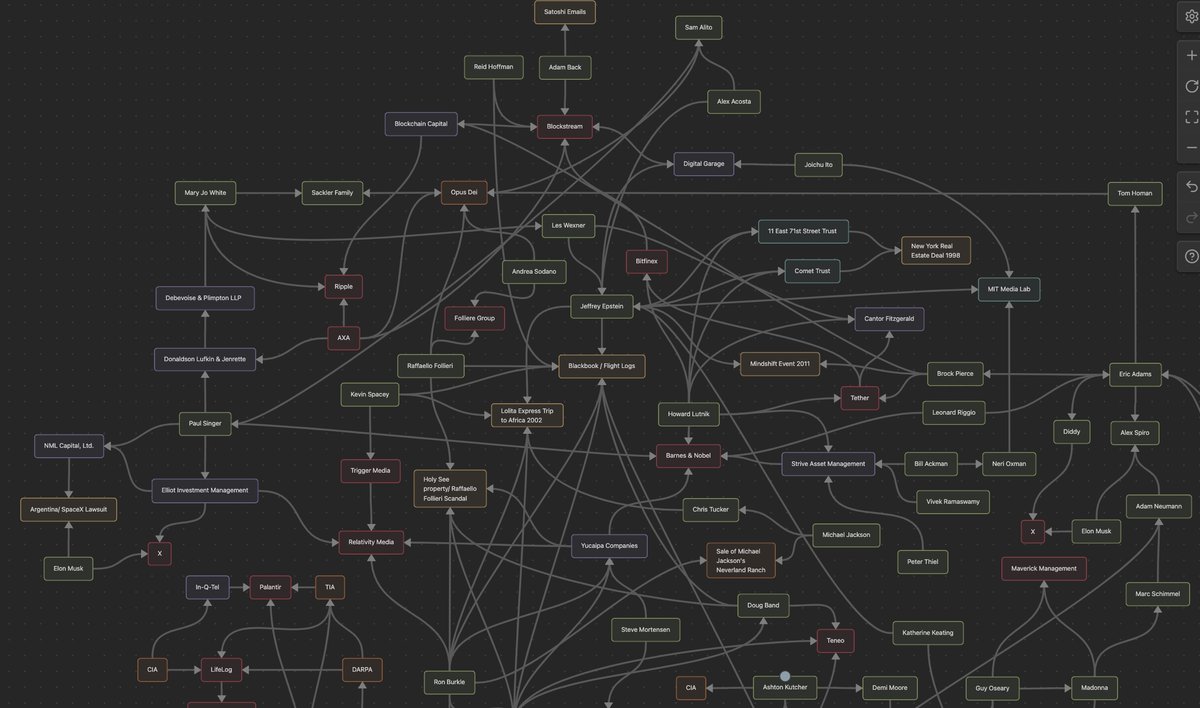
Ripple’s ties to Ashton Kutcher, Ron Burkle, Opus Dei, PayPal mafia and Jeffrey Epstein’s elite network
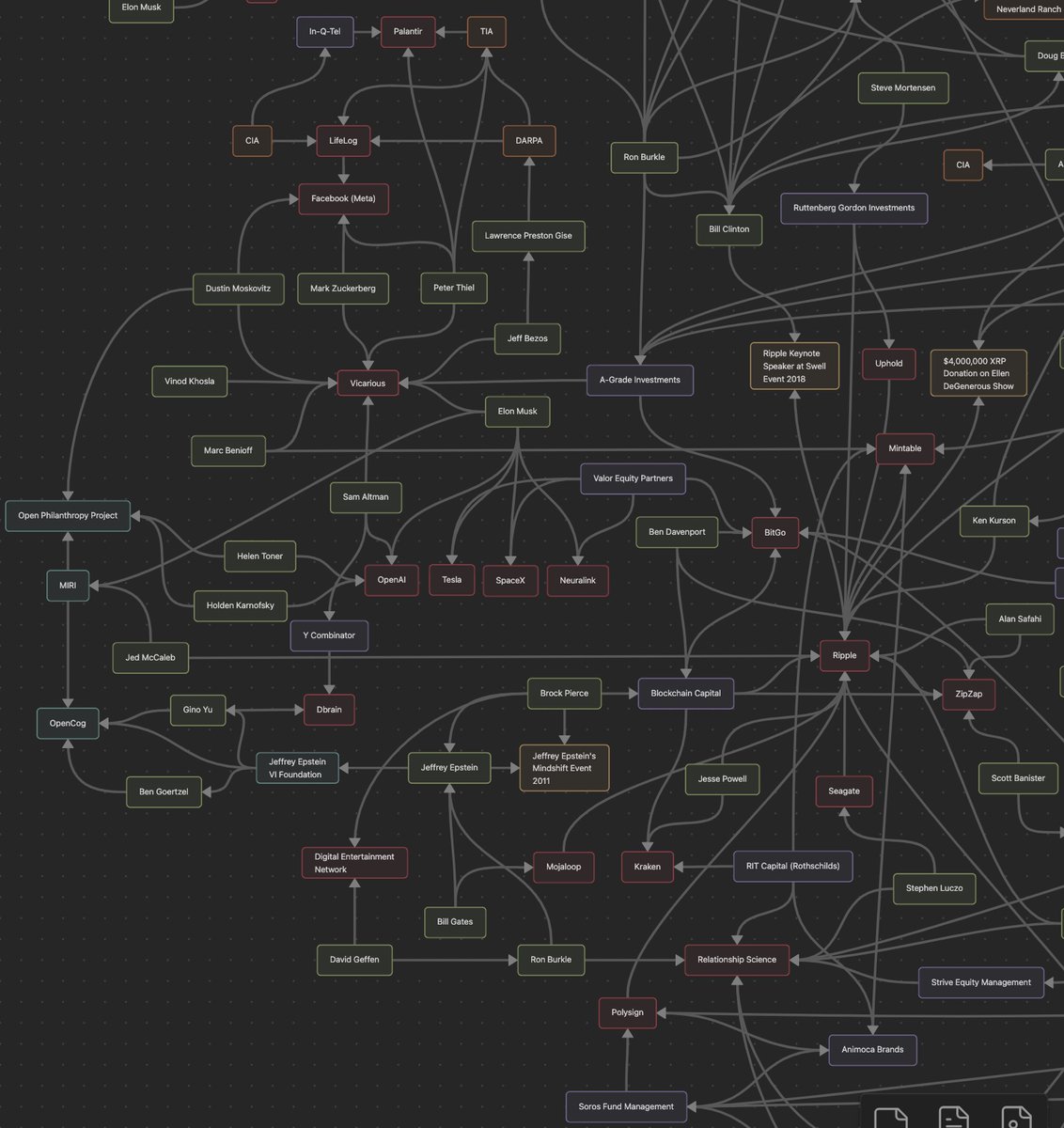
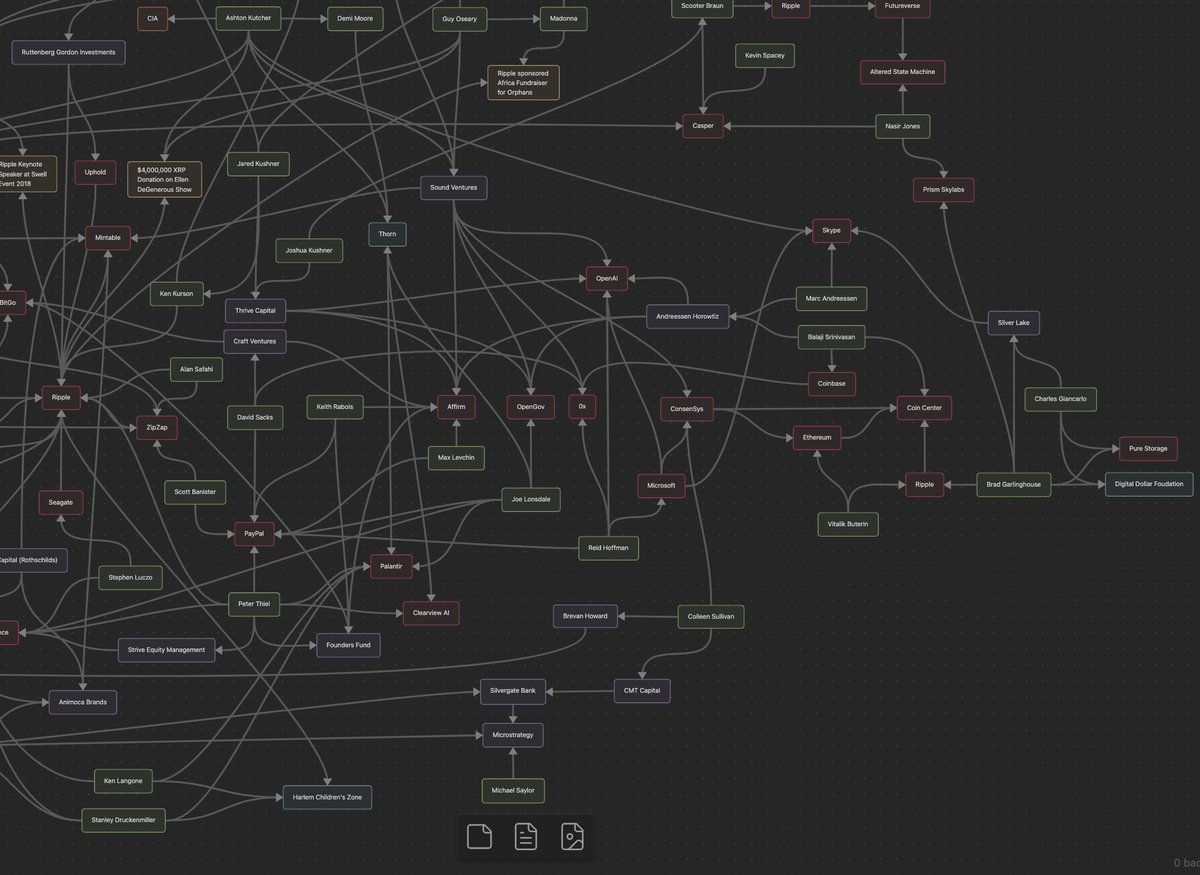
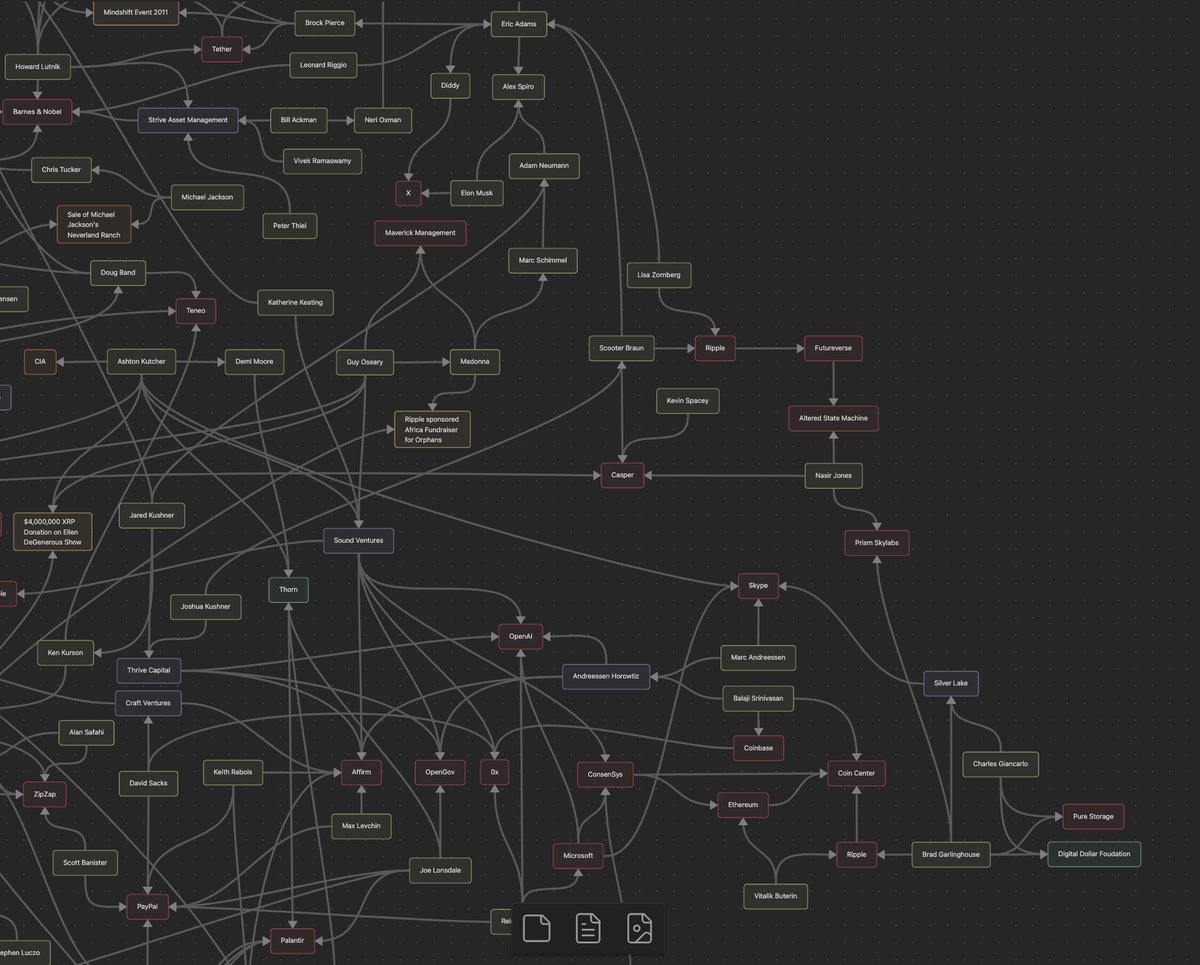
This thread summarizes the intricate web of connections between Ripple, a blockchain company, and influential figures in finance, technology, and controversial networks, including Ashton Kutcher, Ron Burkle, the PayPal Mafia, Opus Dei, and Jeffrey Epstein’s circle. Through A-Grade Investments and Sound Ventures, Kutcher and Burkle invested in Ripple and related ventures like Mintable and BitGo, alongside PayPal Mafia members such as Peter Thiel and Reid Hoffman, who also backed Ripple-affiliated firms like OpenAI and ConsenSys. These investments intersect with Epstein’s network through Brock Pierce, Tether’s co-founder and Epstein’s crypto advisor, who attended his 2011 Mindshift event, and figures like Bill Clinton, listed in Epstein’s “black book” and a Ripple Swell conference speaker. Epstein’s ties extend to tech through funding OpenCog and connections to MIT Media Lab, while Opus Dei’s influence appears via investments in Ripple’s early partner Banco Santander and Burkle’s Yucaipa Companies, linked to Vatican-associated fraud with Raffaello Follieri. The connections highlight a convergence of cryptocurrency innovation, venture capital, and elite social networks, raising questions about transparency, influence, and potential conflicts of interest in Ripple’s rise. These ties suggest Ripple’s growth leveraged not only technological innovation but also strategic alliances within powerful financial and tech ecosystems, some tainted by Epstein’s shadow. The point of these connections is to illustrate how Ripple’s network spans legitimate business, controversial figures, and opaque financial dealings, potentially amplifying its influence while inviting scrutiny.
Thread
1/ 6
Ron Burkle, Ashton Kutcher, Guy Oseary and A-Grade Investments, Part I
Ron Burkle is an American billionaire businessman. His net worth is estimated at around $2-3 billion, built through grocery chain mergers and investments in tech startups and sports, including part ownership of the Pittsburgh Penguins.
Burkle, Ashton Kutcher, and Guy Oseary co-founded A-Grade Investments in 2010, a venture capital fund focused on tech startups, turning the $30 million fund into $250 million. In 2012, they raised additional capital from billionaires like David Geffen and Mark Cuban. David Geffen co-founded Digital Entertainement Network with Brock Pierce, founder of Blockchain Capital, co-founder of Tether, and Jeffrey Epstein’s personal crypto adviser who attended his Mindshift event on Little St. James Island in 2011.
A-Grade Investments investments:
Vicarious, an AI company founded in 2010 by D. Scott Phoenix and Dileep George, was based in San Francisco, focused on developing artificial general intelligence (AGI) for robots, using brain-inspired computational principles. Its technology aimed to automate complex tasks like kitting, palletizing, and packaging, with applications in manufacturing and e-commerce. Vicarious raised $250 million over eight funding rounds, with its latest Series D round in 2017 for $50 million. Investors included high-profile names like Mark Zuckerberg, Dustin Moskovitz, Elon Musk, Jeff Bezos, Marc Benioff, Peter Thiel, Vinod Khosla, and A-Grade Investments (Ron Burkle, Ashton Kutcher and Guy Oseary’s fund). The company was acquired by Alphabet’s Intrinsic in April 2022 for an undisclosed amount. Alphabet is the parent company of Google, a seed investor of Ripple and focused on AI advancement, including DeepSeek and Gemini. Marc Benioff and Ashton Kutcher both funded Mintable, an NFT platform backed by Ripple’s Creator Fund. Other investors of Mintable include Animoca Brands, which also funded Polysign, a Ripple subsidiary (now defunct) and RIT (Rothschilds venture capital). RIT and George Soro’s Soros Fund Management are invested in Animoca Brands and Polysign as well. (More on these connections later).
Coincidentally, Sam Altman, Jeff Bezos, Peter Thiel, Mark Zuckerberg and Dustin Moskovitz, all funders in Vicarious, have their own ties to DARPA and the CIA:
Sam Altman held a position at DARPA before co-founding OpenAI, the leading AI company for LLM that has grown in the tens of billions of dollars, going from a “non-profit” to “for-profit” company. Reid Hoffman of PayPal mafia is a board member, and Elon Musk and Peter Thiel are co-founders and investors in OpenAI, amongst others. Jeff Bezos grandfather, Lawrence Preston Gise, was a founding member of the Advanced Research Projects Agency (ARPA), later renamed DARPA, where he worked on space technology and missile defense systems. DARPA, under Gise’s early influence, laid the groundwork for innovations like the internet (ARPAnet), voice recognition, and high-speed networking. Gise retired in 1968 to his Texas ranch, where he mentored a young Jeff Bezos. Peter Thiel’s Palantir company was funded by the CIA’s investment branch, In-Q-Tel and recieved many US government contracts since thier founding in 2003. Just one year prior to Palantir’s founding, a DARPA project called TIA (Total Information Awareness). Admiral, John Poindexter led TIA aimed at developing advanced data collection and analysis technologies to enhance national security by detecting and preventing terrorist threats. TIA sought to integrate vast datasets—financial transactions, travel records, communications, and more—using AI and data mining to identify patterns of potential terrorist activity. The program included tools like predictive modeling, biometric recognition, and real-time surveillance to create a comprehensive intelligence network. Public and congressional concerns over privacy violations and potential abuse led to significant backlash. Critics feared TIA’s broad surveillance capabilities could infringe on civil liberties, creating a "Big Brother" system. In 2003, Congress defunded TIA, effectively halting the program, though some components reportedly continued under classified projects or were redistributed to other agencies like the NSA. Coincidentally, Palantir was founded immediately after TIA was defunded. Peter Thiel also was the first outside funder and board member of Mark Zuckerberg’s Facebook. Facebook was founded the exact same day (February 2, 2004) as the day DARPA’s LifeLog was defunded. DARPA's LifeLog project, launched in 2003, aimed to create a system for collecting and analyzing an individual's daily activities, communications, and experiences to build a comprehensive digital record. The goal was to use AI to process data from emails, phone calls, locations, and other personal interactions to identify patterns, predict behaviors, and enhance decision-making, primarily for military applications like improving soldier performance or intelligence analysis. The project raised privacy concerns due to its potential for mass surveillance. LifeLog faced public and congressional scrutiny similar to the TIA program. Dustin Moskovitz, funder of Vicarious along with Thiel, Zuckerberg and Bezos, was a co-founder of Facebook with Mark Zuckerberg.
Like the above technocracts, Ashton Kutcher is likely a CIA asset/ agent. Ashton Kutcher has made several jokes (or hidden in plain sight truthful remarks) over the years about him being in the CIA. He has tweeted “Spent the afternoon picking the brain of a former CIA guy. It really makes you wonder if anything you come in contact w/ isn not manipulated.” He also posted an image on twitter drinking out of a coffee mug with the CIA logo on it and the caption”Just sending out a morning shout to the men and woman of the intelligence community that keep us safe and protect our country.” Kutcher has also been known to wear hats with the CIA logo and Freemason’s square and compass symbol. Kutcher has also testified in court that he, with the help of the CIA and FBI, helped save thousands of kids from human trafficking via his Thorn foundation. His foundation, Thorn, works closely with Palantir, a CIA (In-Q-Tel) funded AI congolmerate. Kutcher also has ties to many people in hollywood who were close with Bill Clinton and Jeffrey Epstein. Epstein was a known intelligence asset for both CIA and Israel’s Mossad. He may have been tapped as an agent or planted in Hollywood by the CIA.
Dustin Moskovitz is a lead funder of Open Philanthropy Project. Two Open-AI employees, Helen Toner and Holden Karnofsky, are members of Open Philanthropy Project. Also, MIRI (Machine Intelligence Research Group) gave a large donation to the project. MIRI members and largest donors include Elon Musk and Jed McCaleb, Ripple’s co-founder. MIRI also founded OpenCog, an open source AI platform that was funded by Jeffrey Epstein through his Jeffrey Epstein VI Foundation. Gino Yu and Ben Goertzel were leaders of OpenCog who received Epstein’s funding. Gino Yu also founded Dbrain, a company backed by Sam Altman through his Y Combinator.
Airbnb is one of the start-ups that A-Grade Investments made that boosted their fund’s value considerably. Airbnb was also backed by Sam Altman through his Y Combinator, Kevin Hartz, Jeff Bezos, and several PayPal mafia members such as Keith Rabois, Peter Thiel and Reid Hoffman. Silver Lake and Tiger Global are also investors. Ripple’s CEO Brad Garlinghouse is an advisor at Silver Lake and Tiger Global is a funder of Ripple. Silver Lake also invested in Skype, a company with funding from Ashton Kutcher. Marc Andreessen of Andreessen Horowtiz and Netscape encouraged Ashton Kutcher to invest in Skype early on, leading to one of his first and most successful startup investments.