🎙️ “Sensacional!”
MUST WATCH: 🇧🇷 Alison dos Santos breaks the 400m hurdles world record in 45.80 with Álvaro José’s commentary for the Brazilian TV broadcast of the Zurich Diamond League.
So good.
If I had to pick my favorite events in running, it would be the 800 and 1500/mile.
I think middle distance is the best combination of spectating and training. I don’t watch a ton of running on TV, but an 800 or mile is genuinely fun to watch. You’re not getting up for a bathroom break. The whole thing takes just a few minutes. And for real track heads, there are a lot of intricacies to the race tactics.
From a training perspective, middle distance gives you a little bit of everything.
There’s still a large aerobic contribution, especially as you get toward the 1500/mile, so you need to run a good amount and develop a strong aerobic base. But you can tailor the rest of your training toward your strengths and weaknesses. You can emphasize more anaerobic work and sprinting if you need speed, or lean more heavily into aerobic work and mileage if that’s where you need development.
I also think there’s tremendous value in doing workouts around 800 to mile pace. It’s very fast, but it’s not sprinting. It’s a big step up from 5K or 10K pace and gives distance runners an opportunity to build that faster gear.
The training is also flexible. You can go through periods of building mileage and doing longer runs, then shift toward less mileage and shorter/faster workouts. With marathon training, and even half marathon training to some extent, you’re more locked into regular long runs and training that I find to be harder on the body.
This is one reason I think it’s good for older runners. You want to find that balance of easy mileage (not too much), cross training, and faster running.
The biggest problem is simply finding races. There aren’t nearly as many opportunities to race an 800 or 1500/mile as there are 5-10k, half marathons, and marathons.
There’s an ego and glory component to it too. Telling someone you’re training for a marathon sounds impressive. Telling the average person you’re training to race one mile might sound like you’re preparing for gym class.
But there’s another advantage to middle distance training: it doesn’t close the door on longer races.
If you’re aerobically strong and fit enough to race a good mile, you’re already in a pretty good position to race a 5K or 10K. And if you decide you want to run a half marathon or marathon, you’re likely only a few months of longer runs and more specific endurance work away from being prepared for that too.
You get aerobic development, speed, power, variety, and flexibility, without having to structure your entire training around long races.
That’s my case for middle distance being the best.
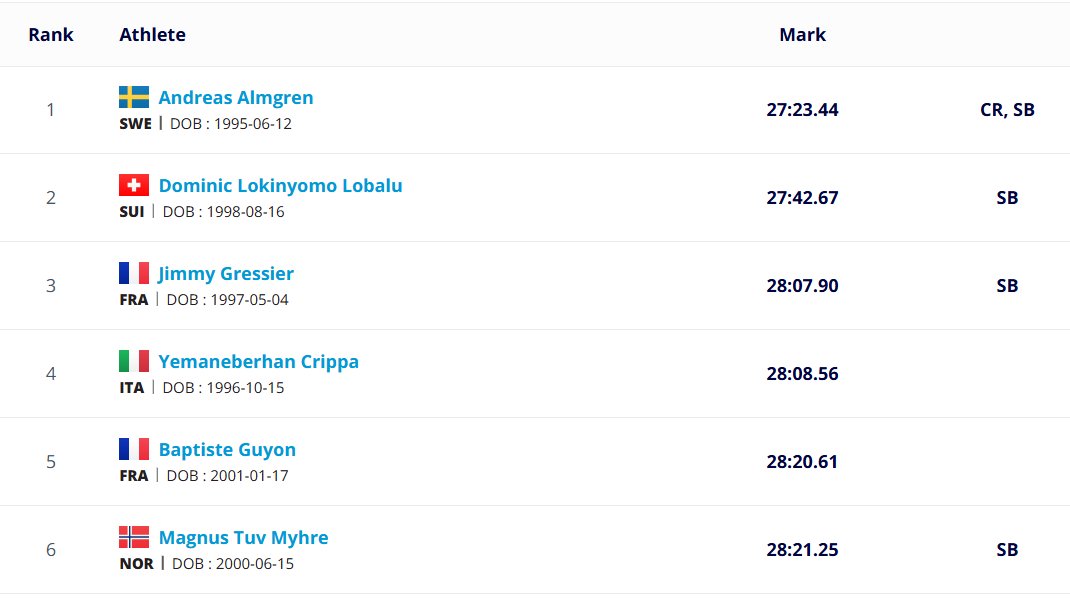
One of the most impressive performances you'll ever see in a men's 10,000m final. Sweden's Andreas Almgren runs 27:23.50, leading the final 9k, to break the 48-year-old Euro champs record.
Lapped all but 6 runners in the field (and 3 of those unlapped themselves in final meters)
I don’t think people realize how absurd this is. Scottish runner Josh Kerr just broke the mile world record in 3:42.66, an average speed of 16.2 mph. Most people couldn’t even briefly reach that speed, let alone sustain it for an entire mile.
The Netherlands is putting another $1.2 billion into its biking infrastructure. Not because they're generous, but because it's economical.
National infrastructure projects of any size are legally required to undergo a cost-benefit analysis before they get built.
They ran the numbers on cycling and every dollar invested came back as roughly $8.90 in benefits: lives saved, healthcare costs avoided, quieter streets, cleaner air, less congestion. 6,500 fewer premature deaths a year, six more months of average life expectancy across the entire country.
A few years ago, they were skeptical of a $17 million cycling bridge across the Maas River. They ran the analysis. The bridge was predicted to save $132 million over its lifetime, so they built it.
Most conversations about cycling infrastructure start with "how do we pay for it?" The Dutch conversation starts at "what's the cost-benefit ratio." That's the key difference.
The Netherlands isn't just subsidizing bicycles, it's refusing to waste money by doing nothing.
It's fascinating to see what people think is "fast"
The guy down the street thinks sub 3 hour marathon is elite
The recreational runner thinks sub 2:30 is elite.
The former college runner thinks everyone slower than 2:20 is recreational.
It's all relative.
One of the most striking things I observed in the decade researching and reporting for The Way of Excellence is that the greatest competitive advantage is having fun. https://t.co/QMMhSCRaNL
"One of the greatest competitive advantages is having fun. Joy and intensity can coexist, and in the best performers, they almost always do." — The Way of Excellence. https://t.co/QMMhSCRaNL
Yomif Kejelcha may have one of the wildest range profiles in distance running history.
In this moment:
Second-fastest man ever at 5K.
Second-fastest ever at 10K.
Second-fastest ever at the half marathon.
Second-fastest ever at the marathon
Yomif Kejelcha is basically the greatest No. 2 the sport has ever seen
You don’t see this too often.
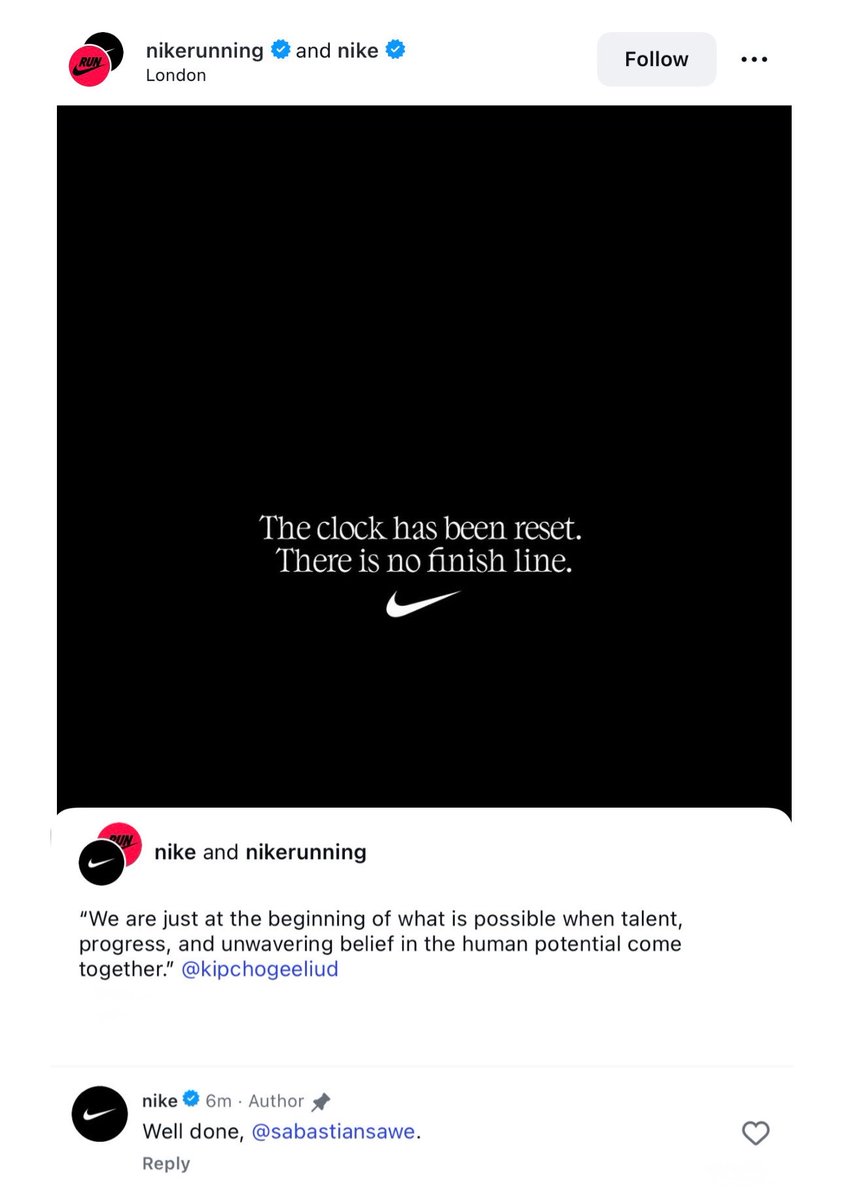
Nike congratulates Adidas marathoner Sabastian Sawe on his 1:59:30 marathon world record.
Today, Sawe broke Kelvin Kiptum’s 2:00:35 world record and became the first man to run first sub-2:00 marathon on a record-eligible course. Eliud Kipchoge did it in 2019 but it was not record-eligible.