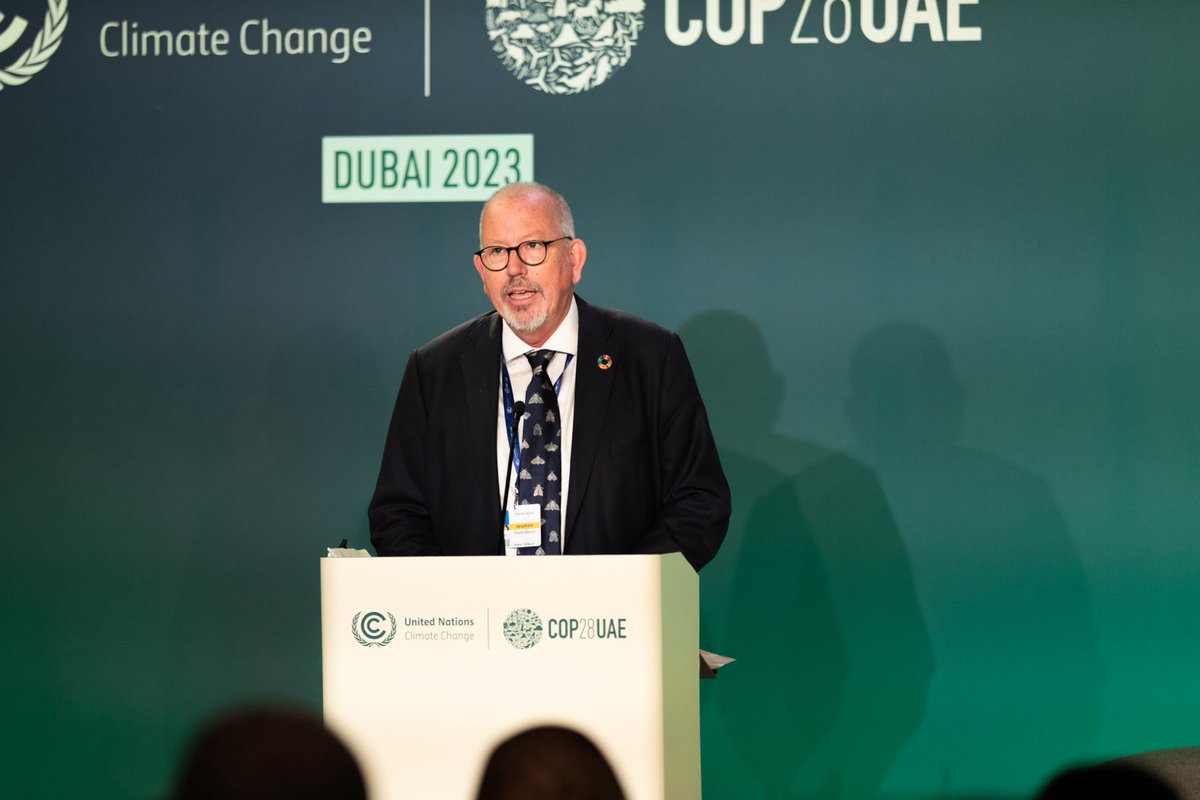
Margot Wallström & Andriy Yermak, co-chairs of High-Level WG on Environmental Consequences of the War presented an Environmental Compact for Ukraine to President Zelensky. The Planetary Boundary Framework is proposed to guide the recovery of the Nation https://t.co/VncJ6mZKIj
New Global Stocktake text out: https://t.co/CJFYcYC5IO. Stronger, but not enough. GHG mitigation focussed on energy systems (food not mentioned, but methane is). Food & sustainable ag appears only in adaptation (resilience building) 😢. Nice to see cascading risks there.
🪂 The first $WSM Airdrop is finally LIVE!
Over 1,000,000 tokens will be distributed towards eligible users.
Your bonus is based on your on-chain activity, which can be checked down below.
➡️ https://t.co/AvxfDEv2sG
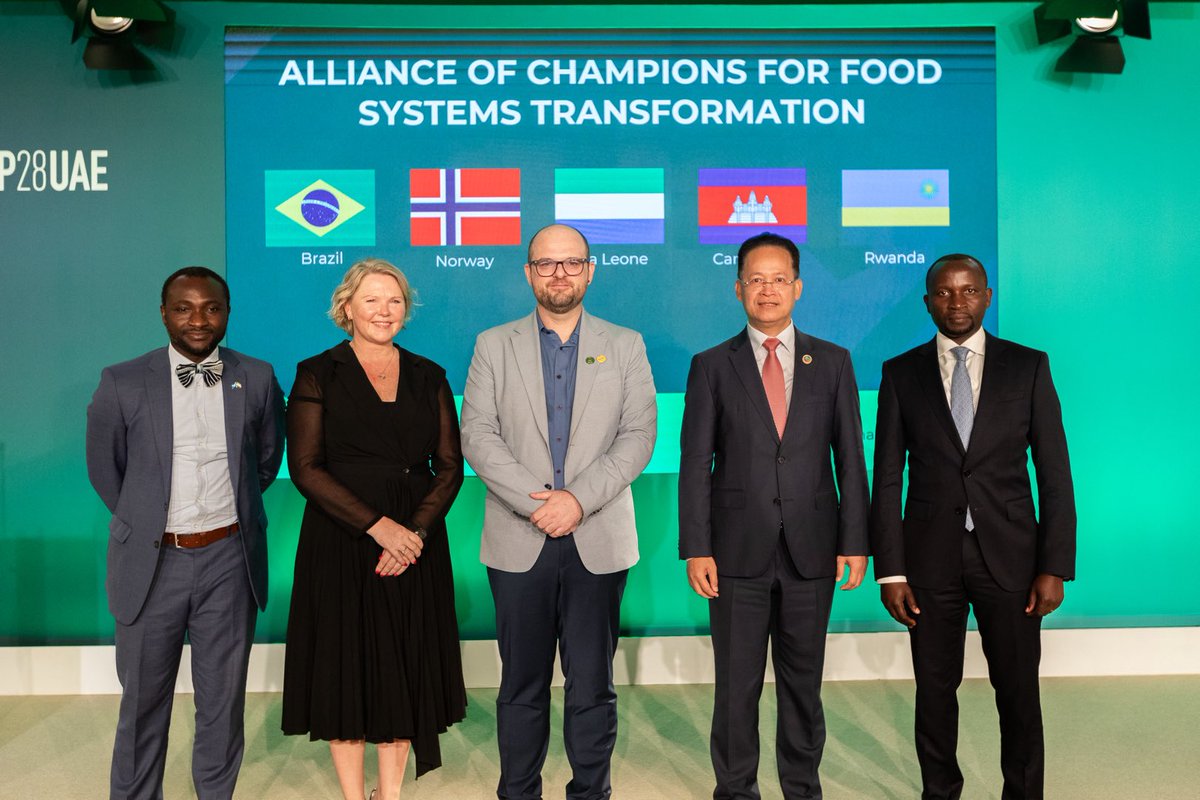
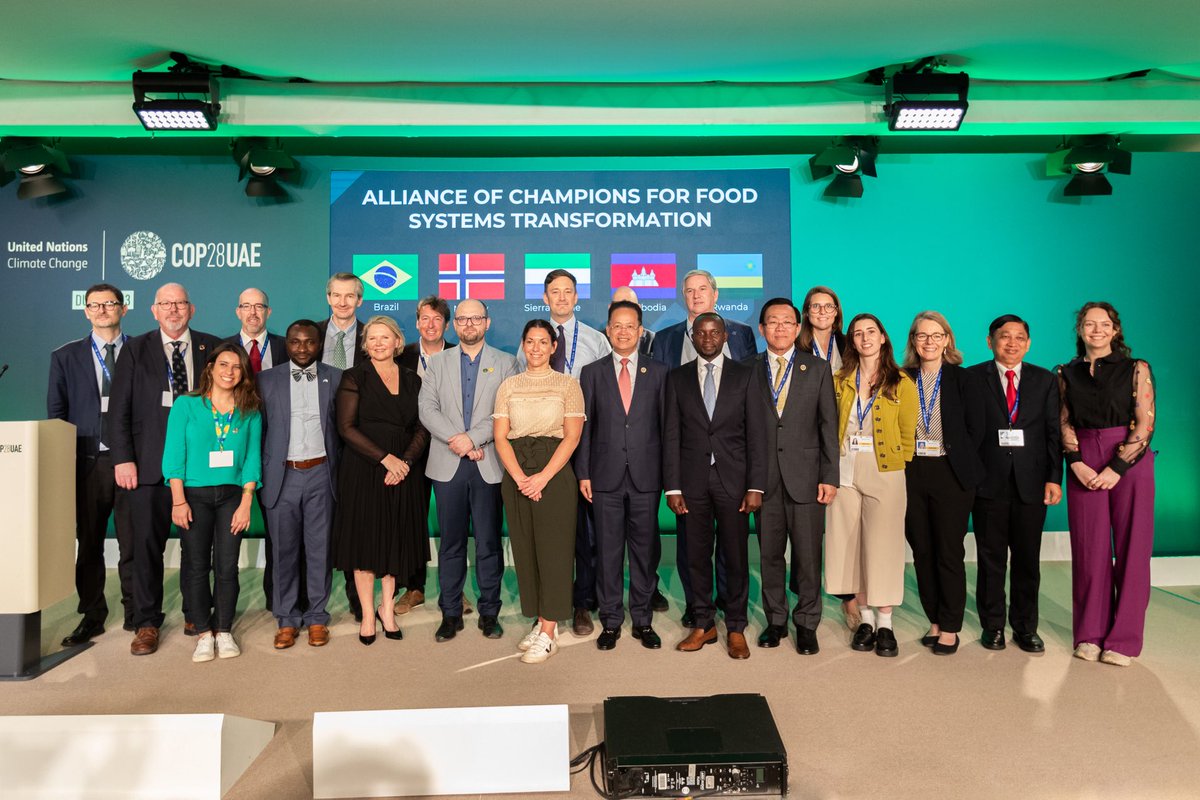
We did it! Launched the https://t.co/0Q9BtRoXVT at COP28. Co-led by Brazil, Norway and Sierra Leone, with also ministers from Cambodia and Rwanda. Great team effort to get this far!
Will the Sunnylands “approach” – explicitly connecting the future of fossil fuels with renewable energy deployment – now offer a compromise frame for the remaining negotiations, with the US and China setting the tone for a deal on phase down/out at COP28? 6/6
Here at COP28, the Presidency and IEA press release said “In parallel [to renewable phase-up], fossil fuel demand and supply must phase-down this decade to keep 1.5°C within reach” 5/6
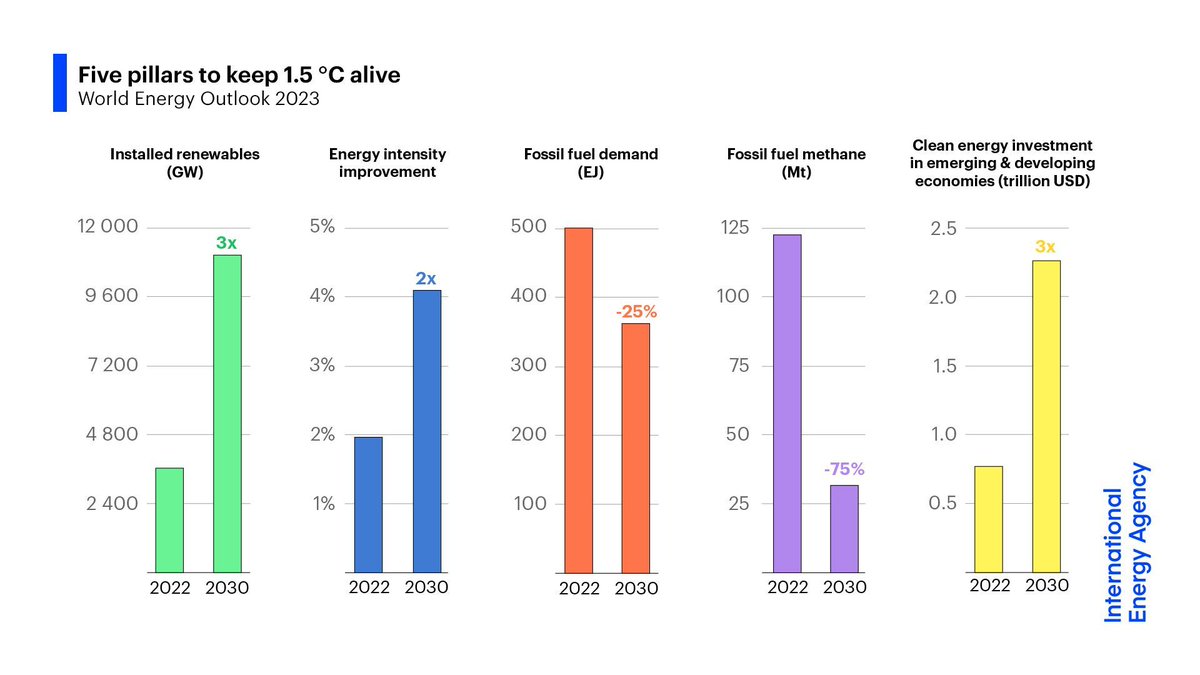
#WEO23 offers 5 pillars for #COP28
1️⃣ Triple renewable capacity
2️⃣ Double energy efficiency progress
3️⃣ Cut methane from fossil fuels by 75%
4️⃣ Boost clean energy investment in emerging economies
5️⃣ Ensure an orderly decline in fossil fuel use
More: https://t.co/sWb8C0uaox
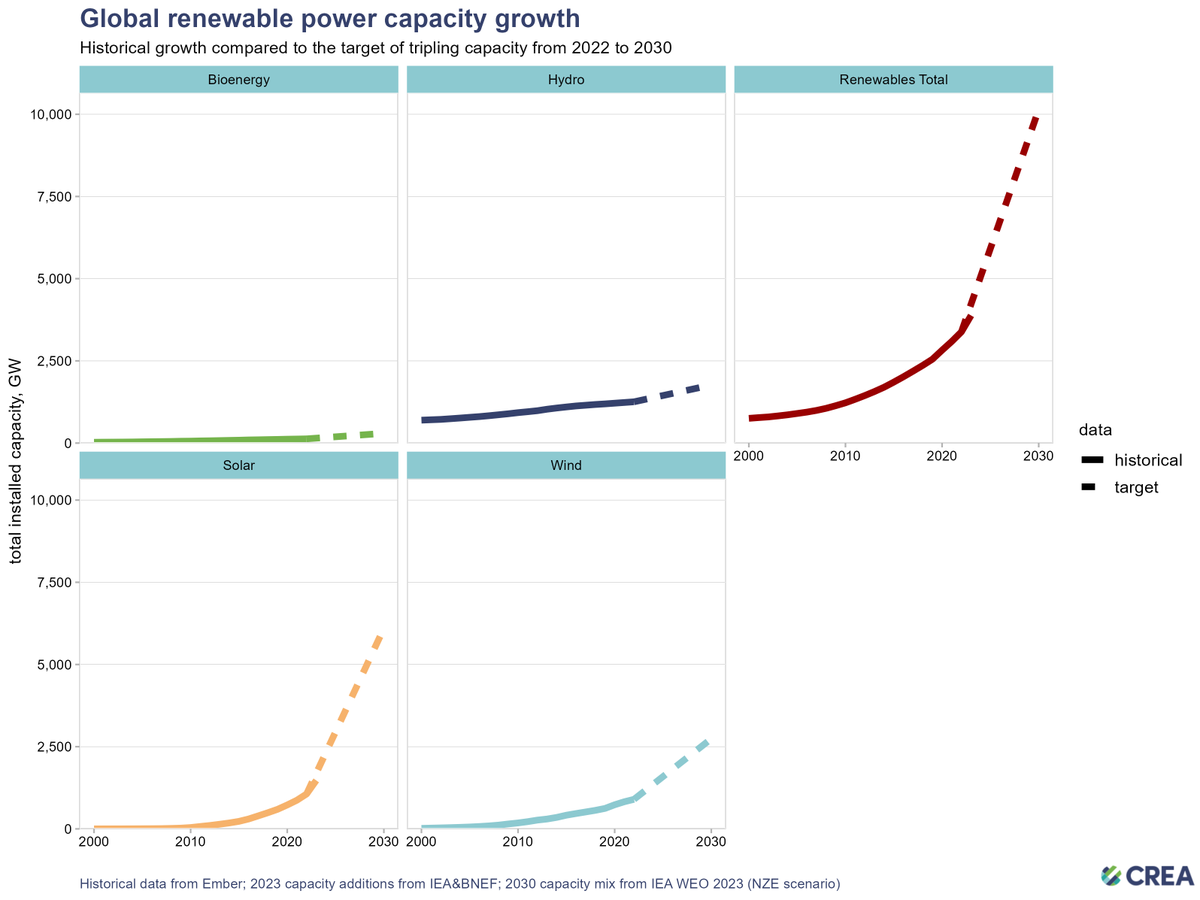
The target of tripling global renewable energy capacity from 2022 to 2030, already endorsed by 118 countries at the UN climate summit, and hopefully eventually adopted by the whole summit, is enormously significant.
If the target is met, the share of renewables in global power generation will go up from 40% in 2022 to 60% in 2023, and the share of non-fossil energy would reach 70%. This would enable CO2 emissions from the electricity sector to be cut by 45% from 2022 to 2030, according to the IEA, an enormous drop in just 8 years.
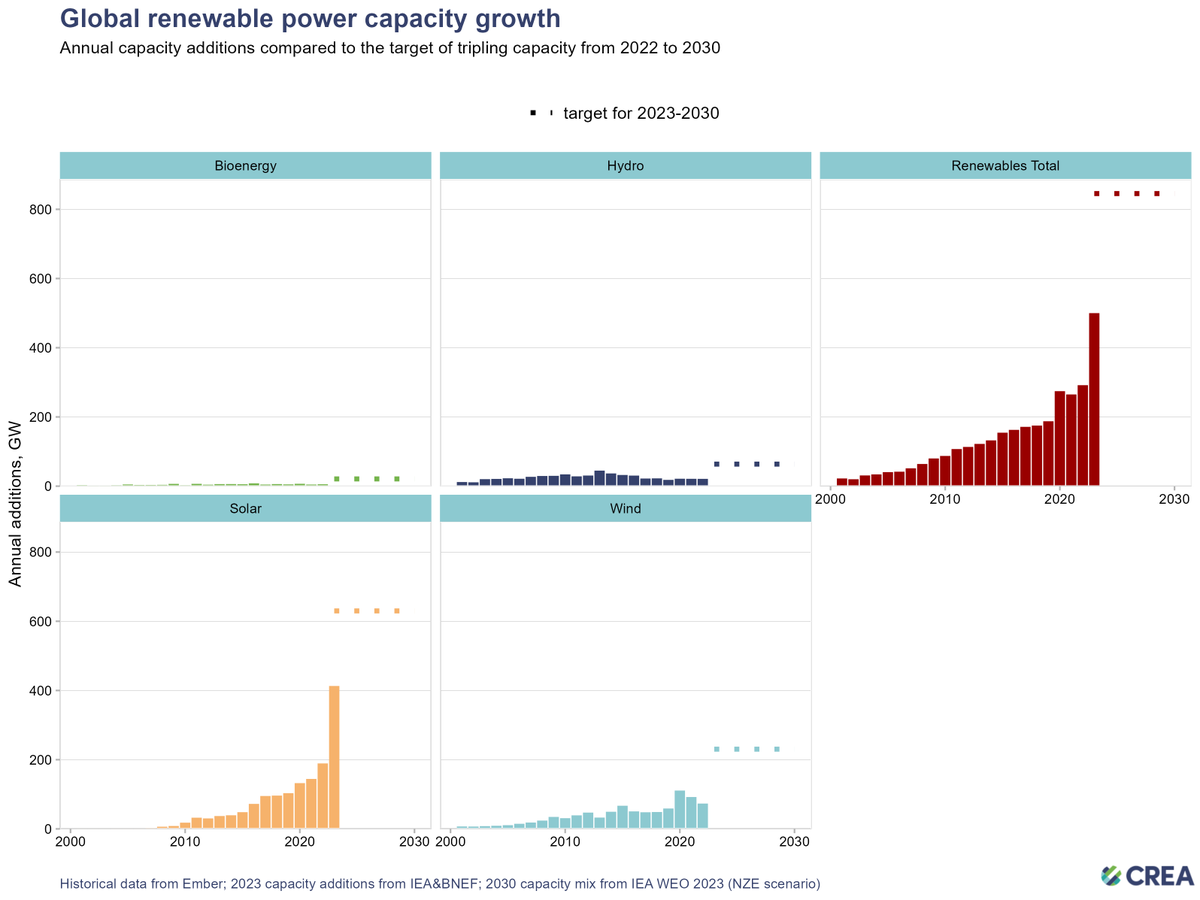
Up to 2022, it took 13 years for global renewable energy capacity to triple, from 2009 to 2022. This tripling required the addition of 2200 GW of capacity, or an average of 170 GW per year. Delivering the next one requires approximately 6800 GW over eight years, or 850 GW per year. Therefore, it's a 5-fold increase in the rate of annual additions.
Global additions reached almost 300 GW in 2022, topping the 2020 record. 2023 is expected to see approximately 500 GW installed, a major jump from the previous record. Solar power additions alone are projected at 410 GW, surging up from 240 GW in 2022. Substantial further growth is needed on top of the levels reached in 2023.
Remarkably, the world’s largest energy consumer and clean energy market, China, has reached the rate of annual additions required for a tripling from 2022 to 2030. The country’s renewable energy capacity stood at 1,213GW at the end of 2022, so 300 GW per year is needed to triple capacity by 2030. Solar power additions are projected at 240 GW this year, while wind is expected to deliver 65 GW and hydropower about 5 GW. However, China's domestic energy targets are not yet in line with the tripling renewables goal, and there is clear reluctance to make any new commitments at least before the preparation of the next five-year plan, expected to be published in 2026. So it seems likely that China's domestic renewable power additions could align with the global tripling goal in reality, while the government would not be prepared to adopt a specific national goal in line with the global target.
China represents almost one third of global electricity use, and its share is likely to increase further towards 2030. China also has one third of the global renewable energy capacity and generation, so it seems that China's fair share of the global goal should be close to tripling its own capacity.
The flipside of China’s remarkable capacity additions this year is that when China is excluded, the rest of the world has a long way to go. Approximately 170 GW of solar power additions are going to be achieved this year outside of China, while an average of approximately 400 GW needs to be achieved 2024–30 to hit the goal. Making this happen means financing and other enabling measures for those developing countries where solar and wind haven't taken off yet.
At meeting about sustainable trade hosted by Coalition of Trade Ministers on Climate - 59 ministers around the world - which is a coalition arising from an idea hatched @ChathamHouse. Great to see it in action and contribute some ideas!
China is currently building 95% of new solar pv factories and will continue to dominate clear energy sectors; international collaboration and co-operation is essential to avoid slowing down transition (4 of 5)
The renewable technologies that can deliver this increase are solar pv and wind and will between them need to provide 40% of global electricity by 2030. (3 of 5)
Countries need to be pledging that they will put in place finances and policies to ensure that target is met NATIONALLY and not just a call for an international target (for other countries to deliver on) (2 of 5)
Q&A: Why deals at COP28 to ‘triple renewables’ and ‘double efficiency’ are crucial for 1.5C | @CleanPowerDave
Read here: https://t.co/SIk3iq7Rsj
#COP28