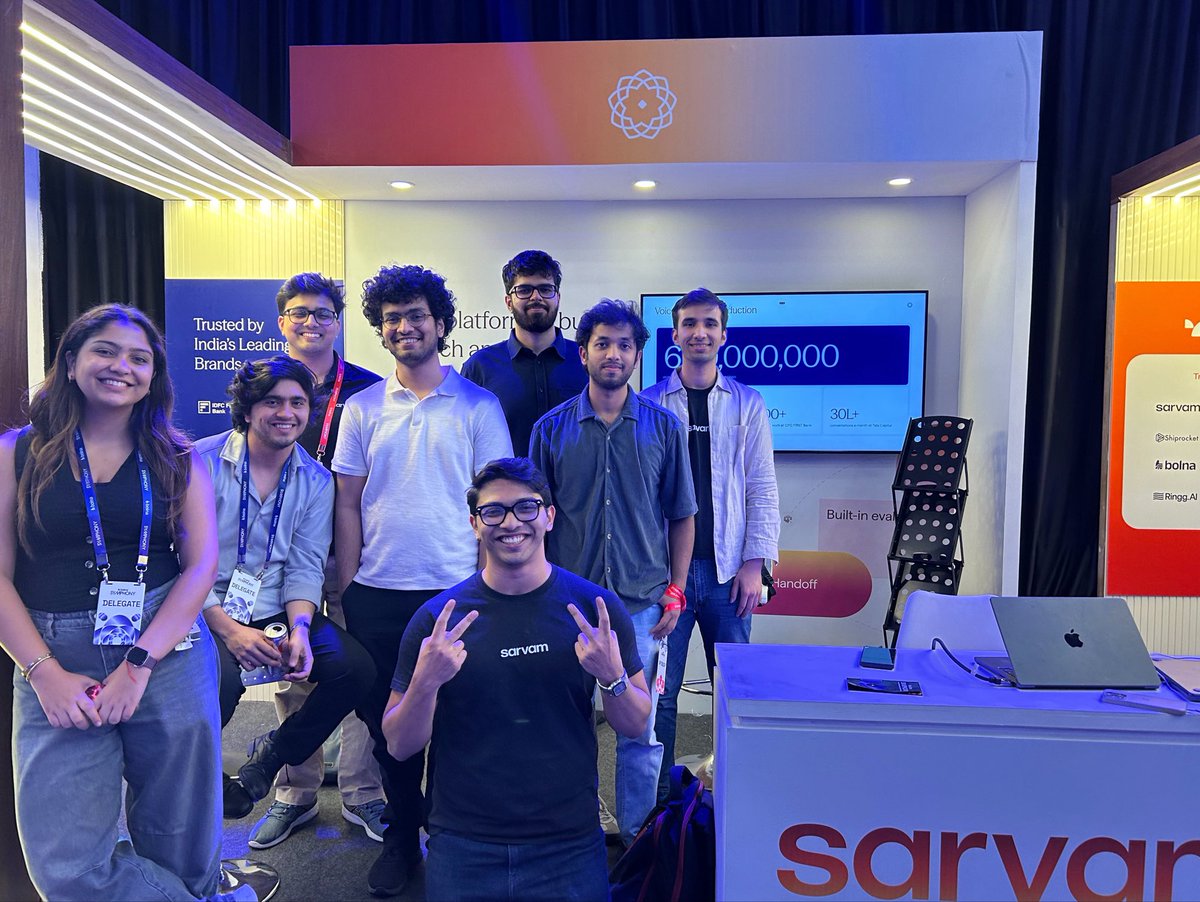
Some clarifications on various themes being discussed about @SarvamAI in the last few days:
1. Government Support: The IndiaAI Mission under MeitY has played a pivotal role in bootstrapping India's AI ecosystem. It gave ~20 startups subsidised access (40% discount) to GPUs for training models. We used that access to train Sarvam 105B from scratch, which we completed and open-sourced this February. The government did not pay Sarvam directly, instead like with every supported startup, the subsidy went to GPU cloud providers, helping seed AI infra in the country.
2. Sarvam Token Factory: Open-weight models saw massive adoption globally this year. They offer a cost advantage over closed models and let enterprises own their AI stack. But this choice is not available to all Indian enterprises, which often need data to remain within the country and low latency for interactive use cases. Sarvam Token Factory is one of the first large inference offerings in India. We serve multiple open-weight models on GPUs we have privately procured, without any government support. We have optimised datacenter scale inference to make our token cost comparable to or lower than established providers such as Fireworks, Baseten and Together.
Today, India consumes a few trillion tokens a day and imports the majority of them. Scaling this consumption up and building sovereign capability requires investing in GPU infra, running efficient token factories, and guaranteeing advantages in cost, latency, and data residency. This is the key objective of Sarvam Token Factory. We will continue to reduce costs further and widen access for inferencing in India.
3. Our own models: Building inference capability does not conflict with our core mission: training our own models. Over the last few months, alongside putting together the token factory and scaling up our enterprise offerings, we optimised our training stack for Blackwell GPUs and achieved significantly higher performance. We used this optimised infra to train an improved checkpoint: Sarvam 105B-1711, which we are open-sourcing today. It improves on reasoning, tool-calling, and co-work tasks, while excelling in Indian languages. It is one of the best Flash-Lite class models, open or closed, achieving high accuracy at a low cost of ₹25 per million output tokens. We also optimised it to run on a single RTX Pro GPU with our agentic product Indus. Along with the weights, we release inference and training recipes so others can build upon it.
In the coming two weeks we will release multiple other models across vision, speech, and edge. And crucially, we are working with partners to get the latest training grade compute into India. This will set us up for training our next generation of much larger models.
4. The Sarvam Journey. To put things in perspective, most AI labs invest 100s of millions of dollars into infra to train from scratch, scaling up to billions for frontier capabilities. We are determined to climb that ladder from India, while building a sustainable commercial engine across population scale and enterprise use cases.
Irrespective of the different narratives, some of which appear manufactured, we firmly believe that India can and must win across the full-stack of AI - we have the talent, the demand, and positivity to adopt AI. At Sarvam we will stay focused and build towards this outcome.
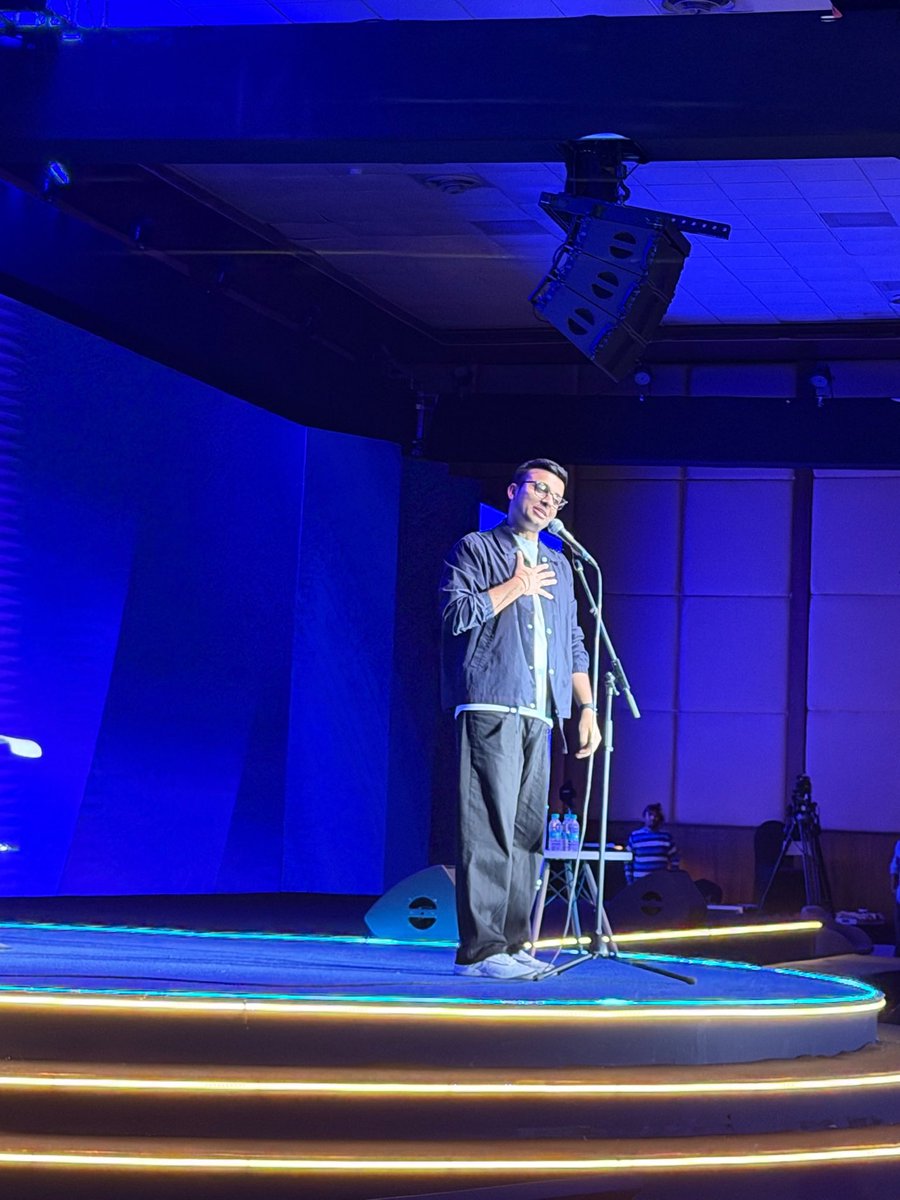
A room full of people trying to make AI sound human.
And then a comedian shows up and casually delivers perfect timing, context awareness and zero hallucinations.
Benchmark that. 😂
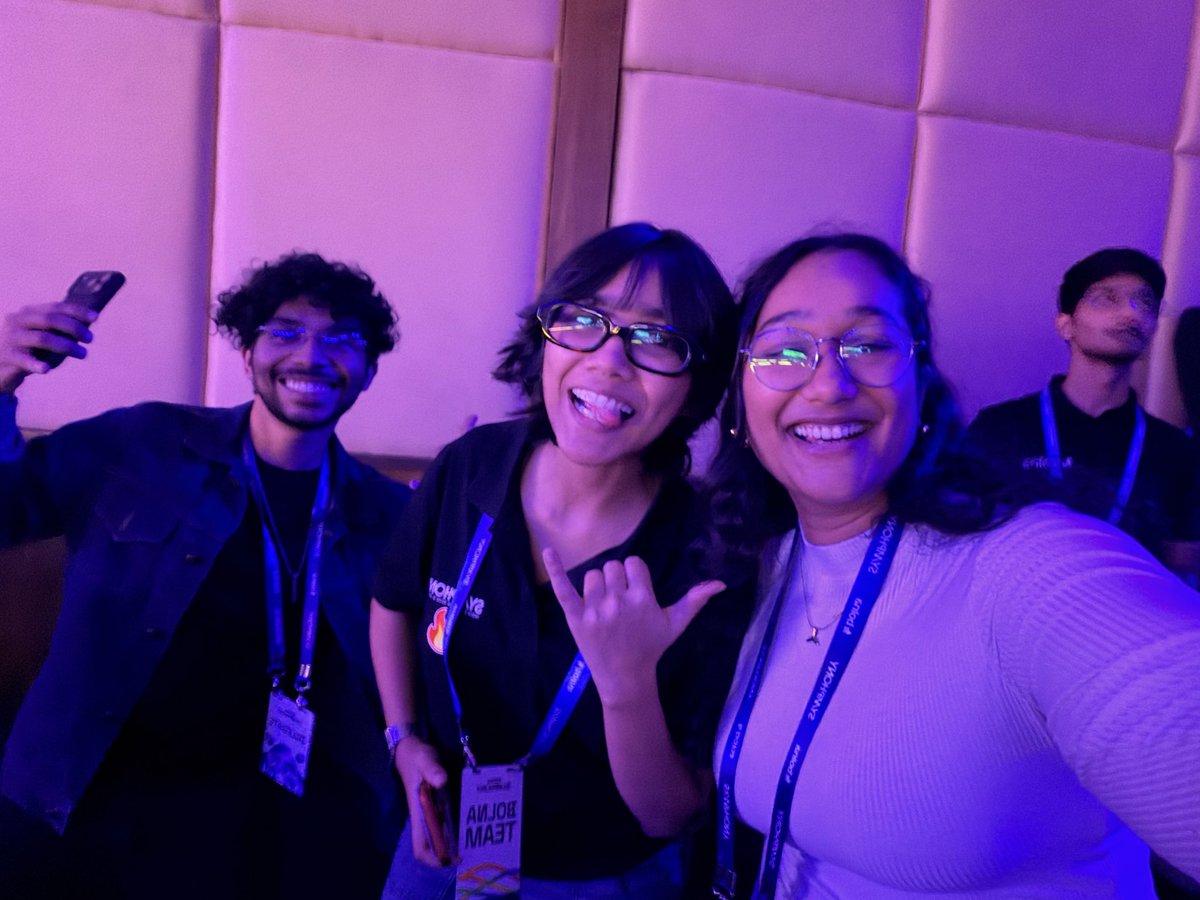
@aashishsolanki_@bolna_dev#Symphony2026
the hottest job in tech right now is basically being good at hanging out
startups and vcs are hiring people with titles like ecosystem lead whose whole job is showing up in person. dinners, run clubs, coffee, the panel nobody wanted to go to. it sounds like a joke until you realize why
every company now has the same ai writing the same launch post, making the same video and sending the same cold email to the same inbox. marketing got infinitely cheap, which also made it kind of invisible. when everyone can automate the pitch, the pitch stops working
so the thing that cant be automated becomes the whole strategy. being in the room. remembering someones name. replying to a comment like a person and not like a growth tool
same thing is happening online. the accounts actually growing right now are weirdly manual. they answer people by hand, they show up in other peoples replies, they post things that clearly came from their actual week. its slower and it doesnt scale and thats exactly why it works
when i was building my old account to 5.3M, the internet mostly rewarded whoever could post the most. i think that era is ending. volume is free now. real attention to one specific person isnt
the funny part is sf spent a decade trying to automate every human interaction, and the most valuable skill in the city is turning out to be the one you learn at a dinner party
do the thing a bot could do. just do it yourself