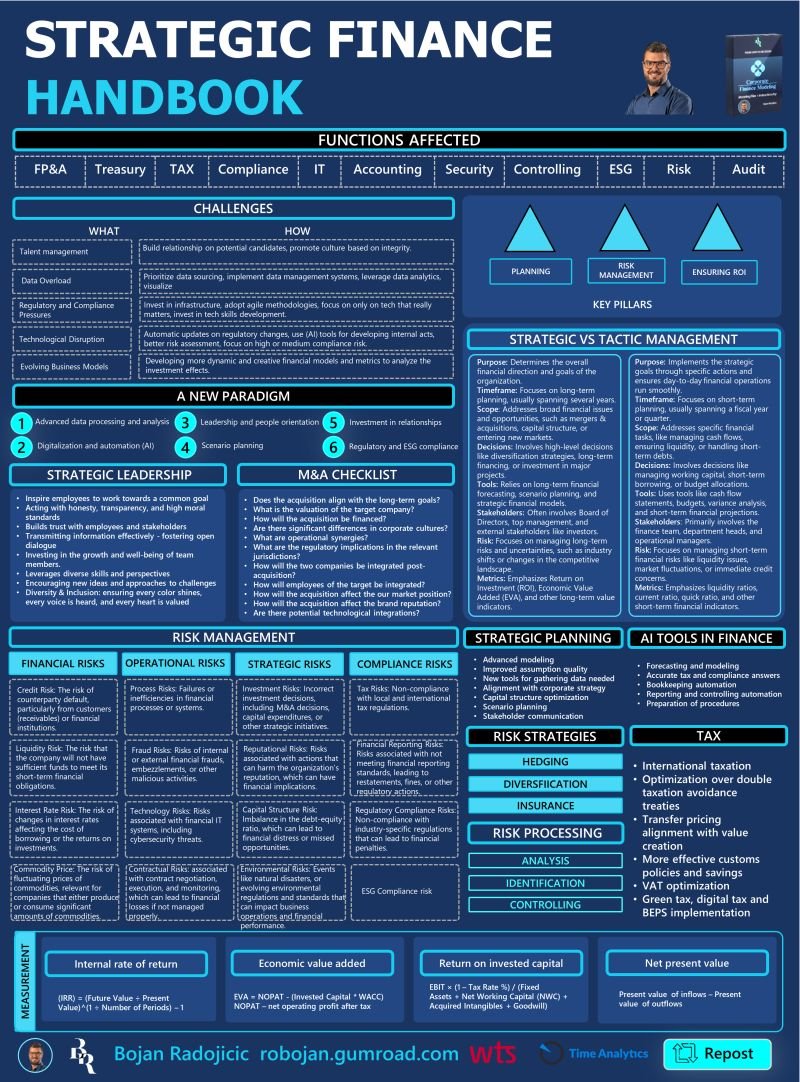
🚀 STRATEGIC FINANCE HANDBOOK
𝗙𝘂𝗻𝗰𝘁𝗶𝗼𝗻𝘀 (𝗗𝗲𝗽𝗮𝗿𝘁𝗺𝗲𝗻𝘁) 𝗔𝗳𝗳𝗲𝗰𝘁𝗲𝗱
→ FP&A
→ Treasury
→ Tax
→ Compliance
→ IT
→ Accounting
→ Security
→ Controlling
→ ESG
→ Risk
→ Audit
𝗖𝗵𝗮𝗹𝗹𝗲𝗻𝗴𝗲𝘀
WHAT
→ Talent management
→ Data Overload
→ Regulatory and Compliance pressures
→ Technological Disruption
→ Evolving Business Models
HOW
→ Build relationship on potential candidates, promote culture based on integrity.
→ Prioritize data sourcing, implement data management systems, leverage data analytics, visualize
→ Invest in infrastructure, adopt agile methodologies, focus on only on tech that really matters, invest in tech skills development.
→ Automatic updates on regulatory changes, use (AI) tools for developing internal acts, better risk assessment, focus on high or medium compliance risk.
→ Developing more dynamic and creative financial models and metrics to analyze the investment effects.
𝗔 𝗡𝗲𝘄 𝗣𝗮𝗿𝗮𝗱𝗶𝗴𝗺
→ Advanced data processing and analysis
→ Digitalization and automation (AI)
→ Leadership and people orientation
→ Scenario planning
→ Investment in relationships
→ Regulatory and ESG compliance
𝗞𝗲𝘆 𝗣𝗶𝗹𝗹𝗮𝗿𝘀
→ Planning
→ Risk Management
→ Ensuring Roi
Strategic Leadership
• Inspire employees to work towards a common goal
• Acting with honesty, transparency, and high moral standards
• Builds trust with employees and stakeholders
• Transmitting information effectively - fostering open dialogue
• Investing in the growth and well-being of team members.
• Leverages diverse skills and perspectives
• Encouraging new ideas and approaches to challenges
• Diversity & Inclusion: ensuring every color shines, every voice is heard, and every heart is valued
...see full content in my handbook.
If you want this visual in PDF, just drop a comment and I’ll send it to you.
(Important: follow me so I can DM you!)
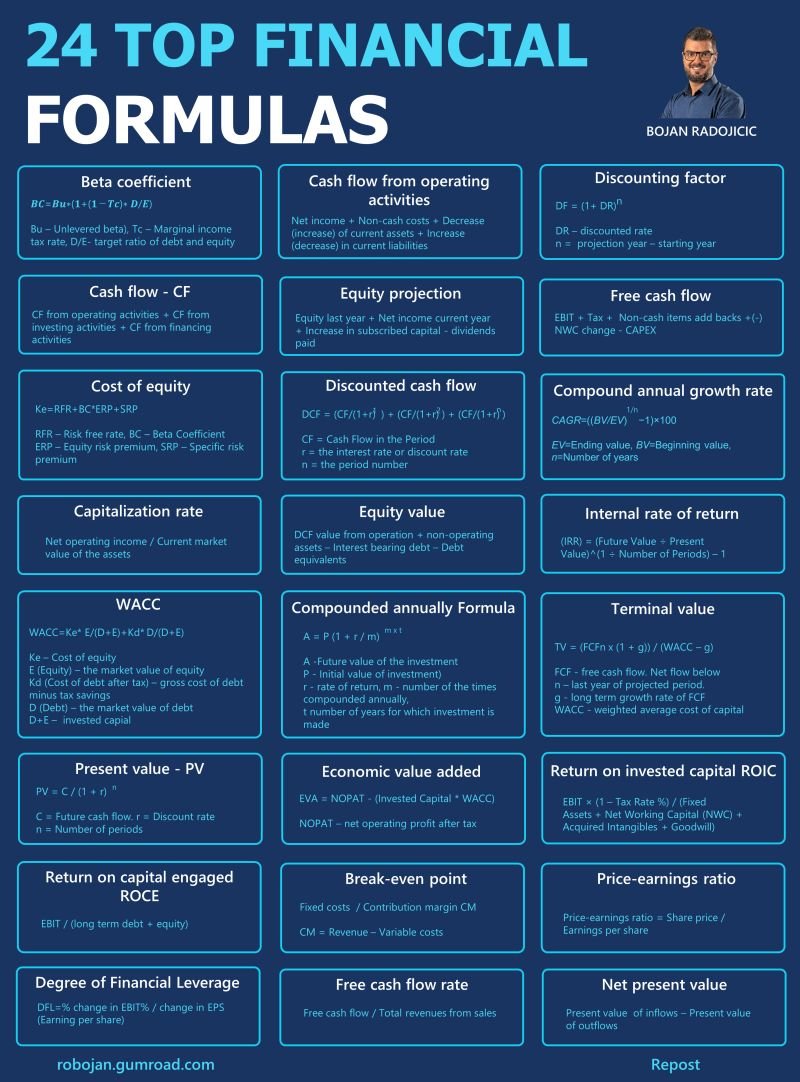
24 TOP FINANCIAL FORMULAS
1. Beta coefficient
2. Cash flow from operating activities
3. Discounting factor
4. Cash flow - CF
5. Equity projection
6. Free cash flow
7. Cost of equity
8. Discounted cash flow
9. Compound Annual Growth Rate
10. Capitalization rate
11. Equity value
12. Internal rate of return
13. WACC
14. Compounded Annually Formula
15. Terminal value
16. Present value - PV
17. Economic value added
18. Return on invested capital ROIC
19. Return on capital engaged ROCE
20. Break-even point
21. Price-earnings ratio
22. Degree of Financial Leverage
23. Free cash flow rate
24. Net present value
If you want this visual in PDF, just drop a comment and I’ll send it to you.
(Important: follow me so I can DM you!)
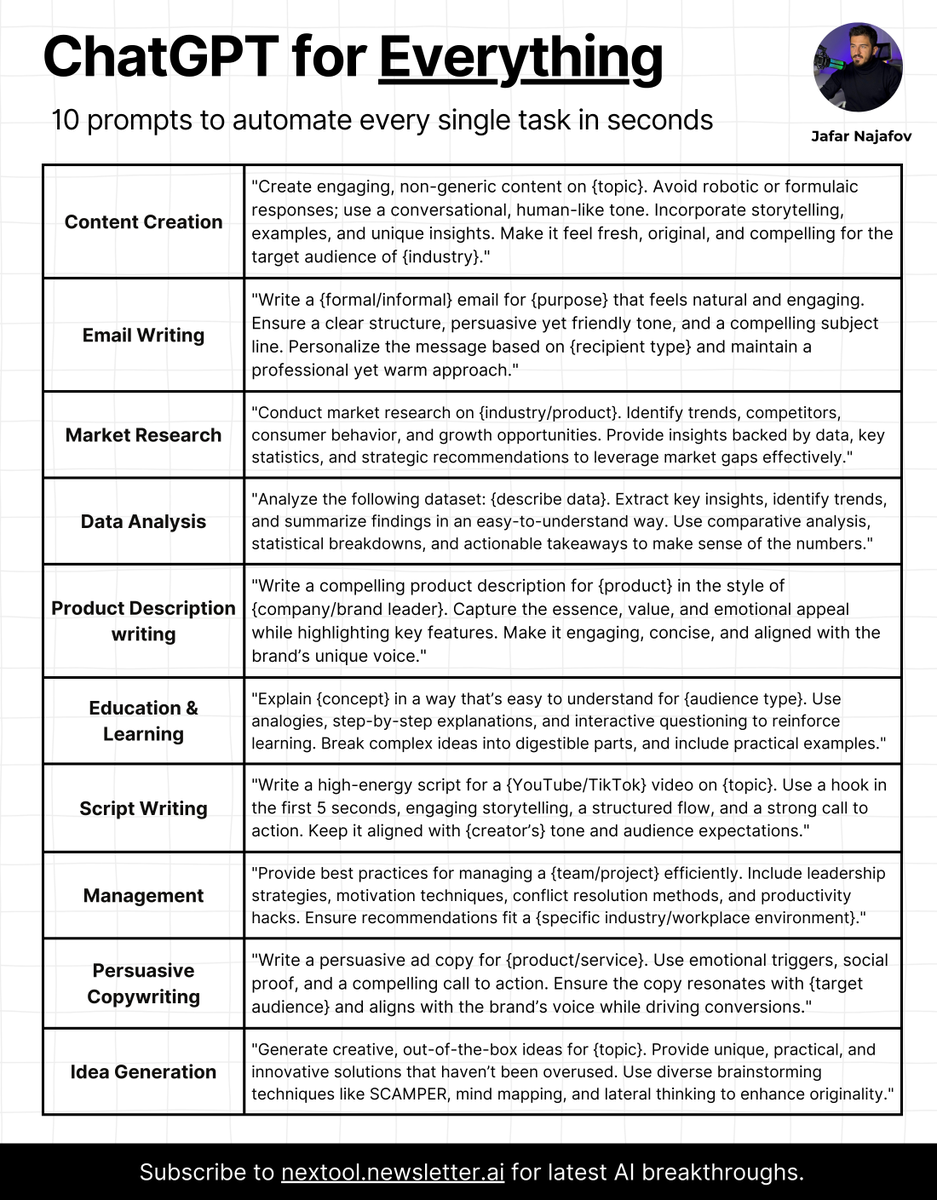
Everyone's using ChatGPT, but 99.9% of people don't know how to use it effectively.
Here are 10 insanely powerful prompts to automate almost every task in seconds:
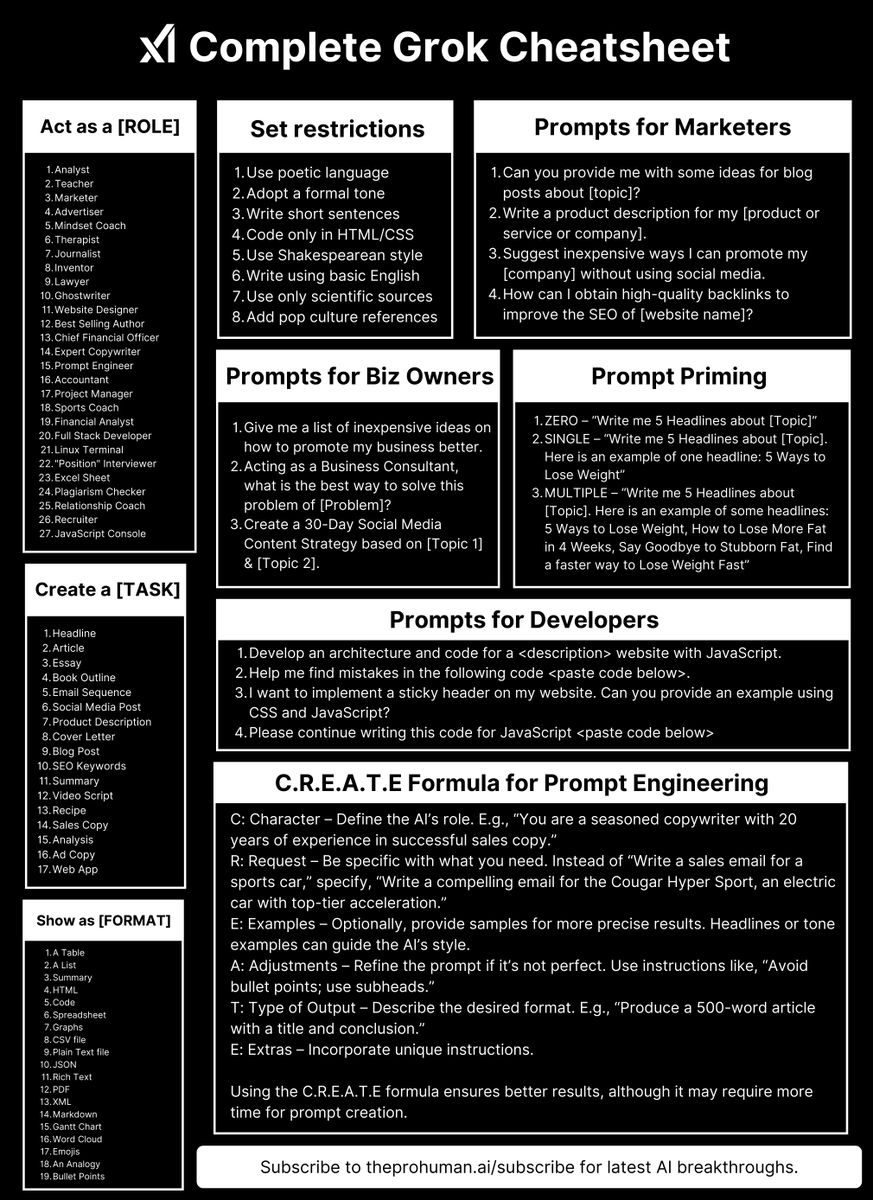
Grok 3 is the most advanced AI chatbot.
But 99% of people don’t know how to use it properly.
Here are 10 powerful prompts to unlock its full potential:
90% of companies fail to execute their strategy:
So, what makes the remaining 10% successful?
Let me introduce you to a useful framework:
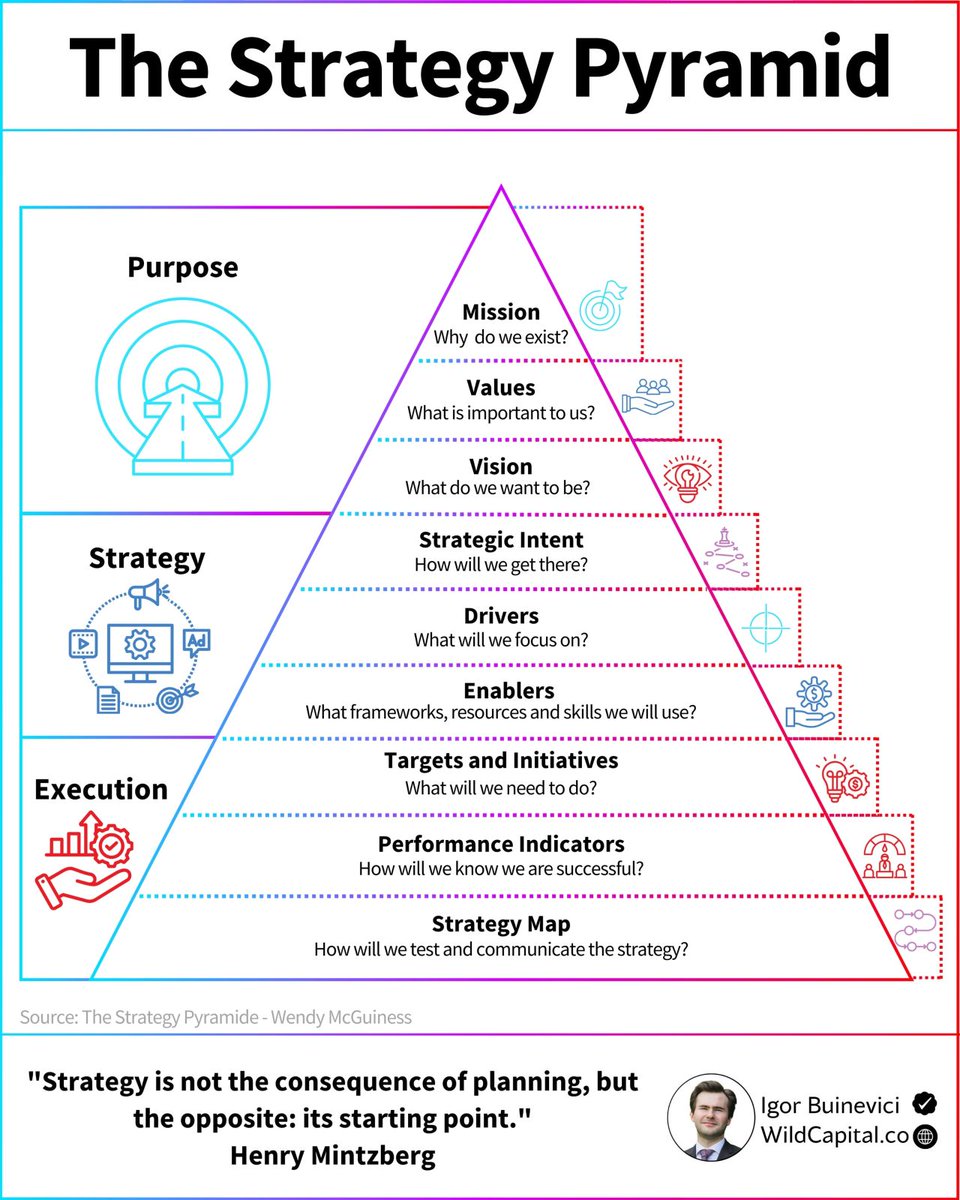
The Strategy Pyramid.
Shared by Wendy McGuiness in 2011, this framework outlines 9 critical elements for successful strategy and execution.
These elements are divided into 3 key categories:
Purpose, Strategy, and Execution.
A) Purpose
1. Mission:
Clarifies your company's core reason for existence.
What’s your "why"?
2. Values:
Defines the principles and beliefs that guide decisions and shape company culture.
3. Vision:
Paints a picture of the future you’re striving for.
Where do you see your company in the years to come?
B) Strategy
4. Strategic Intent:
Sets clear goals and objectives, laying out the desired outcomes and the path to achieve them.
5. Drivers:
Identifies the key factors that will drive success:
Whether it's market expansion, innovation, cost-efficiency, or customer satisfaction.
6. Enablers:
Outlines the tools, resources, and capabilities needed to drive the strategy, like technology, talent, and capital.
C) Execution
7. Targets and Initiatives:
Defines clear actions and measurable targets to ensure progress and alignment with strategy.
8. Performance Indicators:
Sets KPIs to track progress and assess the impact of your strategy.
9. Strategy Map:
Offers a visual layout of the strategy to align the entire organization and provide clarity.
This framework helps leaders:
A) Clarify the organization’s purpose
B) Create a focused, actionable strategy
C) Execute with precision
Each of these pillars is essential - neglecting one could derail the entire strategy.
To succeed, you need clarity on what exactly you’re executing.
P.S. Are you putting enough focus on your strategy?
♻ Repost so your network succeeds in strategy execution.
----
📌 Wild Capital Academy is LIVE!
The top community-powered business scaling program:
Learn strategy, finance, marketing, leadership, and more.
Secure your spot at the best rate ever:
(prices go up in 24 hours and spots are limited)
https://t.co/LQL7DG3yyy
She is the youngest billionaire you never heard of...
She was a university teacher who built Canva into a $40B company by 30 from her mom's living room.
Her strategy was so simple but GENIUS that Adobe executives couldn't believe it.
Here's the full story: 🧵
🔥 Top 20 KPIs Every Finance Pro Needs to Know!
Hey finance pros, want to measure what matters most?
Here’s a breakdown of the 20 most important KPIs for your business—with simple explanations and formulas.
Save this for later! 🧵👇
90% of companies fail to execute their strategy:
But what sets the other 10% apart?
Let me introduce you to an incredibly effective framework:
The Strategy Pyramid
Originally shared by Wendy McGuiness (2011), this framework outlines 9 essential elements of successful strategy and execution.
These elements are organized into 3 core categories:
Purpose, Strategy, and Execution.
A) Purpose
i. Mission:
Defines the company’s core purpose, answering questions like:
“Why do we exist?” and “What is our main reason for being in business?”
ii. Values:
Establishes the principles and beliefs that guide decision-making.
Shapes organizational culture by aligning with ethical standards and desired behaviors.
iii. Vision:
Creates a compelling image of the company’s desired future.
It answers the question: “Where do we aim to be in the years ahead?”
B) Strategy
iv. Strategic Intent:
Specifies the organization’s top goals and objectives.
Lays out the desired outcomes and how to achieve them.
v. Drivers:
Highlights the key factors driving success, such as:
market expansion, innovation, cost efficiency, or customer satisfaction.
vi. Enablers:
Focuses on the tools, resources, and capabilities required to implement the strategy.
Includes technology, skilled personnel, and financial assets.
C) Execution
vii. Targets and Initiatives:
Defines actionable steps and measurable targets aligned with strategic objectives to drive progress.
viii. Performance Indicators:
Establishes KPIs to monitor progress and measure the impact of strategic efforts.
ix. Strategy Map:
Provides a clear visual representation of the strategy to ensure organizational alignment and clarity.
This framework helps leaders:
1) Define their organization’s purpose.
2) Craft a focused strategy.
3) Execute it with precision.
Each pillar is equally vital - neglecting one can jeopardize the entire process.
To succeed in execution:
You must clearly define what you are going to execute.
P.S. Are you dedicating enough attention to your strategy?
-----
📌 I am considering launching:
The top community-powered business scaling program,
Where I will also cover business strategy in detail
(sharing my experience from helping 250+ companies).
50+ leaders have already expressed interest:
Subscribe to my newsletter at https://t.co/jTnaNRbsRL to submit your interest.
You will also receive my top 100 infographics for free as a bonus in the welcome email.