I’m excited about the share buyback authorization like everyone else but in my opinion, I don’t think it will be utilized now. lowering the balance sheet cash would make it more difficult to conduct the bond roadshow, both in the ability of how much can be raised and would result in higher interest rates from fixed-income investors based on risk. you want to look strong when marketing yourself for investment.
if a genie granted me a wish the ideal series of events would be to raise a ton of corporate debt, have the market sink the stock price to middle earth on this news (“oh no, huge leverage! they’re going bankrupt!”), buy back down there, note holder arbs go super long, the stock price explodes, present the tender offer to eBay shareholders at that price with the goal of dipping into authorized shares as little as possible.
we’ll see.
The eBay board are begging shareholders not to let Proposal 4 pass.
If it passes it could give Ryan Cohen an expedited path into the $EBAY board
More information here 👇
https://t.co/mcL6E1GFKp
The walls are closing in for $GME naked short sellers
🚀 $9bn+ cash on hand
🚀 Profitable company with no short term debt
🚀 Bitcoin Treasury reserve company
🚀 Roaring Kitty can return at any time
🚀 CEO that takes no salary and owns ~9% of the outstanding shares
🚀 CEO that will do whatever it takes to acquire eBay and bring customer delight to the 135M global customer base through a combined business
🚀 Historical short sellers and stock antagonists such as Andrew Left are facing upto 25 years in prison
🚀 GENIUS & CLARITY Acts are rapidly progressing allowing Tokenized Securities (Overstock V2)
🚀 S&P at all time high
🚀 Huge retail investor base Direct Registered and holding for the long term
🚀 TEDDY 😉
This will dwarf the VW/Porsche squeeze in magnitude. Be excited.
part 7: I would like to share compelling points relating to the HBC equity raise and its use to secure the position of the Holder of Interests, which forced participation in the $BBBYQ third-party release. I hope you like it.
$BBBY
(old).
So in the last ~48 hours:
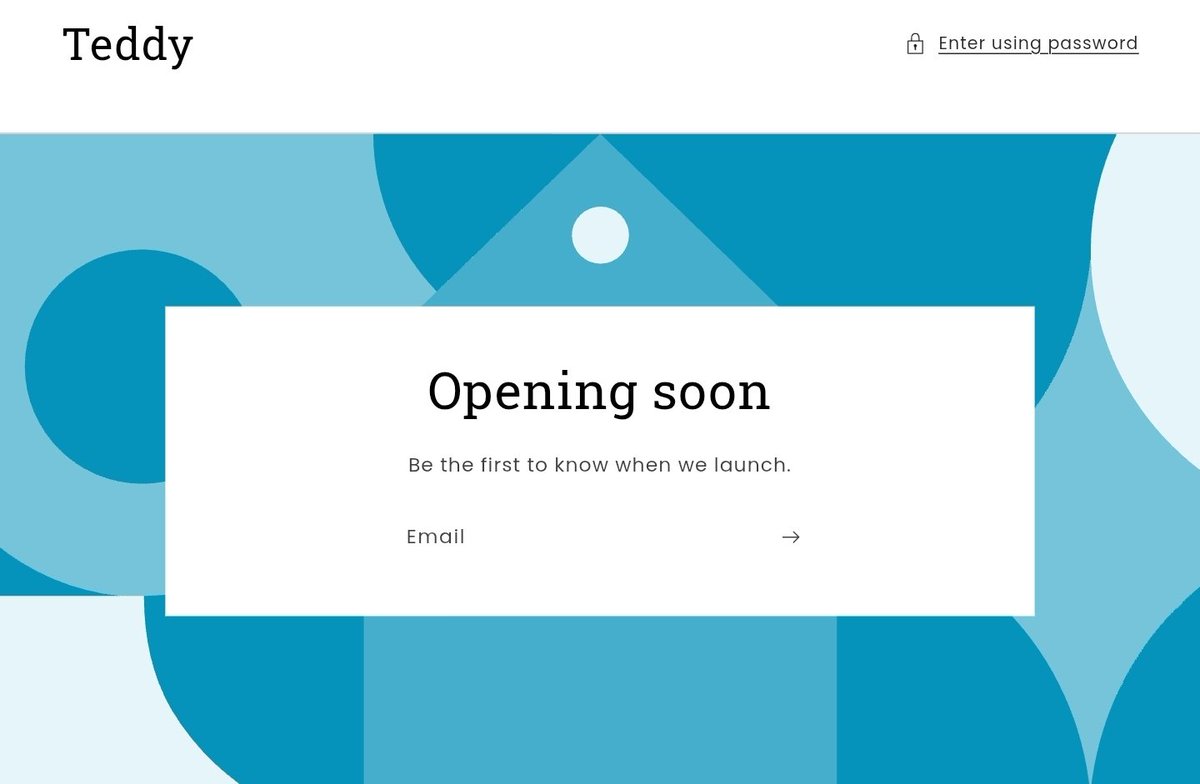
✅ https://t.co/LCUMbBv4aC is replaced with "Opening soon."
✅ Bill Pulte became Acting National Director of Intelligence.
✅ $GME dropped earnings early without a formal announcement.
✅ $GME announced their most profitable quarter in company history, as well as share buybacks.
What's next? 👀
$GME x $BBBYQ x $EBAY I can't help myself turning the graphic that @Zoomie40 made based on @AjAqrabawi's opinion how DK-Butterfly (NOL Shell Company) is used and acqusition of @eBay & @BedBathBeyond@buybuyBABY
The old BBBY had only 2 classes of shares. Commons and preferreds. Each common came with 1 voting right.
So shares with no voting rights, are recorded in the company's treasury.
So if old BBBY says they have 428M voting, why does the dtcc have 348M more on their ledger?
If Jake2B is correct in his HBC theory, Ryan Cohen could control a huge percentage of resissued BBBYQ equity, between 25-50% of the float
If retail investors who held to cancellation get their reissued equity too, this dramatically reduces the tradeable freefloat
That is💥 🚀
I was reading through old $BBBYQ SEC filings and came across something that really stood out. whatever the intentions of the affiliates and/or Purchaser, the assets had to have been secured at the end of 2022 in some way.
think back to the private bond exchanges; there was first a single investor, then an institutional group that followed by retiring their bonds for shares some time between November 14 and December 6, 2022. here is what I had never caught before:
[image 1]
thanks to accounting requirements there is disclosure in the 10-Q that the exchange was performed under what is called a "troubled debt restructuring". that can only be used under very specific circumstances, say if a company discloses that it may not be able to continue as a going concern. if we dive into the math on the deal we will see that whoever participated in the exchange was friendly to the company. here's why:
[image 2]
the aggregate principal amount retired through the bond exchange:
69.0 (2024) + 15.3 (2034) + 70.2 (2044) = 154.5 million dollars worth of bond debt.
[image 3]
but investors only received:
first Form D: 2,762,444 shares which was an offering amount of 10,331,540$;
second Form D: 11,667,021 shares which was an offering amount of 40,717,903$;
10,331,540 + 40,717,903 = 51,049,443$.
[image 3]
154.5 million of debt was retired in exchange for 51 million dollars’ worth of shares. the bond holders exchanged at 0.33 on the dollar when they could have just sold them on the open market at the time for a better return plus the individual investor gave the Company another 3.5 million dollars cash for 0.9 million additional shares.
the Company obviously benefitted tremendously from this deal, recording a 94.4 million dollar gain (the net difference) on their 10-Q. who would do that? the only way it makes sense is if the former bond, then equity holders received something more than just the shares in return. the only alternative explanation is preferring to lose money over open market sales to help the Company.
[image 4]
fun little side fact, looking at the TSO from the 10-Q (which was late!) if you look at the share amount received by the institutional group they total 9.9444% ownership, just under 10% with no way to round up to 10% and be labelled an insider. two more fun facts, the Company filed that their 10-Q was going to be late on the same day the bond exchange was finally terminated with no more extensions, and, the "troubled debt restructuring" was only revealed in the 10-Q itself, over a month later.
to summarize: no investor retires their senior, secured debt instrument for junior, unsecured equity at a loss compared to open-market price to help the Company's balance sheet, unless they got something in return. this exchange retired 25% of all 2024 bonds, an imminent insolvency risk at the time.
so.. what did they get?


![jake2b's tweet photo. I was reading through old $BBBYQ SEC filings and came across something that really stood out. whatever the intentions of the affiliates and/or Purchaser, the assets had to have been secured at the end of 2022 in some way.
think back to the private bond exchanges; there was first a single investor, then an institutional group that followed by retiring their bonds for shares some time between November 14 and December 6, 2022. here is what I had never caught before:
[image 1]
thanks to accounting requirements there is disclosure in the 10-Q that the exchange was performed under what is called a "troubled debt restructuring". that can only be used under very specific circumstances, say if a company discloses that it may not be able to continue as a going concern. if we dive into the math on the deal we will see that whoever participated in the exchange was friendly to the company. here's why:
[image 2]
the aggregate principal amount retired through the bond exchange:
69.0 (2024) + 15.3 (2034) + 70.2 (2044) = 154.5 million dollars worth of bond debt.
[image 3]
but investors only received:
first Form D: 2,762,444 shares which was an offering amount of 10,331,540$;
second Form D: 11,667,021 shares which was an offering amount of 40,717,903$;
10,331,540 + 40,717,903 = 51,049,443$.
[image 3]
154.5 million of debt was retired in exchange for 51 million dollars’ worth of shares. the bond holders exchanged at 0.33 on the dollar when they could have just sold them on the open market at the time for a better return plus the individual investor gave the Company another 3.5 million dollars cash for 0.9 million additional shares.
the Company obviously benefitted tremendously from this deal, recording a 94.4 million dollar gain (the net difference) on their 10-Q. who would do that? the only way it makes sense is if the former bond, then equity holders received something more than just the shares in return. the only alternative explanation is preferring to lose money over open market sales to help the Company.
[image 4]
fun little side fact, looking at the TSO from the 10-Q (which was late!) if you look at the share amount received by the institutional group they total 9.9444% ownership, just under 10% with no way to round up to 10% and be labelled an insider. two more fun facts, the Company filed that their 10-Q was going to be late on the same day the bond exchange was finally terminated with no more extensions, and, the "troubled debt restructuring" was only revealed in the 10-Q itself, over a month later.
to summarize: no investor retires their senior, secured debt instrument for junior, unsecured equity at a loss compared to open-market price to help the Company's balance sheet, unless they got something in return. this exchange retired 25% of all 2024 bonds, an imminent insolvency risk at the time.
so.. what did they get?](https://pbs.twimg.com/media/HJQ4-CDXMAASput.jpg)
![jake2b's tweet photo. I was reading through old $BBBYQ SEC filings and came across something that really stood out. whatever the intentions of the affiliates and/or Purchaser, the assets had to have been secured at the end of 2022 in some way.
think back to the private bond exchanges; there was first a single investor, then an institutional group that followed by retiring their bonds for shares some time between November 14 and December 6, 2022. here is what I had never caught before:
[image 1]
thanks to accounting requirements there is disclosure in the 10-Q that the exchange was performed under what is called a "troubled debt restructuring". that can only be used under very specific circumstances, say if a company discloses that it may not be able to continue as a going concern. if we dive into the math on the deal we will see that whoever participated in the exchange was friendly to the company. here's why:
[image 2]
the aggregate principal amount retired through the bond exchange:
69.0 (2024) + 15.3 (2034) + 70.2 (2044) = 154.5 million dollars worth of bond debt.
[image 3]
but investors only received:
first Form D: 2,762,444 shares which was an offering amount of 10,331,540$;
second Form D: 11,667,021 shares which was an offering amount of 40,717,903$;
10,331,540 + 40,717,903 = 51,049,443$.
[image 3]
154.5 million of debt was retired in exchange for 51 million dollars’ worth of shares. the bond holders exchanged at 0.33 on the dollar when they could have just sold them on the open market at the time for a better return plus the individual investor gave the Company another 3.5 million dollars cash for 0.9 million additional shares.
the Company obviously benefitted tremendously from this deal, recording a 94.4 million dollar gain (the net difference) on their 10-Q. who would do that? the only way it makes sense is if the former bond, then equity holders received something more than just the shares in return. the only alternative explanation is preferring to lose money over open market sales to help the Company.
[image 4]
fun little side fact, looking at the TSO from the 10-Q (which was late!) if you look at the share amount received by the institutional group they total 9.9444% ownership, just under 10% with no way to round up to 10% and be labelled an insider. two more fun facts, the Company filed that their 10-Q was going to be late on the same day the bond exchange was finally terminated with no more extensions, and, the "troubled debt restructuring" was only revealed in the 10-Q itself, over a month later.
to summarize: no investor retires their senior, secured debt instrument for junior, unsecured equity at a loss compared to open-market price to help the Company's balance sheet, unless they got something in return. this exchange retired 25% of all 2024 bonds, an imminent insolvency risk at the time.
so.. what did they get?](https://pbs.twimg.com/media/HJQ4-CCXoAEYha8.jpg)
![jake2b's tweet photo. I was reading through old $BBBYQ SEC filings and came across something that really stood out. whatever the intentions of the affiliates and/or Purchaser, the assets had to have been secured at the end of 2022 in some way.
think back to the private bond exchanges; there was first a single investor, then an institutional group that followed by retiring their bonds for shares some time between November 14 and December 6, 2022. here is what I had never caught before:
[image 1]
thanks to accounting requirements there is disclosure in the 10-Q that the exchange was performed under what is called a "troubled debt restructuring". that can only be used under very specific circumstances, say if a company discloses that it may not be able to continue as a going concern. if we dive into the math on the deal we will see that whoever participated in the exchange was friendly to the company. here's why:
[image 2]
the aggregate principal amount retired through the bond exchange:
69.0 (2024) + 15.3 (2034) + 70.2 (2044) = 154.5 million dollars worth of bond debt.
[image 3]
but investors only received:
first Form D: 2,762,444 shares which was an offering amount of 10,331,540$;
second Form D: 11,667,021 shares which was an offering amount of 40,717,903$;
10,331,540 + 40,717,903 = 51,049,443$.
[image 3]
154.5 million of debt was retired in exchange for 51 million dollars’ worth of shares. the bond holders exchanged at 0.33 on the dollar when they could have just sold them on the open market at the time for a better return plus the individual investor gave the Company another 3.5 million dollars cash for 0.9 million additional shares.
the Company obviously benefitted tremendously from this deal, recording a 94.4 million dollar gain (the net difference) on their 10-Q. who would do that? the only way it makes sense is if the former bond, then equity holders received something more than just the shares in return. the only alternative explanation is preferring to lose money over open market sales to help the Company.
[image 4]
fun little side fact, looking at the TSO from the 10-Q (which was late!) if you look at the share amount received by the institutional group they total 9.9444% ownership, just under 10% with no way to round up to 10% and be labelled an insider. two more fun facts, the Company filed that their 10-Q was going to be late on the same day the bond exchange was finally terminated with no more extensions, and, the "troubled debt restructuring" was only revealed in the 10-Q itself, over a month later.
to summarize: no investor retires their senior, secured debt instrument for junior, unsecured equity at a loss compared to open-market price to help the Company's balance sheet, unless they got something in return. this exchange retired 25% of all 2024 bonds, an imminent insolvency risk at the time.
so.. what did they get?](https://pbs.twimg.com/media/HJQ4-CCWAAEw0k4.jpg)







![jake2b's tweet photo. I was reading through old $BBBYQ SEC filings and came across something that really stood out. whatever the intentions of the affiliates and/or Purchaser, the assets had to have been secured at the end of 2022 in some way.
think back to the private bond exchanges; there was first a single investor, then an institutional group that followed by retiring their bonds for shares some time between November 14 and December 6, 2022. here is what I had never caught before:
[image 1]
thanks to accounting requirements there is disclosure in the 10-Q that the exchange was performed under what is called a "troubled debt restructuring". that can only be used under very specific circumstances, say if a company discloses that it may not be able to continue as a going concern. if we dive into the math on the deal we will see that whoever participated in the exchange was friendly to the company. here's why:
[image 2]
the aggregate principal amount retired through the bond exchange:
69.0 (2024) + 15.3 (2034) + 70.2 (2044) = 154.5 million dollars worth of bond debt.
[image 3]
but investors only received:
first Form D: 2,762,444 shares which was an offering amount of 10,331,540$;
second Form D: 11,667,021 shares which was an offering amount of 40,717,903$;
10,331,540 + 40,717,903 = 51,049,443$.
[image 3]
154.5 million of debt was retired in exchange for 51 million dollars’ worth of shares. the bond holders exchanged at 0.33 on the dollar when they could have just sold them on the open market at the time for a better return plus the individual investor gave the Company another 3.5 million dollars cash for 0.9 million additional shares.
the Company obviously benefitted tremendously from this deal, recording a 94.4 million dollar gain (the net difference) on their 10-Q. who would do that? the only way it makes sense is if the former bond, then equity holders received something more than just the shares in return. the only alternative explanation is preferring to lose money over open market sales to help the Company.
[image 4]
fun little side fact, looking at the TSO from the 10-Q (which was late!) if you look at the share amount received by the institutional group they total 9.9444% ownership, just under 10% with no way to round up to 10% and be labelled an insider. two more fun facts, the Company filed that their 10-Q was going to be late on the same day the bond exchange was finally terminated with no more extensions, and, the "troubled debt restructuring" was only revealed in the 10-Q itself, over a month later.
to summarize: no investor retires their senior, secured debt instrument for junior, unsecured equity at a loss compared to open-market price to help the Company's balance sheet, unless they got something in return. this exchange retired 25% of all 2024 bonds, an imminent insolvency risk at the time.
so.. what did they get?](https://pbs.twimg.com/media/HJQ4-CFW4AAl4Xu.jpg)


