The Stupid Mistake That Handed the Future of AI to NVIDIA
In the mid-1990s the personal computer was still a two-dimensional machine. Games like Quake ran on the CPU alone as every polygon, every light, every texture fought for the same CPU cycles that also had to keep the rest of the system alive.
Arcade cabinets, stuffed with expensive dedicated hardware, made home machines look like toys.
Most chip companies stayed in the comfortable world of 2D accelerators. One small group of former Silicon Graphics engineers decided that was not good enough.
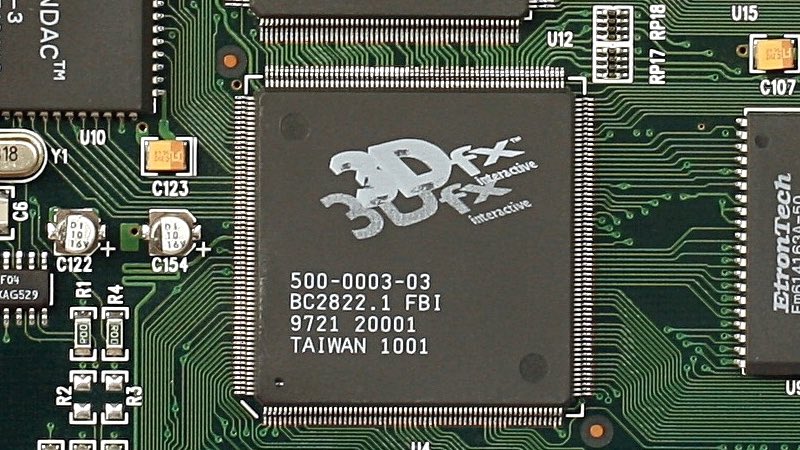
They founded 3dfx Interactive in 1994 and built a chip that did only one thing: accelerate 3D. No 2D. No audio. No compromises.
The Voodoo Graphics card arrived in 1996 at $299. You still needed your old 2D card, connected by a loop-through cable, but the moment the 3D path switched on,
Quake stopped being a slide show. Frame rates jumped. Textures stayed sharp. Suddenly a home PC could look like the arcade. Gamers noticed. Developers noticed. Within two years 3dfx owned roughly 80 to 85 percent of the consumer 3D market.
Their proprietary Glide API was the shortest path from code to pixels, and board partners like Diamond Multimedia, Creative Labs, and Orchid spread the Voodoo name into every retail channel that mattered.
Success created a dangerous temptation. The partners who built and sold the boards captured a large share of the final selling price. 3dfx designed the silicon, but the brand that customers saw on the box was often someone else’s.
Management began to believe they could take the entire profit by owning the whole stack. In December 1998 they paid $141 million in stock for STB Systems, a Texas board maker with a factory in Juarez, Mexico.
The plan was simple and, on paper, rational: stop selling chips to outside partners, manufacture complete boards themselves, and put the 3dfx logo on every card that left the warehouse.
They would control quality, control branding, and corner the remaining margin.
That decision was the stupid mistake.
Overnight the companies that had spent years building the Voodoo ecosystem became competitors. Diamond and Creative, once the strongest distribution arms 3dfx had, were cut off from future chips. They needed silicon.
NVIDIA was waiting with samples, competitive pricing, and a willingness to remain a pure chip supplier.
The partners defected. Sales channels that had once amplified every 3dfx launch now amplified NVIDIA’s RIVA TNT and, soon after, the GeForce 256.
The GeForce brought hardware transform and lighting, 32-bit color that actually worked, and a clean path into Microsoft’s Direct3D, which was rapidly making proprietary APIs like Glide less necessary.
The Voodoo3 arrived in 1999 and was competent at 16-bit color, yet the market had already moved on. Inventory piled up. Cash burned.
By late 2000 the company was forced to reverse course and try to sell chips again, but the partners were gone and the technology lead had evaporated.
Creditors moved.
On December 15, 2000, NVIDIA bought the core assets, patents, and remaining engineers for roughly $70 million in cash plus stock. 3dfx filed for bankruptcy and disappeared in 2002.
The irony: 3dfx invented the consumer 3D accelerator and proved that dedicated graphics hardware belonged in every serious PC. Their arrogant move, the attempt to own the boards and capture the entire market, destroyed the distribution network and handed that network, along with the talent and the patents, to the company that would define the next quarter-century of computing.
NVIDIA focused on silicon, let partners fight over the boards, and used the space to invent programmable shaders, CUDA, and the architecture that now powers the AI era.
One arrogant decision and the transfer of an entire industry from one set of hands to another.
3dfx held the future and then threw it away by trying to own too much of the present.
Today some AI companies are doing the same thing.
Esta noche en Fórmula Taurina, una entrevista con Diego Contreras, ganador del concurso para la creación del himno taurino de México. A las 9 PM en la segunda cadena nacional de @Radio_Formula
AMIGOS, ¿ME AYUDAN CON UN RETUITCITO? QUE LLEGÓ EL ESPECIAL NAVIDEÑO DE @ElDrGoku con voces de @orlandonomas@JesusCampanya e invitado sorpresa
👉https://t.co/8L0Sl5mlNh
Regresan los creadores del acid cabaret con su nuevo sencillo, chulada.
Gabriel Montaño, @OdinParada , Hector Hix, Daniel Bukara
El Gran Conjunto Cabaret - Wanda Seux (Videoclip Oficial) https://t.co/A4oVQU8uwr a través de @YouTube
Amigos NECESITO DE UN POCO DE SU KI EN FORMA DE RETUIT 🙌🏽🙌🏽 que llegó la hora del especial de media hora de preguntas y respuestas 2023 del Consultorio del Dr. Gokú 😁
👉 https://t.co/F9lPzTuevI
con voces de @orlandonomas@ccp_mario@JesusCampanya@ShiroganeAoi@Julio_di_esto
AMIGOS, ¿ME AYUDAN CON UN RETUITCITO DE COMPAS? QUE LLEGÓ GOKÚ A EL PRECIO DE LA HISTORIA. Con al voz de Mario Castañeda
@ccp_mario, @Luisjefe1Vlogs como Chumlee y por ahí un cameo del @cojofeliz
🤠👉🏾👉🏾 https://t.co/4khzkiQLoS