@Thesecretinves2 Really great podcast Robin. So informative and super interesting. I like how you explained the fiscal drag. But also reminded me that I need to do my taxes 😂
Keep in mind- the signature moves by MM are designed to inflict as much confusion and fear as possible so you doubt your (often correct) choices and let go of the positions (most often than not) at a loss.
And then… when they are done mixing it all up and holding you in the cage of frustration - they move. And move aggressively.
And you chase.
If you’re smart- you take profit and recoup what you lost earlier on. If not- you lose more.
But to hold through and see a big picture knowing the rules of this game- that’s the key. Start from obtaining it. The rest will follow.
@melovemoney1 Most slept on concepts 100%.
Ranges
Discount/Premium
Market Structure
Master those and you should win more often when playing with spot positions. Studying time cycles was a bit different because I was mostly revising "when" MT was posting, not the "what".
@melovemoney1@AlystyrX@moneytaur A “monk mode” well said, I love it. Something I’ve been struggling to get into for quite a while. Amazing post btw. I’m sending it to a young kid whom I’m trying to inspire and get him into the game.
If you're struggling with your trading journey hear me out
I want to cover the 10 things that will hopefully help you on your journey (with a couple bonuses)
Before I found @moneytaur 14 months ago I'd be holding those alts and hoping right
Now things are much different
I'm successfully reading the markets and profiting both ways consistently...finally
Before this last major down swing I messaging @moneytaura and saying "it's too obvious, there has to be a catch"
She reminded me that it's really not obvious to the 99%
I remember her at one point even saying "damn G you're even more bearish than I am, and I'm pretty bearish!"
It was there, and it was obvious
And I profited nicely on the way down, and now I'm profiting again on this likely temporary move back up...and then I'll profit more as we likely go down again
I'm not gloating, I'm pre framing the part that's going to hopefully help you
I started being consistently profitable about 12 months in to my journey
Now that things are pre-framed, let me give you a list of tips
1) Don't compare yourself to others. As an example it took me 12 months but it could take you 6 months or 5 years. I'll tell you that the last 14 months I have been OBSESSIVE in learning trading. Like every spare minute is consumed by the charts
2) Study efficiently. Every time you open that chart, have a purpose. Don't just flip chart to chart seeing where the price is.
3) Use past data. This shit is programmed so start learning the patterns
4) Pay attention to how price reacts off fibs...LTF, MTF, HTF...all of it
5) Mark off reaction points and investigate why price reacted there (I've spent months doing just this)
6) Stop just looking at and charting JUST BBs...start painting the whole picture for each chart, which includes normal OBs
7) Start studying past 3 drive and H&S to see how price reacts (on all TFs - make sure you are aware of inverse too). But REALLY study it. How long does HTF take to play out? How does PA act during that time? What is the volume like? This is all important to give you confidence for when the 2 most important patterns are happening...which is all the time.
8) Study volume\VSA\Wyckoff (at least the basics)
9) Get in habit of analyzing from HTF down every time you open a chart. I like to always start on monthly, then weekly, etc
10) Rebuild MTs charts. Over and over and over again. Stop just looking at his charts. Rebuild them. And then do it again. And then again. There's some MT charts I've redone 5+ times. You will pickup different things at different points of your journey.
The bonuses: learn cost efficiently
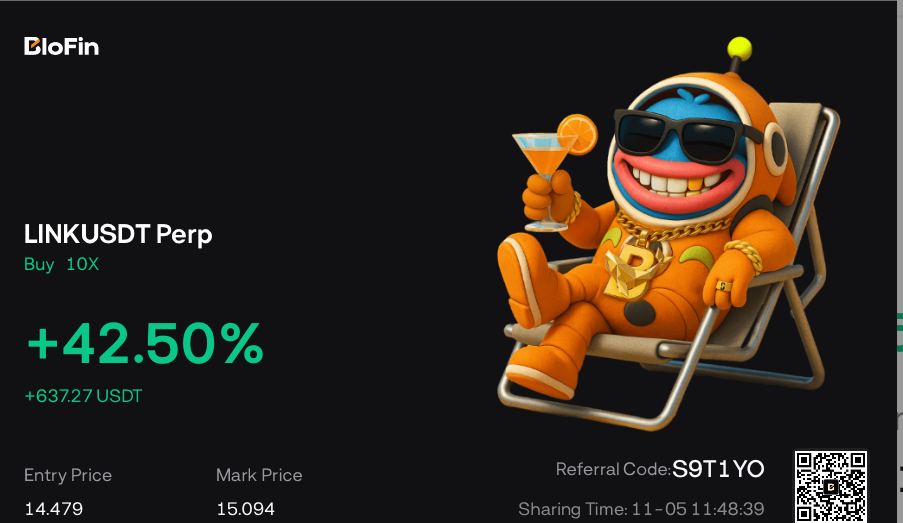
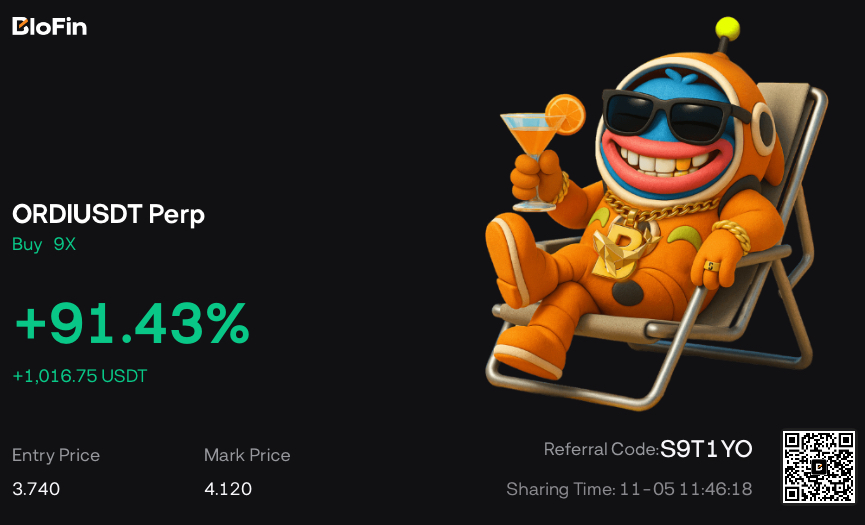
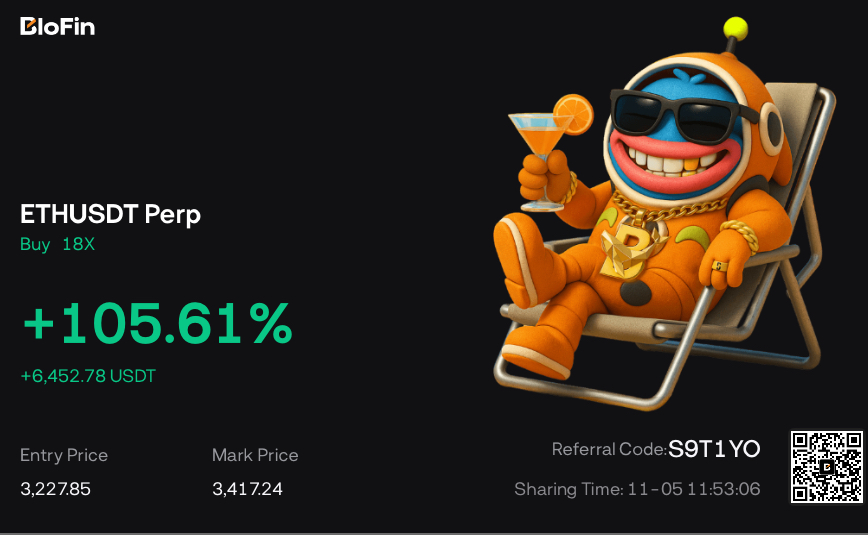
There's a reason I included P&L today (side note: couldn't fit all trades - 4 was max image - also bought bunch of spot)
I'm starting to slowly increase my bids now at 14 months in, but I'm STILL bidding pretty damn low for my budget
Besides a couple HTF long term trades, I've still never risked more than .2% of my trading account on a trade
14 months in
Why?
Because you're going to lose a lot at first
I'm also conservative, probably too much at this point, but I am slowly building my bids just now 14 months in
If you come in doing this for the simple reason to make money too soon, you are going to wreck yourself and destroy your journey
I was able to learn trading extremely cheap (talking about trading, not my alt coin wreckage) because I had the discipline to keep my bids low
I didn't have making money as my focus these last 14 months, and really, I'm still not
My focus has been on learning the game, #1 priority
That is really easy to do when you love this stuff
I think that's another important question to ask yourself...do you enjoy this?
If you don't...my suggestion is you spend your time on something else because you will likely fail
To me this is like a real life video game and one of my favorite things to do is sit down and decode
Bonus #2: hire mentors if you want to progress quickly
They are "too expensive" for some people
Would you pay $5,000 to put yourself a year ahead on the learning curve save $100,000 worth of mistakes?
I'm using specific numbers for example purpose, but i think you get the point
I wouldn't be close to where I am if I didn't hire mentors
Bonus #3: just go into monk mode
Live eat and breath this stuff for a while
If you love it, it's actually quite fun
If you don't...well...this may not be for you
I actually promised myself to lay back on the X bc I'm in monk mode now, but wanted to share this for those struggling
I've been there
The journey can be extremely frustrating at times
But hopefully some of the tips above and my journey can help you
And I still have a long ways to go...I'm not even remotely close to where I want to be
If you have questions throw them in the comments, otherwise I'll probably be off X for the next little bit until this monk mode season concludes
Those who know me know I love working with metaphors. My mind, it responds best to images pictures stories I tell myself in my head. I associate a lot of things with sometimes really wild things that happen in my imagination.
So let me try and use that to explain to you best what I think the main mistake majority of traders make.
If you ever watched the movie Wanted with Mcavoy you would remember the scene where he is told to catch a moving needle through the threads.
You are Wesley. But most of you try and catch the needle by wanting to control the market. And bend it to your will.
The clue is in that scene.
Market is a machine. Cannot be stopped. Cannot be controlled. It has its own rhythm, has its own mechanism, has its own pace. It’s set in motion you have no way of changing. Or controlling.
Your ONLY job is to try and follow it and adjust your timing to that machine. You move when it moves and you change the direction when it changes the direction.
Biases go out the window once you see it as that. It is a whole magnificent, beautiful machine. Well oiled and working like a beast you cannot tame. And you shouldn’t want to tame it.
All you have to do is… let the machine be and catch the needle 😉
- MARKET STRUCTURE -
- Basics
@Moneytaur_ does not reference market structure often, not because its not important, but because these basics should be learned elsewhere. For this writeup, here’s a brief refresher before moving to some MT-specific concepts.
-------
- Trends
Trends are always relative to the timeframe.
Higher timeframe trends dominate lower ones.
Bullish Trend
Consists of a series of higher highs and higher lows.
Bearish Trend
Consists of a series of lower highs and lower lows.
📝A sideways trend is made up of smaller trends confined to a range.
-------
- Structure
Market structure is the foundation on which all key concepts in MT’s trading style are built. Liquidity, imbalances, and supply and demand are all rooted in structure.
Price action is the process that builds this foundation. PA follows liquidity, and this constant search for liquidity shapes structures.
Imbalances between buyers and sellers create directional moves (FVGs), while balance creates fair value zones (Ranges).
Balance → Imbalance → Balance → Imbalance
“If there’s no significant imbalances, there will be OBs and Supply/Demand fresh levels. If there’s no OBs and Supply/Demand fresh levels, there will be significant imbalances.
If there’s none at all it will ⚡️ into a ‘fresh’ level and build a new trading range.
Few…” https://t.co/UOSYiuqJrm
The higher the timeframe, the more robust the structure and the more reliable the signal. HTF > LTF.
Structure defines supply and demand, premium & discount, and creates liquidity zones. It also defines ranges. When price action moves beyond these range boundaries, there are four main possible outcomes:
• Break out/down: price breaks through the range and keeps moving.
• Rejection: price fails to break the range.
• Break out/down plus retest: price closes relevant candle bodies past the range and continues after retracing back into key liquidity.
• Fake-out: price breaks out/down, and then reverses.
Outcomes 3 and 4 differ clearly.
Fake-outs are usually sharp and aggressive, often leaving large wicks from stop hunts or liquidity grabs.
Retests tend to be slower and more deliberate, usually following higher timeframe candle closes past the prior range boundaries.
“Look for HTF body close above previous most significant swing highs. If not, it’s likely a false breakout. If it does, the highest probability play is waiting for a pullback into key level before continuation into the next HTF liquidity level, and if there’s none to take it will likely go to new ATH.”
https://t.co/0DG6h2dw79
- Internal vs. External Structure
External Structure
• The overall trend visible on a higher timeframe (relative to a lower timeframe).
• A weekly chart is made up of seven daily candles; compared to the daily, the weekly is external structure.
Internal Structure
• The smaller movements within the higher timeframe, seen on lower timeframes.
• Shows smaller trends inside the larger move.
Internal structure can shift short-term without changing the external trend. Always let the external (HTF) structure guide your HTF bias; internal structure offers early clues.
Example: (📈 in comments)
This 2W chart is external structure and clearly in an uptrend.
On this daily chart of the grey box, we are in a downtrend. This is internal structure.
The examples highlight the importance of always seeing structures in relation to each other.
M > W > D > H > M > S
Internal structure shifts can be the early clue that external structure may change. Let the higher timeframes define the macro structure and watch for early signs on lower timeframes.
-------
- Market Phases
The Four Market Phases
Accumulation
• Typically follows a downtrend but can appear anywhere market makers prepare for markup.
• The range lets market makers accumulate while pushing news to fit the narrative.
Buy Program (Bull Market/Markup)
• Follows accumulation or re-accumulation.
• The asset appreciates in value.
Distribution
• Typically follows an uptrend but can appear anywhere market makers prepare for markdown.
• The range lets market makers offload while pushing news to fit the narrative.
Sell Program (Bear Market/Markdown)
• Follows distribution or re-distribution, depending on context.
• The asset depreciates in value.
(📈 in comments)
- The Psychology of the Phases
Accumulation
Emotion: Skepticism, disbelief, apathy
Psychology: Most traders are fearful or disinterested. Market makers are quietly buying.
Behaviour: Retail avoids the market; volume is low; sentiment is bearish or indifferent.
Media manipulation: The most bearish news marks the bottom. “Markets are dead.”
Bull Market (Markup/Buy Program)
Emotion: Optimism, excitement, euphoria
Psychology: Confidence builds as prices rise. Retail starts buying in; FOMO.
Behaviour: Volume increases; media turns positive; public participation grows.
Media manipulation: Coverage increases and sentiment turns bullish in line with price.
🔺Intensifies with trend
Distribution
Emotion: Greed, overconfidence, denial
Psychology: Retail believes the trend will continue; smart money is offloading.
Behaviour: Volatility increases; price chops; bullish sentiment remains high.
Media manipulation: News remains bullish; influencers push FOMO narratives.
Bear Market (Markdown/Sell Program)
Emotion: Anxiety, fear, panic, capitulation, despair
Psychology: Retail sells in panic. Smart money prepares to accumulate again.
Behaviour: Heavy selling; negative news cycle; retail sells at loss.
Media manipulation: After the initial selloff, fear-driven headlines dominate.
🔺Intensifies with trend
🔺Understand that the system runs on predictable human behaviour. Stay hyper-aware of your own emotions and learn to flip them into signals instead of traps.
“When you feel you will make a lot of money by holding, it is close to the top. When you feel you will lose all your money by holding, it is close to the bottom.
Your own fear and greed emotions are two of the most powerful indicators you will ever find.” https://t.co/oHAxhgJtCy
-------
- Market Structure Shifts
Changes in structure are vital for gauging the probabilities of the next move. Understanding these shifts and the patterns that reveal them is essential for becoming consistently profitable.
BOS – Break of Structure
A BOS occurs when price closes relevant candle bodies past a significant high or low. It confirms a change in structure.
CHoCH – Change of Character
A CHoCH happens when price breaks structure in the opposite direction of the current trend. It’s the first signal of a possible trend reversal.
BOMS – Break of Market Structure
A BOMS is a clear break of market structure, usually on higher timeframes and significant levels. It confirms a shift in intent when validated and often shows higher volume and leaves FVGs behind.
- Trend Changes
Using trends, BOS, CHoCH, and BOMS helps identify key structural shifts in the market. Knowing when the market transitions from a buy to a sell program is crucial for being profitable.
“Buy program: Bullish BBs work wonders.
Buy program: Bearish BBs can often fail, unless optimal.
Sell program: Bearish BBs work wonders.
Sell program: Bullish BBs can often fail, unless optimal.” https://t.co/CWKVFBwZSe
Putting all learned concepts together helps us spot potential tops forming. Using the ideas above gives us further confirmation.
(📈 in comments)
-------
- MT’s 1,2,3 System (Squiggles)
For MT, structural shifts are an essential part of his setups. The system has three parts:
• A valid break of a key level (BOS)
• A retrace into liquidity
• Entry at the refined level to ride the reversal
This approach ensures we get the optimal entry after fuel is taken, letting us ride the trade longer with clearer invalidation and better RR.
“There’s no MTF or HTF candles closing above key PSH, so you don’t long here. For the highest probability long it’s the squiggle on the chart, with MTF (at least) close above key PSH plus pullback (the entry) before bullish continuation.” https://t.co/DwsTmv5NUI
“All “squiggles” mean the strategy is to wait for close above or below HTF key levels as stage 1 of 3, pullback or retracement into key levels if you can find them, and most of the time you can because bots always leave such levels with fuel behind, to come back later and reverse price again as stage 2 of 3 and this is your entry, and then continuation into the direction of the first move, stage 3. This is how these liquidity games work.”
https://t.co/20IM2XZU8d
Breakout trading is popular, but charts like the one below, and the effectiveness of squiggles, show its weakness clearly.
“You can always choose to long the breakout, but this isn’t going for high probability as it’s what all retail traders do, and the game’s designed to stop or liquidate them all, collecting fuel, and then proceed in the direction retail traders expected, which will then make them start revenge trading as they were ‘right but wrong’.”
-------
- Using Liquidity as a Guide
Market makers leave footprints that help us assign probabilities to the next move. Liquidity is key. When key levels are left behind and price action approaches a level without taking the liquidity first, chances are high, it will revisit to grab that fuel before continuing.
“A helpful hint to determine if a breakout will reverse into a key level before trend continuation is to check if there’s a key level left behind in the previous range that price is attempting to break out from. If the key level is present, especially on HTF and you can refine it into lower timeframes, the probability of a pullback into that level before continuation becomes significant, as price tends to gravitate toward such levels. Additionally, if there’s a key level above the swing high that can be taken, it could act as fuel for a drop into the lower level, setting up for a subsequent pump.” https://t.co/dLb32EUytJ
Alternatively, when no such levels exist, the probability is higher that the breakout/down is real and price action will continue in the direction.
“If you cannot find such, the probability for breakout into price discovery, without looking back for a while, is higher.” https://t.co/uxu7gczPIQ
-------
- Confirming a BOS
In general, higher timeframe structures need higher timeframe confirmations. Use timeframes relevant to the trade. For higher timeframe levels MT often looks for closures 12h or higher. Further HTF closures add confluence and reinforce the likelihood the break is real.
Always watch for body closes above or below the swing high or swing low.
(📈 in comments)
Without a confirmed BOS, we risk falling for fake moves. A confirmed BOS marks clearer intent. Wait for the signal, place orders where the fuel sits, and ride the continuation.
🔺Lately, more HTF closes have resulted in reversals. Market makers are aware that retail is looking at daily closes.
“Don’t fall for false moves. Learn to identify confirmed BOS on HTF and you will level up instantly.”
(📈 in comments)
There’s no single timeframe that automatically invalidates every setup. The last five minutes of a HTF candle can close below a level without any real prior price action in that area. Zoom in on lower timeframes and check what’s happening. Look for signs of strength or weakness to support your decision. Stay flexible and weigh all factors.
Things to consider:
• How optimal is the level?
• Where is the level located?
• Is the asset high volume?
• What are majors doing?
• How does price behave around the level?
• Are newly formed LTF structures being respected?
• Is there spoofing?
• What is order flow showing?
MT has posts calling for 12H+ closes to confirm or reject a level; others rely on 2H. This is closer to an art than a rule, an edge that only comes through screen time and real experience.
“Take notes on this PA, because it will change your game. You can go through timeframes up until 2H and you will notice there’s no candle bodies closing below the level where the 2D BB is at. The hint is there. From here I’ll wait for key SH or SL to be taken and find an entry on pullback or retracement. 0 candle bodies closed below 2D BB. Body, not whisker. At least a 2H full body, specifically for SOL as it’s a high TV coin.” https://t.co/NWU3jY4LnM
-------
- Timeframes
Moneytaur has his own definitions of timeframes. You can either adopt his schematics or come up with definitions that are a better fit for you.
“micro TF: 5min and lower
LTF: 15min > 2H
MTF: 2H > 12H
HTF: 12H > M+” https://t.co/ddmUmlaFK9
HTF (12h+)
• Hold the most liquidity and are the most reliable.
• The higher the TF, the clearer the signal of the predominant trend.
• 1W+ are macro timeframes.
• HTF plays = up to 3% of trading account, max 5% if optimal.
MTF (2h–12h)
• First reliable validations of BOS, CHoCH, BOMS.
• Key for refining levels.
• MTF plays = up to 2% of trading account.
LTF (5m–2h)
• Super-refined entries, exits, and stops.
• First possible signs of BOS, CHoCH, BOMS.
• Less reliable as they hold less liquidity.
• LTF plays = up to 1% of trading account.
mTF (<5m)
• Ultra-refined entries, exits, and stops.
• Entries or exits based on micro structure reactions to key levels.
“In micro timeframes, you can better see when a price reversal is likely, since the ⚡️ at key levels is a powerful sign of that. If you spend time in those timeframes when the price is reaching key levels where you expect a reaction, you’ll start to notice a pattern and better understand whether a reversal can actually occur or if the reaction is too weak. As for the ‘ping-pong’ at key levels, it’s the same, but weaker than in lower timeframes and harder to read, since you don’t see proper candle bodies, so you just have to get used to it.”
📝Note on Timeframes and TradingView
• TradingView anchors all intraday timeframes to the daily close.
• Timeframes that do not evenly divide into 24h will produce one partial candle at the end of each daily session.
• This shorter candle is always the last candle before the session reset at 00:00 UTC.
• So a 23h candle is 1 x 23h + 1 x 1h candle. When trading a 23h level, the chance is high that you are in reality taking a trade based off a 1h hOB.
Interesting as I just finished a stream with my crew and the close isn’t showing up like the other day… however (!) today’s close IS important and I wanna see USDT.D close below 4.68% (major confluence with the fib too) AND I wanna see it drop lower than 4.52%. I know I said I potentially see bears take over from here fully BUT it will depend where we pull back to and what the market does from here. Still strong case to support that we have seen the top 😑
All longs could be nicely leading up to more key levels that were printed lately for nice and sweet entries to ride another wave lower. You getting ready? 👀
Putting my SL2BE shortly. I am not waiting for retest of the levels. I’d rather secure profits and try long again- especially since I did hit some losses trying to long the daily BTC near 705. But that will depend on where we go from here and how strongly I feel about longs.
Also- I could claim sooooo much clout for the latest moves but I am just gonna keep it to myself and the mentees that had it all perfectly mapped out and played it alongside me. Some things are just better enjoyed in smaller groups without the need to come and share charts of things that already came to be 🤭
Ps. The lads are smashing it!
TV Object Tree 🧩
Today I wanted to share my process for structuring the data within my trading view charts, keeping them clean and organised. Specifically, this relates to the 'object tree', which houses all the drawings within a chart.
For many people, the object tree could be likened to a 'black hole', never looked within, the contents of which is unknown and unstructured.
You can find the object tree to the right of TV, below the alerts icon.
Within the object tree, you can create folders of drawings, which can be renamed, locked, hidden, or moved up and down - affecting the visibility hierarchy of drawings. This can also be done for individual drawings.
An easy way to clear up some mental real estate is to make it a habit to organise drawings based on time frames, whilst simultaneously creating a new folder for each trade you have taken. Below is an overview of how I organise my object tree, which is the same for each chart/asset.
For the best results, I recommend keeping the hierarchy the same. Below is a detailed explanation for what each folder consists of:
Text ➡️ all text (no 'levels')
Plans ➡️ long/short position & trend line for stop loss
LTF ➡️ sub 2H TFs (can create separate MICRO TF)
MTF ➡️ 2H up to 11H
HTF ➡️ 12H up to 23H
HTF+ ➡️ 1D+
Levels ➡️ timeframe labels used for liquidity blocks🔒
The benefits of structuring data this way allows you to toggle the visibility of certain groups:
🟢 Getting caught up in LTFs and forgetting to see the bigger picture? Turn off LTFs and MTFs to only see your HTF reversal levels.
🟢 Getting distracted by all the text and levels labels on your charts? Turn off text and levels to see clean levels only.
🟢 Want to store your trading plan and SL on the chart, but your charts are getting too cluttered to work? Keep plans turned off while you chart, then turn them back on after.
Logging Trades
What makes this system great is the trade logging folders. After a trade has been entered, all drawings related to the trade are moved into a new folder which has a specific labelling system.
⚠️ To avoid wasting time moving drawings into folders, use this tip.*
The suffix is 'L' or 'S' (long or short), followed by the 'trade ID'**. For backtesting trades, I use 'BT' and for missed trades I use 'MT'. Once a trade is finished, I 🔒 the folder to prevent drawings from being moved, which could cause reviewing issues in the future.
*Firstly open the object tree. Then hold command (MAC) and drag the mouse over the area of drawings for a specific trade, and click on the 'create a group of drawings' button within the object tree (folder icon with a '+' symbol). This allows you to quickly group drawings, without having to sift through each timeframe folder to extract each drawing, which is painfully inefficient.
When dealing with a group of overlapping drawings that contain some objects not related to my trade, I instead hold command (MAC) and selectively click on drawings, after which I create the folder.
Because I value speed, I'll create a temporary folder this way even if its just one drawing, and then add it to its trade folder; ive found this is quicker then sifting through a whole folder for the drawing.
🎯 Dont forget, if you fat fingered and moved/deleted folders or drawings incorrectly, just press command + Z (Mac) to undo this.
**Each trade I take across all assets has a unique number. Importantly, the numbering is not related to just one chart only. For example, if you took 100 trades, and only trades 23, 45 and 89 were for LINK, your LINK chart would only have three trade folders labelled like this:
S-89
L-45
L-23
You can also add more info if you desire, like win/loss, or TF. I personally like to keep it simple on trading view as this data is already within my obsidian trade journal.
Conclusion
If you can take away anything from this post, it would be to start storing your old trades on trading view right now.
🔑 Remember, you only start winning when you learn from losing. How often do you study your losers? By systematically storing your old trades within trading view, backtesting new insights on old trades becomes easy and efficient.
My Journey
and how I do it...
Like everybody - or most of us - everything started in Moneytaurs feed. I saw what was possible: Bannister Effect.
I began to work and pretty soon I recognized - way too much noise for me. There were so many people who post charts.
I muted a lot and just focussed on him and a handful of other people who understood what he posts.
When he said it works in every market I started to look at other stuff besides crypto. I think it started here.
https://t.co/7EbvXjCWHp
I was very comfy with leaving crypto because on the other markets was no noise. Nobody posted a chart, I didn't know about confluences and I was just peacefully alone.
Like he said - journal and find out what works - I did. I began to journal and got beaten up. It's not like I was entering TradFi and it was easy money.
Like many others I began to highlight every hidden Block. It made no sense. Highlighting every possible level leads to a lot of drawings - what I needed was a clean chart. Not every odd TF Block is important for me.
So I started with keeping it cleaner and the more important levels began to work. It started making fun and I rigged into Forex and started trading Indices.
Still I was alone and in peace over there.
He said one very important thing - we can learn his TA but we are not him. It's a freeing statement. I learned the TA - of course there is way more but I got an understanding and I knew how to make it work after journaling and started building my own style with his edge.
I started to look for one Setup. Goal was to make money - not to be right every time.
This is the Setup
https://t.co/RZCd8D0ZOM
I began to start trading the Dax. here is my very first trade on it.
https://t.co/uug01pNAvW
I started to love this Asset. It just moves good and I started to dig in more. I knew I can "master" it at one point like other Traders mastered Assets so I began to build a Journal only for the Dax.
https://t.co/6RVbLoC7s3
I documented way more than 100 Trades. Things start to click and I'm able to handle it better day by day. I share most of the plays with execution here and you can see where I enter and where I TP. No proof of execution - no trade.
Small collection:
https://t.co/GvPakkHu2q
https://t.co/N87UnvXd0G
https://t.co/VT6k2itDjE
https://t.co/OOmUPzyTtD
The win rate is fine and when I wait - and execute - the Setup that I love the win rate is very high.
The Plays I take and that I journal contain more than "only" a hidden Orderblock. It's about time. It's about sessions. It's about lows and highs. You need to know when to take the trade and when to not take it.
The mechanics of this Asset - or how I interpreted them - are working good here. I started playing it on other Assets and it can work well too. But not on every Pair.
https://t.co/JRREAIp715
The outcome of trying to master this Asset is very nice. I'm relaxed, I know I wait for the Setup to appear and when I take enough of them I win. The money I make is rotated into some HTF plays. I often simply buy Demand on Stocks, like I did on AOT and MRNA or whatever.
Every TA related post he does should be seen as a hint. There is no post that is useless - never. If you start to master one thing and stick with what fits you and implement what he drops for us - there is no limit.
Now I have an advantage. Many people rotate to TradFi - but I'm already home. I'm comfy. First mover (I think).
It's not like it was easy. It's not like I didn't suffer or invested a lot of cash. It's a massive amount of time on the charts, a big amount of pain. The emotions in the beginning were extreme and still are present when I enter or hold a trade.
On the executions I share - with the arrows - you might spot some differences. At some I'm able to hold. At some I TP early. It becomes easier.
Example comfy hold:
https://t.co/tKbdkBi8Uv
Example no comfy hold:
https://t.co/bRsbtyE8vt
My journal says - hold longer. Still when I'm in the trade it's different. Sometimes I can hold. Sometimes not. Even if its pretty much win or loss and I know the win rate.
Thats my journey so far. And I'm here for the long run. I think some of the plays I shared can be applied to you own game. I can strongly recommend to build your own stuff based on his edge and knowledge.
Use it. It's so much more than what most people think.
MoneyTaur's trade on AXS is a masterclass in trade management. As a student, Level 1 is learning to spot hidden liquidity with a high probability of reversal. Level 2 is learning to read the market for clues to confidently enter. Level 3 is learning to manage a trade once you have entered it. Let's see how Master managed this trade and what we can learn.
He posted the trade idea in April 2025. There was a 2W OB that was refined to a weekly HOB and further refined to a 2D HOB. He essentially considered the Weekly HOB taken by the April reaction, so the focus was now on the upcoming 2D level.
Fast forward about 3 months (can you wait that long anon?) and his entry level hits. The initial stop was around 12% or so (approximately). I believe that initial stop was based on closing the FVG on 6D but point is--it's not based on percentage it's based on liquidity.
He entered a spot bag and Longs (futures).
He gets a strong reaction, and about 2 days later price starts to approach some possible HTF liquidity. He takes 15% of the longs off the table (booking some profit) and he tightens the stoploss, moving it to the bottom of the 2D OB, reducing it from about 12% to about 6%. He's now both booked profit from the Longs and reduced risk for both spot and longs.
He then plans to let price rise to the .618 of previous swing. When price hits that level he intends to move the stoploss up to roughly the top of the weekly hob / 2w OB from the origin of the move.
But here's where it's interesting. A day or so later, he revises his plan to be more cautious. Price hits .5 of the swing about the same time that he notices bearish reactions on Total 2 and USDT/C.D. He takes 30% profit on his longs and moves his stop loss to the intended level, about 5-7% above entry.
As of this writing, price has pulled back to the .786 of the current swing, which would, if no other changes were made, stop him out on the remaining 55% of his Long.
But what an epic lesson in managing the trade: he booked 45% of the long in profit (15% and then 30%) and his spots are still free to run, with stoploss above break even.
Thank you, @Moneytaur_ for sharing with us.
⚠️ PSYCHOLOGICAL THINKING ⚠️
Psychological thinking is essential in trading because data, charts and fundamentals do not just drive financial markets, but they are also deeply influenced by human behaviour 🧠. Every decision made in the market, whether by an individual retail investor or a large institution, is ultimately a human decision shaped by perception, emotion and cognitive bias.
Trading and investing involve navigating through uncertainty, fast-paced information and high-stakes choices, which can trigger strong psychological responses. Without an understanding of how the mind works under pressure, such as fear, greed, overconfidence or hesitation, even traders with a solid TA strategy can make irrational decisions. You are playing a psychological game which is run by algorithms and liquidity. You will be controlled until you master your emotions.
To master your emotions, I recommend that you read "The Mental Game of Trading" and "Trading in the Zone" to understand the way the mind processes under pressure in the trading markets and general psychology 🧠.
Up to 80% of all financial markets are run by algorithms, meaning you have to act like a robot to win alongside the whales. Emotionless. Never let your emotions change your initial plan, as they will only lead you down the path of failure.
90% Psychological thinking
10% Technical analysis
Once you have mastered your psychological thoughts, it will become your foundation, as you are no longer heavily influenced externally. The only thing left to do is to refine your TA skills over the upcoming years. Then there will be no barriers to hold you back from reaching your goal.
Even if you can read the market, but still have poor psychology, you will most likely end up unprofitable. At best, break even.
Keep in mind that the trading game is probabilistic; not every trade setup has a 100% certainty. To save me time of rewriting, you should have a read of NC's post as it will widen your thoughts on how the game should be looked at 👉 https://t.co/RAlcDM4TLi
Greed is dangerous in trading because it hinders rational thinking, which can lead to irrational decisions and uncontrolled risks. It often causes traders to over-risk or chase every opportunity, even when the setup is no longer valid or when the price has been parabolic for a long time.
This is poor risk management.
You can read about risk management in my educational post here 👉 https://t.co/glfS3jjLVU
Traders driven by greed may hold onto losing trades for too long as they struggle to accept a loss or refuse to take profits on winning trades as they think the price will go even higher, only to then watch gains disappear as they hope for the market to recover [which they do get and still never sell 😶].
Greed tends to intensify when the asset has seen a huge increase in price over a couple of months and when price action approaches a HTF bearish key level [Macro/local tops], but retail will never sell at such opportunities due to extreme FOMO. Scared to turn unrealised profits into realised profits. Greedy traders will often jump into the markets late at the worst price levels because they see others profiting. Always aim to buy low and sell high. If you feel late to the party, then wait for the next opportunity elsewhere [Discount zone]. Play with no greed, and those failures will never be expensive. Don't chase quick riches!
When entering this field, only risk what you are willing to lose. Greed will make you overinvest money in the market when it could be needed for bills or other necessities 📜
You should always stick to your initial plan and take profits as the price increases/decreases. If you are currently recovering losses, your main plan should be to recover what you initially invested and then secure profits. Many people are in a loss and still aim for insane targets that will never be hit. If you get a 50% gain or higher on a mid/short-term position and pay it all [or most] back, then you're still probably being too greedy. Whales will keep greed at max levels to prevent you from securing those profitable trades, so they can make their big moves. You will tend to hear about positivity, such as large buy orders from 🐳's, regulations being lifted, Country/bank involvement and more at optimal HTF bearish key levels.
There's a lot of money to be made in the markets if you know what you're doing, have patience and aren't greedy 💰
On the other hand, fear is just as bad because it leads to hesitation, poor decision-making and missed opportunities. When traders operate out of fear, they will often avoid taking valid setups even when their analysis is correct. This hesitation will cause you to enter trades too late, exit too early or avoid correct decisions altogether, limiting your profit potential.
Fear tends to intensify when the asset has seen a huge decrease in price over a couple of months and when price action approaches a HTF bullish key level [Macro/local bottoms], but retail will never buy at such opportunities due to extreme fear. The fear shuts down the part of your brain designed to solve problems. Whales will keep fear at max levels to paralyse you to enter such profitable trades, so they can make their big moves. You will tend to hear about negativity, such as war, pandemics, recessions and more at optimal bullish HTF key levels.
Fear will make you cut winning trades prematurely, as you are afraid the market will reverse. Instead of letting profits run with a trailing SL after partial profits, you will leave gains on the table due to cutting early. Fear can also make you hold onto losing trades for too long, hoping to avoid locking in a loss, which can often result in even bigger losses.
If your friends have a poor mindset and are scared to take risks, then you should probably find new friends. It's the hard truth that stops most people from reaching their full potential while they continue to procrastinate. Any opportunity you find, they'll tell you a reason why not to do it, creating that never-ending doubt and uncertainty in your mind, which results in pure fear. The fear of trying something new. The fear of making mistakes. The fear of losing money. Their fearful thoughts will spread to you. Don't be scared to invest in yourself, whether it's money or time. Reading this, you now realise how powerful external thoughts can express and intensify your emotions. Cut the fear of failure and trust the process, and you'll make it.
MoneyTaur talking about poor mindset within the markets 👉 https://t.co/juw3Tr0dSd
MoneyTaur talking about consistency 👉 https://t.co/HNOq796mRX
As you can see, both strong psychological responses can lead you to abandon your strategy, ignore your risk management rules and create financial pressure. Always second-guessing yourself, overanalysing and a lack of confidence to stick with a consistent approach. This inconsistency breaks discipline and turns trading into an emotional rollercoaster🎢.
FOMO-only [Positive news] at market tops
FUD-only [Negative news] at market bottoms
Your fear & greed emotions are two of the most powerful indicators you will ever find ‼️
Always evaluate your fear and greed levels, or you will stay blind in this market 👁️
The key to mastering your psychology lies in focusing on just one thing: the percentage of risk you're placing on each position. How much you've invested, what you've gained or lost, and even your account balance are irrelevant. Letting go of those figures helps you gain emotional control. By distracting yourself from the monetary side of trading, you start to think more clearly and react less emotionally. This detachment becomes your strongest mental edge in trading.
Whether a trade wins or loses, your mindset stays the same - calm, objective and consistent. There's no need to make it back as quickly as possible after a loss. There's no need to jump straight back into the market after a win. No more impulsive decisions, as you are sticking to your system with discipline.
People who tend to follow a strict routine in any field tend to show strong discipline. This is why you see fascinating results from those people. To you, it will seem "quick", but the truth is they played the long game and waited for success to naturally follow 🛣️
If you're a trader with smaller capital, you will most likely fall into the trap of chasing massive returns, which is very common due to accounts with a huge following showing ridiculously high returns. It is not 2021 anymore; it is highly unlikely you will experience those types of gains unless you have insider information or are just plain lucky 🎲.
Instead, you should be thinking like the whales with huge amounts of capital who understand consistent gains. They can consistently profit off 10%, 50% or 100% moves. These numbers are responsibly achievable. They're not chasing results but are focused on execution and accuracy.
Stay focused on the technical aspect when placing a TP level or a SL. The R/R is the only thing that should matter, not the dollar amount ‼️
Once your mindset is in the right place, the need for specific outcomes fades away. You stop trading for the money and start trading with a process while embracing mistakes to learn from them. That's when the results start to follow naturally.
The market is always available 24/7. There will always be opportunities to make money elsewhere, so don't be so fixated on one pair if the R/R is weakening. You have to be patient, as the main objective is to wait for a key level to be reached [High R/R setups].
Select a few high-volume assets to analyse [whatever amount is comfortable]. Regularly monitor those assets, update and invalidate when your criteria are no longer met. Don't fall into the trap of overanalysing lots of pairs due to slow triggers. Also, make sure to set your alerts at a reasonable position to recheck your setups as PA approaches your key level, with a clear title of what type of trade it is to avoid confusion.
In a full-blown bull market, you should be sitting and enjoying the wave while having realistic targets. No wishful thinking ‼️
Narrative Validation + Positioning of the Market
Whales will often use well-known narratives to intensify emotions during crucial times. They will often talk about these narratives at optimal HTF key levels. Often, they are used for reverse psychology 🔄🧠. They will talk about negative narratives to add fear into the market to stop you from thinking about buying at discount levels, and talk about positive narratives to add greed into the market to stop you from thinking about selling at premium levels.
Here's the flip side to it to show how they have full control of the situation. Once they feel like retail has cracked the code, they'll start telling the truth to build back the trust. Meaning they might use positive narratives/keywords at discount levels or negative narratives/keywords at premium levels.
This is all part of the game, showing you that they can turn the switch whenever they want to. Once they feel the trust, back to 🔄🧠. Once they feel the distrust, back to telling the truth. This will be a continuous cycle for many years to come.
Market manipulation will always exist because people can not control their fear or greed levels.
How do we see past such lies or truth?
The key is to identify the positioning of the market.
How long have we had continuous upside or downside?
Are we in extreme discount or extreme premium?
Did we just hit an optimal bullish HTF key level or a bearish one?
Did we just break past a key PSH or PSL with confirmation?
What are the current emotions you feel and can see from others in the current position?
These are the types of questions that you need to answer to identify the true meaning of the cryptic messages they release on social media. Understanding this will help you decipher the code to see if they are simply adding ⛽️ to the 🔥 or using 🔄🧠.
If whales are using a negative narrative and price action is hitting an optimal bullish HTF key level in the extreme discount zone, I assume 🔄🧠
If whales are using a positive narrative and price action is hitting an optimal bearish HTF key level in the extreme premium zone, I assume 🔄🧠
If whales are using a negative narrative and price action is hitting an optimal bearish HTF key level in the extreme premium zone, I assume ⛽️🔥
If whales are using a positive narrative and price action is hitting an optimal bullish HTF key level in the extreme discount zone, I assume ⛽️🔥
Also, at the macro/local tops or bottoms, you will most likely not see a mixture of positivity and negativity; it will be one or the other [One side will be heavily dominated]. Like I said before, whales will often use 🔄🧠 because it's too easy to intensify greed when prices are high and fear when prices are low. These are the strong responses that will stop you from thinking from a rational perspective.
An example of adding ⛽️ to the 🔥 would be talking about a hack at an optimal bearish HTF key level, or maybe talking about the bitcoin halving at an optimal HTF bullish key level.
An example of 🔄🧠 would be talking about the Titanic at an optimal bullish HTF key level, or Michael Saylor talking about buying huge amounts of Bitcoin at an optimal HTF bearish key level, or in extreme premium.
Firstly, consider what PA is currently doing and where it stands in its HTF range. Then identify the type of emotion you feel and from others. It will most likely be greed or fear [Do not force it, you'll naturally feel these emotions when they arise]. Sentiment on X is quite good to understand if a reversal [bullish or bearish] is imminent or not. Then think about the narratives that could form around the specific coin or the market as a whole.
▫️If it's about Bitcoin, you might see talk about moon phases, the Bitcoin-halving or large orders from whales.
▫️ If it's a specific coin, such as a DeFi or AI coin, then it might be hack-related or real-life advancements in artificial intelligence.
▫️ If it's about a RWA coin, then it might be news related to banks or other high institutions talking about digital assets.
▫️ If it's about a gaming coin, you might want to look out for big companies that are tied to gaming and how they're talking about gaming and crypto co-existing through NFTs.
▫️ If it's about oil, you might want to look out for worldwide news, such as [pre/post] war, supply-chain effects, green energy, etc.
There are many more examples, but you get the main idea that I'm trying to portray. Think from a big perspective that could evolve everyone.
Whales can sway public opinion and create narratives that best suit their interests while trying to keep the dream alive for retail investors so they HODL into death spirals 🩸. Always look at the bigger picture when trying to relate narratives to price action. What are the 🐳's truly trying to hide from retail players?
Here's the most recent example I could think of that I posted, which involved large selling, the Titanic and Elon showing hints of a powerful push to the upside👉 https://t.co/4WUjdTyTne
Narrative validation should always be used from a macro perspective [HTF]! Using it constantly on lower timeframes will most likely make you fall into analysis paralysis!
Narrative Runs
The market is not like 2021 anymore, where you see everything pump in large percentages. Instead, you will most likely see specific narratives pumped at certain points in the cycle. For example, it may be memes at the beginning, then NFT/Gaming/AI in the middle and green energy coins at the end. Certain narratives will do more X's than others at certain points in a cycle [Likely to be the narratives that aren't currently talked about]. As the market evolves, new narratives and related coins will emerge in the market.
I would only suspect an everything-pump season if another stimulus check was given out after a serious global issue [Free money given to the public to spend].
If you hear about a narrative late and see large percentages already made within the narrative, it's best you look elsewhere to find a better opportunity. The risk-to-reward ratio will be terrible if you continue to seek within the same narrative which has already been pumped. Whales will continue to hype that chosen narrative and dump their bags while retail buy into their large sell orders.
Don't hate the player 🧍, hate the game 🎮
You can go to CoinMarketCap and look at the different types of coins for certain narratives. I would personally look at the High MC coins with good trading volume.
CMC 👉 https://t.co/Db8HSRM8td
MoneyTaur - "Runs will be by narrative rather than everything-pump. Look for narratives that will gain traction"
MoneyTaur - "Be emotionless. Be Smart. Don't be greedy"
MoneyTaur motivation 👉 https://t.co/8l6Jk67Hr8
Be fearful when others are greedy.
Be greedy when others are fearful.
Many will overlook this post because it's not interesting, but in reality, this is the key piece to the puzzle that can help you become profitable.
I try to make these topics as friendly as possible, and it does take some time out of my day, so if you want me to provide more educational posts, please like and repost so they can reach more people 🙏
If you have any questions, put them in the comments below 👇
Some uncomfortable, brutal and extended truths:
The more you dive into the financial markets, the more you begin to see the deep rot beneath the surface, a system engineered not for fairness or prosperity, but for control and exploitation.
It becomes apparent that the markets are not governed by natural laws of supply and demand, but rather by an intricate web of manipulation designed to benefit a select few.
What seems like an unpredictable, chaotic environment is, in fact, a well-orchestrated game where the rules are rigged and the outcomes are carefully determined by those with the power to influence every major move.
At the heart of this manipulation sits the central banks, the supposed “guardians” of economic stability.
But the truth is, these institutions are far more than mere regulators: they are the architects of the financial system’s manipulation.
The Federal Reserve, the European Central Bank, the Bank of Japan, and others have the power to control the global money supply.
They don’t just tweak interest rates: they print money out of thin air, injecting it into the system whenever they see fit.
But here’s where the "conspiracy" runs deep: this money isn’t meant to stabilize the economy, it’s meant to maintain control.
Central banks are the puppet masters, pulling the strings behind the scenes, dictating the ebb and flow of global liquidity.
They can inflate asset bubbles when they want to, and they can deflate them just as easily when it suits their agenda.
They don’t care about inflation or unemployment as much as they care about preserving their power over the financial system.
This isn’t just a matter of economic policy, it’s a system of engineered dependency.
The global financial system has been designed to ensure that the most powerful players remain in control, no matter the consequences for the general population.
This is why we see constant bailouts, massive injections of liquidity, and interventions when things start to unravel.
The system is built on the premise that the elites, the central banks, the major financial institutions are “too big to fail.”
And when they inevitably make disastrous decisions that cause economic collapse, they know that taxpayers will bear the brunt of the fallout.
The rest of the world pays the price for their mistakes, while the insiders continue to profit, as happened with the Libor scandal, proving that banks have access to hidden information taking heavy advantage.
But it’s not just about central banks, there’s a far darker force at play: the financial elites who operate behind closed doors.
These aren’t just the rich CEOs or the hedge fund managers you see on TV.
This goes much deeper, these are the hidden hands, the shadowy figures who control vast sums of money and can move entire markets without anyone ever knowing their names.
These players manipulate entire economies, not through public policy or popular decision-making, but through covert control of the financial markets.
They use insider knowledge, dark money flows, and vast networks of influence to orchestrate events that lead to market chaos, only to swoop in and profit when the dust settles.
When we see markets crash, when we hear about a "black swan event," or when a crisis unfolds with no warning, it’s often because these elites have engineered the situation.
Crashes don’t happen by accident.
Major financial institutions have the ability to create these crashes, deliberately engineering the circumstances that lead to widespread panic and chaos.
They use the media to manipulate public sentiment, spreading fear and misinformation to trigger the mass selling of assets and just as quickly as the panic spreads, they step in and scoop up assets at a discount.
The system is designed for them to profit off chaos, and every crash, every downturn, serves as an opportunity for the powerful to consolidate even more wealth and control.
This isn’t a free market, it’s a rigged one, and one of the most insidious aspects of this rigging is how the financial elites manipulate the very fabric of market psychology.
They don’t just react to news, they create news.
They control the timing of major economic announcements, geopolitical events, and market-moving reports.
They know exactly when to release a piece of information to cause maximum volatility, to set off a chain reaction of fear or greed that drives the masses into action.
"Ah, Mr. President.."
But these actions are rarely based on genuine market conditions or the health of the economy.
Instead, they are orchestrated to create the right conditions for the elite to profit.
When the market crashes, it’s not always because of a “natural” correction, it’s because the powers behind the curtain have decided it’s time to execute a plan.
They use their insider knowledge to manipulate the market at every turn, ensuring that they are always on the right side of the trade.
What’s even more disturbing is how these elites operate in complete secrecy.
Their wealth and power are hidden behind layers of shell companies, offshore accounts, and anonymous entities.
The media, which is often controlled by these same elites, keeps the public in the dark, painting a picture of “free markets” and “democracy” while the real decisions are made behind closed doors.
The economic system isn’t a democratic institution, it’s a tool used by a few to control the many.
They ensure that the average person is never able to break free from the system, keeping them trapped in a cycle of debt, consumerism, and financial dependency.
And let’s not forget about the role of governments in this conspiracy.
It’s no secret that governments are often in bed with the financial institutions.
Politicians pass laws and regulations that benefit the richest individuals and corporations, while the public is left to suffer.
Major corporations lobby governments to create favorable conditions for them to thrive, ensuring that they maintain their monopoly over the markets.
The entire political and economic system has become a closed-loop, with the powerful feeding off each other to preserve their wealth and influence.
In many ways, the financial system has become a form of modern slavery.
It keeps people in perpetual debt, reliant on the system for their survival.
It forces them to work longer hours, take on more debt, and consume more, all while the wealthy few continue to accumulate power.
The average person is trained to believe that they can “work hard” and achieve financial independence, but the system is rigged in such a way that this is virtually impossible.
The wealth gap grows ever wider, as the powerful continue to accumulate more, and the rest of the population remains stuck in a cycle of financial insecurity.
The more you look at the system, the more it becomes clear that it’s not a “glitch” or a series of unfortunate events, it’s by design.
The financial system is an intricate web of control, where every move is calculated, every piece of information carefully crafted to maintain the status quo.
The market crashes, the boom and bust cycles, the endless cycles of debt: these are all tools used by the powerful to manipulate and control the masses.
It’s a system built not on fairness, not on merit, but on deception and exploitation.
Ultimately, the deeper you go into the study of financial markets and technical analysis, the more you realize that the system isn’t just broken, it was never meant to be fair.
It was designed to concentrate wealth and power in the hands of the few, while the rest of the world fights over the scraps.
What we see as the “free market” is a carefully constructed illusion, a game rigged by those with the knowledge, the wealth, and the power to control it.
And as you uncover this truth, you start to understand just how rotten and corrupt the whole system truly is.
Corruptio optimi pessima.
Narrative validation, bullish or bearish, is one of the whales’ sharpest tools. It’s how they manipulate the crowd. With Bitcoin’s recent drop and most portfolios bleeding even more, you’ll see the usual wave of panic.
“We’re in a bear market”
“It was the top”
“It’s over”
Make no mistake. This doesn’t mean the biggest bull run of all time is next. But it also doesn’t mean the current story is what it appears to be.
It’s about traps.
It’s always about traps.
Whales engineer emotion. Retail walks right into it always buying late, never selling in time, and always trusting consensus.
Avoid the biggest traps and you win.
That’s the game.
It's more like i see through the game because i’ve realized the truth: The elites don’t react to markets. They orchestrate them.
The world doesn’t move and then money follows. Money moves, and the world bends around it.
Just by reading the charts, i can often canticipate what's most likely next, because this entire system is engineered to extract profit from the people while gaslighting them into thinking it's all just chance.
Being aware of what the whales choose to reveal to the public sharpens your ability to forecast what's next. Even certain films serve as subtle disclosures, because PP isn’t fiction. it’s a tool, and it’s very real.
And no, i don't keep track of all those. They only accelerate PA.
'Which coins will recover?'
Let’s talk hints.
1] Coins leaving HTF BBs behind, toward supply zones, above 0.5 fib of macro range. These coins are likely to recover -- it’s just how the game is programmed.
There’s no "life-changing tech" or projects revolutionizing the world. This market is a cash grab, selling dreams to the naive. From ashes it was born, and to ashes it shall return -- for most coins.
2] Coins on institutional portfolios
If institutions hold it, it’s more likely to survive crashes and recover once it finds its HTF lows. Institutions don’t shoot themselves in the foot. They accumulate for the long term.
Example with Grayscale: https://t.co/IWq5yyGI5w
Look up what big players are holding as those assets are very unlikely to disappear in a matter of months.
3] Coins that haven’t lost their HTF lows
If a coin is still holding its HTF lows, it’s not a confirmed death sentence. If it’s trading on consistent high volume, whales have an interest in keeping it alive. FUD can always hit, but more often than not, it’s just another classic shakeout to drop price into HTF key levels for those “magical” reversals. If a coin previously had a massive run from what is today an HTF demand zone, you can dig into its past liquidity -- it’ll tell you who’s really playing with it.
If liquidity was high, big players were involved. They don’t just gamble -- they accumulate with intent.
If liquidity was low, then it was just the usual CX larps gathering their cabal for another pump & dump. Understanding who’s behind the moves is the difference between playing blind and playing to win.
4] Coins that have survived multiple bear markets
If a coin has survived previous bear markets, it will likely outlast whatever new shiny object retail is chasing today.
XRP is a prime example. The average investor who has never been profitable in this game might hate it, but it has been around for over a decade, owned by major players, banks, and institutions.
Survived a brutal SEC lawsuit [smoke & mirrors] and never dropped out of the top 10. That’s real resilience.
Not saying XRP will moon or won’t moon -- but it’s volatile, high-volume, and will likely stay relevant for years. Life-changing money can be taken from it, if you know what you're doing.
Coins that fit these criteria have a better shot at recovery. The rest is heading to the digital graveyard in the not so distant future.




![CryptoChase02's tweet photo. ⚠️ PSYCHOLOGICAL THINKING ⚠️
Psychological thinking is essential in trading because data, charts and fundamentals do not just drive financial markets, but they are also deeply influenced by human behaviour 🧠. Every decision made in the market, whether by an individual retail investor or a large institution, is ultimately a human decision shaped by perception, emotion and cognitive bias.
Trading and investing involve navigating through uncertainty, fast-paced information and high-stakes choices, which can trigger strong psychological responses. Without an understanding of how the mind works under pressure, such as fear, greed, overconfidence or hesitation, even traders with a solid TA strategy can make irrational decisions. You are playing a psychological game which is run by algorithms and liquidity. You will be controlled until you master your emotions.
To master your emotions, I recommend that you read "The Mental Game of Trading" and "Trading in the Zone" to understand the way the mind processes under pressure in the trading markets and general psychology 🧠.
Up to 80% of all financial markets are run by algorithms, meaning you have to act like a robot to win alongside the whales. Emotionless. Never let your emotions change your initial plan, as they will only lead you down the path of failure.
90% Psychological thinking
10% Technical analysis
Once you have mastered your psychological thoughts, it will become your foundation, as you are no longer heavily influenced externally. The only thing left to do is to refine your TA skills over the upcoming years. Then there will be no barriers to hold you back from reaching your goal.
Even if you can read the market, but still have poor psychology, you will most likely end up unprofitable. At best, break even.
Keep in mind that the trading game is probabilistic; not every trade setup has a 100% certainty. To save me time of rewriting, you should have a read of NC's post as it will widen your thoughts on how the game should be looked at 👉 https://t.co/RAlcDM4TLi
Greed is dangerous in trading because it hinders rational thinking, which can lead to irrational decisions and uncontrolled risks. It often causes traders to over-risk or chase every opportunity, even when the setup is no longer valid or when the price has been parabolic for a long time.
This is poor risk management.
You can read about risk management in my educational post here 👉 https://t.co/glfS3jjLVU
Traders driven by greed may hold onto losing trades for too long as they struggle to accept a loss or refuse to take profits on winning trades as they think the price will go even higher, only to then watch gains disappear as they hope for the market to recover [which they do get and still never sell 😶].
Greed tends to intensify when the asset has seen a huge increase in price over a couple of months and when price action approaches a HTF bearish key level [Macro/local tops], but retail will never sell at such opportunities due to extreme FOMO. Scared to turn unrealised profits into realised profits. Greedy traders will often jump into the markets late at the worst price levels because they see others profiting. Always aim to buy low and sell high. If you feel late to the party, then wait for the next opportunity elsewhere [Discount zone]. Play with no greed, and those failures will never be expensive. Don't chase quick riches!
When entering this field, only risk what you are willing to lose. Greed will make you overinvest money in the market when it could be needed for bills or other necessities 📜
You should always stick to your initial plan and take profits as the price increases/decreases. If you are currently recovering losses, your main plan should be to recover what you initially invested and then secure profits. Many people are in a loss and still aim for insane targets that will never be hit. If you get a 50% gain or higher on a mid/short-term position and pay it all [or most] back, then you're still probably being too greedy. Whales will keep greed at max levels to prevent you from securing those profitable trades, so they can make their big moves. You will tend to hear about positivity, such as large buy orders from 🐳's, regulations being lifted, Country/bank involvement and more at optimal HTF bearish key levels.
There's a lot of money to be made in the markets if you know what you're doing, have patience and aren't greedy 💰
On the other hand, fear is just as bad because it leads to hesitation, poor decision-making and missed opportunities. When traders operate out of fear, they will often avoid taking valid setups even when their analysis is correct. This hesitation will cause you to enter trades too late, exit too early or avoid correct decisions altogether, limiting your profit potential.
Fear tends to intensify when the asset has seen a huge decrease in price over a couple of months and when price action approaches a HTF bullish key level [Macro/local bottoms], but retail will never buy at such opportunities due to extreme fear. The fear shuts down the part of your brain designed to solve problems. Whales will keep fear at max levels to paralyse you to enter such profitable trades, so they can make their big moves. You will tend to hear about negativity, such as war, pandemics, recessions and more at optimal bullish HTF key levels.
Fear will make you cut winning trades prematurely, as you are afraid the market will reverse. Instead of letting profits run with a trailing SL after partial profits, you will leave gains on the table due to cutting early. Fear can also make you hold onto losing trades for too long, hoping to avoid locking in a loss, which can often result in even bigger losses.
If your friends have a poor mindset and are scared to take risks, then you should probably find new friends. It's the hard truth that stops most people from reaching their full potential while they continue to procrastinate. Any opportunity you find, they'll tell you a reason why not to do it, creating that never-ending doubt and uncertainty in your mind, which results in pure fear. The fear of trying something new. The fear of making mistakes. The fear of losing money. Their fearful thoughts will spread to you. Don't be scared to invest in yourself, whether it's money or time. Reading this, you now realise how powerful external thoughts can express and intensify your emotions. Cut the fear of failure and trust the process, and you'll make it.
MoneyTaur talking about poor mindset within the markets 👉 https://t.co/juw3Tr0dSd
MoneyTaur talking about consistency 👉 https://t.co/HNOq796mRX
As you can see, both strong psychological responses can lead you to abandon your strategy, ignore your risk management rules and create financial pressure. Always second-guessing yourself, overanalysing and a lack of confidence to stick with a consistent approach. This inconsistency breaks discipline and turns trading into an emotional rollercoaster🎢.
FOMO-only [Positive news] at market tops
FUD-only [Negative news] at market bottoms
Your fear & greed emotions are two of the most powerful indicators you will ever find ‼️
Always evaluate your fear and greed levels, or you will stay blind in this market 👁️
The key to mastering your psychology lies in focusing on just one thing: the percentage of risk you're placing on each position. How much you've invested, what you've gained or lost, and even your account balance are irrelevant. Letting go of those figures helps you gain emotional control. By distracting yourself from the monetary side of trading, you start to think more clearly and react less emotionally. This detachment becomes your strongest mental edge in trading.
Whether a trade wins or loses, your mindset stays the same - calm, objective and consistent. There's no need to make it back as quickly as possible after a loss. There's no need to jump straight back into the market after a win. No more impulsive decisions, as you are sticking to your system with discipline.
People who tend to follow a strict routine in any field tend to show strong discipline. This is why you see fascinating results from those people. To you, it will seem "quick", but the truth is they played the long game and waited for success to naturally follow 🛣️
If you're a trader with smaller capital, you will most likely fall into the trap of chasing massive returns, which is very common due to accounts with a huge following showing ridiculously high returns. It is not 2021 anymore; it is highly unlikely you will experience those types of gains unless you have insider information or are just plain lucky 🎲.
Instead, you should be thinking like the whales with huge amounts of capital who understand consistent gains. They can consistently profit off 10%, 50% or 100% moves. These numbers are responsibly achievable. They're not chasing results but are focused on execution and accuracy.
Stay focused on the technical aspect when placing a TP level or a SL. The R/R is the only thing that should matter, not the dollar amount ‼️
Once your mindset is in the right place, the need for specific outcomes fades away. You stop trading for the money and start trading with a process while embracing mistakes to learn from them. That's when the results start to follow naturally.
The market is always available 24/7. There will always be opportunities to make money elsewhere, so don't be so fixated on one pair if the R/R is weakening. You have to be patient, as the main objective is to wait for a key level to be reached [High R/R setups].
Select a few high-volume assets to analyse [whatever amount is comfortable]. Regularly monitor those assets, update and invalidate when your criteria are no longer met. Don't fall into the trap of overanalysing lots of pairs due to slow triggers. Also, make sure to set your alerts at a reasonable position to recheck your setups as PA approaches your key level, with a clear title of what type of trade it is to avoid confusion.
In a full-blown bull market, you should be sitting and enjoying the wave while having realistic targets. No wishful thinking ‼️
Narrative Validation + Positioning of the Market
Whales will often use well-known narratives to intensify emotions during crucial times. They will often talk about these narratives at optimal HTF key levels. Often, they are used for reverse psychology 🔄🧠. They will talk about negative narratives to add fear into the market to stop you from thinking about buying at discount levels, and talk about positive narratives to add greed into the market to stop you from thinking about selling at premium levels.
Here's the flip side to it to show how they have full control of the situation. Once they feel like retail has cracked the code, they'll start telling the truth to build back the trust. Meaning they might use positive narratives/keywords at discount levels or negative narratives/keywords at premium levels.
This is all part of the game, showing you that they can turn the switch whenever they want to. Once they feel the trust, back to 🔄🧠. Once they feel the distrust, back to telling the truth. This will be a continuous cycle for many years to come.
Market manipulation will always exist because people can not control their fear or greed levels.
How do we see past such lies or truth?
The key is to identify the positioning of the market.
How long have we had continuous upside or downside?
Are we in extreme discount or extreme premium?
Did we just hit an optimal bullish HTF key level or a bearish one?
Did we just break past a key PSH or PSL with confirmation?
What are the current emotions you feel and can see from others in the current position?
These are the types of questions that you need to answer to identify the true meaning of the cryptic messages they release on social media. Understanding this will help you decipher the code to see if they are simply adding ⛽️ to the 🔥 or using 🔄🧠.
If whales are using a negative narrative and price action is hitting an optimal bullish HTF key level in the extreme discount zone, I assume 🔄🧠
If whales are using a positive narrative and price action is hitting an optimal bearish HTF key level in the extreme premium zone, I assume 🔄🧠
If whales are using a negative narrative and price action is hitting an optimal bearish HTF key level in the extreme premium zone, I assume ⛽️🔥
If whales are using a positive narrative and price action is hitting an optimal bullish HTF key level in the extreme discount zone, I assume ⛽️🔥
Also, at the macro/local tops or bottoms, you will most likely not see a mixture of positivity and negativity; it will be one or the other [One side will be heavily dominated]. Like I said before, whales will often use 🔄🧠 because it's too easy to intensify greed when prices are high and fear when prices are low. These are the strong responses that will stop you from thinking from a rational perspective.
An example of adding ⛽️ to the 🔥 would be talking about a hack at an optimal bearish HTF key level, or maybe talking about the bitcoin halving at an optimal HTF bullish key level.
An example of 🔄🧠 would be talking about the Titanic at an optimal bullish HTF key level, or Michael Saylor talking about buying huge amounts of Bitcoin at an optimal HTF bearish key level, or in extreme premium.
Firstly, consider what PA is currently doing and where it stands in its HTF range. Then identify the type of emotion you feel and from others. It will most likely be greed or fear [Do not force it, you'll naturally feel these emotions when they arise]. Sentiment on X is quite good to understand if a reversal [bullish or bearish] is imminent or not. Then think about the narratives that could form around the specific coin or the market as a whole.
▫️If it's about Bitcoin, you might see talk about moon phases, the Bitcoin-halving or large orders from whales.
▫️ If it's a specific coin, such as a DeFi or AI coin, then it might be hack-related or real-life advancements in artificial intelligence.
▫️ If it's about a RWA coin, then it might be news related to banks or other high institutions talking about digital assets.
▫️ If it's about a gaming coin, you might want to look out for big companies that are tied to gaming and how they're talking about gaming and crypto co-existing through NFTs.
▫️ If it's about oil, you might want to look out for worldwide news, such as [pre/post] war, supply-chain effects, green energy, etc.
There are many more examples, but you get the main idea that I'm trying to portray. Think from a big perspective that could evolve everyone.
Whales can sway public opinion and create narratives that best suit their interests while trying to keep the dream alive for retail investors so they HODL into death spirals 🩸. Always look at the bigger picture when trying to relate narratives to price action. What are the 🐳's truly trying to hide from retail players?
Here's the most recent example I could think of that I posted, which involved large selling, the Titanic and Elon showing hints of a powerful push to the upside👉 https://t.co/4WUjdTyTne
Narrative validation should always be used from a macro perspective [HTF]! Using it constantly on lower timeframes will most likely make you fall into analysis paralysis!
Narrative Runs
The market is not like 2021 anymore, where you see everything pump in large percentages. Instead, you will most likely see specific narratives pumped at certain points in the cycle. For example, it may be memes at the beginning, then NFT/Gaming/AI in the middle and green energy coins at the end. Certain narratives will do more X's than others at certain points in a cycle [Likely to be the narratives that aren't currently talked about]. As the market evolves, new narratives and related coins will emerge in the market.
I would only suspect an everything-pump season if another stimulus check was given out after a serious global issue [Free money given to the public to spend].
If you hear about a narrative late and see large percentages already made within the narrative, it's best you look elsewhere to find a better opportunity. The risk-to-reward ratio will be terrible if you continue to seek within the same narrative which has already been pumped. Whales will continue to hype that chosen narrative and dump their bags while retail buy into their large sell orders.
Don't hate the player 🧍, hate the game 🎮
You can go to CoinMarketCap and look at the different types of coins for certain narratives. I would personally look at the High MC coins with good trading volume.
CMC 👉 https://t.co/Db8HSRM8td
MoneyTaur - "Runs will be by narrative rather than everything-pump. Look for narratives that will gain traction"
MoneyTaur - "Be emotionless. Be Smart. Don't be greedy"
MoneyTaur motivation 👉 https://t.co/8l6Jk67Hr8
Be fearful when others are greedy.
Be greedy when others are fearful.
Many will overlook this post because it's not interesting, but in reality, this is the key piece to the puzzle that can help you become profitable.
I try to make these topics as friendly as possible, and it does take some time out of my day, so if you want me to provide more educational posts, please like and repost so they can reach more people 🙏
If you have any questions, put them in the comments below 👇](https://pbs.twimg.com/media/Guc7EJIWkAAm5pS.png)


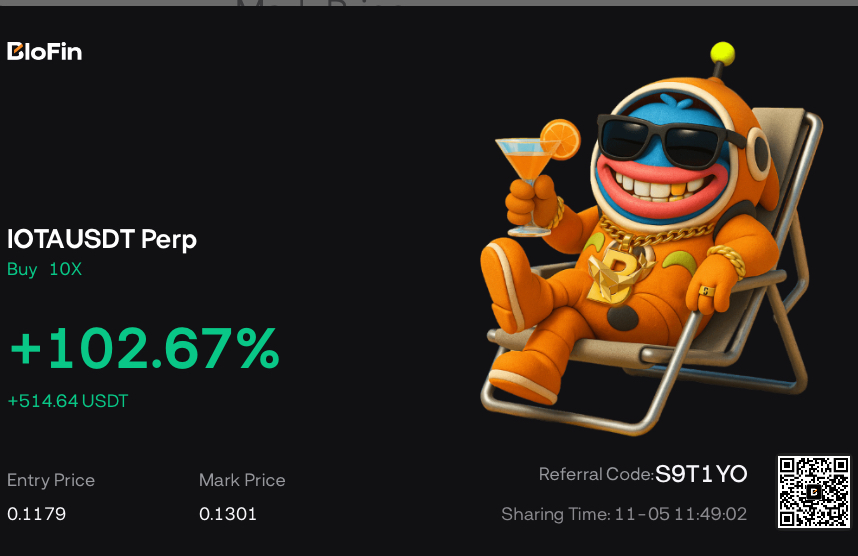

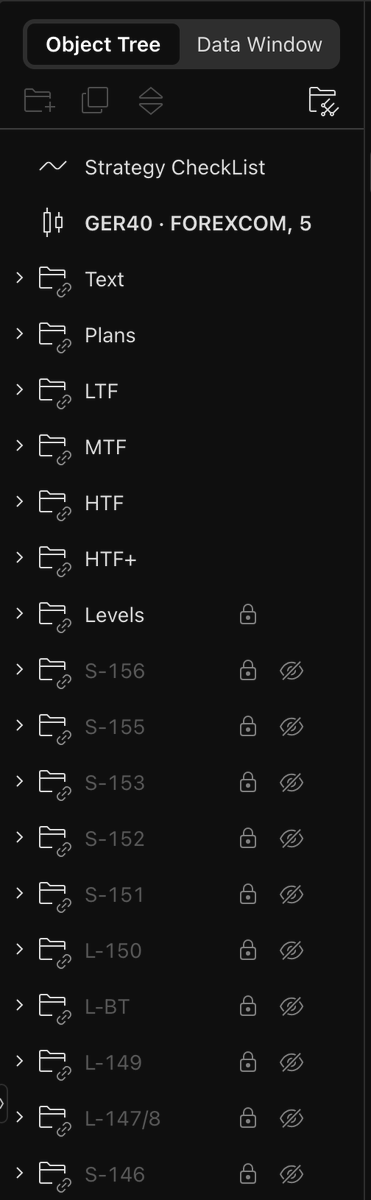
![CryptoChase02's tweet photo. ⚠️ PSYCHOLOGICAL THINKING ⚠️
Psychological thinking is essential in trading because data, charts and fundamentals do not just drive financial markets, but they are also deeply influenced by human behaviour 🧠. Every decision made in the market, whether by an individual retail investor or a large institution, is ultimately a human decision shaped by perception, emotion and cognitive bias.
Trading and investing involve navigating through uncertainty, fast-paced information and high-stakes choices, which can trigger strong psychological responses. Without an understanding of how the mind works under pressure, such as fear, greed, overconfidence or hesitation, even traders with a solid TA strategy can make irrational decisions. You are playing a psychological game which is run by algorithms and liquidity. You will be controlled until you master your emotions.
To master your emotions, I recommend that you read "The Mental Game of Trading" and "Trading in the Zone" to understand the way the mind processes under pressure in the trading markets and general psychology 🧠.
Up to 80% of all financial markets are run by algorithms, meaning you have to act like a robot to win alongside the whales. Emotionless. Never let your emotions change your initial plan, as they will only lead you down the path of failure.
90% Psychological thinking
10% Technical analysis
Once you have mastered your psychological thoughts, it will become your foundation, as you are no longer heavily influenced externally. The only thing left to do is to refine your TA skills over the upcoming years. Then there will be no barriers to hold you back from reaching your goal.
Even if you can read the market, but still have poor psychology, you will most likely end up unprofitable. At best, break even.
Keep in mind that the trading game is probabilistic; not every trade setup has a 100% certainty. To save me time of rewriting, you should have a read of NC's post as it will widen your thoughts on how the game should be looked at 👉 https://t.co/RAlcDM4TLi
Greed is dangerous in trading because it hinders rational thinking, which can lead to irrational decisions and uncontrolled risks. It often causes traders to over-risk or chase every opportunity, even when the setup is no longer valid or when the price has been parabolic for a long time.
This is poor risk management.
You can read about risk management in my educational post here 👉 https://t.co/glfS3jjLVU
Traders driven by greed may hold onto losing trades for too long as they struggle to accept a loss or refuse to take profits on winning trades as they think the price will go even higher, only to then watch gains disappear as they hope for the market to recover [which they do get and still never sell 😶].
Greed tends to intensify when the asset has seen a huge increase in price over a couple of months and when price action approaches a HTF bearish key level [Macro/local tops], but retail will never sell at such opportunities due to extreme FOMO. Scared to turn unrealised profits into realised profits. Greedy traders will often jump into the markets late at the worst price levels because they see others profiting. Always aim to buy low and sell high. If you feel late to the party, then wait for the next opportunity elsewhere [Discount zone]. Play with no greed, and those failures will never be expensive. Don't chase quick riches!
When entering this field, only risk what you are willing to lose. Greed will make you overinvest money in the market when it could be needed for bills or other necessities 📜
You should always stick to your initial plan and take profits as the price increases/decreases. If you are currently recovering losses, your main plan should be to recover what you initially invested and then secure profits. Many people are in a loss and still aim for insane targets that will never be hit. If you get a 50% gain or higher on a mid/short-term position and pay it all [or most] back, then you're still probably being too greedy. Whales will keep greed at max levels to prevent you from securing those profitable trades, so they can make their big moves. You will tend to hear about positivity, such as large buy orders from 🐳's, regulations being lifted, Country/bank involvement and more at optimal HTF bearish key levels.
There's a lot of money to be made in the markets if you know what you're doing, have patience and aren't greedy 💰
On the other hand, fear is just as bad because it leads to hesitation, poor decision-making and missed opportunities. When traders operate out of fear, they will often avoid taking valid setups even when their analysis is correct. This hesitation will cause you to enter trades too late, exit too early or avoid correct decisions altogether, limiting your profit potential.
Fear tends to intensify when the asset has seen a huge decrease in price over a couple of months and when price action approaches a HTF bullish key level [Macro/local bottoms], but retail will never buy at such opportunities due to extreme fear. The fear shuts down the part of your brain designed to solve problems. Whales will keep fear at max levels to paralyse you to enter such profitable trades, so they can make their big moves. You will tend to hear about negativity, such as war, pandemics, recessions and more at optimal bullish HTF key levels.
Fear will make you cut winning trades prematurely, as you are afraid the market will reverse. Instead of letting profits run with a trailing SL after partial profits, you will leave gains on the table due to cutting early. Fear can also make you hold onto losing trades for too long, hoping to avoid locking in a loss, which can often result in even bigger losses.
If your friends have a poor mindset and are scared to take risks, then you should probably find new friends. It's the hard truth that stops most people from reaching their full potential while they continue to procrastinate. Any opportunity you find, they'll tell you a reason why not to do it, creating that never-ending doubt and uncertainty in your mind, which results in pure fear. The fear of trying something new. The fear of making mistakes. The fear of losing money. Their fearful thoughts will spread to you. Don't be scared to invest in yourself, whether it's money or time. Reading this, you now realise how powerful external thoughts can express and intensify your emotions. Cut the fear of failure and trust the process, and you'll make it.
MoneyTaur talking about poor mindset within the markets 👉 https://t.co/juw3Tr0dSd
MoneyTaur talking about consistency 👉 https://t.co/HNOq796mRX
As you can see, both strong psychological responses can lead you to abandon your strategy, ignore your risk management rules and create financial pressure. Always second-guessing yourself, overanalysing and a lack of confidence to stick with a consistent approach. This inconsistency breaks discipline and turns trading into an emotional rollercoaster🎢.
FOMO-only [Positive news] at market tops
FUD-only [Negative news] at market bottoms
Your fear & greed emotions are two of the most powerful indicators you will ever find ‼️
Always evaluate your fear and greed levels, or you will stay blind in this market 👁️
The key to mastering your psychology lies in focusing on just one thing: the percentage of risk you're placing on each position. How much you've invested, what you've gained or lost, and even your account balance are irrelevant. Letting go of those figures helps you gain emotional control. By distracting yourself from the monetary side of trading, you start to think more clearly and react less emotionally. This detachment becomes your strongest mental edge in trading.
Whether a trade wins or loses, your mindset stays the same - calm, objective and consistent. There's no need to make it back as quickly as possible after a loss. There's no need to jump straight back into the market after a win. No more impulsive decisions, as you are sticking to your system with discipline.
People who tend to follow a strict routine in any field tend to show strong discipline. This is why you see fascinating results from those people. To you, it will seem "quick", but the truth is they played the long game and waited for success to naturally follow 🛣️
If you're a trader with smaller capital, you will most likely fall into the trap of chasing massive returns, which is very common due to accounts with a huge following showing ridiculously high returns. It is not 2021 anymore; it is highly unlikely you will experience those types of gains unless you have insider information or are just plain lucky 🎲.
Instead, you should be thinking like the whales with huge amounts of capital who understand consistent gains. They can consistently profit off 10%, 50% or 100% moves. These numbers are responsibly achievable. They're not chasing results but are focused on execution and accuracy.
Stay focused on the technical aspect when placing a TP level or a SL. The R/R is the only thing that should matter, not the dollar amount ‼️
Once your mindset is in the right place, the need for specific outcomes fades away. You stop trading for the money and start trading with a process while embracing mistakes to learn from them. That's when the results start to follow naturally.
The market is always available 24/7. There will always be opportunities to make money elsewhere, so don't be so fixated on one pair if the R/R is weakening. You have to be patient, as the main objective is to wait for a key level to be reached [High R/R setups].
Select a few high-volume assets to analyse [whatever amount is comfortable]. Regularly monitor those assets, update and invalidate when your criteria are no longer met. Don't fall into the trap of overanalysing lots of pairs due to slow triggers. Also, make sure to set your alerts at a reasonable position to recheck your setups as PA approaches your key level, with a clear title of what type of trade it is to avoid confusion.
In a full-blown bull market, you should be sitting and enjoying the wave while having realistic targets. No wishful thinking ‼️
Narrative Validation + Positioning of the Market
Whales will often use well-known narratives to intensify emotions during crucial times. They will often talk about these narratives at optimal HTF key levels. Often, they are used for reverse psychology 🔄🧠. They will talk about negative narratives to add fear into the market to stop you from thinking about buying at discount levels, and talk about positive narratives to add greed into the market to stop you from thinking about selling at premium levels.
Here's the flip side to it to show how they have full control of the situation. Once they feel like retail has cracked the code, they'll start telling the truth to build back the trust. Meaning they might use positive narratives/keywords at discount levels or negative narratives/keywords at premium levels.
This is all part of the game, showing you that they can turn the switch whenever they want to. Once they feel the trust, back to 🔄🧠. Once they feel the distrust, back to telling the truth. This will be a continuous cycle for many years to come.
Market manipulation will always exist because people can not control their fear or greed levels.
How do we see past such lies or truth?
The key is to identify the positioning of the market.
How long have we had continuous upside or downside?
Are we in extreme discount or extreme premium?
Did we just hit an optimal bullish HTF key level or a bearish one?
Did we just break past a key PSH or PSL with confirmation?
What are the current emotions you feel and can see from others in the current position?
These are the types of questions that you need to answer to identify the true meaning of the cryptic messages they release on social media. Understanding this will help you decipher the code to see if they are simply adding ⛽️ to the 🔥 or using 🔄🧠.
If whales are using a negative narrative and price action is hitting an optimal bullish HTF key level in the extreme discount zone, I assume 🔄🧠
If whales are using a positive narrative and price action is hitting an optimal bearish HTF key level in the extreme premium zone, I assume 🔄🧠
If whales are using a negative narrative and price action is hitting an optimal bearish HTF key level in the extreme premium zone, I assume ⛽️🔥
If whales are using a positive narrative and price action is hitting an optimal bullish HTF key level in the extreme discount zone, I assume ⛽️🔥
Also, at the macro/local tops or bottoms, you will most likely not see a mixture of positivity and negativity; it will be one or the other [One side will be heavily dominated]. Like I said before, whales will often use 🔄🧠 because it's too easy to intensify greed when prices are high and fear when prices are low. These are the strong responses that will stop you from thinking from a rational perspective.
An example of adding ⛽️ to the 🔥 would be talking about a hack at an optimal bearish HTF key level, or maybe talking about the bitcoin halving at an optimal HTF bullish key level.
An example of 🔄🧠 would be talking about the Titanic at an optimal bullish HTF key level, or Michael Saylor talking about buying huge amounts of Bitcoin at an optimal HTF bearish key level, or in extreme premium.
Firstly, consider what PA is currently doing and where it stands in its HTF range. Then identify the type of emotion you feel and from others. It will most likely be greed or fear [Do not force it, you'll naturally feel these emotions when they arise]. Sentiment on X is quite good to understand if a reversal [bullish or bearish] is imminent or not. Then think about the narratives that could form around the specific coin or the market as a whole.
▫️If it's about Bitcoin, you might see talk about moon phases, the Bitcoin-halving or large orders from whales.
▫️ If it's a specific coin, such as a DeFi or AI coin, then it might be hack-related or real-life advancements in artificial intelligence.
▫️ If it's about a RWA coin, then it might be news related to banks or other high institutions talking about digital assets.
▫️ If it's about a gaming coin, you might want to look out for big companies that are tied to gaming and how they're talking about gaming and crypto co-existing through NFTs.
▫️ If it's about oil, you might want to look out for worldwide news, such as [pre/post] war, supply-chain effects, green energy, etc.
There are many more examples, but you get the main idea that I'm trying to portray. Think from a big perspective that could evolve everyone.
Whales can sway public opinion and create narratives that best suit their interests while trying to keep the dream alive for retail investors so they HODL into death spirals 🩸. Always look at the bigger picture when trying to relate narratives to price action. What are the 🐳's truly trying to hide from retail players?
Here's the most recent example I could think of that I posted, which involved large selling, the Titanic and Elon showing hints of a powerful push to the upside👉 https://t.co/4WUjdTyTne
Narrative validation should always be used from a macro perspective [HTF]! Using it constantly on lower timeframes will most likely make you fall into analysis paralysis!
Narrative Runs
The market is not like 2021 anymore, where you see everything pump in large percentages. Instead, you will most likely see specific narratives pumped at certain points in the cycle. For example, it may be memes at the beginning, then NFT/Gaming/AI in the middle and green energy coins at the end. Certain narratives will do more X's than others at certain points in a cycle [Likely to be the narratives that aren't currently talked about]. As the market evolves, new narratives and related coins will emerge in the market.
I would only suspect an everything-pump season if another stimulus check was given out after a serious global issue [Free money given to the public to spend].
If you hear about a narrative late and see large percentages already made within the narrative, it's best you look elsewhere to find a better opportunity. The risk-to-reward ratio will be terrible if you continue to seek within the same narrative which has already been pumped. Whales will continue to hype that chosen narrative and dump their bags while retail buy into their large sell orders.
Don't hate the player 🧍, hate the game 🎮
You can go to CoinMarketCap and look at the different types of coins for certain narratives. I would personally look at the High MC coins with good trading volume.
CMC 👉 https://t.co/Db8HSRM8td
MoneyTaur - "Runs will be by narrative rather than everything-pump. Look for narratives that will gain traction"
MoneyTaur - "Be emotionless. Be Smart. Don't be greedy"
MoneyTaur motivation 👉 https://t.co/8l6Jk67Hr8
Be fearful when others are greedy.
Be greedy when others are fearful.
Many will overlook this post because it's not interesting, but in reality, this is the key piece to the puzzle that can help you become profitable.
I try to make these topics as friendly as possible, and it does take some time out of my day, so if you want me to provide more educational posts, please like and repost so they can reach more people 🙏
If you have any questions, put them in the comments below 👇](https://pbs.twimg.com/media/Guc7EJhXkAA3w_C.png)


