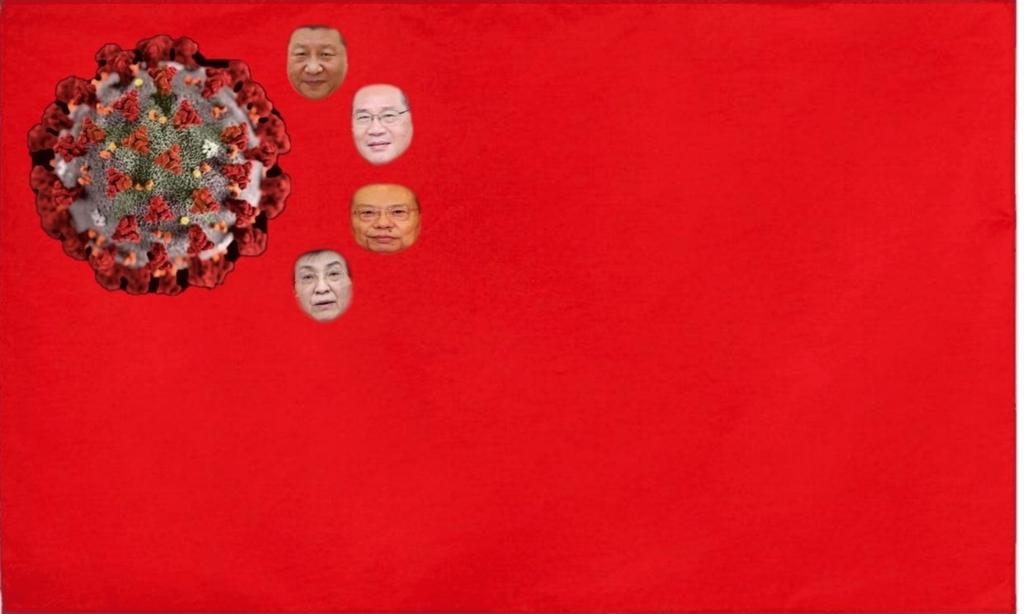
Big Breaking 🚨 Indian teenagers won the earth prize for microplastic filter made from tamarind seeds.
But the Indian media is busy licking the boots & shielding China what is the significance of this news for them?
😂🇮🇳 Small gang of Indian influencers just cooked China’s year long mega PR budget with nothing but phone screenshots of overflowing trash bins & chaotic trains.
Reality 1 - Propaganda 0.
We don’t need 1.6 billion dollars.just 2GB/day data and vibes.
#IndiansCooked #ChinaExposed #DesiPower
CHINESE LABOUR LAWS EXPOSED
This woman is sick and was hospitalized apparently and she had to come for work while she is getting saline. You all should be greatful for India where you get sick leaves and Free Healthcare from Government. My heart goes out for this lady.Bless her😔(If she is still alive🫠)
For four thousand years, the Indian subcontinent was the centre of world trade. Sumerian tablets record Indian ships reaching Mesopotamia in the third millennium BC. Rome ran a permanent trade deficit with India. By 1600, Surat was the richest port on earth.
Then, within a single lifetime, India lost its maritime supremacy almost entirely.
The conventional explanation is that Europe arrived with superior ships and weapons. It is a comforting story and it is largely wrong. The deeper cause was internal.
Indian commerce was extraordinarily sophisticated. Surat's leading merchant, the Jain financier Virji Vora, was reputedly the richest man in the world; the East India Company borrowed from him. Merchants of every religion and origin traded together because the system rested on two foundations: religious toleration, established by Akbar, and predictable, low-tariffs. Customs duties were around five per cent. Contracts were honoured. Trust was the real currency.
There was one structural weakness. In Venice, Amsterdam and London, the state and the merchant class shared an interest in trade and invested in it together. In Mughal India, the ruling elite was indifferent to commerce. Merchants financed the state; the state never encouraged merchants.
When Aurangzeb became hostile, merchants had no protection. Religious toleration was abandoned. Temples were destroyed, punitive taxes on non-Muslims reimposed, the Sikh Guru executed. Forty years of war followed. East India Company imports from India fell ninety per cent in seven years. Eight thousand merchants abandoned Surat in a single exodus.
They relocated, many of them to an insignificant island Britain had received as a royal wedding dowry, because it offered the security and toleration the Mughal state had destroyed. It also offered English Common Law. Within a generation Bombay was the commercial capital of India. The Wadia family built the Royal Navy's finest ships there. The Tata dynasty traces its origins to this migration.
Europe did not defeat Indian commerce. It inherited it, by providing the conditions Indian merchants needed and their own rulers had thrown away.
This is not an argument about colonialism. It is an argument about something more fundamental, and it is the thread running through all three of my books on maritime trade. The second ‘The Millennium Maritime Trade Revolution’ is subtitled ‘How Asia Lost Maritime Supremacy.’ It is hardly ever lost to a stronger rival but when a society stops valuing the openness, toleration and commercial purpose that made it great. Portugal did it. The Dutch Republic did it. Britain, in the 20th century, did it too.
The conditions of prosperity are always a choice. And they can be unmade by a single generation that comes to value something else more.
Link to the full Substack essay with sources is below.