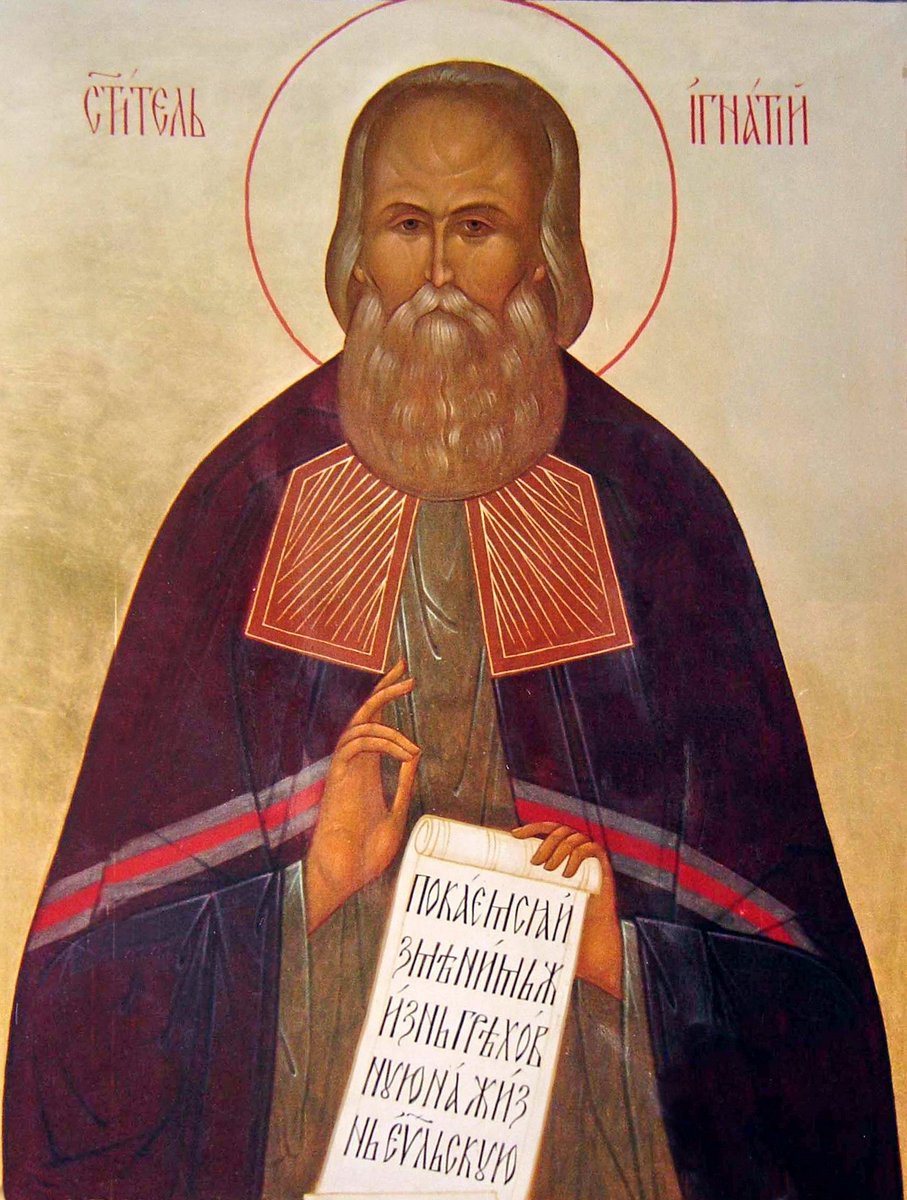
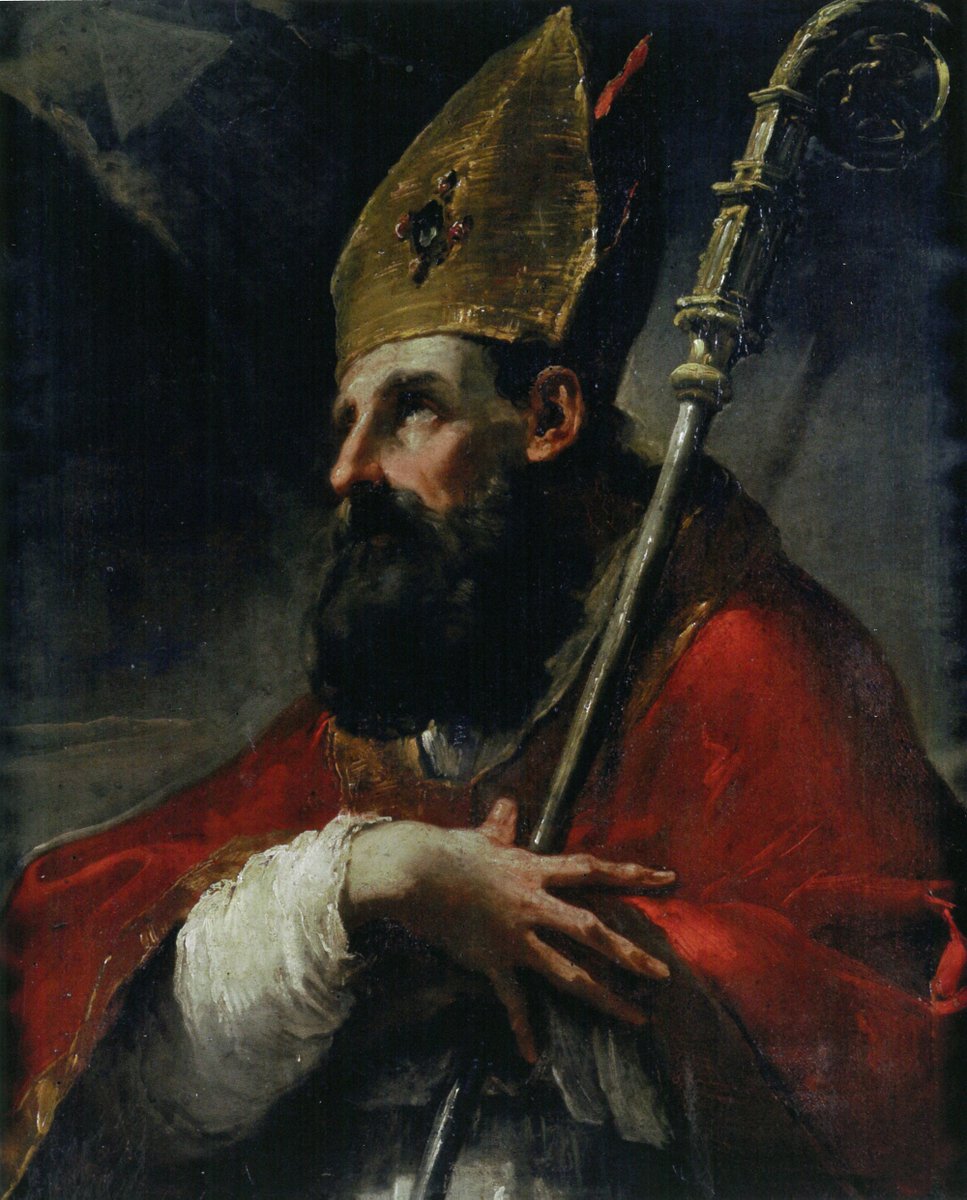
‘With the final depletion of spiritual mentors, guidance by the patristic writings has become the only path to salvation. Whoever submits to this guidance can already be considered saved.
But whoever is led by his own reasonings or by the teaching of false teachers must be recognised as damned.’
–St. Ignatius (Bryanchaninov), Letters from the Nikolo-Babaevsky Monastery, Letter 39)
My grandma heard me praying the rosary and she got mad saying "how don't you go crazy saying the same thing so many times???".
Man I hate being in an atheist family, praying for them anyways🙏🏻
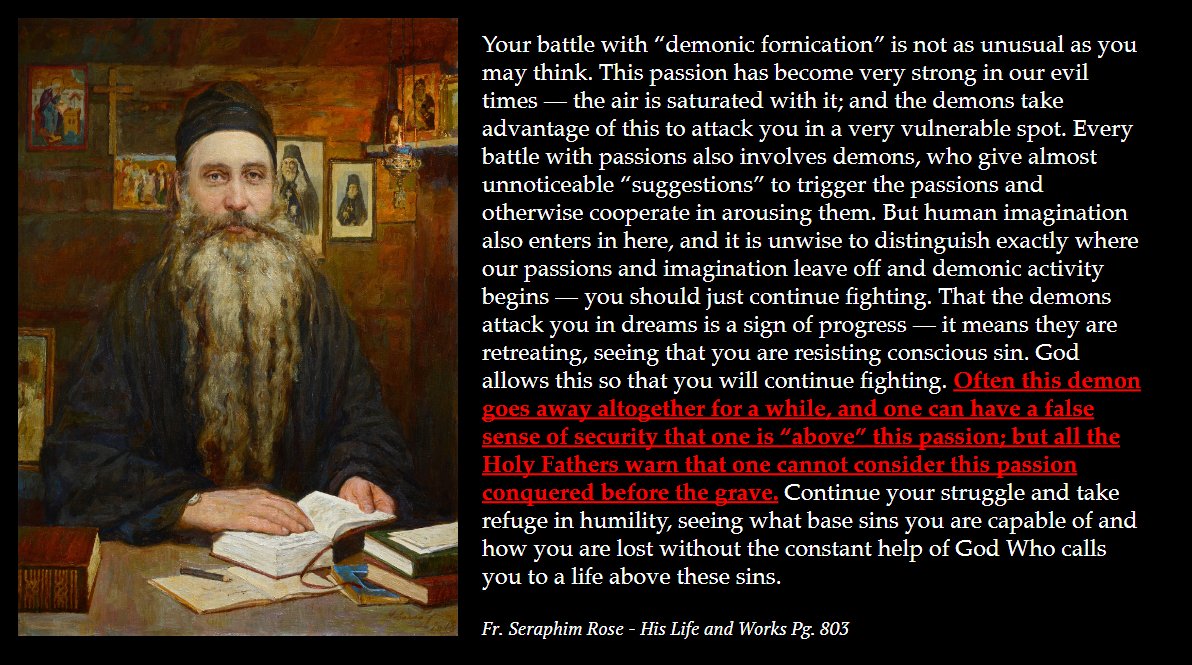
Demonic suggestions can subtly prepare the mind for lust without us noticing. Because these thoughts accumulate, we must continuously redirect our focus toward holy things to flee this sin. Never assume you have overcome this vice.
‘The works of righteousness themselves are not sufficient for the merit of perfect blessedness unless the mercy of God also does not impute the defects of human changes and movements even within the will for righteousness.’
–St. Hilary of Poitiers, Comm. on Psalm 51
"But with Akindynos, the Latin theologians will say: It is impossible for the sensory eye to perceive uncreated light; therefore, every necessity either to suppose that light created, or that the apostles did not attain it with bodily eyes, but whichever we say, we shall not speak in accord with the evangelists nor the Fathers. The antecedent must therefore be distinguished: Impossible by natural power: I concede; by supernatural power: I deny. By supernatural power, we believe the material water of baptism washes away stains of sins from immaterial souls; and the fire of Gehenna, being bodily, torments not only bodies but immaterial beings. Why not also eyes, by nature much closer in power to intellectual nature than fire and water, strengthened by divine power, become perceptive of immaterial things? Or He who, as He wills, makes and transforms each thing and can change essences according to His will, will He not have power over His own powers?" -
EUGENIUS VOULGARIS, SACRED THEOLOGY BOOK 1, DE DEO UNO, CHAPTER 16
"Christ, receiving us, made Himself a debtor, according to the Holy Scriptures: 'The Lamb of God, who takes the world’s sin' (Jn. 1:29), 'Becoming a curse for us' (Gal. 3:13), receiving the death of all, and dying for all." –St. Mark the Ascetic, Opusculum 7, XV (PG 65.1093)
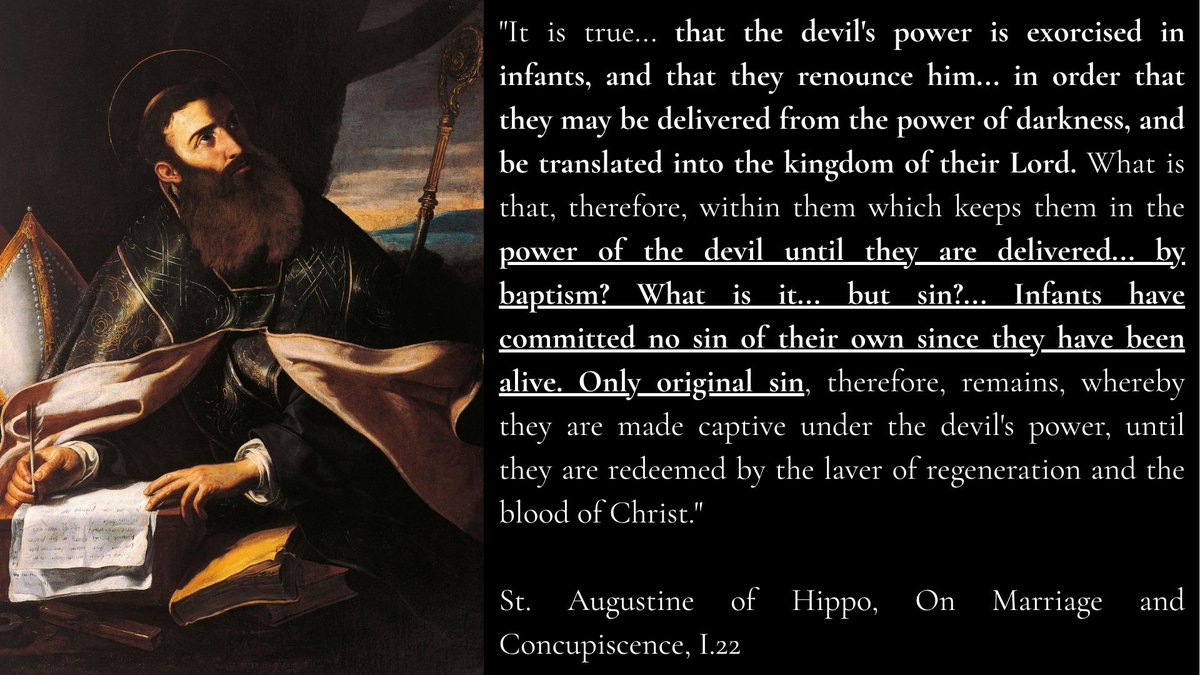
"Without faith, however, even those works which appear to be good are turned into sins, because whatever is not from faith is sin."
— St. Augustine, Against Two Letters of the Pelagians III, 14
Yesterday I called @jaydyer’s show. I told him I’m Orthodox, he called me a liar. He said I was “worse than Evangelicals, Muslims and OnlyFans whores.”
Today, he posted that I was Catholic and that people were gullible and needed discernment.
After I replied with a video of my baptism, he deleted the post.
No correction. No acknowledgement.
This is not about personal offense. It is about public Orthodox influence.
The question is not, “Can God use flawed men?” Of course He can.
The question is: when apologetics becomes misrepresentation, mockery, and contempt, what kind of formation is it producing?
If Orthodox apologetics trains men to crush rather than correct, to mock rather than discern, and to perform confidence rather than bear humility, then something has gone deeply wrong.
Truth matters. So does the spirit in which truth is defended.
The following is a notable passage from St. Basil, showing that he understands Rom. 3:25 as teaching that God is the object of propitiation (εξιλασμός), rather than contemporary interpretations which assert that ἱλαστήριον refers solely to cleansing of or remittance of sin in us.
‘...The great Basil, interpreting “A brother cannot redeem the debts of another, nor his own debts before God”(Ps. 48:7), says: “Do not seek your brother, in order that he may redeem you, but Him who surpasses human nature; not a mere man, but the man Jesus Christ. He alone is able to propitiate (εξιλεώση) God for us all, for God appointed Him to become, by His death on the Cross, the propitiation (εξιλασμός) for sins through faith (cf. Rom 3:25).”’
–St. Basil the Great, Comm. on Psa. 48:7 (St. Nicodemus, Spiritual Exercises, Study XIX.1)