The APPG on Science & Technology in Agriculture promotes debate among politicians and other stakeholders on the role of scientific innovation in agriculture.
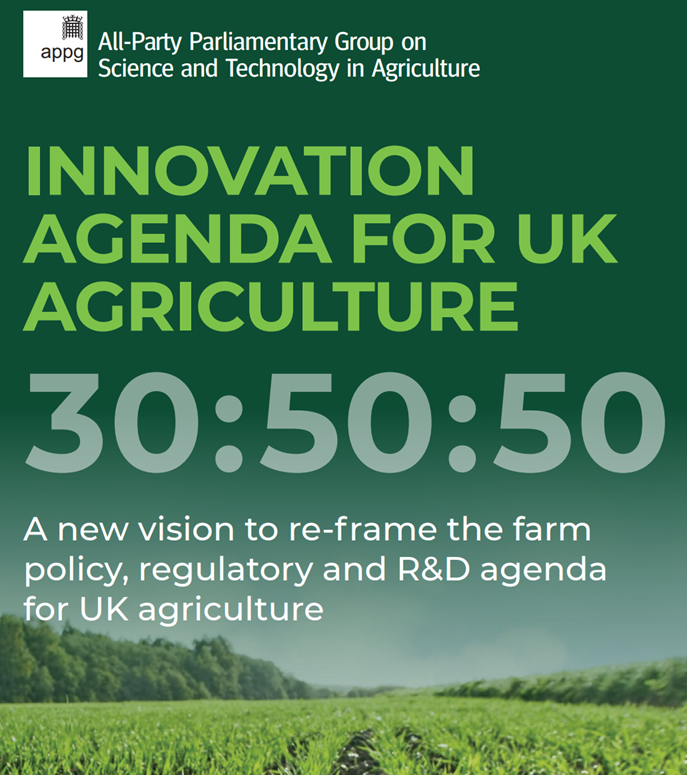
Policymakers, scientists and industry leaders will gather for the 30:50:50 Agri-Science Summit to hear policy blueprint to harness science and innovation to produce 'more from less' - 30% more food while halving farming’s environmental footprint by 2050.
https://t.co/kjegP5S7ap
Writing in Niab Landmark magazine @MPGeorgeFreeman sets out the @appg_agscience #30:50:50 plan to reverse stalled productivity growth in British agriculture by harnessing the latest advances in science and innovation.
@niabgroup
https://t.co/gP4FLaJkWd
New international study confirms that the best way to hit climate targets in agriculture is to invest in smarter farming techniques that produce more with less.
https://t.co/vxe48qt3A2
"At a time when food security and environmental stewardship sit squarely at the heart of national debate, a bold new framework is emerging from Westminster that could transform British farming for generations to come."
https://t.co/pH31qxiPkM
MP calls for early access to gene editing in farmed animals to help protect against worsening disease challenges such as bird flu.
https://t.co/gIoIsFzEwc
MPs welcome the entry into force today of the Precision Breeding Act for plants in England, describing it as a landmark moment for British science, and calling for this to mark the beginning of a new, pro-innovation agricultural policy agenda.
https://t.co/XOgXV8QCR6
“From today we expect applications to come forward which offer the potential to increase yields, reduce chemical inputs, enhance disease resistance, cut food waste and improve nutritional quality across a range of different crops.” @MPGeorgeFreeman
https://t.co/qxGGNZrBGt
Ministers urged to set food self-sufficiency goal.
UK should aim for 75% self-sufficiency in food production by 2050, according to a group of MPs who warn that UK agricultural productivity growth has stalled. https://t.co/agawSr0xlX
MPs at Westminster call for a radical reset in domestic agricultural policy, harnessing the full power of scientific advance to boost UK food self-sufficiency, while reducing farming's environmental impact.
@appg_agscience
https://t.co/aw3JzDcVKb
APPGSTA is calling for the government to adopt its 30:50:50 mission — a framework aimed at boosting UK agricultural output by 30% while cutting the sector’s environmental footprint by half by 2050.
https://t.co/pOCqFoIqgT
Listen again: @MPGeorgeFreeman on BBC Farming Today warning that UK agriculture is at a tipping point and calling for a radical policy reset to help farmers produce more from less harnessing the latest advances in science and innovation. #30:50:50
https://t.co/HSGZk96mVZ
As @appg_agscience prepares to launch a new policy blueprint to help UK agriculture harness the latest advances in science and innovation to produce 'more from less', a big shout out to our 30:50:50 partners whose support has made the programme possible:
@MPGeorgeFreeman
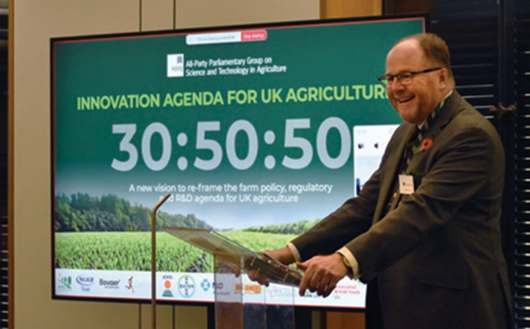
At a Westminster Summit on 3 Nov bringing together politicians, scientists and industry leaders, APPGSTA chair @MPGeorgeFreeman will unveil a new policy blueprint for UK agri-science to deliver on urgent food security, climate and biodiversity goals #30:50:50
In response to virologists' warnings of bird flu spillover risk, leading veterinarian Lord Trees explains how UK-based gene editing research to develop bird flu resistant chickens could help prevent a COVID-like pandemic.
@GeneticLiteracy
https://t.co/dXZQWbmg9n
A thoughtful piece by BSPB head of policy Dr Anthony Hopkins on rethinking mutations - long vital to agriculture's ability to feed humankind and now, through genome editing, able to drive plant breeding innovation with even greater speed and precision.
@_seedinnovation
"When we hear the word mutation, most of us imagine something sinister: radioactive monsters, or genetic diseases. But in plant breeding, mutations are neither rare nor inherently dangerous. In fact, they are the foundation of agriculture itself."
https://t.co/4NS0Rmwgz5
Innovations to help UK farmers produce 'more from less' are being held back by red tape, an @appg_agscience stakeholder meeting has heard - part of the group’s 30:50:50 initiative to produce 30% more food with a 50% lower environmental footprint by 2050.
https://t.co/mu6tB9AlSs
Britain is at risk of sleepwalking into a food security crisis. Without radical policy change, the UK is set to produce far less of its own food, relying ever more heavily on imports from a volatile world market, warns economist @DGWilkinson
https://t.co/gJe7y6Sq9p
"I am genuinely puzzled as to why organic farming groups and environmentalists would not welcome such developments with open arms, given their potential to improve crop productivity while reducing dependence on artificial fertiliser and pesticide inputs."
https://t.co/pK4EdLaNyt