I’m going to take my time with this one. If you’re busy, save this post and read it later. If you’re a night owl like me, this is a good late-night read.
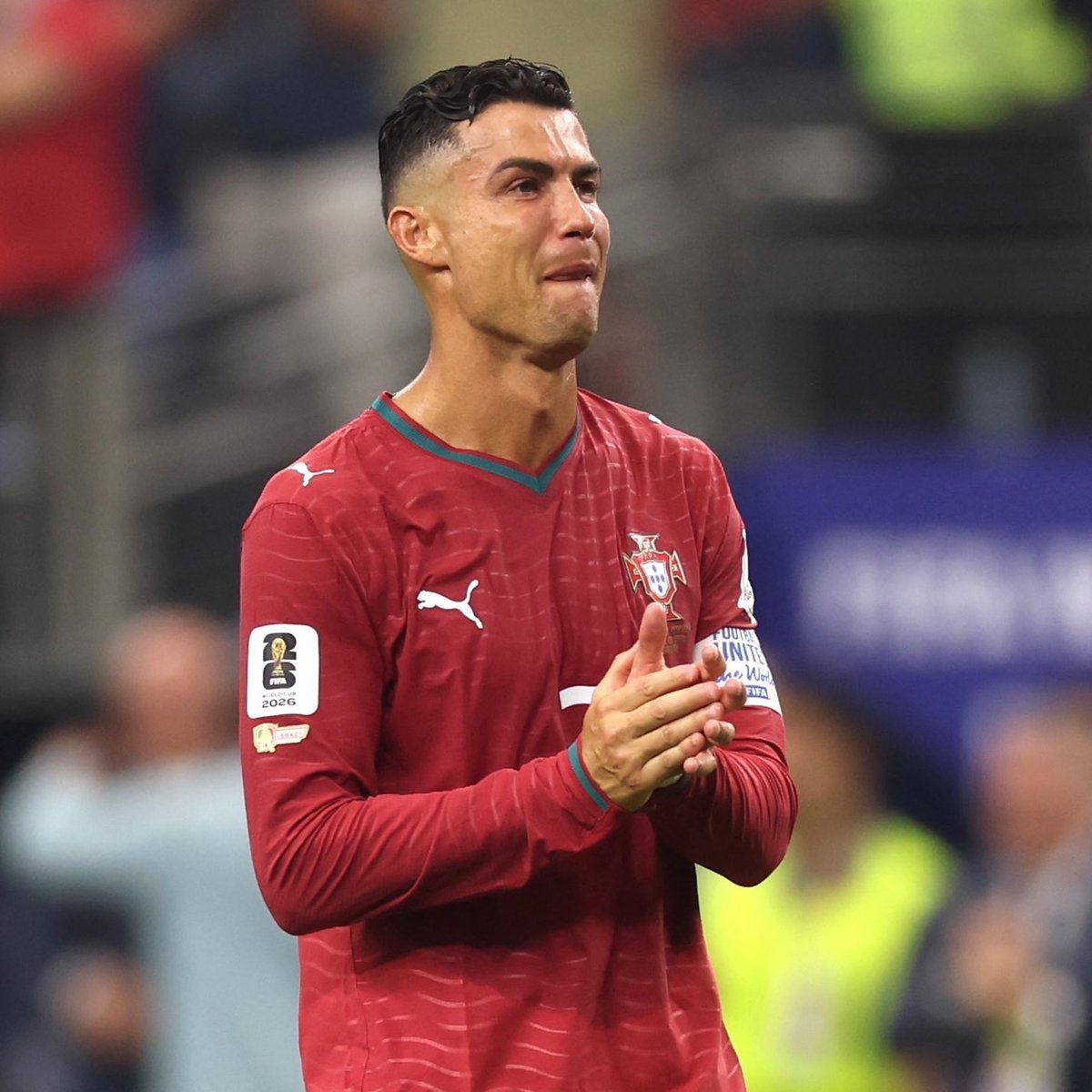
Do you know the worst thing about Cristiano Ronaldo?
It’s that he set the standards for what defines a legend… and in the end, he couldn’t even live up to the standards he created himself.
After winning Euro 2016, Ronaldo said:
“You can’t become a legend until you win a trophy with your national team.”
It was an obvious dig at Messi.
Argentina had just lost the 2014 World Cup final to Germany, and Messi was going through the toughest period of his international career. Those words only added fuel to the fire.
Where was the respect for a rival, Ronaldo?
The surprising part was that social media completely embraced that narrative. Messi was labeled a bottler, while Ronaldo was declared the winner of the rivalry—at least in the media, not on the pitch.
Then Messi retired from international football, came back, won the Copa América, and suddenly they were level in major international trophies.
What happened next?
Ronaldo fans started saying that one Euro is worth more than a hundred Copa Américas, claiming there was no competition in South America. Not true—but that became the excuse.
Then Messi went on to win the World Cup.
This time, the excuses changed again.
They claimed FIFA had fixed the tournament for Messi. That the World Cup was scripted in his favor. They simply didn’t know what else to say.
Then Ronaldo himself came out with one of the strangest quotes imaginable:
“A legend’s career can’t be defined by just seven games.”
At first glance, it sounds reasonable.
But beneath it was another attempt to diminish what Messi had achieved.
Before the World Cup, they insisted it would be Ronaldo’s tournament. On paper, Portugal had a fantastic squad. If the manager couldn’t get the best out of them, that’s Portugal’s problem—not Ronaldo’s.
Yet that same Portugal squad wasn’t any weaker than the Argentina team Messi led to the 2014 World Cup final—the same team people mocked Messi for not carrying to the title.
Just a couple of days ago, Ronaldo said:
“The World Cup doesn’t define my career, whether I win it or not.”
A statement that directly contradicts what he had said years earlier, when he admitted that winning the World Cup would make him feel completely fulfilled.
Now you’re 41 years old, Cristiano.
By your own standards:
* You have 5 Ballon d’Ors, not 8.
* You have one European Championship, not two Copa América titles.
* You never won the World Cup.
* You have four European Golden Shoes, while Messi has six—even though you’re an out-and-out striker.
So what now?
Will you keep playing until the next World Cup and become the first player to appear in one at 45, hoping to finally win it?
If we judged you by the standards you created, you wouldn’t qualify as a legend.
Of course, nobody actually judges you that way. Everyone still recognizes you as one of football’s greatest legends.
The real mistake was comparing Ronaldo to Messi in the first place.
That rivalry was exaggerated from the beginning by the media and figures like José Mourinho.
Messi conquered every major trophy available to him, shattered records that once seemed untouchable, and at 39 years old he’s still competing with Kylian Mbappé and Erling Haaland—the stars of the next generation—for the Golden Boot. And honestly, he could still win it.
What made Messi beloved by so many fans is that he never tried to diminish Ronaldo’s achievements.
Ronaldo, on the other hand, repeatedly made comments that many interpreted as attempts to downplay his greatest rival’s accomplishments—and that’s never an admirable trait.
Cristiano helped create a generation that thinks belittling other people’s achievements while constantly glorifying your own is a way to establish dominance.
Good bye. Ronaldo.
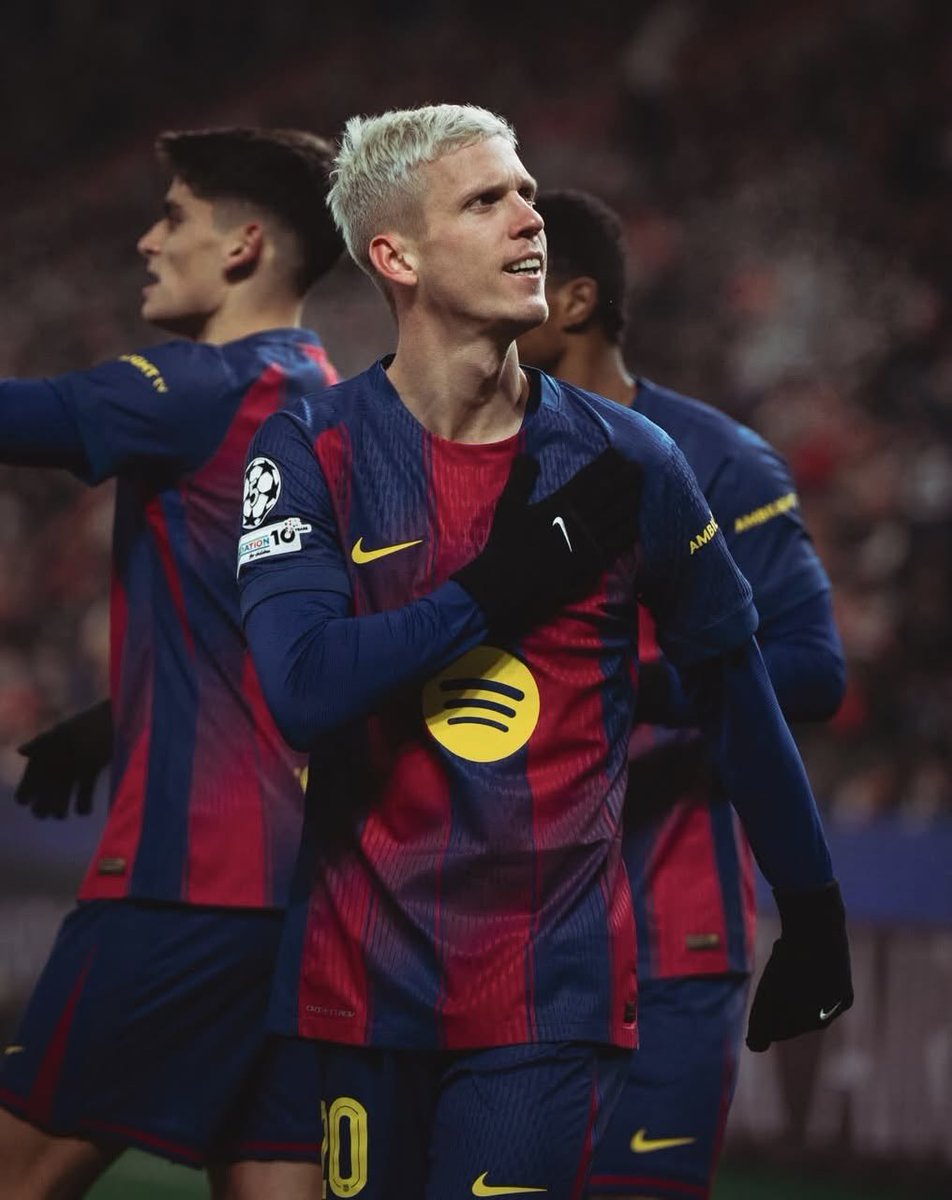
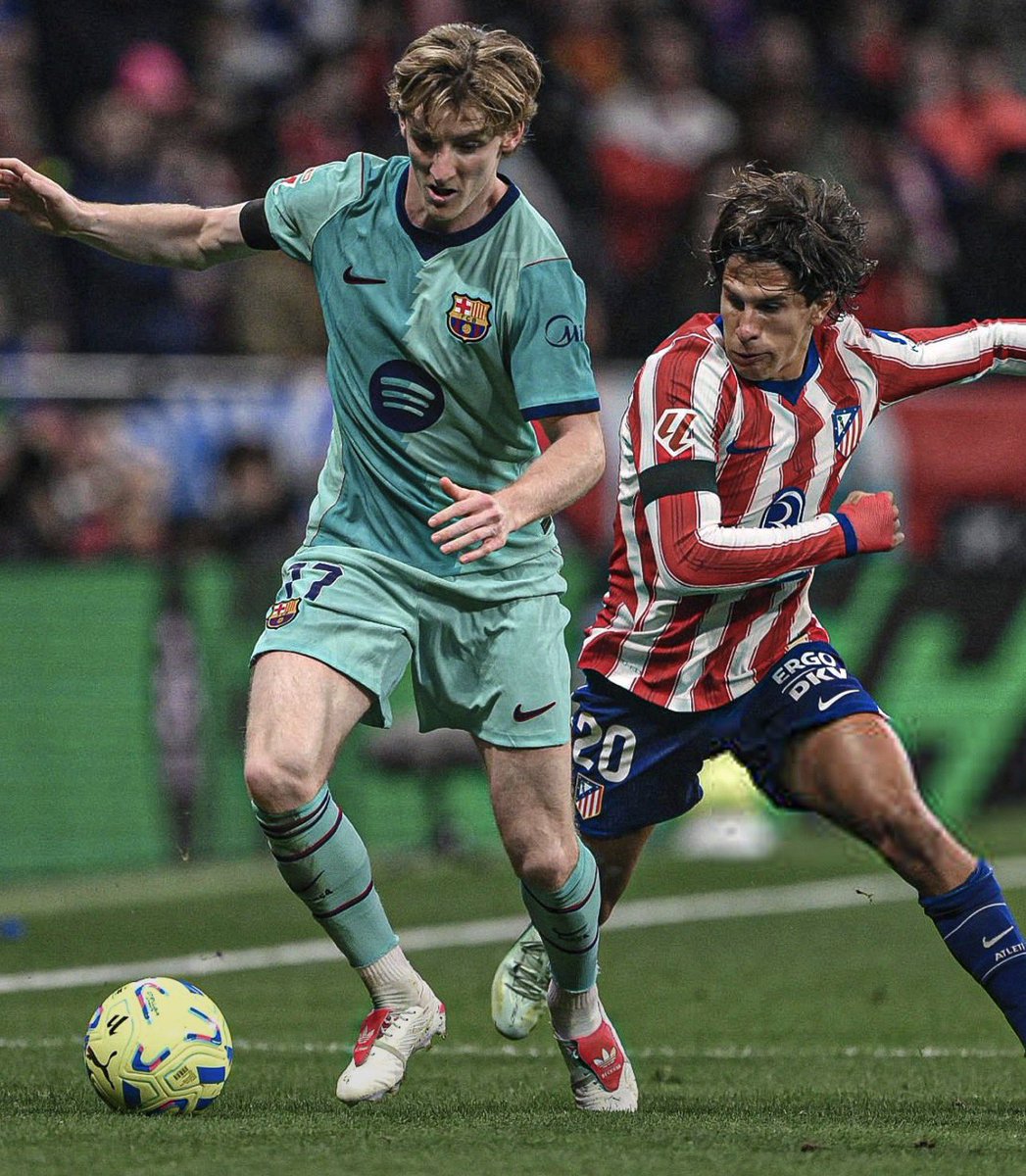
The player I’ve missed the most over the last few games is Dani Olmo, especially in big games against teams that sit deep and defend with a compact shape.
He’s brilliant at finding pockets of space between the lines, operating in tight areas and creating something out of nothing when Barcelona struggle to break teams down.
Olmo is the kind of player who can change a game with one clever touch or an unexpected pass. Without him, Barcelona are missing a key player who can unlock even the most organised defences.
Compare Barcelona fans’ reactions to Raphinha showing frustration after a poor performance with their reactions to Lamine Yamal doing the same, and you’ll understand a lot.
And before anyone misunderstands, this isn’t about attacking Raphinha or comparing him to Lamine. It’s about exposing the double standards in how fans judge Lamine’s every action compared to the rest of the squad.
Everyone is quick to attack and criticise Yamal for his behaviour, despite the fact that he’s still a teenager and has a lot of maturing to do. Meanwhile, when Raphinha shows frustration, everyone rushes to defend him, saying he’s the team captain and deserves everyone’s respect.
The double standards are there for everyone to see.
Which player were you most excited to see wearing the Barcelona shirt, but ultimately flopped?
I’ll start. For me, it’s Philippe Coutinho.
Coutinho’s failure at Barcelona still hurts to this day… He was one of the signings I looked forward to the most, alongside Neymar and Fàbregas.
Back then, watching Coutinho at Liverpool was enough to make me sit through an entire game, just for the pleasure of watching him play.
Unfortunately, things didn’t go as we all hoped. 💔
We often take Lamine Yamal for granted, but what he’s doing this season is truly HISTORICAL. 🤯
These are the best season starts in football history (club and country) in terms of G/A by November 30:
1. Messi (2011/12): 47 G/A.
2. Cristiano Ronaldo (2014/15): 39 G/A.
3. Messi (2012/13): 38 G/A.
4. Cristiano Ronaldo (2013/14): 36 G/A.
5. Lewandowski (2019/20): 35 G/A.
And in 6th place comes a 19 year old Lamine Yamal, with 30 G/A by November 9!
But here’s the crazy part: Lamine still has 5 games left in November, potentially representing both Barcelona and Spain.
If he manages another 10 G/A across those 5 games, he could surpass Cristiano Ronaldo’s 39 G/A and move into 2nd place in the all time rankings.
And he’s doing all this at just 19 years old.
For those asking about games played:
- Messi (2011/12): 25 games, 1.88 G/A per game.
- Ronaldo (2014/15): 23 games, 1.70 G/A per game.
- Messi (2012/13): 24 games, 1.58 G/A per game.
- Ronaldo (2013/14): 22 games, 1.64 G/A per game.
- Lewandowski (2019/20): 25 games, 1.40 G/A per game.
- Lamine Yamal (2026/27): 20 games, 1.50 G/A per game.
Never take this kid for granted. We’re witnessing something special. ❤️
🎙️🚨 Toni Kroos breaks down why Barcelona's high defensive line and lack of pace at the back could become a major problem in the Champions League:
“With this style of play, it is difficult for Barcelona to win the Champions League.
Barcelona have always relied on creating more chances than their opponents. However, this approach becomes difficult in the Champions League, where you face teams capable of scoring several goals and defending extremely well.
In those situations, you also need to be able to defend properly. Barcelona rely heavily on scoring 2 or 3 goals to win games.
Personally, I love their style of play. I think it is fantastic and entertaining. But they lack the exceptional defensive quality needed to play this way without problems.
They don’t have a defender like Upamecano, someone you can leave in a 1v1 situation with plenty of space behind him, knowing he will handle it perfectly.
I believe Cubarsí is their best defender by far because he combines strength in duels with pace.
As for the other 3 defenders, I don’t think any of them can be trusted to defend 30 metres of space behind the defensive line on their own.
Whenever opponents break Barcelona’s press, they find huge spaces to exploit, often against defenders who lack the exceptional pace and defensive qualities needed to cover them.
With Upamecano, Davies or players of that calibre, I wouldn’t worry about defending with 30 metres of space behind me.
But with Cancelo, Gerard Martín and players like them, it becomes much more difficult.”
Gabriel has made a very positive impression since joining Barcelona. He has worked hard, improved his physical condition and developed considerably, both on and off the ball.
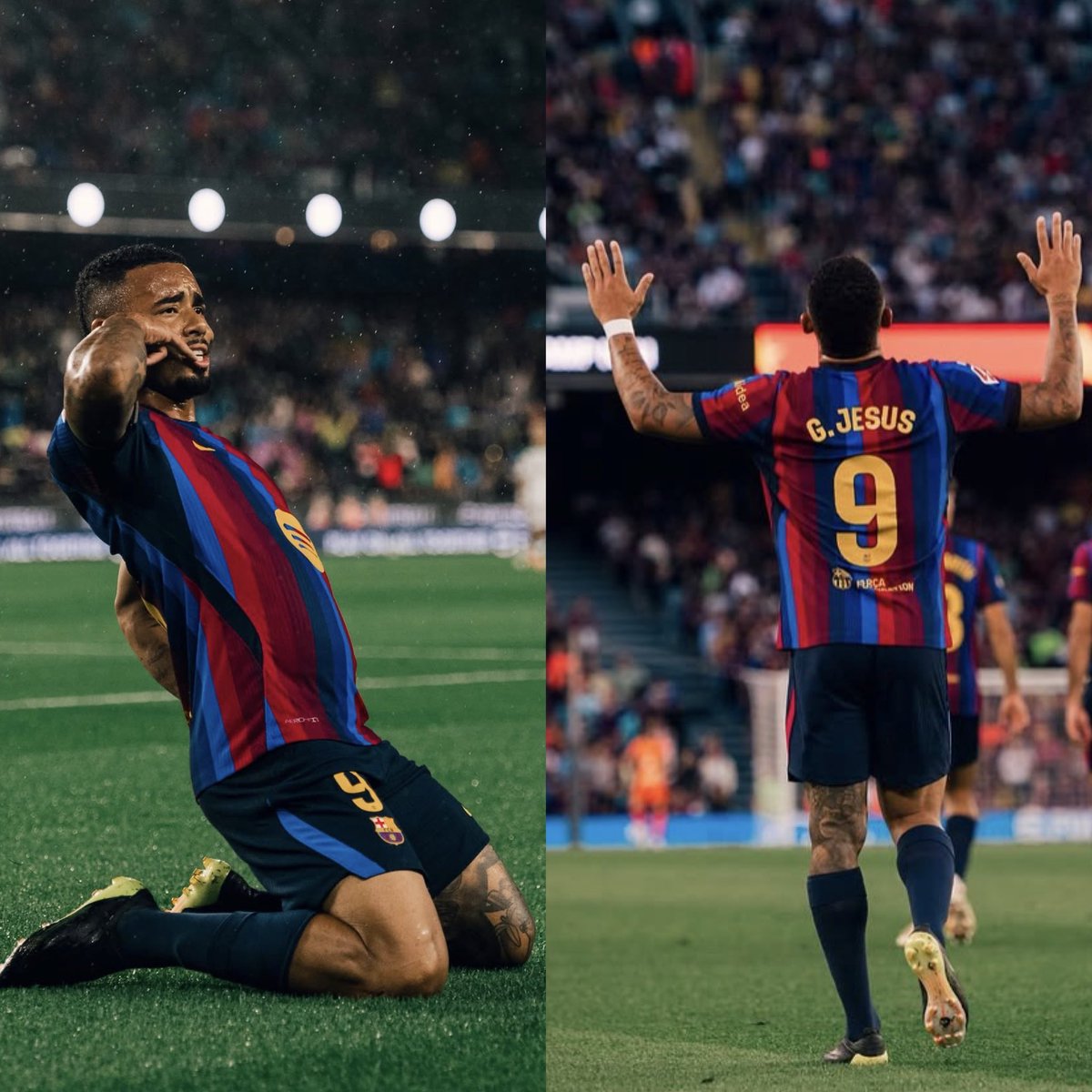
He is an intelligent, technically gifted striker with excellent movement who brings balance to the team and contributes in different areas of the pitch. I genuinely believe he deserves more opportunities, even in the biggest games, whether as a starter or coming off the bench.
This international break will be crucial for him to prepare for what’s coming next. We still have a demanding run of games ahead, with the Copa del Rey, La Liga and Champions League all to play for.
Barcelona will need a genuine striker presence inside the box, someone who can occupy defenders, attack crosses and provide a different dimension in the final third. Gabriel can offer exactly that, and I hope Flick gives him a bigger role in the months ahead.
Denmark manager Brian Riemer:
🗣 “Andreas Christensen was close to tears during a phone conversation with me because of his frustration and deep disappointment over his recurring injuries.
Christensen loves the Danish national team, but he has decided not to join the squad during the current international break because he does not feel physically ready and does not want to rush his return.”
@Sfynbou Rashford delivered more than Gordon at this same stage. Especially at the start of the season when Raphinha got injured and he filled his gap..
Gordon fans keep saying his biggest strengths are holding onto the ball and pressing opponents.
But we could promote a winger or midfielder from La Masia, or simply play Fermín or Olmo on the left wing, and get those same qualities without spending €80 million.
What I want to know is: what does Gordon actually offer creatively as a winger? What makes him special in the final third?
Flick is finally starting to implement some of De la Fuente’s ideas.
Normally, Flick relies on relentless pressing, maximum intensity from both the central areas and the flanks, and maintaining a high tempo until the final whistle.
However, this time he changed a lot. Barcelona played at a much lower tempo, focusing more on keeping possession to wear down the opposition. He even abandoned the high defensive line and intense pressing to protect the result and reduce the players’ physical workload.
If Flick continues to show this kind of tactical flexibility and adapts his approach depending on the situation, we will see Barcelona playing in multiple different ways that opponents simply won’t be able to anticipate.
Galatasaray. Paris Saint-Germain. Real Madrid. Atlético Madrid.
Pedri has been the main character in Barcelona’s biggest games lately. The amount of praise this man has received could fill entire libraries. Not even an 8TB phone would be enough to store it all.
But here’s the question. 👇
When Barcelona eventually go through a difficult period, will we go back to hearing the same old narratives?
“Pedri gets tired.”
“Pedri doesn’t show up in big games.”
We’ve been hearing these arguments since 2022, despite everything he’s done to prove otherwise.
The funny thing is that when Barcelona win, it’s all about Pedri. But when Barcelona lose, somehow he becomes part of the problem.
That’s how quickly the narrative changes.
One of Barcelona’s biggest weaknesses this season is the lack of a striker who can act as a proper reference point in attack. It’s a problem that becomes much more obvious against well organised teams.
Raphinha isn’t particularly good at receiving with his back to goal, holding up possession or linking with the wingers. This could also explain Gordon’s difficulties, considering how much his game depends on combining with the striker and attacking the spaces around him.
Look at Lewandowski in 2024/25. His movement constantly dragged centre backs out of position, creating space for Raphinha to attack from the left. That was a huge part of what allowed Raphinha to produce the best season of his career and become a serious Ballon d’Or contender.
We also remember him dragging Real Madrid’s defence towards him before releasing Yamal with a through ball that put him one on one with Courtois. He repeated these movements countless times.
That’s what we’re missing.
An elite striker isn’t just someone who scores goals. He’s another solution against the press, someone who can hold up the ball, occupy defenders, link with the wingers and create space for others.
That’s why I consider signing Álvarez or another striker of his profile almost as important as signing a new centre back.
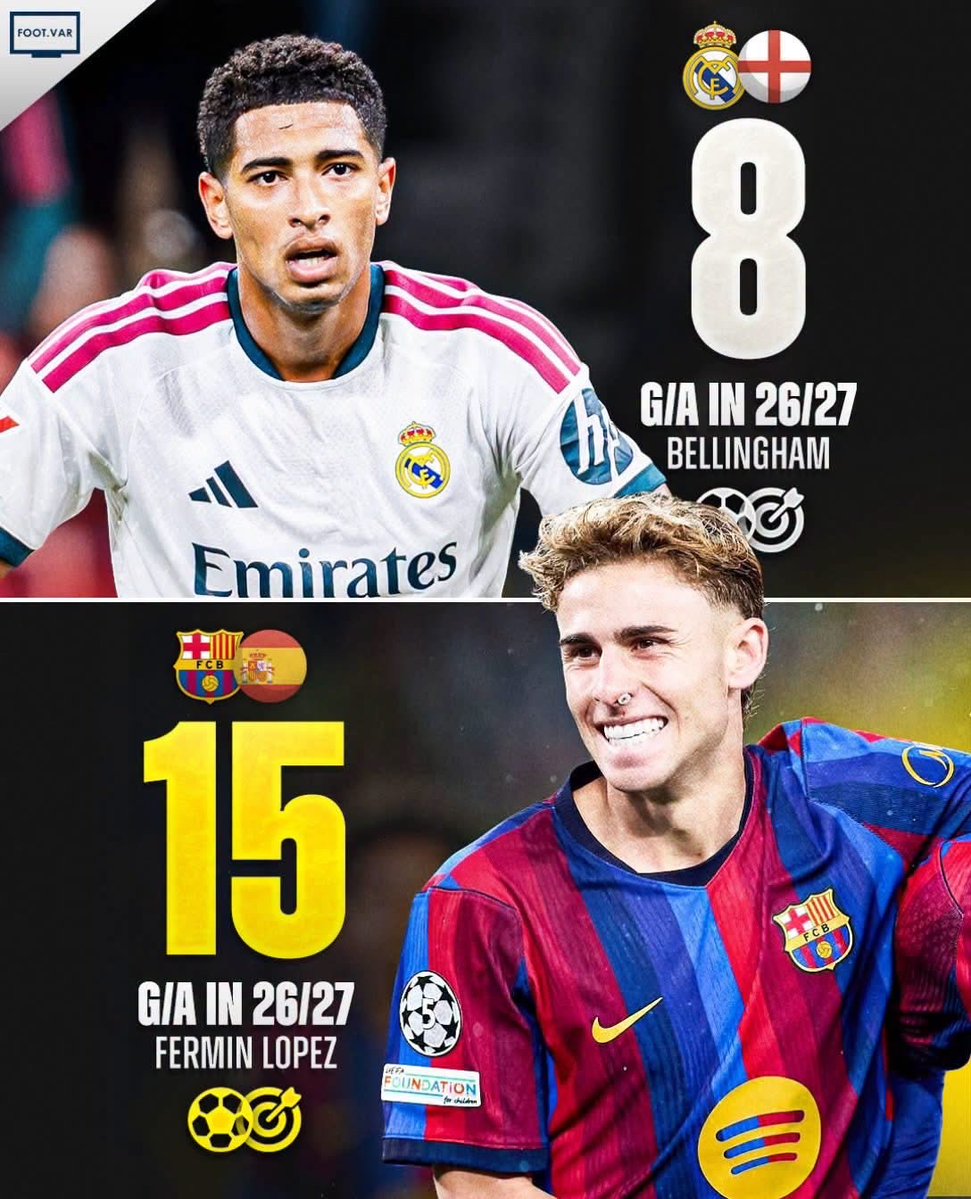
Real Madrid fans compare Pedri and Bellingham based on goals and assists, even though they don’t play the same position or have the same role.
But when it comes to comparing Fermín López and Bellingham, who actually play in similar positions, they suddenly avoid the debate. Probably because by their own standards, Fermín makes their overrated star look ordinary.
Nothing new from a fanbase that genuinely believed Camavinga was better than Pedri 4 years ago.
We’re dealing with the most delusional fanbase on the planet.
Eric, Christensen, De Jong, Gavi, Pedri, Adeyemi, Lamine…
These were the players asking Raphinha NOT to take the free kick and to keep possession instead, but he went ahead and took it anyway. 💀