One of the most washed and recorded finds are animal bones and we learn a lot from them; diseases, diets, migration patterns and animal husbandry. Butchery marks may indicate any tools used and along with pottery sherds, build a bigger picture of daily life during that period.
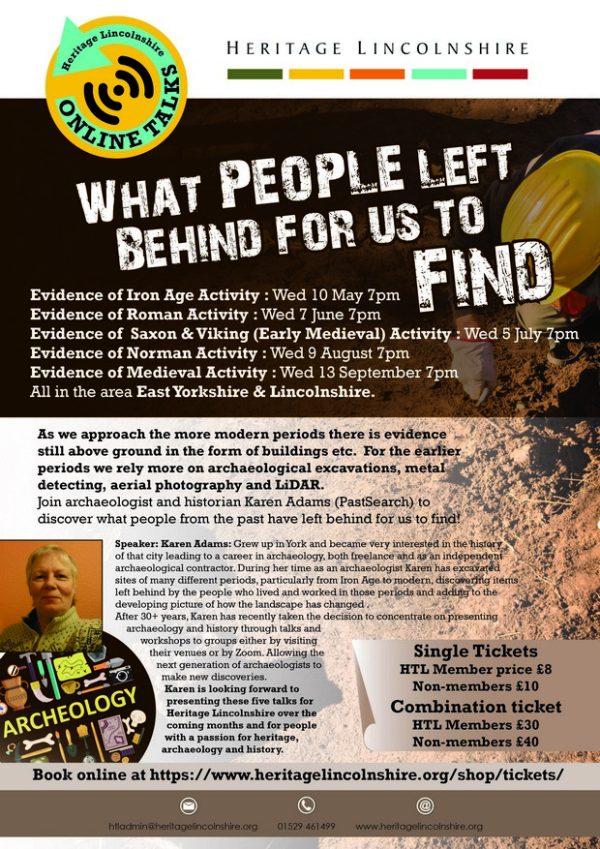
Join Karen Adams, archaeologist and historian, for a series of online talks hosted by @HeritageLincs to find out 'What People Left Behind for us to Find’.
The series starts 7pm, Wednesday 10 May & tickets start at just £10 https://t.co/9dpDHly2IN
APS are recruiting for a Project Manager to join the team in Lincolnshire. To find out more and to apply, please visit the CIfA website https://t.co/0FQMgQxyDp
Heritage Lincolnshire welcomes new CEO
The Trustees of Heritage Lincolnshire are delighted to announce that they have appointed Tracy Stringfellow as the charity’s new CEO.
Our team are needing an administrator to join our busy and friendly team. This position is available for an immediate start and is to be based at our Heckington office.
For more information please go online https://t.co/0EeqKu6mm3
Deadline for applications 11th September 2022.
We are needing an administrator to join our busy and friendly team. This position is available for an immediate start and is to be based at our Heckington office.
For more information please go online https://t.co/0EeqKtOKXt
Deadline for applications 11th September 2022.
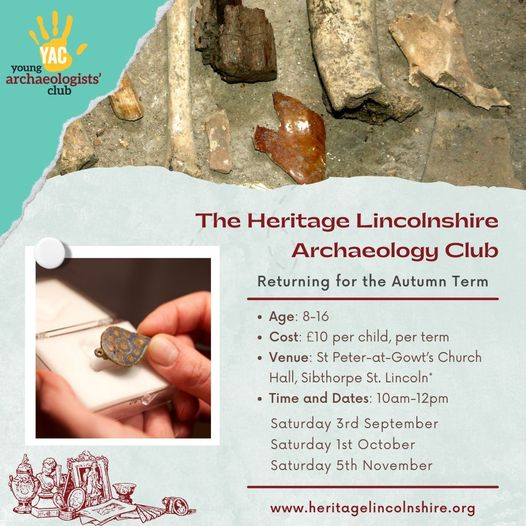
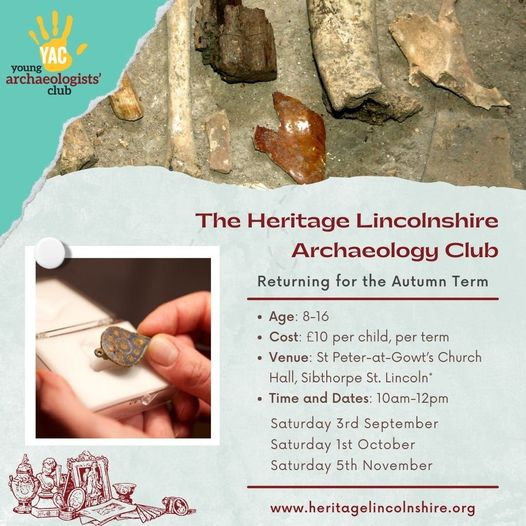
Our Heritage Young Archaeologists Club starts on Saturday 3rd September for its Autumn Term!
Do not let your 8-16 year old miss out on finding out more about the fascinating world of archaeology!
Find out more online at https://t.co/I1g60PfnD2
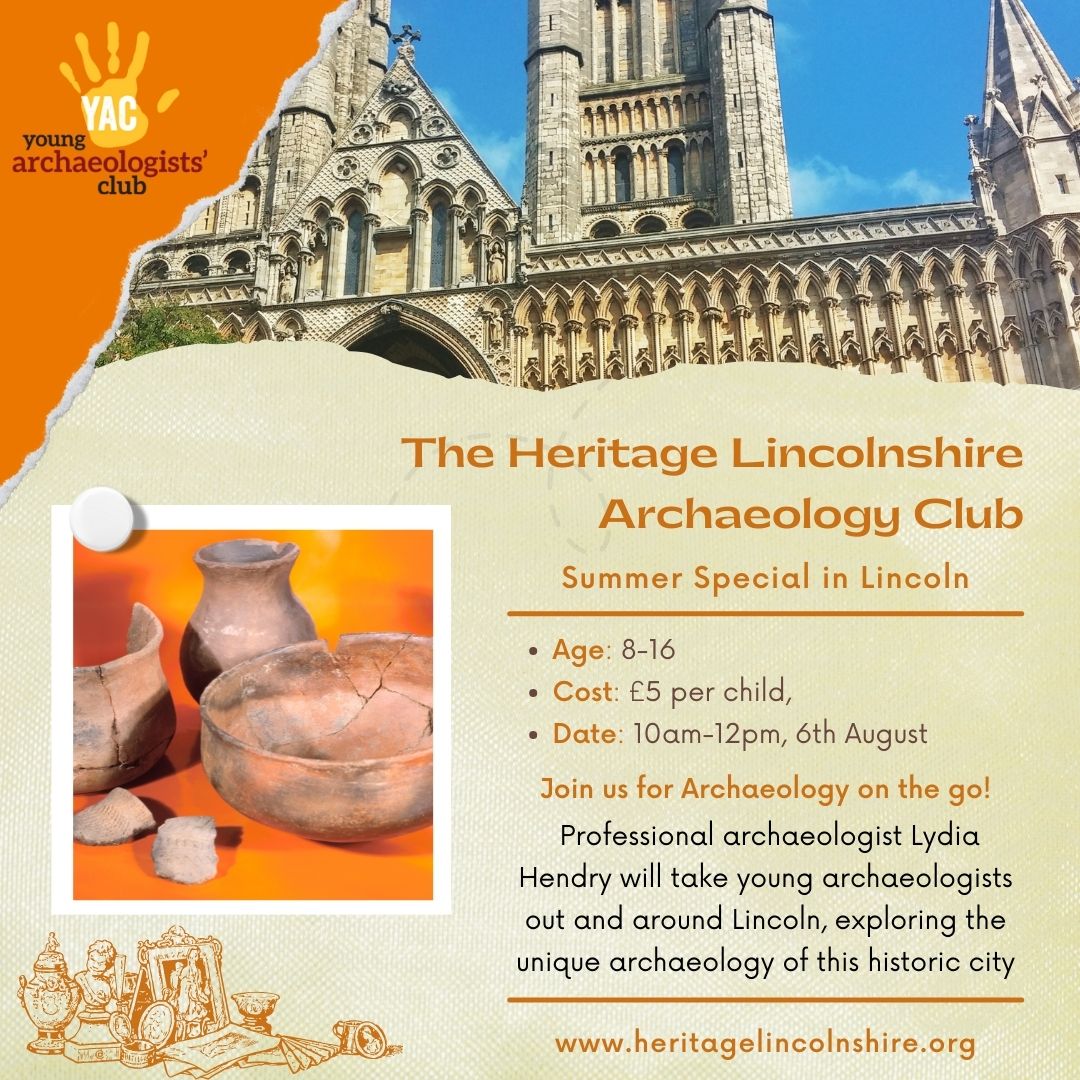
Young Archaeologists Club – Summer Special!
Professional Archaeologist, Lydia Hendry, will take young archaeologists out and about in Lincoln, exploring the unique archaeology of this historic city on 6th August.
Book online now at https://t.co/aJxv2MZhsn
#FindsFriday - a Penannular brooch from North Lincolnshire to share with you
Penannular brooches are marked by a gap in the ring through which the pin passes. The ring was then twisted to lock the brooch & secure the cloth. They were common in the Iron Age to early Roman!