Did you know that the .png format was created out of spite? Or that .jpeg just discards like half of the colours in your image because you won't notice?
To celebrate last week's launch, I published a chapter on image compression.
https://t.co/IwwPF9l1LK
Thinking of starting a community for people who want to learn hardware, work in hardware, or just enjoy tinkering with things in general.
Reply to the tweet if you want in.
Le #CERN rend open-source sa librairie de composants électroniques pour le logiciel KiCAD. Disponible via Gitlab, elle contient des données pour plus de 17000 composants électroniques, y compris des symboles schématiques et des empreintes de circuits.
https://t.co/BJvm3mtp7O
Today is the day.
The Linux Field Guide is officially live.
This is the project I've been talking about for a while. A long-form publication for "upper beginner" Linux users - the people who installed Linux, are comfortable in a terminal, and want to understand WHY things work the way they do, not just how to type the commands.
The first article is now up. It opens Series 01: The C Layer.
https://t.co/CQosgyOJwj
Title: Why C is the Linux userspace interface.
Most writing about C defends it the same way - "it's fast," "it's close to the metal," "there's too much legacy code to replace it." All of these treat C as a tool you happen to be stuck with. This article makes a different argument: C isn't a language you pick on Linux. It is literally the operating system interface, as POSIX defines it.
Working code throughout. Real assembly for x86_64 and RISC-V, the actual ld command line gcc hides from you, and Apple's own documentation as receipts. About a 15 minute read.
This is article 1 of many. Six series planned, each ~10 entries. The C Layer is just the start - shells, /proc, signals, files-as-everything, and bootstrapping a Linux system from scratch are all coming. A newsletter is in the works for readers who want article roundups plus extra content. For now, follow here for updates.
Thank you to everyone who followed along through the campaign this past week. Today is the payoff.
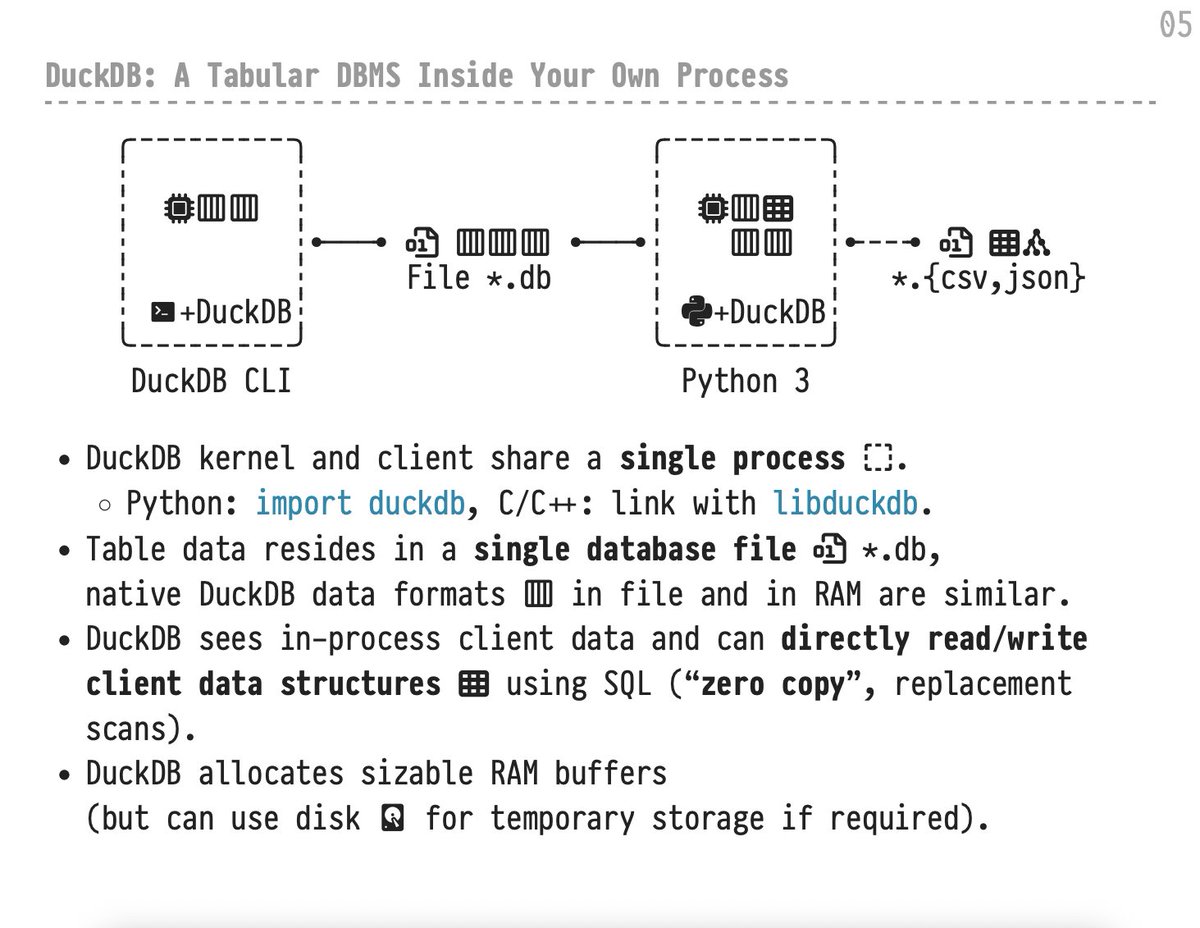
Would you like to learn more about SQL or are you more interested in DuckDB's internals? Either way, you're in luck: Professor Torsten Grust of the University of Tübingen published two sets of lectures (almost 300 slides in total) along with their supplementary material.
Modern DRAM is based on a brilliant design from IBM.
But, we're still paying for a latency penalty that's existed since the 60s!
In this video, I'm introducing my research project (Tailslayer) that immensely reduces p99.99 latency on traditional RAM!
By implementing a hedged read strategy taking advantage of (undocumented!) channel scrambling offsets, I've gotten as much as 15x reductions in tail latency.
The technique works across Intel, AMD, Graviton, DDR4, DDR5, x86, ARM, you name it.
Check out the C++ lib I wrote, watch the video, and try it yourself!
I built everything from scratch, 100% inhouse in india, it was just me & my obsession of making technology accessible to everyone in need!
It is a brain controlled robotic prosthetic hand!
Learn more at: https://t.co/PTbAgKJKUy
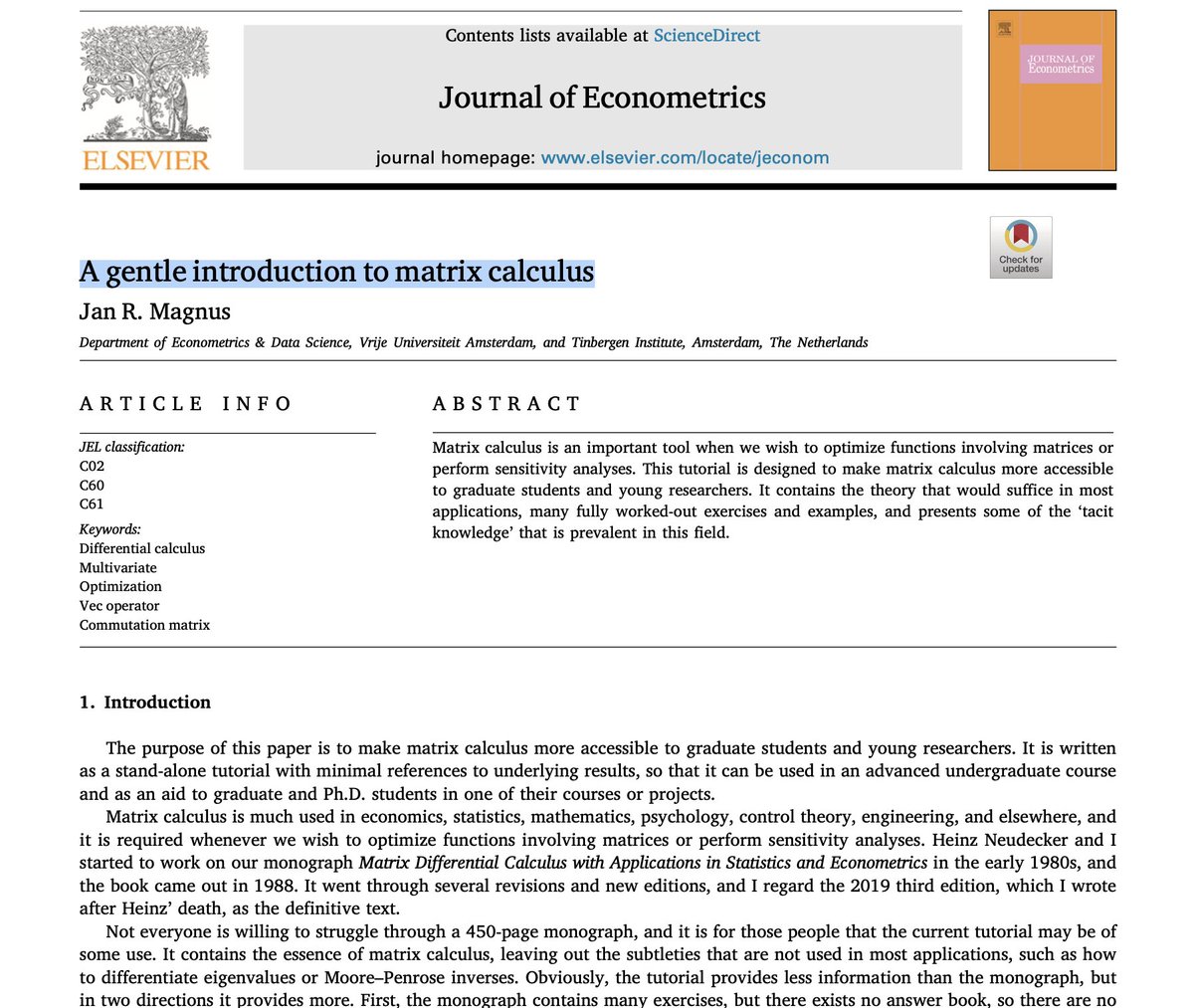
An absolute banger of a paper.
“A Gentle Introduction to Matrix Calculus” by econometrics legend Jan Magnus — one of the clearest explanations of matrix derivatives ever written.
If you work in econometrics, machine learning, statistics, or optimisation, this paper is pure gold.
If you work in Physics, Machine Learning, Engineering, or any field with a serious mathematical component, Space Mapping is one of those ideas worth adding to your toolkit.
Tom and I have finally finished a draft of Dynamic Programming Vol 2! Exhausting but satisfying. New approach to DP theory, advanced material, many applications... https://t.co/PPDk98DFgV
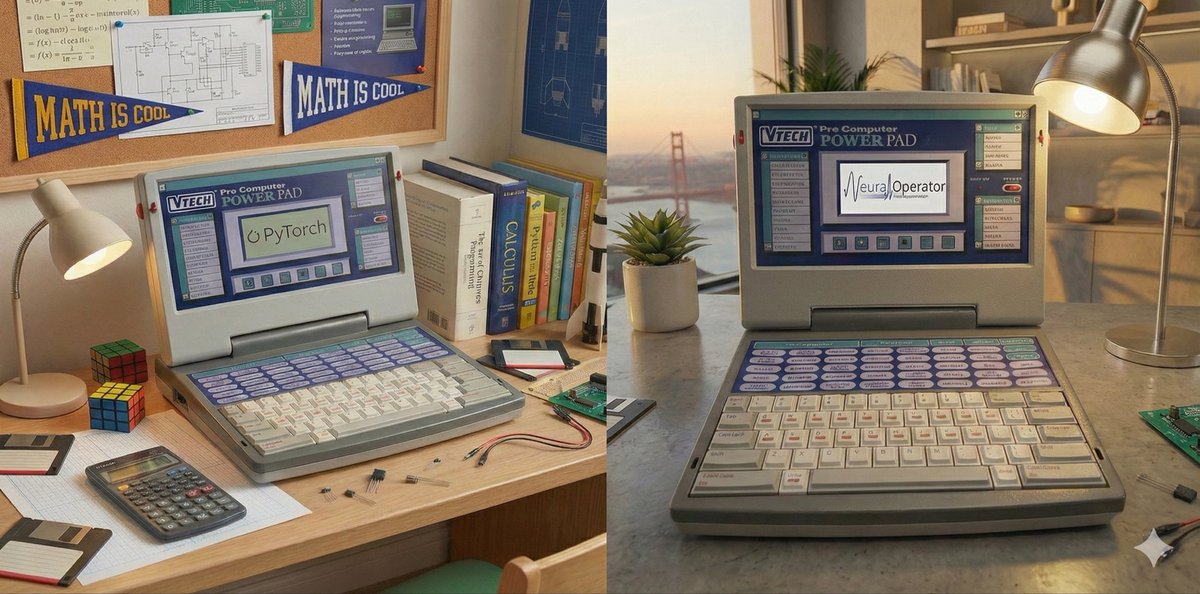
From learning math as a child to coding on my first VTECH computer (gotta start with the BASIC!), applied math and software have always been my passions.
I’ve been lucky to get to build a career where with these fields now drive modern AI. PyTorch has been a big part of making that possible, bridging theory and implementation, and making it available to all as open-source software.
Today, I’m proud to announce that we are contributing back to that ecosystem: The NeuralOperators library is officially joining the PyTorch ecosystem!
NeuralOperators brings together learning on function spaces and deep learning to enable AI for science and engineering. It’s now available for you to use directly in your existing PyTorch framework.
Thank you to the @PyTorch community and our amazing team: @AnimaAnandkumar, Valentin Duruisseaux, and @davehpitt
https://t.co/gX0aqDP5XN
#PyTorch #NeuralOperators #AI #OpenSource #DeepLearning #AppliedMathematics #AIforEngineering #AIforScience
Super excited to release TorchLean!!
I’m happy to answer questions and would love to discuss verified NNs + theorem proving especially what it’ll take for the field to become widely usable in real ML systems.
Blog post + codebase release soon!