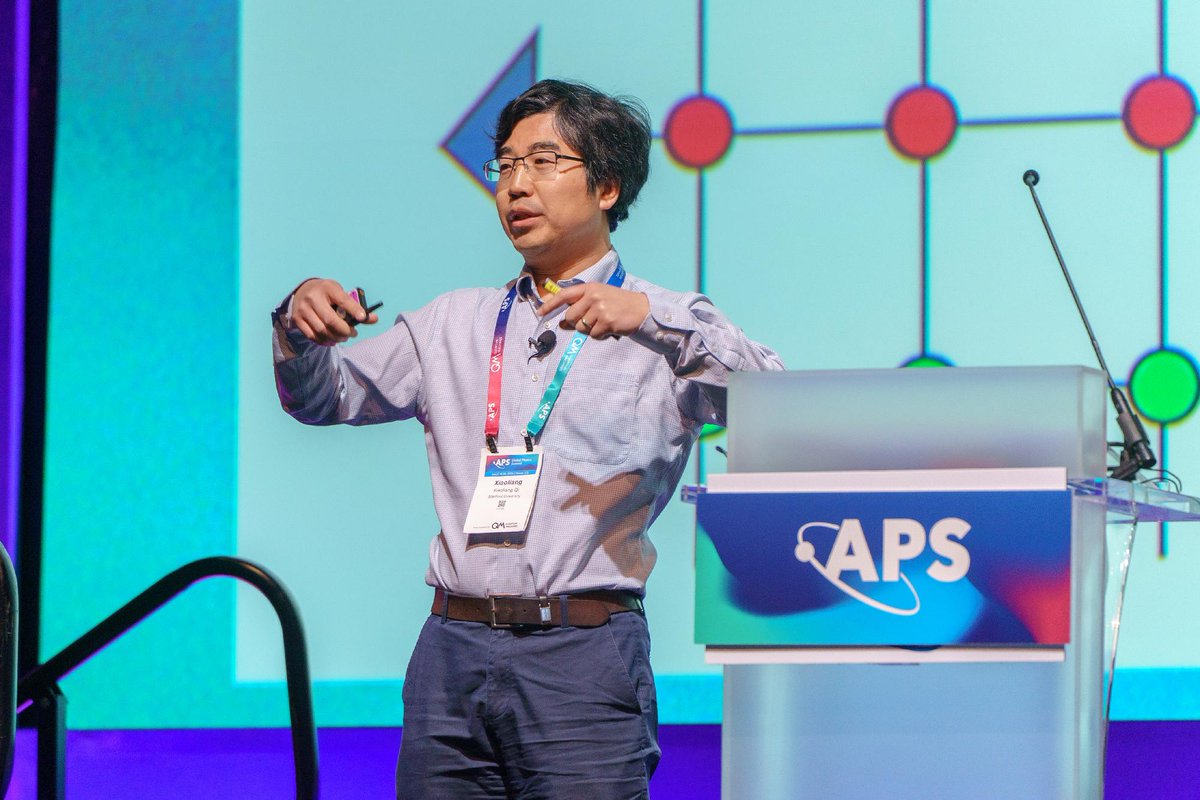
Physicists from every field connect at the APS Global Physics Summit ✨
Abstracts for #APSSummit27 are due today, by 5 p.m. ET. Don't miss this chance to share your research.
https://t.co/k6BgjG0IS3
Why is the sun's corona millions of degrees hotter than its surface? A study in Physical Review Letters used powerful lasers to recreate solar nanoflares in the lab and watch them heat plasma.
Read the study: https://t.co/rSBNHJ1Ts4
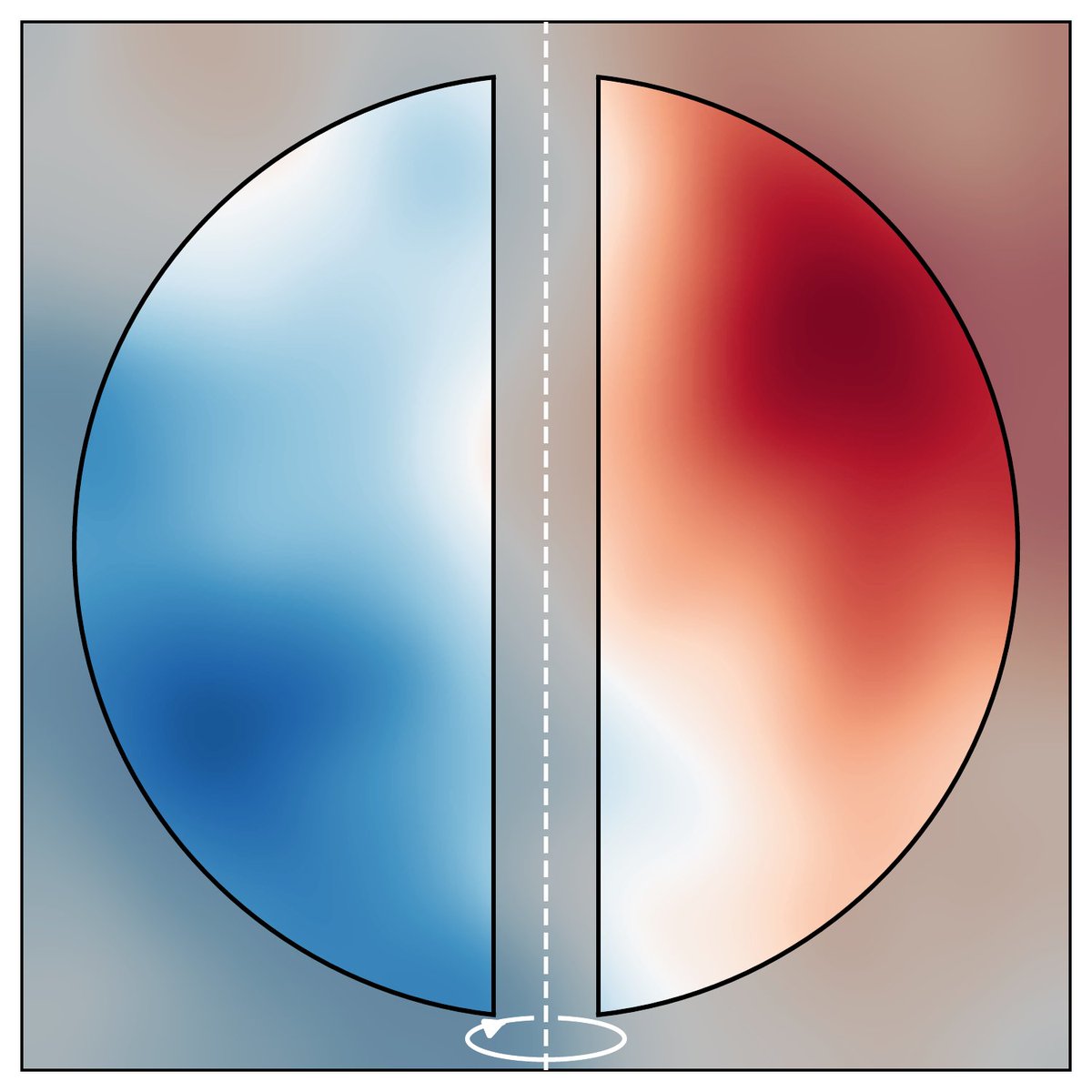
Do galaxy clusters spin? A study in Physical Review Letters finds evidence that they do, from a faint warm-and-cool pattern their rotating gas leaves in the universe’s oldest light.
Read the study: https://t.co/TojEqVUFs9
When the dense helium cores of two red giants collide, the merger could produce high-energy neutrinos, finds a study in Physical Review D. IceCube could expect about one such neutrino from a single merger up to 180,000 light years away.
Read the study: https://t.co/obsr6czDzG
All physics disciplines connect at #APSSummit27. 🌟 Let your research shine bright on the largest APS stage. Abstracts are due Oct. 22, submit today. https://t.co/k6BgjG0IS3
A study in Physical Review D re-analyzes different mechanisms for primordial black hole formation under the dark dimension scenario and finds that, if these cosmic objects exist, they would be five dimensional.
Read the study: https://t.co/GfAfmoWtjq
Congratulations again to Francis Halzen, winner of the 2026 @NobelPrize in Physics. Physical Review Letters published two key IceCube Collaboration studies behind this prize.
Swipe through 15 years of #NobelPrize-winning research that appeared in PRL.
Know an early-career researcher whose astronomy or astrophysics paper stands out?
Nominate them by Nov. 15 for the Emerging Astrophysicist Award. The recipient gets $2,000 and support to attend and a speaking opportunity at #APSSummit27. Learn more: https://t.co/31pfl7tOMg
Winning a @NobelPrize comes with some serious bragging rights — and a $1 million prize. We asked #APSSummit26 attendees what they’d do with it. Drop your answers below.
#NobelPrize
🎉 Congrats to our new class of APS Fellows. They’ve been recognized by their peers for exceptional contributions to #research, #education, #leadership, and public #service.
Learn more about them: https://t.co/KJDUjrSLqx
Since 2000, we’ve published the core discovery papers behind more than 60% of the Nobel Prizes in Physics. Those papers are available to read for free: https://t.co/O890IWJzpm
From condensed matter to quantum computing, #APSSummit26 attendees shared what physics discipline they think should win a #NobelPrize. What do you hope will take home the top award tomorrow?
@nobelprize
One year ago, our members John Clarke, Michel H. Devoret, and John M. Martinis won the 2025 @NobelPrize in #Physics for experiments that revealed quantum tunneling in an electric circuit.
The 2026 laureates will be announced next week. Any predictions?
#NobelPrize
A new study suggests the gallium anomaly, a neutrino mismatch between experiment and theory, could be solved by more precise calculations of electron-neutrino capture without new physics like sterile neutrinos.
Read more in @physrevlett: https://t.co/62ywMOfgoJ
Congratulations to the recipients of our fall 2026 prizes and awards in the fields of #FluidDynamics, #NuclearPhysics, and #PlasmaPhysics. 🎉
Check out the winners here: https://t.co/wRVt213CKn
Congratulations to the 2026 Golden Goose Awardees for federally funded research behind a noninvasive cancer treatment, satellite views of disaster recovery, and everyday physics. We're glad to count Sidney Nagel, 2023 APS Medal winner, among them. #GGA26 https://t.co/niSrvxpg3Z
In 1983, a Soviet computer detected a U.S. nuclear missile launch. Officer Stanislav Petrov had minutes to decide whether the warning was real. He trusted his judgment, avoiding a potential nuclear disaster. Learn what caused the false alarm in #APSNews: https://t.co/hDSWJnSsDX
#PhysicsHistory
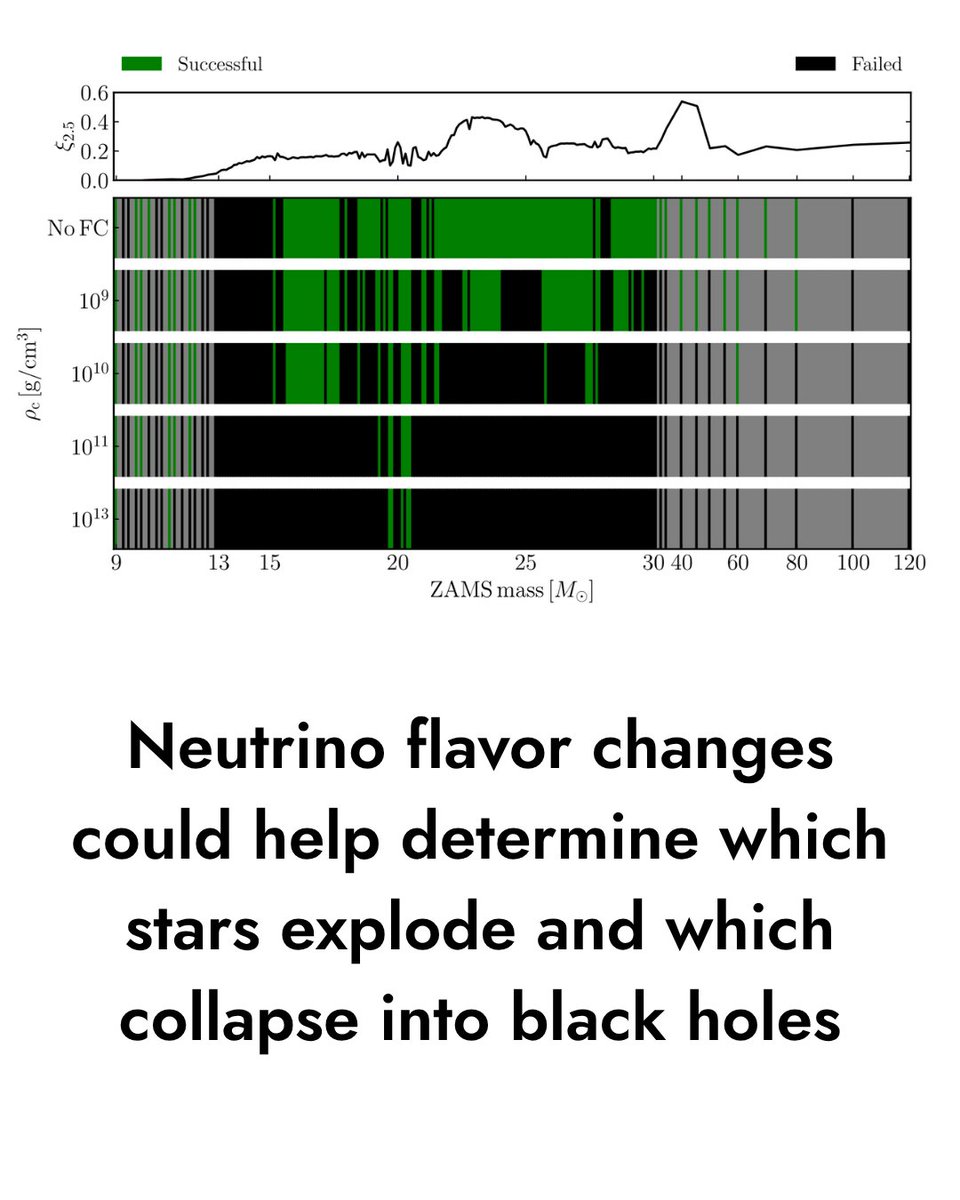
⭐ When a massive star dies, does it explode or disappear into a #BlackHole? New simulations suggest neutrinos could be a determining factor.
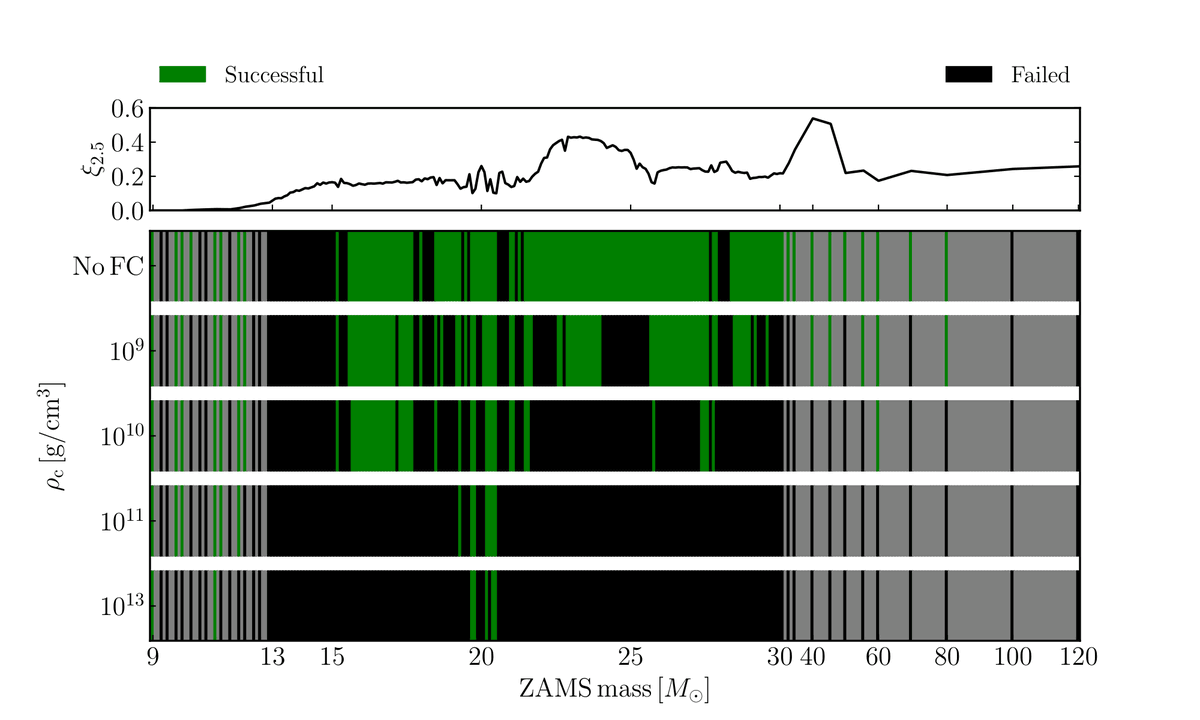
Researchers modeled the collapse of 195 stars and found that when neutrino flavor conversion was included, some stars that otherwise would have exploded collapsed into black holes.
Read more in Physical Review D at the link in bio.
⭐ What determines whether a dying star explodes or collapses into a black hole? New simulations of 195 stars suggest that neutrino flavor conversion can predict a star’s fate.
Read more in Physical Review D: https://t.co/acoiI2TEwq