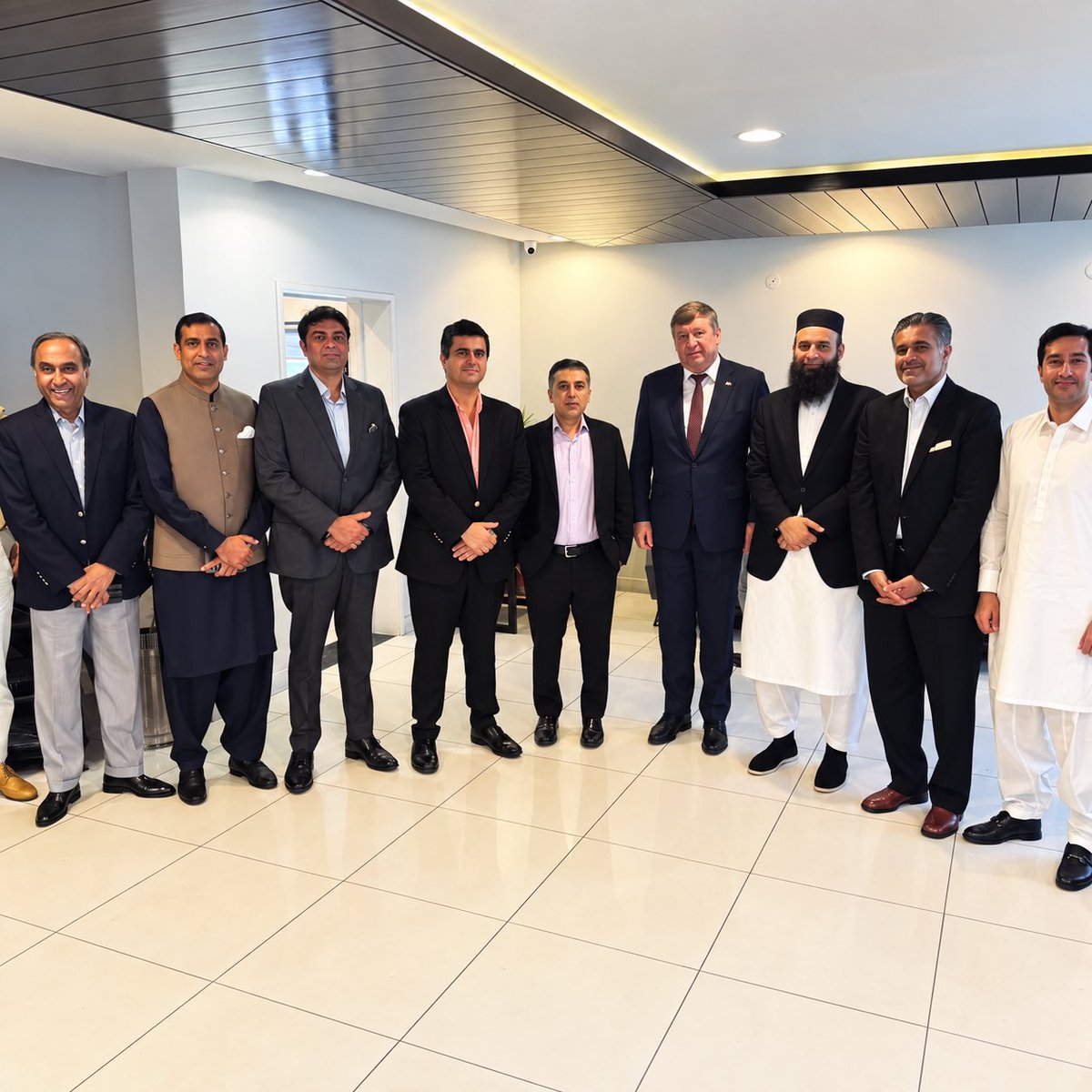
🇵🇰🇩🇪 GERMAN IMPORTERS SEE GROWING OPPORTUNITIES IN PAKISTAN’S TEXTILE INDUSTRY
Germany’s VFI, representing over 300 companies, has expressed interest in strengthening sourcing and trade relations with Pakistan amid evolving global textile supply chains.
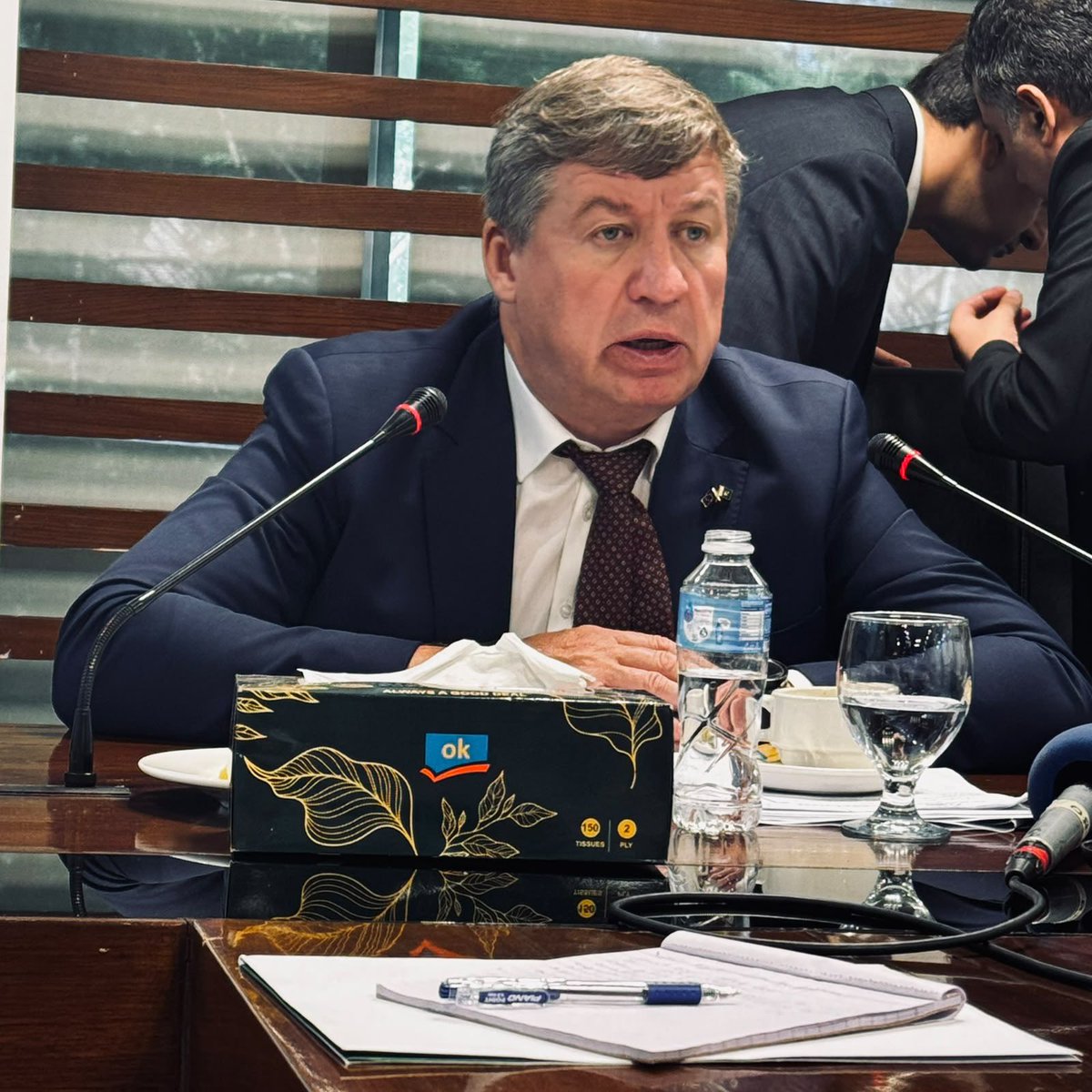
Speaking during his visit to APTMA, Dr. Michael Arretz highlighted Germany’s interest in deeper economic cooperation with Pakistan.
APTMA Chairman Asad Shafi underscored the importance of GSP+, noting a 73% increase in Pakistan’s exports to the EU since 2013.
From market access to sustainability and stronger buyer-manufacturer linkages, the opportunity now lies in translating engagement into exports.
Source: Associated Press of Pakistan (APP), November 20, 2026.
#APTMA #PakistanTextiles #Germany #GSPPlus
https://t.co/6e01ZBCEn4
PAKISTAN’S INDUSTRIAL CRISIS: WHO IS RESPONSIBLE?
Former APTMA Chairman Kamran Arshad delivers a candid assessment of Pakistan’s economic failures.
From collapsing cotton production and uncompetitive energy costs to misguided taxation, industrial closures and policies favouring imports over manufacturing.
Why have Bangladesh and Vietnam surged ahead while Pakistan continues to struggle?
A wide-ranging conversation on industrial policy, economic reform, entrepreneurship and Pakistan’s future.
Watch the full podcast with Hassan Naqvi:
https://t.co/Fo9aJwA2bj
#APTMAUncut #PakistanTextiles
Pakistan manufactures for global markets, yet our own retailers often struggle to connect with domestic suppliers.
The CAP–APTMA collaboration is an opportunity to narrow that gap through better sourcing connections, product development and industry dialogue.
A worthwhile step towards a more connected textile value chain.
Pakistan has a strong textile manufacturing base and a growing domestic retail sector. Yet gaps in supplier discovery, product development and commercially viable order quantities continue to limit local sourcing opportunities.
APTMA, in collaboration with the Chainstore Association of Pakistan (CAP), is working to strengthen connections between textile manufacturers and retail brands, particularly in sourcing, innovation and product development.
As part of the 6th Pakistan Future of Retail Summit & Expo, organized by CAP and TerraBiz, a dedicated ��From Fiber to Fashion” pavilion is being planned to facilitate industry engagement and explore opportunities for greater domestic sourcing.
The broader objective is to encourage dialogue, improve market connectivity and support the development of a more competitive Pakistani textile and retail value chain.
📍 17 November 2026 | PC Lahore
#APTMA #FutureOfRetail2026 #FiberToFashion
INDUSTRY DEMANDED LOWER INTEREST RATES. SBP WENT THE OTHER WAY.
In this powerful 3-minute address, a former APTMA Punjab Chairman questions Pakistan’s economic priorities and warns of the consequences for industrial competitiveness.
Since this address, SBP has reportedly increased its policy rate by another 50 basis points.
His concerns are difficult to ignore:
▪️ Trillions spent servicing government debt while businesses struggle with expensive financing.
▪️ Double-digit interest rates despite significantly lower inflation.
▪️ Electricity costs, taxation and borrowing rates that leave Pakistani manufacturers struggling to compete with China, India, Bangladesh and Vietnam.
His demands: single-digit interest rates, eventually reaching 6%, and electricity at 9 US cents/kWh.
But perhaps his most powerful statement is also the simplest:
“The buyer has not sworn to buy from Pakistan.”
International buyers have choices. Pakistan cannot expect export orders without offering competitive prices, quality and reliability.
Macroeconomic stability is essential. But what happens when the numbers improve while the factories struggle?
WATCH THE FULL 3-MINUTE ADDRESS.
#APTMAUncut #PakistanTextiles #TextileCrisis
GSP+ AT RISK. WHERE IS THE GOVERNMENT’S IMPLEMENTATION ROADMAP?
Pakistan’s textile industry earned €732 MILLION in EU tariff exemptions in 2024.
Industry leaders are meeting the EU Ambassador. But who is delivering measurable progress on Pakistan’s national commitments?
The Ministry of Commerce has initiated an action plan. Where are the deadlines, implementation milestones and publicly verifiable results?
GSP+ cannot be secured through meetings alone.
https://t.co/wHvu4RkJSX
#APTMAUncut #PakistanTextiles #GSPPlus
What can Pakistan learn from Bangladesh and Vietnam’s textile export growth?
At TEXtalks 2026, Muhammad Ali Chaudhry and Faisal Jawed discuss three challenges shaping Pakistan’s textile future:
• Export competitiveness
• Domestic cotton supply
• EU GSP+ market access
Three interconnected issues. One question: how does Pakistan build a more competitive textile industry?
Selected excerpts from TEXtalks 2026, Lahore.
Pakistan has strong textile manufacturing capabilities and a rapidly evolving retail sector.
Yet manufacturers and retailers often operate in silos, with limited visibility into each other’s capabilities, sourcing requirements and product development cycles.
The first APTMA × CAP working session was an important step towards bridging that gap.
A look back at the discussions at APTMA House, Lahore.
🎥 Video courtesy: Chainstore Association of Pakistan (CAP).
PAKISTAN’S TEXTILE OPPORTUNITY IS ALSO AT HOME.
Our mills have invested billions in manufacturing capacity. Yet local retailers still source fabrics from abroad.
APTMA–CAP dialogue seeks to bridge this gap.
Can Pakistan’s manufacturers and brands build a stronger domestic supply chain?
#APTMAUncut
GSP+ IS NOT A GUARANTEE.
The EU Ambassador’s visit highlights what lies ahead: tougher requirements, greater scrutiny and factory-level preparedness.
A proposed APTMA–EU working group could take engagement directly to the factory floor.
A stronger partnership. A more competitive Pakistan.
#APTMAUncut #GSPPlus
APTMA hosted H.E. Raimundas Karoblis, EU Ambassador to Pakistan, in Lahore for a constructive discussion on GSP+ and the future of Pakistan–EU trade relations.
The meeting highlighted the significant benefits of GSP+, the additional requirements under the new framework taking effect in 2027, and the importance of preparing for reapplication by the end of 2028.
Members expressed a positive outlook on the partnership while emphasising the need for continued government-level reforms to meet existing and emerging GSP+ benchmarks.
A proposal was put forward to establish a joint working group connecting Pakistani textile manufacturers, from upstream to downstream, with European sourcing houses and technical advisers. The objective would be to strengthen transparency, sustainability, productivity and export readiness through practical engagement at the factory level.
Members also highlighted the need for adequate inspection capacity across Pakistan’s extensive textile industry, given the importance of GSP+ to the country’s exports and employment.
The Ambassador expressed his hope that Pakistan would meet the additional requirements.
The meeting brought together leading textile manufacturers representing Arshad Group, Colony Textile, Cross Stitch, Din Textile, Ghazi International Fabrics, Kamal Limited, Nagina Group, Resham Textile, Saad Textile, Shahzad Textile, Siara Textile, Style Textile and US Denim Limited.
Also present were APTMA Secretary General and Aptma Energy Advisor, and members of APTMA’s staff.
A fruitful exchange reaffirming the importance of sustained engagement, shared responsibility and stronger Pakistan–EU trade cooperation.
#APTMA #GSPPlus #PakistanEU #TextileExports
⚠️ PAKISTAN CANNOT AFFORD TO EXPORT ITS WATER.
Mohsin Leghari raises a question policymakers can no longer ignore:
If water is now Pakistan’s binding agricultural constraint, should scarce water be allocated to crops with weak economic returns — while export industries struggle for raw material?
Pakistan needs a water ledger: measure every crop against water consumed, value created, jobs supported & export earnings generated.
Agriculture policy and industrial policy cannot operate in separate rooms.
#APTMAUncut #PakistanTextiles #Cotton #WaterSecurity
⚠️ BANGLADESH MOVES TO PROTECT DOMESTIC SPINNING
Bangladesh has suspended duty-free bonded imports of 10–30 count cotton yarn — a direct intervention affecting imported yarn used by its export sector.
Meanwhile, Pakistan’s spinning industry is asked to compete while carrying some of the region’s highest energy, financing & taxation costs.
Competitiveness is built by policy — or destroyed by it.
Source URL: https://t.co/KEaorJVUnG
#APTMAUncut #PakistanTextiles #TextileCrisis
🚨 PAKISTAN’S COTTON NUMBERS DON’T ADD UP
Multan Division:
• 694,000 acres planted
• 388,000 bales reportedly picked
• Only 171,061 bales in ginning/PCGA arrivals
That’s a gap of 216,000+ bales.
Before declaring a bumper crop—or a shortage—the numbers need to reconcile.
Cotton policy and mill procurement cannot be driven by estimates that tell different stories.
Verify the crop. Follow the physical cotton. Get the data right.
#APTMAUncut #PakistanCotton #PakistanTextiles
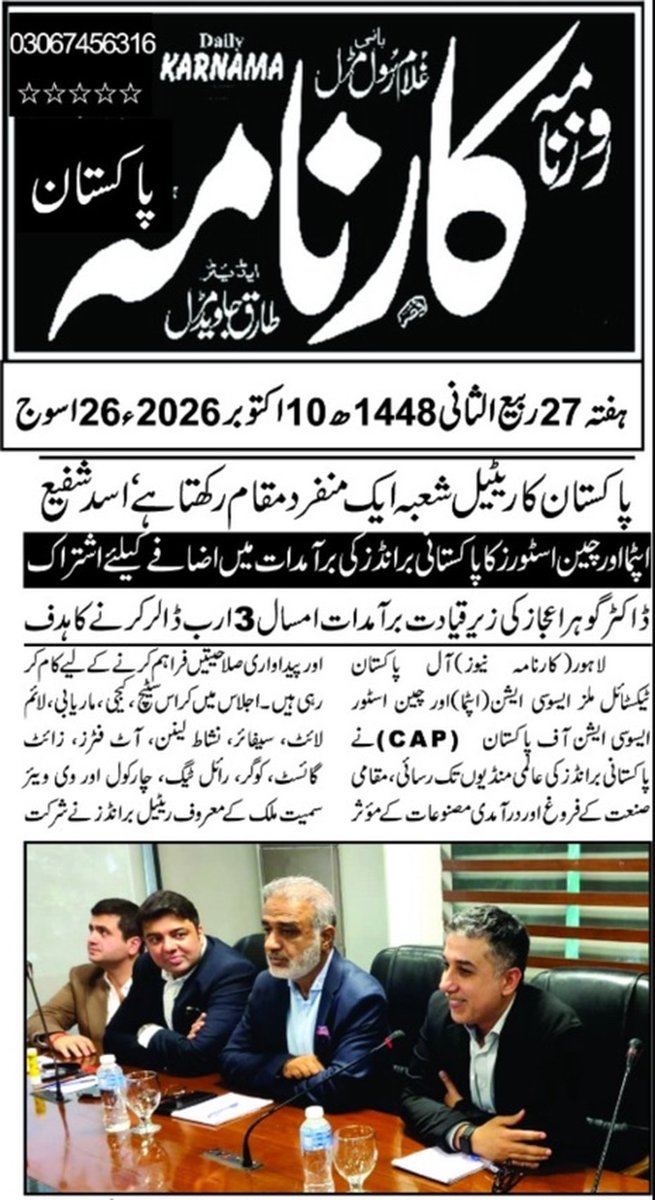
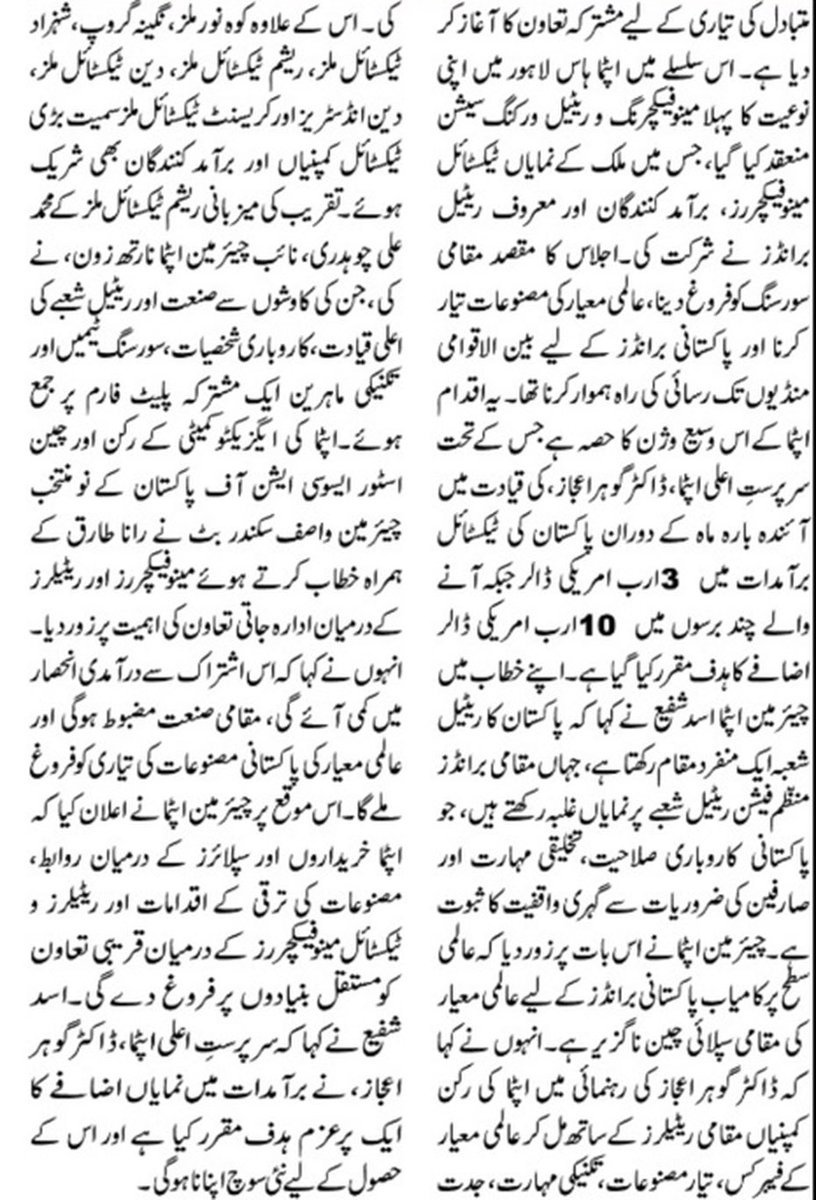
PAKISTAN’S BRANDS NEED PAKISTAN’S MANUFACTURERS
APTMA & CAP have joined hands to strengthen Pakistani brands at home — and take them into export markets.
The opportunity: connect retailers with Pakistan’s heavily invested textile manufacturing base, while bridging gaps on smaller orders, flexibility & speed.
APTMA participants included:
• Asad Shafi — Cross Stitch / Co-founder CAP
• Muhammad Ali Chaudhry — Vice Chairman, APTMA Punjab / Resham Textile
• Danish Aslam — Treasurer
• Raza Baqir — Secretary General, APTMA
• Tahir Cheema — Energy Consultant / former MD PEPCO
CAP was represented by leading Pakistani retail brands.
The objective should be clear: Pakistani manufacturing + Pakistani brands = greater value retained in Pakistan and a stronger export footprint.
Source: Daily Karnama, 5 Sept 2026
#APTMAUncut #PakistanTextiles #MadeInPakistan
FROM FIBRE TO FASHION — THE GAP NEEDS BRIDGING.
Pakistan’s textile manufacturers have invested heavily in large-scale, export-oriented production. That scale has built a formidable manufacturing base — but it can also make smaller MOQs, rapid sampling and frequent product development commercially difficult.
At today’s APTMA–CAP interaction, retailers highlighted demand for:
• Smaller MOQs & faster sampling
• More R&D in fabrics and finishes
• Closer mill–brand merchandising links
• Local alternatives to imported fabrics
The answer isn’t manufacturers vs retailers. It’s connecting two strong parts of the same value chain.
Perhaps the next investment isn’t simply more capacity — but flexible capacity capable of serving brands, testing new products and eventually taking Pakistani fashion to global shelves.
#APTMAUncut #PakistanTextiles #ValueAddition #MadeInPakistan
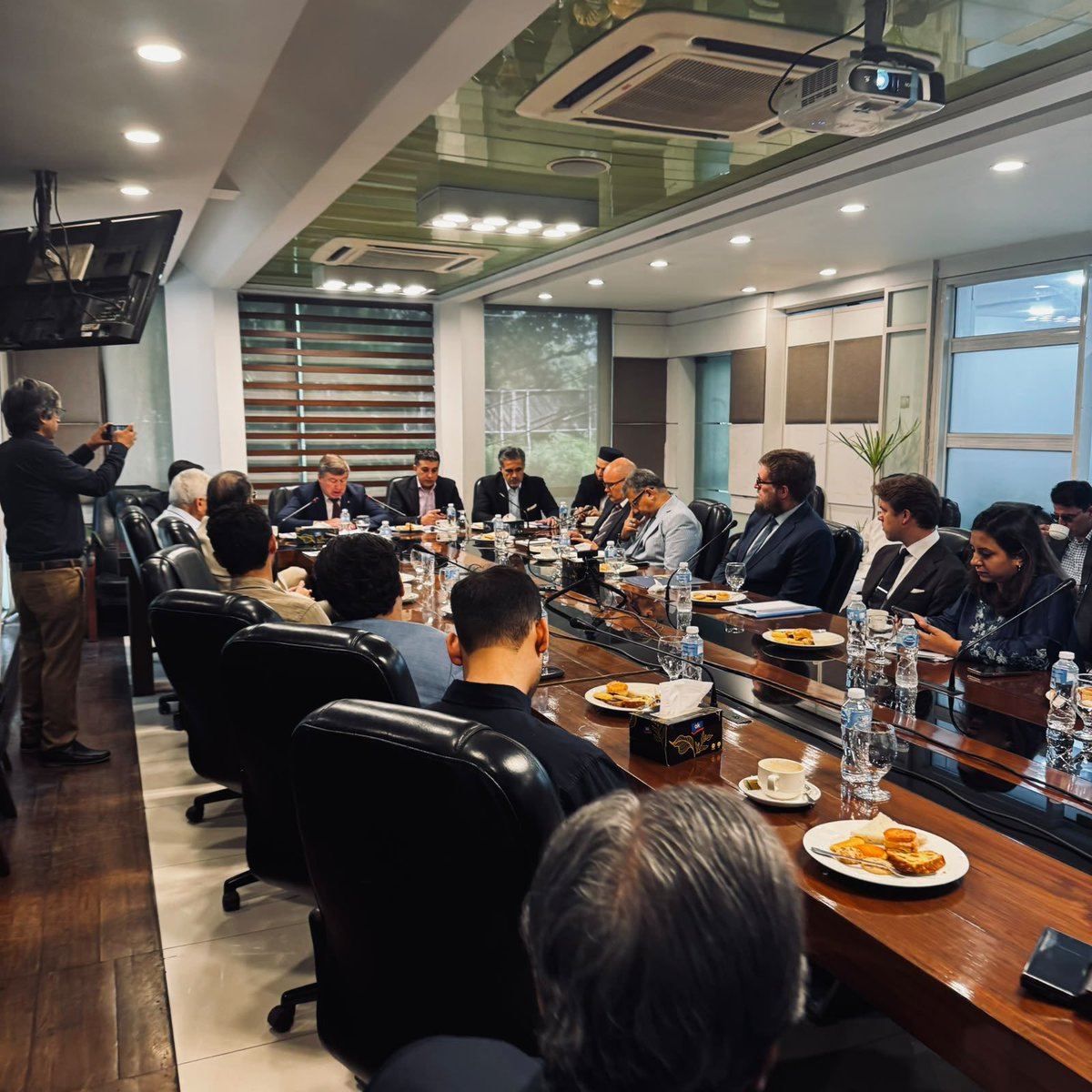
APTMA hosted a high-level delegation of the Chainstores Association of Pakistan (CAP) today for a wide-ranging discussion on connecting Pakistan’s manufacturing strength with its growing retail and fashion industry.
The discussion was refreshingly practical. Retailers highlighted gaps that domestic manufacturers must address:
• Greater R&D and product development
• Capability for smaller MOQs and sampling
• Better understanding of fabrics, finishes and changing consumer requirements
• Stronger engagement between mill merchandising teams and Pakistani brands
• More competitive local alternatives to imported fabrics
The meeting also looked beyond the domestic market. With manufacturing accounting for less than 30% of the final retail value of a typical apparel product, Pakistan has an opportunity to capture significantly more value through design, product development, branding, marketing and international retail.
APTMA proposed deeper interaction between CAP members and the merchandising and product-development teams of textile manufacturers, enabling mills to hear retailers’ requirements directly and develop commercially viable solutions.
From fibre to fashion, we are ultimately one value chain. Bringing manufacturers and brands closer together can strengthen domestic sourcing today — and help build Pakistani brands capable of competing internationally tomorrow.
APTMA thanks CAP Patron Tariq Mehboob (Royal Tag), Chairman Asfandyar Farrukh (HUB), Chairman-elect Wasif Sikandar Butt (Maria.B), and representatives of Charcoal, Limelight, Zeitgeist, Unze London, and other leading retailers for an open and constructive exchange.
APTMA was represented by Chairman Asad Shafi (Cross Stitch/ KIJI ; co-founder CAP), Vice Chairman APTMA Punjab Muhammad Ali Chaudhry (Resham Textile), Treasurer Danish Aslam (Shahzad Textile), Secretary General Raza Baqir, and Tahir Basharat Cheema, Energy Consultant and former MD PEPCO.
The dialogue will continue — with a shared objective of connecting Pakistan’s manufacturing capabilities with its brands, retailers and ultimately the global consumer.
#APTMA #PakistanTextiles #MadeInPakistan #TextileExports #ValueAddition
EXPORT ORDERS DON’T WAIT FOR BUREAUCRACY.
400–500 cotton containers stuck.
Rs10M+ lost every day.
Fumigation effectively halted — over a classification dispute.
This is how avoidable bottlenecks become an export crisis.
Resolve it. Now.
#APTMAUncut#PakistanTextiles
URGENT: IMPORTED COTTON CLEARANCE HALTED
Non-clearance of Methyl Bromide has brought cotton fumigation to a halt:
• 400–500 containers stranded at port
• Losses exceeding Rs10 million/day
• Export orders & raw-material supply at risk
APTMA urges immediate government intervention to restore clearance and protect Pakistan’s textile exports.
🚨 EFS CRACKDOWN — MISUSE NOW UNDER SCRUTINY
Customs has intensified checks on fabric imports under EFS after suspected misdeclaration — including reports of greige fabric being temporarily coloured to pass as dyed fabric.
Export facilitation must remain exactly that: facilitation for genuine exporters, with firm action against misuse — without disrupting compliant textile units.
#APTMAUncut #EFS #PakistanTextiles
⚠️ DIGITAL INVOICING — EARLY IMPLEMENTATION ISSUE
A classification mistake by a cotton ginner is exposing an important gap in the new digital invoicing system:
• Invoice uploaded under the wrong sales category
• Correct invoice subsequently uploaded
• Incorrect/duplicate invoice cannot be deleted
• Ginner’s return gets stuck — impacting textile buyers downstream.
Similar invoice-related filing issues affecting multiple taxpayers have already been formally escalated for resolution.
Human errors will happen. Digital systems must allow them to be corrected — without creating compliance deadlocks across the value chain.
#APTMAUncut #DigitalInvoicing #PakistanTextiles
EFS FABRIC CRACKDOWN — WHAT HAPPENS NEXT?
Following our earlier report on the halt of EFS fabric shipments, further details indicate that Customs scrutiny has intensified.
Fabric consignments are reportedly being subjected to 100% sampling and laboratory testing, with enhanced Red Channel scrutiny following suspected cases where greige fabric was allegedly treated with temporary food colouring and declared as dyed fabric.
Contravention proceedings under Sections 32 and 32A of the Customs Act, 1969 are also reportedly being initiated in suspected cases.
The concern now is twofold: misuse of EFS must be dealt with firmly, but genuine exporters should not become collateral damage through prolonged holds, demurrage and detention.
Protect EFS from abuse — and protect genuine industry from unnecessary disruption.
#APTMAUncut #EFS #PakistanTextiles #Customs
🚨 FBR MOVES AGAINST EFS MISDECLARATION
Customs has halted fabric shipments under EFS after checks reportedly found multiple contraventions — including fabric samples using food colouring instead of dye.
Compliance protects genuine exporters. Abuse of EFS hurts the entire textile value chain.
Strong action against misuse must continue — without penalising compliant industry.
#APTMAUncut #PakistanTextiles #EFS