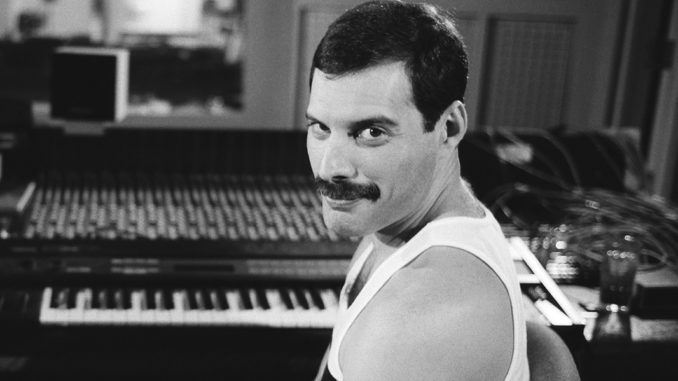
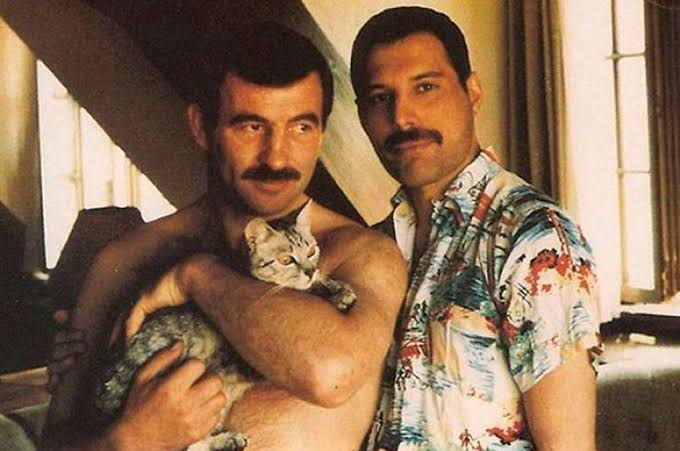
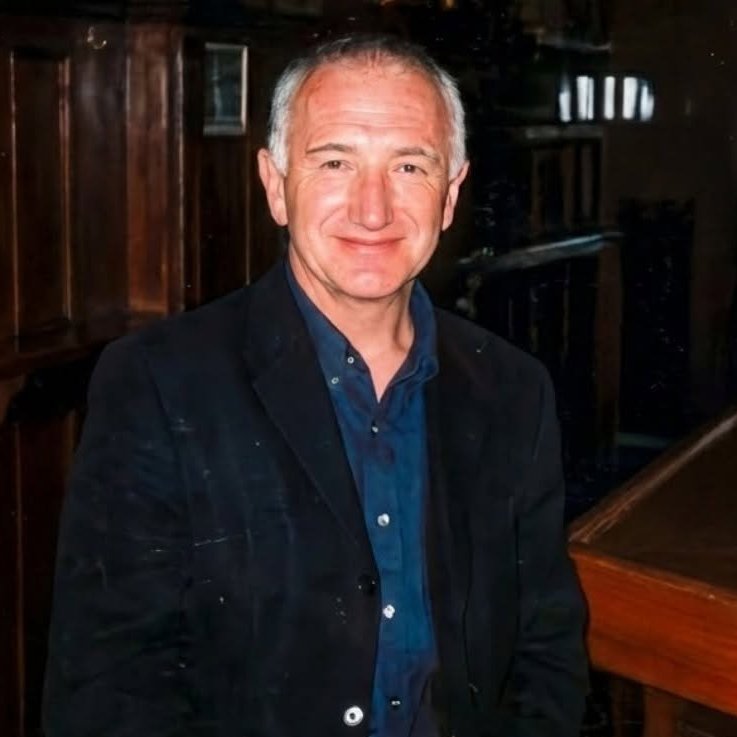
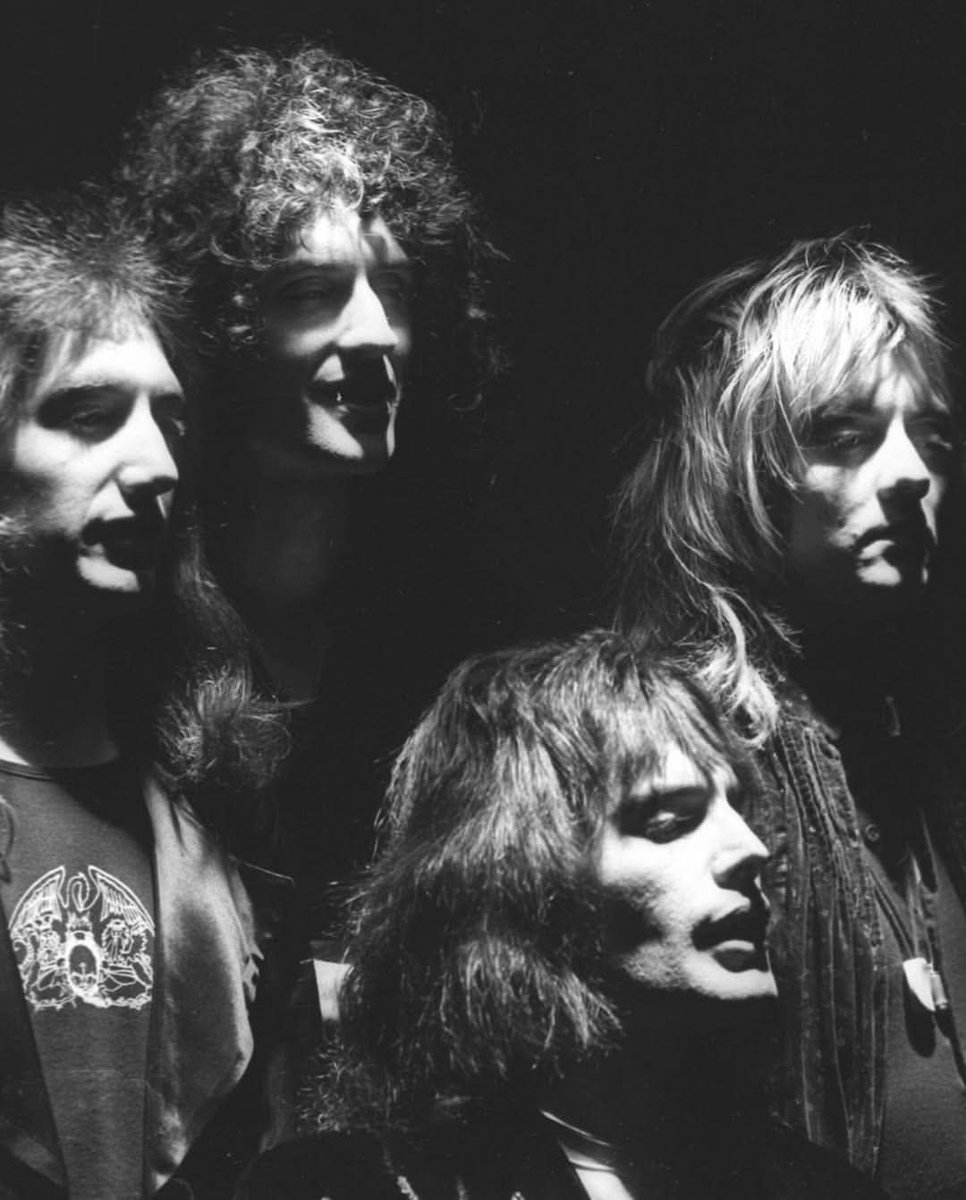
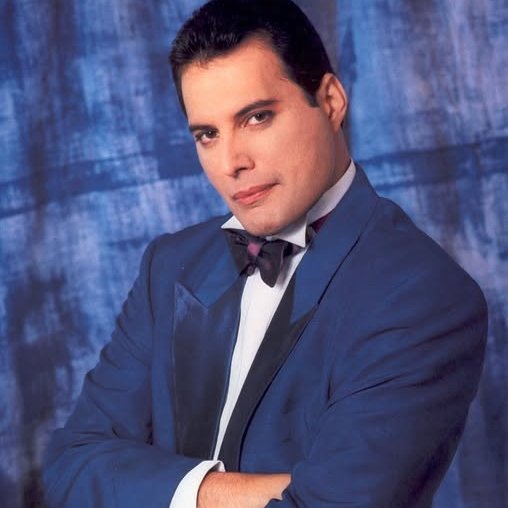
He turned Freddie Mercury down the first time they met. He didn't even know who he was. Seven years later — Freddie was cremated still wearing the gold ring Jim had given him.
In March 1985 — Freddie Mercury walked up to a man in a London g*ay club called Heaven.
He offered to buy him a drink.
The man was Jim Hutton — a hairdresser from County Carlow, Ireland, working at London's Savoy Hotel. He didn't recognise Freddie Mercury. He was already seeing someone. So he said no.
Freddie walked away.
About eighteen months later — they crossed paths again. This time the sparks flew.
Hutton moved into Mercury's Garden Lodge mansion shortly after they began dating. To protect their privacy — he was introduced to everyone, including Freddie's own parents, as the gardener.
But behind closed doors — Freddie called him his husband.
Ga*y marriage was not le*gal in the U*K. They wore gold wedding rings anyway — as symbols of their commitment.
Then in 1987 — Freddie received his AID*S diagnosis.
He told Jim directly — "I'd understand if you wanted to leave." Jim's response was immediate — "I love you, Freddie. I'm not going anywhere."
He stayed. Every single day. Through every painful stage.
In Freddie's final days — Jim described carrying a chair to the doorway so Freddie could sit and look at his paintings one last time. Freddie was too weak to stand. Jim kept close — in case he fell.
Freddie Mercury was cremated still wearing the gold ring Jim had given him in 1986.
Jim Hutton d*ied on New Year's Day 2010 from lung cancer — at the age of 60.
The man who didn't know Freddie Mercury's name — became the last great love of his life.
#jimhutton #freddiemercury #queen
The three songs played at Freddie Mercury’s funeral: “I’ll f*cking do it darling”
“What will I be doing in 20 years’ time? I’ll be dead, darling! Are you crazy?” – Freddie Mercury
To select one’s own songs to be played at one’s funeral is a morbid fascination for those afflicted with a lifelong love of music. Some like the thought of a big ballad to act as their swan song, while others would prefer to share a laugh with those in attendance. For a singer and performer as marvellous as Freddie Mercury, it must have been an arduous process, especially because of his knowledge of the event’s impending arrival.
During the recording of Queen’s 14th and final album, Innuendo, Freddie Mercury was three years on from his AIDS diagnosis. However, the singer was as virile as ever, at least on the surface. Defiant to remain as upbeat as possible, he strove to exhibit the same joie de vivre that had made him so beloved throughout his life. This sanguine approach to hardship is something that soars on the album, as it did during that period for everyone around him.
The tale of the fitting anthem ‘The Show Must Go On’ forms the perfect tableau of this fortitude. As his bandmate Brian May recalls, by this stage in the recording process, the virus and effects of the radiation treatment used to fight it had weakened Freddie to the point of being seriously ill and almost bedridden. But he was not to be deterred.
May had expressed concerns that he thought Mercury was too ill to perform and that the recording session should be scrapped. However, Mercury picked himself up off the floor and, as May recalls: “I said, ‘Fred, I don’t know if this is going to be possible to sing.’ And he went, ‘I’ll fucking do it, darling’—vodka down—and went in and killed it, completely lacerated that vocal.” Knowing he was probably only capable of a single take, the jocular frontman poured all of his might and a serving of vodka into a performance that seemed all-encompassing of the life he lived and the eternally upbeat way he lived it.
Shortly afterwards, the frontman passed away. He had been suffering in silence, but in his final 24 hours, he boldly made a press release declaring that he was indeed suffering from AIDS. At a time when the illness was still shrouded in conservative ignorance, he faced the vitriol of the press even in his last moments to make a statement that sought to raise awareness. “The time has come now for my friends and fans around the world to know the truth and I hope that everyone will join with me, my doctors and all those worldwide in the fight against this terrible disease,” he said.
24 hours after this acknowledgement, on November 24th, 1991, Freddie Mercury passed away surrounded by close friends at a bedside vigil. His lifetime friend and former girlfriend, Mary Austin, received the bulk of his fortune and is the only person who knows where his ashes remain. In the following days, fans poured out onto the streets surrounding his home and adorned it with flowers, notes and candles.
However, the man who loved lavish things had vowed to have a rather more quaint funeral than many might expect. Close friends and family gathered at the West London Crematorium for a 25-minute service presided over by two Parsee priests. A single red rose adorned his coffin as he was carried into the hall, ordained by the first of his favourite songs, Aretha Franklin’s version of ‘Precious Lord, Take My Hand’.
A further moment’s pause was later afforded, and ‘You’ve Got a Friend’ by Carole King was played while the congregation reflected. And finally, his favourite aria, ‘D’amour sull ali Rose’, composed by Giuseppe Verdi and sung by Montserrat Caballe, who performed alongside Mercury on his 1980 solo album, was played. The mix of playfulness and poignancy typified by these anthemic songs was fitting of the man himself: a tender trailblazer galvanised by rambunctious charisma.
To select a collection of songs to help represent your life after you have passed is a difficult feat, but there is perhaps no greater delivery of this task than the songs played at Mercury’s funeral. They are bold, tender and without reproach; they excel in delivery and performance while celebrating the enriching beauty of singing. It is a uniquely poised playloist that captures the man it was made for.
The songs played at Freddie Mercury’s funeral:
‘Precious Lord, Take My Hand’ – Aretha Franklin
‘You’ve Got a Friend’ – Carole King
‘D’amour sull ali Rose’ – Montserrat Caballé
#freddiemercury #queen
The singer Axl Rose called his biggest musical teacher: “It would open my mind”
No one in their right mind would ever try to tell Axl Rose what to do whenever he started performing.
From the minute that Guns N’ Roses began gaining traction, he seemed like a maniac being let loose for a couple hours, and every single time he played tunes like ‘Welcome to the Jungle’, there was no question of whether he was going to fly off the handle or not. It was simply a matter of when the bomb was going to go off, but there was a lot more to Rose than simple rock and roll moves.
A lot of his best moments tended to be about more musical ventures than following in the footsteps of Robert Plant or Jim Morrison. He wanted to be a serious songwriter, and that came from studying what the greatest albums in his record collection were like long before he and Slash started to make music together. And if you listen to Appetite for Destruction, you can really hear that on full display.
As much as people talk about the street-level nastiness of the record, there was a lot more going on underneath the surface. All of the songs were carved out to be parts of a greater whole, and even when working on a more tender song like ‘Sweet Child O’ Mine’, hearing them stumble upon the ‘where do we go now’ section purely by accident is one of the greatest cases of unintentional genius in rock and roll history.
But if people didn’t get to see Rose’s musical genius on full display, Use Your Illusion was definitely going to correct that. He wanted to pull out at the stops and leave Appetite in the dust, but most people probably weren’t looking for him to break out the pianos and become a full-on Elton John-style singer on ‘November Rain’. Then again, Rose wasn’t looking to emulate John every single time he played.
He gladly ushered the piano star into the Rock and Roll Hall of Fame and played with him on occasion, but Freddie Mercury was the true star he was aiming for. The Queen frontman was the embodiment of what a rock and roll star should look like, and as far as the frontman’s moves were concerned, Rose felt that no one could have possibly shown him more about what rock and roll could ever be.
Compared to John’s fantastic range, Rose always looked to Mercury as his greatest musical teacher, saying, “If I hadn’t had Freddie Mercury’s lyrics to hold on to as a kid, I don’t know where I would be. It taught me about all forms of music… it would open my mind. I never really had a bigger teacher in my whole life.” And when you look at the frontman’s range, it’s not hard to see everything he did as a massive tribute to his idol.
Even if we discount the fact that he turned up at Mercury’s memorial concert to perform ‘Bohemian Rhapsody’ with John, a lot of Rose’s massive vocal range is descended from what Mercury did. There are definite moments where things can get a little bit squawky, but having one of the most elastic vocal ranges of anyone else in his field means trying to use it the same way that Mercury did, whether that was making ballads or the most aggressive rock and roll song of all time.
Is Rose going to get anywhere near Mercury’s range? Hell no, but that was never the point. He was going to be his own persona just like Mercury was, and even if he wasn’t on the same level, he wanted to reach a point where he could at least get close to what he had accomplished.
#axlrose #freddiemercury #gunsnroses
The Moment John Deacon Disappeared Forever 📷📷
"We all know Queen continues to tour, but have you noticed the bass player is missing? The story of John Deacon's disappearance is heartbreaking. After Freddie died, John fell into a deep depression. He played one final time with the band in Paris in 1997. As he walked off stage, he looked at Brian May and Roger Taylor and said, 'I can't do this anymore.' He walked out of the venue and has never performed again. He is now a recluse who hasn't spoken to his bandmates in over 20 years. He was the quiet one, but his silence speaks volumes."
#johndeacon
🎸 On This Day!
On November 10, 1977, Queen’s album News of the World entered the UK charts at number 4.
This iconic record gave us timeless anthems like “We Will Rock You” and “We Are the Champions,” further cementing the band as one of rock’s greatest.
What’s your favorite song from this album? 👇
#Queen #NewsOfTheWorld #OnThisDay #WeWillRockYou #WeAreTheChampions
Queen on the set of the music video for 'Bohemian Rhapsody' at Elstree Studios in Borehamwood on 10th November 1975.
The video was directed by Bruce Gowers and was shot in 3 hours for a cost of £4,500 at the time at the band’s rehearsal space.
"At that time it was a new world, the world of videos, and I didn't think anyone was that into it for making money. The video was just made for Top of the Pops and I don't think any of us thought it would go beyond that - certainly not be used live on stage for over 40 years. It was a thrill to work with Queen, to do a music video and see it played on television, and I think a lot of other young directors who came after me felt the same. There were no big egos, everyone was really easygoing. Freddie was very professional and knew exactly what he wanted. Would I direct a video for them now? No, I have not got a great interest in doing it. For me Freddie was the band. To remove the lead singer is a tough call for that project." – Bruce Gowers
"I know it's been called the first ever music video, but it's hard to actually define these things, I know for a fact the Beatles made 35mm films of tracks — but ours was more like a mini-movie." – Brian May
#Queen #BohemianRhapsody
On July 13, 1985, Queen gave a performance at Live Aid that still echoes through music history. The legendary benefit concert at Wembley Stadium in London saw Freddie Mercury and his bandmates—Brian May, Roger Taylor, and John Deacon—command the stage with unmatched energy.
With over 72,000 people in the audience and millions tuning in globally, Mercury’s powerful voice and magnetic stage presence captivated everyone. What was already a major event became a timeless moment, with Queen’s set standing as one of the most unforgettable in live music history.
In just 20 minutes, Queen turned Wembley into a vibrant celebration. With songs like “Bohemian Rhapsody,” “Radio Ga Ga,” and “We Will Rock You,” they captured the hearts of everyone in the crowd.
Freddie Mercury’s stage presence was magnetic, his mic standing a symbol of his command. The claps, chants, and cheers became one, as the energy in the stadium soared. Every beat and lyric brought the band and their fans closer together.
One of the most unforgettable moments of Queen’s Live Aid performance came when Freddie Mercury led the crowd in a spontaneous “call and response.” His powerful voice rang out across the stadium, and tens of thousands of fans responded, perfectly in sync, transforming the entire arena into a single, unified voice.
It was more than just a performance—it was a display of Mercury’s unmatched ability to connect with people and use music to bring them together. Queen’s iconic set didn’t just raise millions for famine relief; it marked a pivotal moment in rock history, cementing their legacy as one of the greatest live acts of all time.
#Queen #LiveAid
Happy Jazz Day! 🎉
¡Hoy celebramos el 48º aniversario del icónico álbum "Jazz" de Queen, lanzado el 10 de noviembre de 1978!
Con hits como "Don't Stop Me Now", "Bicycle Race" y "Fat Bottomed Girls", este disco nos regaló energía rockera inigualable.
¡Sube el volumen y revive la magia de Queen! 🤘🏻
#Queen #Jazz #QueenJazz
An Austrian biophysicist, Christian Herbst, who specializes in vocal physiology, wanted to prove that Fredie Mercury had the most special voice in music history. The researcher got to work and has published a study in the scientific journal Taylor & Francis Online where he explains his findings: the singer of Queen had a "surprising" vibrato of 7 Hz, far above Luciano Pavarotti's, for example, which was 5.7 Hz.
This means Freddie Mercury's vocal cords moved faster than those of the other song stars, allowing him to swing his voice. Experts say Queen’s singer was “able to control the voice when she was on the verge of losing control”. The best way to watch it was with the a cappella version of “We Are The Champions.”
Science already claimed years ago that the lead singer of Queen was the greatest singer in history. Among other things, by findings Herbst also found in his studio: Freddie Mercury used ‘subharmonic’ vibrations to simulate that he was singing in a lower pitched. A feat only within the reach of a chosen few.
To reach his conclusions, the Austrian biophysicist analyzed up to 240 sustained notes present in more than twenty recordings Mercury made with his voice alone, without any instrument to accompany him. There he could prove that his tone was baritone and not tenor as he thought, so he had to push him to the limit to get the spectacular sounds that emerged from his throat.
Unforgettable until the very end, Freddie Mercury.
#FreddieMercury #Queen
Descubre la historia de Jazz, el séptimo álbum de Queen, publicado el 10 de noviembre de 1978. Repasamos sus canciones, éxitos y legado musical. https://t.co/19novtegrz
¡Hoy celebramos el 48º aniversario del icónico álbum "Jazz" de Queen, lanzado el 10 de noviembre de 1978! 🎂
Con hits como "Don't Stop Me Now", "Bicycle Race" y "Fat Bottomed Girls", este disco nos regaló energía rockera inigualable. 🎸
¡Sube el volumen y revive la magia de Queen! 🎵
#Queen #JazzAlbum
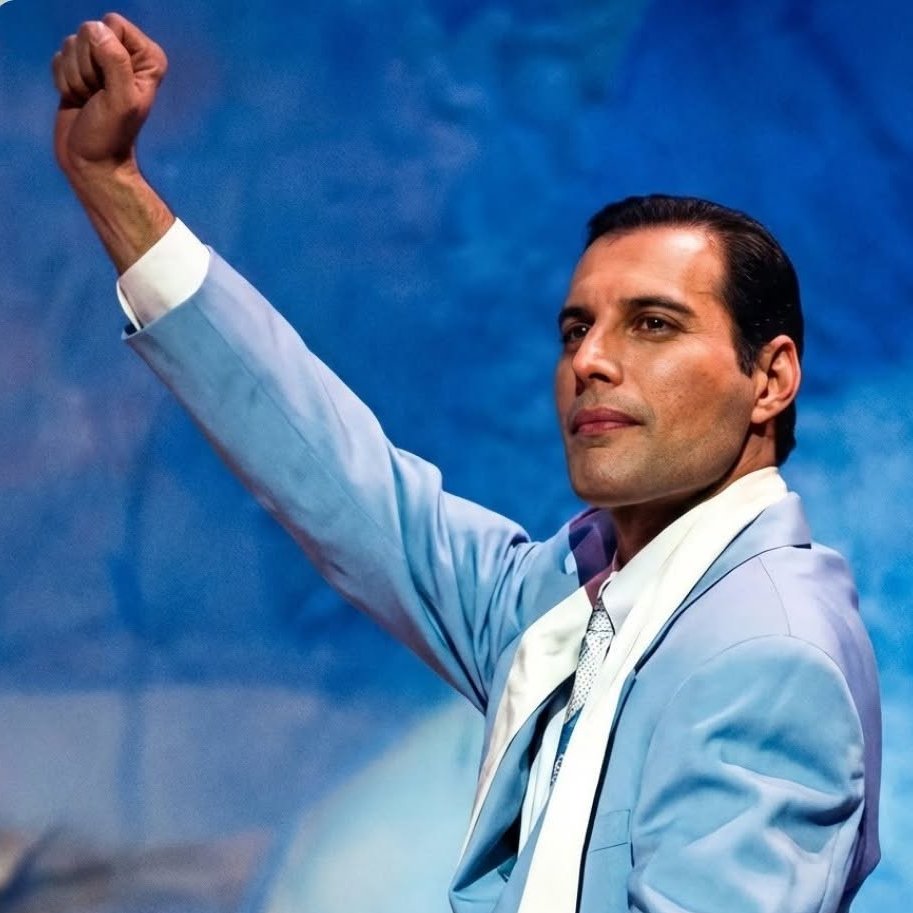
The Last Goodbye: Freddie’s Final Appearance (Feb 1990)
"It was February 1990, exactly this time of year, when the world saw Freddie Mercury for the very last time. Queen accepted the Brit Award for Outstanding Contribution to Music. Freddie, looking noticeably frail in a powder blue suit, didn't sing. He didn't dance. He simply leaned into the microphone and whispered three words: 'Thank you... goodnight.' It was his final public farewell to the fans he loved so much. A heartbreaking moment in rock history."
#FreddieMercury