Chicos, breve recordatorio, que los de la generación del 27 eran casi todos unos señoritos, y que incluido Lorca, no veían con buenos ojos a Miguel Hernandez, que era un campesino de Orihuela. El hablaba de los campos, de las cebollas, del trigo…
¿Por qué cojones hay madridistas que le tenéis tanto asco a Mbappé?
¿Es por 2022? ¿Por renovar con el PSG? Hablamos de un chaval de 23 años al que hasta el presidente de Francia le llamó para presionarle a quedarse.
¿Es porque pensáis que Vini y Mbappé no se llevan bien y se odian o algo así? ¿O porque creéis que no aporta al equipo… siendo el máximo goleador?
De verdad, no entiendo qué problema tenéis con Mbappé. Se me escapa.
@moonbagda@ElenaSanchezz@Sauco_RM Esto es hablar por hablar porque no sabemos qué ha pasado, lo que está claro es que los que mandan aquí son los médicos y el Madrid ha echado a todo su equipo médico por algo. Si, suele preguntar el médico luego pero eso implica que no está tan claro una vez recibe los informes
@frayfrayLF@NoKroti19 Es tontería desgastarse con niños rata q lo más cerca que han estado de jugar con focos es en el FIFA, pero es evidente lo que dices y no pasa nada. Los dos son buenos, (uno más que otro) pero los dos tienen muchos problemas en el juego sin balón y en la elección de opciones
@jhonkakasiski@Tommy91397921@DonShelby_ Que tendrá que ver ahora mbappe, que parecemos tontos los del team mbappe vs team Vinicius. El partido de vini me parece malo con independencia de ello, pero vaya si me preguntas, si, es bastante mejor futbolista mbappe. Con las que tuvo Vini, ayer Mbappe te mete 3 fácilmente
@Tommy91397921@DonShelby_ Vinicius ayer hizo un partido lamentable, ponte una por una sus acciones cada vez que toca un balón elige mal o la pierde. Metió un penalti y un gol a 30cm de la portería y falló 7 claras q normalmente eso te manda pa casa.Pero como metió dos goles hagamos como q hizo un partdazo
A powerful scene in the Odyssey happens when Odysseus finally returns to Ithaca after twenty years of war and wandering.
You would expect the story to end with celebration, with the hero coming home, the family reunited, and order restored.
Homer does something far stranger.
Odysseus arrives disguised as a beggar, because Athena warns him that the palace has been taken over by more than a hundred suitors who have been living there for years, eating his food, drinking his wine, and pressuring his wife Penelope to marry one of them.
They believe Odysseus is dead and in their minds the kingdom is already theirs.
So the king of Ithaca walks through his own halls dressed in rags while the men stealing his house sit comfortably at his tables. They mock him, throw scraps at him, and one of them even strikes him, and Odysseus takes it. That is the remarkable part, because the same man who blinded the Cyclops and survived twenty years of disasters now stands quietly while strangers insult him in his own home. Homer tells us his heart burns inside his chest and that he wants to attack them immediately, yet he restrains himself and waits.
Instead of striking, Odysseus studies the room carefully. He counts the men, watches their habits, and quietly observes which servants remain loyal and which have betrayed him. The hero of the Odyssey does something most people cannot do, which is delay revenge until the moment is right.
Eventually Penelope announces a contest and brings out Odysseus’ great bow, declaring that she will marry the man who can string it and shoot an arrow through twelve axe heads lined up in a row. One by one the suitors try and fail, because none of them can even bend the bow. Then the beggar asks for a turn. The suitors laugh at first, but the bow is eventually handed to him.
Odysseus takes it in his hands and strings it effortlessly. Homer says the sound of the bowstring tightening rings through the hall like the note of a swallow. Then he places an arrow on the string and sends it cleanly through all twelve axe heads.
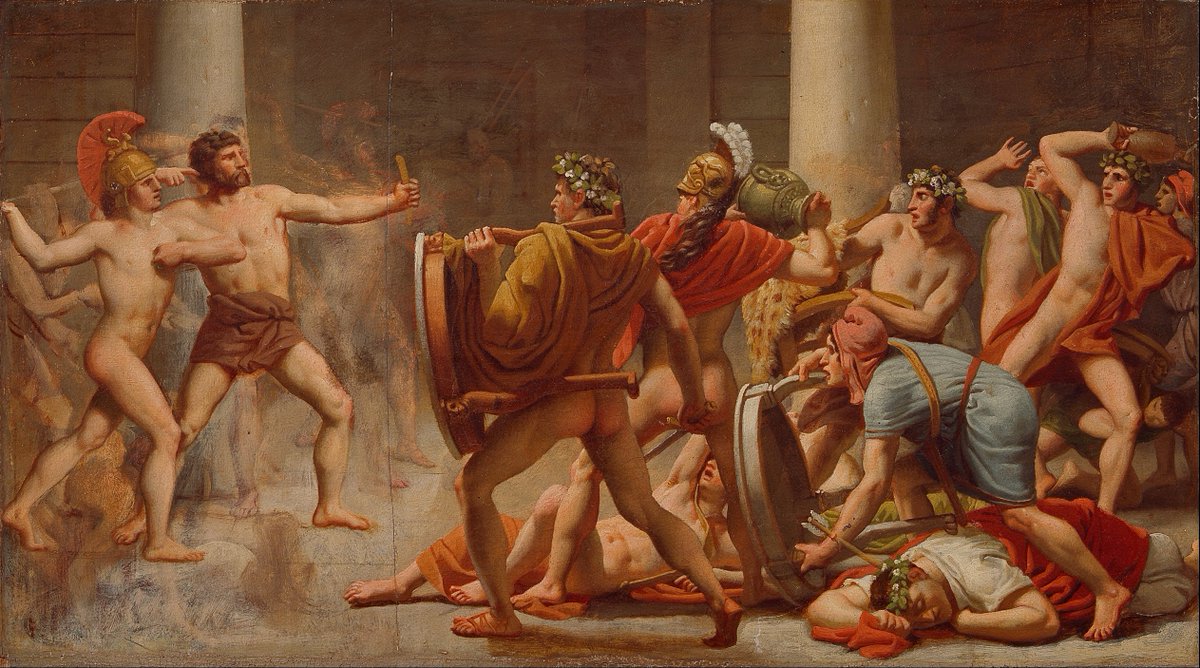
In that moment the beggar disappears. Odysseus turns the bow toward the suitors and reveals who he is.
What follows is one of the most brutal scenes in Greek literature. The doors are sealed and the suitors realize too late that they are trapped inside the hall. Odysseus, his son Telemachus, and two loyal servants begin killing them one by one. There is no escape, no mercy, and no negotiation. The men who spent years consuming another man’s house die inside it.
It is a violent ending, but Homer wants you to understand something important. The real danger to Odysseus was never just the monsters and storms on the long journey home. It was the possibility that someone else might take his place while he was gone. When Odysseus finally returns, he reminds everyone in Ithaca of a simple truth: a man’s home is not truly his unless he is willing to fight for it.