31 years have now passed since the horrific atrocities that unfolded in Srebrenica, where more than 8,000 Bosniak Muslim men were murdered, hundreds of women r*ped, and over 20,000 Bosniaks were forcibly expelled from their homes in Srebrenica, Bosnia and Herzegovina.
+
Our mental analogy for Palestine has to be Circassia. A genocide combined with a project of national annihilation. At the end a millenarian culture that survives only as tragedy and memory. History doesn’t always have a happy ending
The maximalist reading of having a good opinion of others (ḥusn al-ẓann) — treat every claim, every claimant, every fund-raiser charitably, and treat any skepticism as a moral defect — collapses categories that Islamic tradition maintains distinct.
The actual standard is more of a two-tier structure. Where no right of others is at stake, particularly private affairs, ḥusn al-ẓann governs. As the famous counsel of Ibn Sīrīn has it, “If something reaches you about your brother, seek an excuse for him; if you find none, say: 'Perhaps he has an excuse I do not know.'”
But in the domain of ḥuqūq (rights) — testimony, religious knowledge, money, fundraising, etc.— the governing values are clarification (tabayyun), prudence (ḥazm), and faithful trusteeship (amāna).
God commands that reports be verified, not presumed true: “If an iniquitous person comes to you with tidings, then be discerning, lest you harm a people out of ignorance and become remorseful over that which you have done” (Q 49:6). This presupposes assessing the character of the source before accepting a report. The Prophet ﷺ advised to maintain vigilance: “The believer is not stung from the same hole twice.” Naïveté repeated is not a virtue.
Where rights are at stake, Islamic law does not operate on presumptive trust: integrity of witnesses must be formally established. The entire science of ḥadīth criticism rests on scholars publicly declaring certain narrators unreliable. When ʿUmar vetted a character witness, he asked: Have you been his neighbor? Traveled with him? Dealt with him in money? When the man answered no to all three, ʿUmar concluded he did not truly know him.
The strategy of manipulators is to import the ethic of the first tier into the second. They reframe due diligence as sūʾ al-ẓann (suspicion and conjecture) and warranted criticism as ghība (backbiting), weaponizing the community’s virtues against it. But extending unexamined trust in matters of rights is not virtue; it is negligence. Ḥusn al-ẓann is a discipline of the heart toward private conduct. It is not a license to hand the community’s money, trust, and religion to anyone who asks.
Like everyone, I want this vile criminal out of the country. Victims must come first.
I will ask the Home and Foreign Secretaries to review all possible options - and they should consider nothing is off the table.
https://t.co/u42MdjrX65
How can anyone still support this Israeli govt when psychopathic monsters like Ben Gvir are ministers in it, advocating genocide in Lebanon? Disgusting.
This is not a rant by a random genocidal lunatic. It's a public post by the national security minister of the Israeli regime.
The genocidal death cult headquartered in Tel Aviv is a threat to all of humanity. It threatens all humans. Its only interest is permanent war.
This is an absolutely major story and almost no Western media covered it: India's water minister CR Patil said on Tuesday that "it is certain, not a single drop of water will go (to Pakistan) in the coming years."
Patil said that India is "actively working on it" after "directives" from Prime Minister Narendra Modi.
As a reminder, Pakistan's dependence on water from India is close to total: the country is essentially built around the Indus river system, all of whose rivers flow through India before entering Pakistan.
The Indus system irrigates 80% of Pakistan's farmland, generates a third of its electricity, supplies its major cities with drinking water, and sustains the livelihoods of some 240 million people.
So, essentially, no water from India = annihilation of Pakistan as a state.
Pretty damn consequential, all the more given we're talking about 2 nuclear powers here. And all the more because, understandably, Pakistan's formal position is that water diversion would constitute "an act of war" (https://t.co/WLoDpGzc2W).
Unfortunately, Patil's statement isn't just talk: India already set up the legal framework to make this possible. Last year, they unilaterally suspended the 1960 Indus Waters Treaty, despite the treaty containing no withdrawal clause.
It used to be the one piece of India-Pakistan relations that worked, and had survived multiple wars and over six decades of hostility. Now India is saying officially that it will "never be restored" (https://t.co/2SnUNevFbX).
The one mitigating factor here is physics: you don't just "turn off" a major Himalayan river system. Diverting rivers of this magnitude means building massive storage and canal infrastructure in Himalayan terrain: projects measured in years.
But India IS ACTUALLY BUILDING that infrastructure: for instance it just approved in May the building of the so-called "Chenab–Beas Link Tunnel," an 8.7km ₹2,352 crore (~$280M) tunnel designed to divert water from the Chenab basin into India's Beas river system. The Chenab is one of the main tributaries of the Indus - and one of the three "western rivers" (Indus, Jhelum, Chenab) allocated to Pakistan under the 1960 Indus Water Treaty.
Which means that, unfortunately, Patil's "not a single drop of water in the coming years" looks like a roadmap: the infrastructure to strangle Pakistan's water supply is being approved and tendered in plain sight.
This is also a story about selective media coverage and double standards: I'm willing to bet that 99% of people in the West have never heard of any of this.
Now make this thought experiment: imagine China announced it was building infrastructure to cut off every drop of water flowing to India and its ministers proclaimed on television that "not a single drop" would cross the border. It would be wall-to-wall coverage, sanctions packages, and a thousand op-eds about Beijing "weaponizing water."
Heck we don't need to imagine because the simple fact of China merely building a hydropower dam on the Yarlung Tsangpo (the upstream Brahmaputra) generated exactly the wall-to-wall alarm I'm describing, even though China threatened nothing and even though Indian officials said the threat is a "myth" given the fact that the river gathers most of its volume inside India from monsoon rains (https://t.co/GBgBybBPoE). Malign intent was still presumed from the act of construction, because it's China.
In India's case, the intent couldn't possibly be clearer: it's proclaimed by ministers on the record, and backed by India's actions. But because they're a courted Western partner, what they're doing - arguably the most extreme form of economic warfare imaginable, directed at a nuclear state - largely gets silence.
Src for screenshot: https://t.co/qav4muNkij
What happens when formal institutions of governance fail?
In The Informal Economy is Pakistan's Backstop, Sinead O'Sullivan (@SineadOS1) explores the role of Pakistan's 'civilisational economy' in ensuring Pakistan's survival—at the cost of growth.
Beneath the visible machinery of the modern state—the budget, the central bank, the commercial banks, the capital controls, and the recurring pilgrimages to the IMF—is the 'civilisational economy': a set of informal arrangements running on long-standing obligations and reputation rather than formal contracts, distributed across geographies in a way that allows it to operate independently of any single state.
But this comes at a price. The very systems that prevent the country’s collapse may be the same systems that prevent it from evolving for the better.
As the institutional strength of the late 20th century is hollowed out, and as markets thin and finance becomes politicised with the rules-based order fraying, the distinction between redundancy and efficiency becomes urgent.
The question that should occupy the minds of macroeconomists today is that of Pakistan’s very condition: which systems endure when conditions deteriorate, and what does endurance cost the societies that depend on it?
Read more on Kasurian. Link below:
@0xAdam9 @AmzBoogie My experience with regards to the chirping is different. The change in the sky is not reliable due to light pollution - I’m assuming you live in a city or close to one.
Rupert, you speak of deportation of child rapists like it's radical.
Reinstate capital punishment.
Execute child rapists of ALL backgrounds, religions, races, nationalities.
And don't get too upset, but Muslims will likely support this the most, since executing those who commit extreme corruption (Fasad) aligns with Sharia.
Enough pointless tantrums.
@Ibrahimifg Good to hear that investors are so scrupulous. Observing the general public one gets the impression no one is really bothered about boycott anymore.
Muslims are not ghettoised, rather, they prefer to live and raise their families within Muslim enclaves and environments where they feel secure and share cultural affinity.
This sentiment exists among all communities (Sikh, Hindu, Christian etc.) as most people predominantly reside within their own social and cultural enclaves. There are certain places in urban centres where intermingling occurs and Muslims have a fair share of presence in those. Either everyone is ghettoised, or no one is.
Preferring to live among their own people should not be an issue, that is a universal social tendency. The real issue arises when localities inhabited by certain groups face discrimination in infrastructure, civic facilities, investment, and development.
The responsibility for that lies with the administration and political order which is Hindu majoritarian, not with the people residing there. It is a wrongdoing of your own people, do not project that on Muslims.
TWO CONCEPTIONS OF WHAT IT IS TO BE RELIGIOUS
Calculating Wager or Sweetness of Tasting ?
Two main forms of religion have and always will exist, one authentic, the other, counterfeit, corresponding to two human types. The first, phoney variety is a kind of bargain you claim to have entered into with the Divine, in which, somewhat grudgingly, you offer to exchange a finite quantity of deprivation, from all the exciting stuff like fornication and drinking you’d really like to do here, for a larger quantity of revelling and enjoyment in the Hereafter. Religion is a pain, but one that simply has to be done. It is, after all, why you are better than everyone else. At least that is worthwhile!
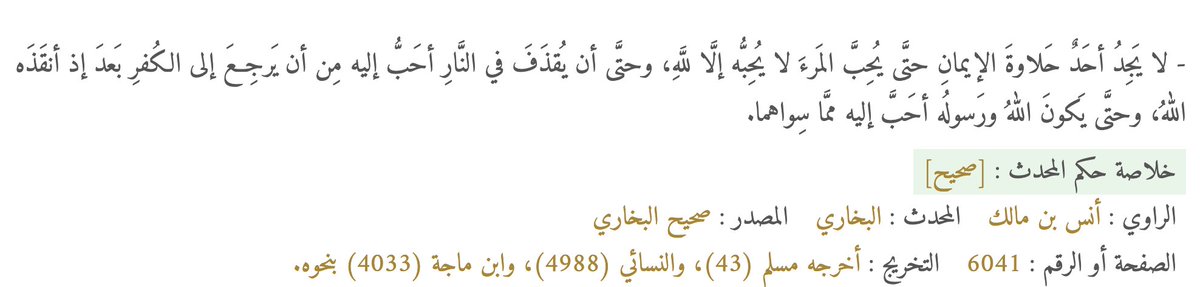
The other, genuine form of religion, involves falling in love with the beauty of God’s creation and of the revelation, and with the life and the spiritual person of the Holy Prophet ﷺ , and thence becoming increasingly nourished, and indeed, enraptured, by the resultant taste and sweetness. This form of religion is the one that the Prophet ﷺ himself calls to. In authentic narrations the Holy Prophet ﷺ speaks about experiential īmān, which, of course, the Sufis later describe. He ﷺ speaks about the sweetness of the experience of faith, and even of tasting it (dhawq). "Whoever has three traits within himself will find the sweetness of faith: one who loves Allah and His Messenger more than anything else, one who loves a servant only for the sake of Allah, and one who hates to turn back to unbelief after Allah has saved him, just as he hates to be thrown into the fire"; and, “He has tasted the sweetness of faith, he who is pleased with Allah as his Lord, with Islam as his religion, and with Muhammad as his Prophet."
All is beauty. Knowing that is love. Love is duty.
Thomas Carlyle (see photograph), one of the greatest prose stylists of the 19th century (and a famous admirer of the Prophet ﷺ), wrote:
“Religion in most countries, more or less in every country, is no longer what it was, and should be, — a thousand-voiced psalm from the heart of Man to his invisible God, the fountain of all Goodness, Beauty, Truth, and revealed in every revelation of these; but for the most part, a wise prudential feeling grounded on mere calculation; a matter, as all others now are, of Expediency and Utility; whereby some smaller quantum of earthly enjoyment may be exchanged for a far larger quantum of celestial enjoyment” (Signs of the Times)
Let’s face it, this spiritual illness afflicts far too many Muslims today, many of whom evidently prefer legalism, formalism, and selfish calculation, to truth, beauty, and goodness. Be in no doubt, then, that the Holy Prophet himself ﷺ exhorts you to taste your faith, not to barter with it.