If you're serious about growth as a software engineer in 2026,
try these newsletters (all free):
1. System Design
➟ https://t.co/ZbgxWpVFNj
2. Engineering Leadership
➟ https://t.co/kqPyIUnKFP
3. Insider Knowledge Big Tech
➟ https://t.co/B3IZS7hsqv
4. Data Engineering
➟ https://t.co/7X0M40fTJz
5. Engineering Career Growth
➟ https://t.co/A2h5xXFIRh
6. Test-Drive Development
➟ https://t.co/XB2mNUV6BE
7. Frontend & Software Design
➟ https://t.co/KurIiXrW5t
8. DevOps & Cloud
➟ https://t.co/5gAwRraFeO
9. .NET & Architecutre
➟ https://t.co/vSM1QImHxZ
10. Software Architecture
➟ https://t.co/uIcXmGaGsa
11. Engineering & Leadership Insights
➟ https://t.co/rx6iBZmBts
12. Weekly Curated Tech Articles
➟ https://t.co/F7SkWJ6Y1a
What other newsletters should be on this list?
👋 PS: Get our System Design Handbook FREE when you join our newsletter. Join 28,501+ engineers: https://t.co/1YxuvrLqeh
🔖 Save for later.
♻️ Repost to help others grow.
➕ Follow Nikki Siapno + turn on notifications.
What Is Programming? A Complete Breakdown for New Learners
Programming is often misunderstood as “just writing code,” but in reality, it is a blend of multiple thinking skills, each contributing to how software is built, improved, and maintained.
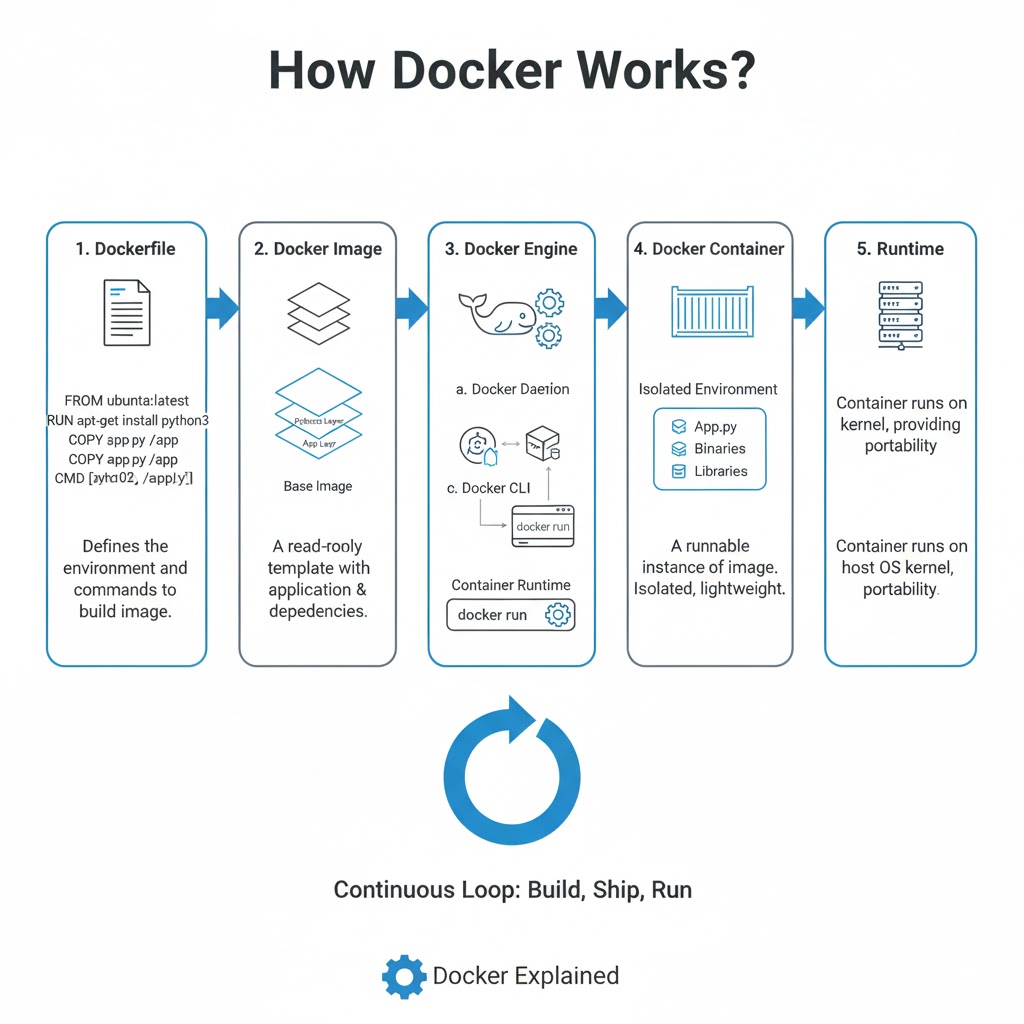
How does Docker work?
You write a Dockerfile (or use an existing image) that defines the environment, dependencies, and commands your application needs.
Docker reads this file and builds a container image , a lightweight, standalone, and executable package that includes everything required to run your app.
When you run a container:
→ Docker uses the container runtime to create isolated environments using Linux kernel features like namespaces and cgroups.
→ Each container shares the host’s OS kernel but runs in its own isolated process space.
→ The Docker daemon manages containers, images, volumes, and networks.
→ The Docker client (CLI) communicates with the daemon through REST APIs to build, run, and manage containers.
At runtime:
→ Docker ensures consistent execution by providing the same environment across development, testing, and production.
→ It manages networking, volumes for persistent data, and image caching for faster deployment.
→ Containers can be orchestrated using tools like Docker Compose, Kubernetes, or Swarm for scalability and automation.
The result: Docker delivers fast, portable, and reliable application deployment , the same code runs identically everywhere, from a developer’s laptop to cloud production servers.
👉 Want to go deeper? Check out this ebook:
Mastering Docker & Containers: From Beginner to Advanced Deployment
https://t.co/lIKb9UCyHl
I built a Runtime JAR Inspector in just 10 hours
Know which JARs are actually loaded in your JVM & focus on the vulnerabilities that really matter.
📖 Read the full story:
https://t.co/cKbtZIdfbR
#Java#JVM#Security#AppSec#SupplyChainSecurity
I created a GitHub repository to help you learn with Java interview
And, it received 250+ stars on GitHub
It gives you:
- Java interview questions by topic
- Core Java Fundamentals
- Java interview resources
repo - https://t.co/dKBMudur97
How many times have you bookmarked a tutorial “for later” because you were too stressed about keeping up to actually enjoy learning it? It's time to stop panic learning, and start learning with joy. https://t.co/VDMYfrycZg
If you’re starting your Spring AI journey, don’t start from scratch!
This awesome repo is packed with examples, projects, and resources to get you started quickly.
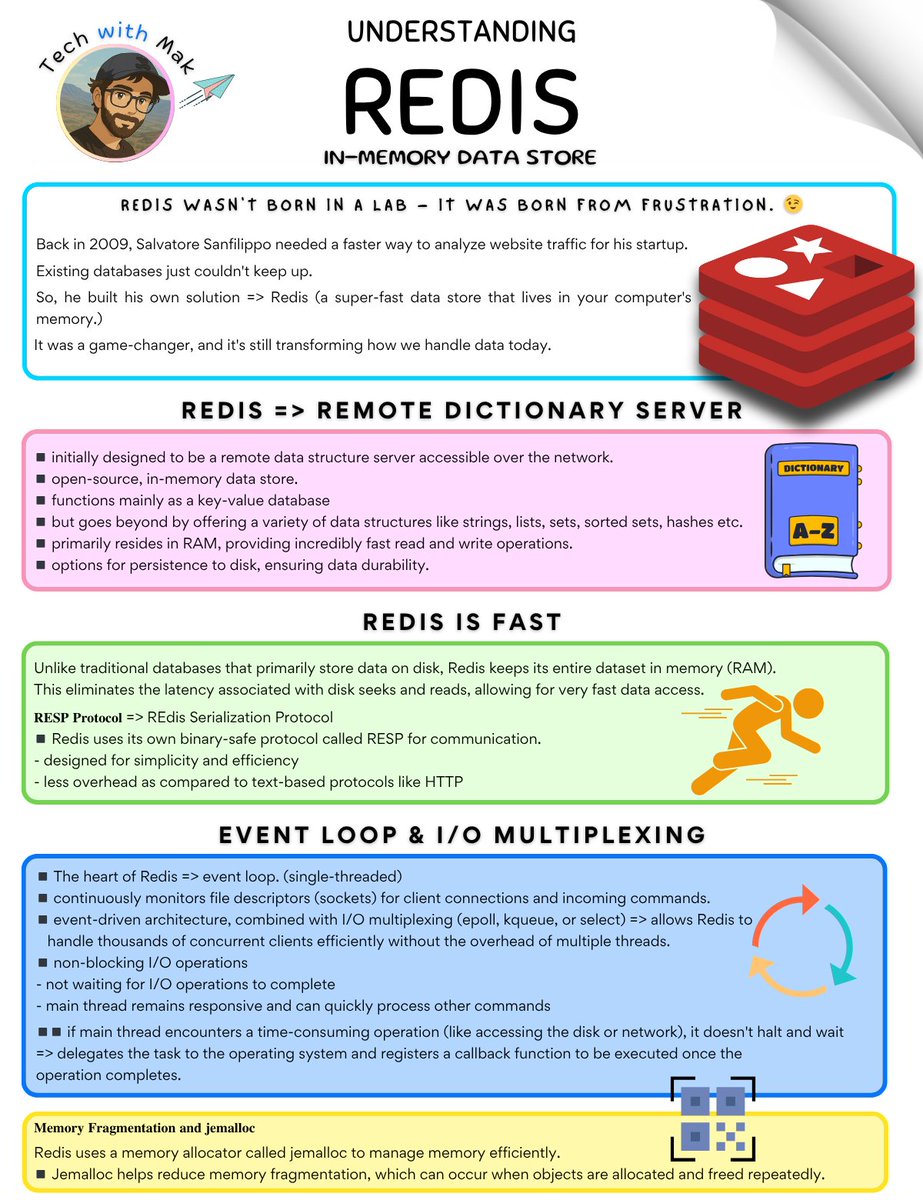
Let's talk about - Redis
1./ Redis wasn't born in a lab, it was born from frustration. 😉
How?
➸ Back in 2009, Salvatore Sanfilippo needed a faster way to analyze website traffic for his startup.
Existing databases just couldn't keep up.
➸ So, he built his own solution => Redis (a super-fast data store that lives in your computer's memory.)
It was a game-changer, and it's still transforming how we handle data today.
Read more 👇
__
👍 Follow - @techNmak
#softwaredevelopment #redis #databases
If you’re serious about learning agentic AI,
here’s a pathway I’ve found highly effective:
I’ve been diving deeper into how to build multi-agent systems.
A lot of courses out there are shallow in coverage.
To build real AI agents, you need more than just tool usage or prompt chaining.
You need a strong grasp of concepts like agent reasoning, orchestration, state management, and more.
Building multi-agent systems adds a whole additional layer of complexity on top.
I was looking for something that was comprehensive and covered the underlying concepts. While being equally hands-on with building multi-agent systems.
Something that would give me a strong understanding of how to build multi-agent systems, not just how to use the latest trending tool.
Udacity's Agentic AI Nanodegree program checked those boxes.
• It’s framework-agnostic. You’re not just learning one tool. You’re learning how agentic systems work under the hood.
• The projects aren’t basic. You’re challenged to build complex multi-agent systems.
• And there’s actual human feedback on your work from subject matter experts.
Check it out: https://t.co/6yi6Eaw2Eg
It's not for the faint-hearted. The course has a strong level of complexity, which is exactly what's needed.
Udacity gave me early access and offered to sponsor a post if I liked it. Here we are. It’s solid, and a great option if you’re serious about building agentic systems.
💬 Are you actively upskilling in agentic AI? ↓
Java is not just adding features—it's also removing old ones that became obsolete and are either a maintenance burden, performance drag, or hazardous to use.
This episode of the Inside Java Podcast with @nipafx and @stuartmarks touches on 32bit ports, applets, finalization, and the security manager. https://t.co/88lV07ohEa